Colditz Castle: Medieval Fortress and Oflag IV-C Prisoner-of-War Camp


Site at a Glance
- Rating
- 4.5
- Popularity
- Medium
- Country
- Germany
- Primary era
- Medieval
- External website
- Open
- Eras represented
- Medieval, Modern
- Civilizations
- Holy Roman Empire, Margraviate of Meissen
- Site type
- Military
- Remains
- Castle
On this page16 sections
History
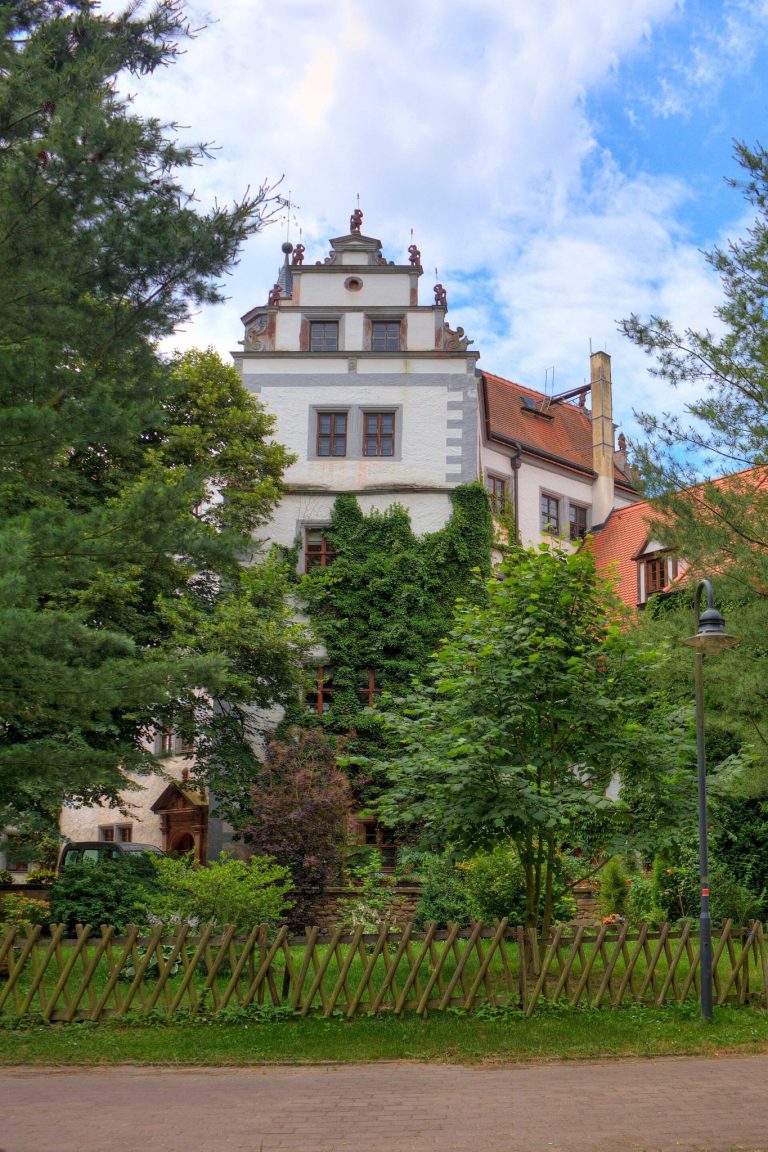
Colditz Castle stands in Colditz, Germany, on a hill above the Mulde River. Construction began in the eleventh century, and the castle was enlarged and rebuilt repeatedly into the modern period. Its best-known historical phase began in 1939, when it became Oflag IV-C, a German prisoner-of-war camp for captured Allied officers, and a high-security camp for men regarded as especially dangerous escape risks.
Medieval origins and modern institutional use
The castle’s medieval fabric developed through successive expansions and reconstructions. Its position on a hill overlooking the town and river valley gave the complex a defensible setting, while later building work created a mixture of courtyards, service areas, attics, storage rooms, residential spaces, and administrative quarters.
After the Nazis came to power in 1933, Colditz Castle was used to detain opponents of the regime in a concentration camp. In 1938 it became a psychiatric institution. Patients were deliberately starved to death there as part of the Nazi policy of euthanasia, the organized killing of people whom the regime classified as having lives unworthy of life.
Oflag IV-C, 1939 to 1945
In 1939 the castle was converted into Oflag IV-C. The name was formed from the German term Offizierslager, meaning officers’ camp. Colditz was also designated a Sonderlager, or special high-security camp, for officers who had escaped or attempted to escape from other camps and for prisoners considered particularly hostile to Germany. The camp operated from 1939 until 1945.
The first prisoners arrived in November 1939. They were 140 Polish officers captured during the German invasion of Poland, which began on 1 September. Some had been wounded in the battles of Kock and Tomaszów Lubelski. Generals arrived from Oflag II-A Prenzlau in December, accompanied by senior officers from Oflag XI-A Osterode. By 13 December, the camp held 632 officers and 101 enlisted men.
After the French campaign in 1940, the Polish prisoners were dispersed. Polish generals went to Oflag IV-B Königstein, other Polish officers to Oflag II-A Prenzlau, and officer cadets to Stalag VI-B Neu Versen. A Stalag was a German prisoner-of-war camp intended mainly for enlisted personnel and non-commissioned ranks.
From October 1940, officers from Britain, the British Empire, the Netherlands, France, and Belgium were brought to Colditz. Among the first British prisoners were the Canadians Donald Middleton, Keith Milne, and Howard Wardle. On 7 November came six officers later known as the Laufen Six: Harry Elliott, Rupert Barry, Patrick Reid, Dick Howe, Peter Allan, and Kenneth Lockwood.
By Christmas 1940, approximately 60 Polish, 12 Belgian, 50 French, and 30 British officers were held at the castle, together with their orderlies. Two Yugoslav and two Czechoslovak pilots who had escaped to Britain were also imprisoned there. Two hundred French officers arrived in February 1941. By the end of July, the camp contained more than 500 officers, including over 250 French, 150 Polish, 50 British and Commonwealth, and two Yugoslav officers.
Prisoner communities and camp life
The camp generally operated under the 1929 Geneva Convention on prisoners of war, which established rules for the treatment of captured military personnel. Representatives of the United States, acting as the protecting power, monitored compliance at first; Switzerland later assumed that role. The Wehrmacht, Nazi Germany’s unified armed forces, supplied the guards. More than 70 German officers and enlisted men worked at the castle between 1939 and 1945, alongside civilian maintenance and medical staff.
Oberst Schmidt commanded the camp from 1939 until August 1942. Oberst Glaesche followed from 1 August 1942 to 13 February 1943, and Oberst Gerhard Prawitt held command from 14 February 1943 until 15 April 1945. Captain Reinhold Eggers served as security officer from November 1940 until April 1945 and became chief of security in 1944. He was the only English-speaking German officer at Colditz and often acted as an interpreter.
Prisoners received inadequate German rations, although Red Cross parcels sustained them for much of the period from Christmas 1940 until the winter of 1944 to 1945. They could correspond with relatives, use limited camp money called Lagergeld, and buy supplies at the canteen. The officers were not assigned forced labour. Much of their time was spent in organized sports, theatre, music, language study, literary debates, and correspondence courses.
Polish, Dutch, British, French, and international groups organized musical performances, theatrical productions, literary activities, and sporting competitions. The first camp Olympic Games took place in August 1941. Prisoners also secretly distilled alcohol from jam, sugar, dried fruit, water, and yeast. Guards initially confiscated the stills but eventually tolerated the practice.
Correspondence served another purpose. Prisoners used coded messages to pass information about German troop movements, defences, bombing damage, possible targets, and morale. A code called HK or 5-6-O was used officially to communicate with British prisoners in several camps without German detection.
Changing national groups and worsening conditions
Alain Le Ray became the first prisoner to escape from Colditz Castle in April 1941. On 24 July, 68 Dutch officers arrived, most of them members of the Royal Netherlands East Indies Army. They had refused to sign a declaration promising not to take part in the war against Germany. Hans Larive brought knowledge of a route through Singen into Switzerland. A Gestapo interrogator had revealed the route after an earlier escape attempt, and later prisoners used it.
In May 1943, the German army command decided that Colditz should house only British and Commonwealth officers and Americans. Dutch, Polish, Belgian, and most French prisoners were transferred elsewhere. By late July, 228 Commonwealth officers remained, including Britons, Canadians, Australians, New Zealanders, South Africans, Irishmen, and one Indian officer. The first Americans arrived on 23 August 1944. They included three counter-intelligence personnel who had been parachuted into Hungary.
Conditions deteriorated sharply during the winter of 1944 to 1945. In early 1945, around 1,200 French prisoner officers were evacuated to Colditz and crowded into the castle beside the existing prisoners, while another 600 French prisoners were held in the town below. Hunger and cold reached their most severe level during this period.
Six French generals arrived in January and February, including Jean Adolphe Louis Robert Flavigny, Louis Léon Marie André Buisson, Arsène Marie Paul Vauthier, Albert Joseph Daine, and René Jacques Mortemart de Boisse. Major-General Gustave Marie Maurice Mesny was murdered by the Germans while being transferred from Königstein. On 5 February, Polish General Tadeusz Bór-Komorowski arrived with several senior officers. He was deputy commander of the Armia Krajowa, the principal Polish underground resistance organization, and was associated with the Warsaw Uprising.
Evacuation and liberation
On 13 April 1945, as American forces approached, the SS removed the Prominente, or prominent prisoners. At Colditz, this term referred to prisoners whose family connections or social positions made them potential hostages, bargaining assets, or instruments of political pressure. Some were left at Königstein, Giles Romilly escaped from Tittmoning, and the remainder were taken toward Austria.
Adolf Hitler had ordered the prominent prisoners to be executed, but SS General Gottlob Berger refused to carry out the order and arranged for them to reach American forces on 5 May. Meanwhile, Prawitt was ordered to evacuate the remaining prisoners. The senior prisoner officers refused, and Prawitt capitulated. The prisoners took control of the castle while German sentries remained at their posts without ammunition. On 16 April, Polish, French, and British flags were displayed to prevent an American attack.
American soldiers of the First Army captured the town after heavy fighting and entered the former camp. The Red Army reached Colditz in May 1945. The town then entered the Soviet occupation zone and later the German Democratic Republic. The castle was successively used as a prison for local criminals and people considered hostile to the communist state, a psychiatric hospital, an old people’s home, and a storage facility.
Memory and interpretation
Colditz veterans maintained their associations after the war. British veterans formed the Colditz Association, former prisoners returned to the castle, and the Colditz Society was established in England in 1991. Memoirs by J. E. R. Wood, Émile Le Brigant, Pat Reid, Reinhold Eggers, and Georg Martin Schädlich influenced later interpretations of the camp.
Pat Reid’s 1952 book The Colditz Story brought the castle to wide public attention. Later assessments regarded the book as subjective and partly inaccurate. Its presentation of escape as an almost game-like adventure helped create the “Colditz myth”, an idealized image of cheerful Allied prisoners repeatedly outwitting their guards. Restoration beginning in 2006 uncovered hidden objects, while a small castle museum and later documentaries, television productions, films, books, and games continued to present the history of Oflag IV-C.
Remains
Hilltop castle and camp layout
Colditz Castle occupies a hill overlooking the town and the Mulde valley. It stands on a cliff with a reported drop of about 75 metres toward the river, and its outer walls are approximately two metres thick. Centuries of enlargement and rebuilding produced a complex arrangement of prison sections, the commandant’s area, an inner courtyard, attics, a park, service spaces, and storage rooms.
Inner courtyard and prisoner areas
The inner courtyard served as a major area for prisoner activities. Men played football, volleyball, rugby, hockey, cricket, boxing, chess, and other games there. The former camp also contained a prisoners’ theatre, a library, living areas, a canteen, workshops, and storage facilities. Officers lived separately from their lower-ranking orderlies, who had been brought from Stalag camps.
Park and controlled entrances
Groups were sometimes escorted into the park beside the castle for exercise and sport. The park was enclosed by a wall and barbed-wire fencing. The high-security camp had a controlled entrance and three daily roll calls, later increased to four. Prisoners examined the gate, park wall, windows, storage areas, roofs, attics, and service movements when planning escapes.
Escape tunnels and concealment spaces
The French tunnel
French officers excavated a tunnel beneath the castle over eight months, from May 1941 to January 1942. They intended it to free about 200 prisoners. The builders installed electric lighting and prepared civilian clothing, false documents, and money, but German guards discovered the entrance shortly before the work was complete. Part of the tunnel was later made visible through a glass panel set into the floor.
Attics and hidden equipment
The attics and service spaces supported several covert projects. Frédéric Guigues secretly built two radios from components hidden in parcels. The first was discovered through an informant. The second received French-language BBC broadcasts, which prisoners circulated among themselves, and remained hidden in the castle until repair work uncovered it in 1992. Guigues had found and reburied it in 1965, and another former prisoner found it again in 1975.
Prisoners also established a forgery workshop. Its equipment included a wooden-and-wire typewriter, an improvised camera, and counterfeit stamps. Other escape-related objects included false-document materials, concealed tools, escape clothing, mannequins used during roll calls, and equipment associated with the secret radio laboratory.
The glider and material traces of escape plans
From the summer of 1944 until April 1945, twenty engineers secretly built a two-person glider in an attic. They produced about 6,000 components from stolen wood, metal bed fittings, screws, telephone wire, and mattress fabric, while other prisoners acted as lookouts. The project was intended as a last-resort escape plan and also helped sustain morale. The original glider was never flown and disappeared after the war, but a replica is displayed in the castle.
Prisoners developed numerous methods for concealing escapees during roll calls. Some men were counted twice, while Dutch prisoner and sculptor-made mannequins helped create the appearance of a full complement. The documented attempts included Peter Allan’s effort to leave inside a straw mattress, Émile Boulé’s disguise as a woman, Airey Neave’s use of a German corporal’s uniform, and Dominic Bruce’s concealment in a tea chest before his recapture at Gdańsk.
Counts of successful escapes range from 30 to 36. One tally records 174 attempts by 316 officers, with 35 eventually reaching home. The totals include attempts after transfers to other camps, trains, hospitals, or dental facilities, as well as repatriations obtained by simulating illness. Michael Sinclair was the only man killed while attempting to leave the camp itself. He was shot during his ninth attempt while climbing the camp fence.
Later preservation and exhibitions
Restoration work that began in 2006 uncovered further objects hidden by prisoners during the camp period. The castle museum presents these discoveries together with material connected to prisoner life and escape preparations. The former staff section has been adapted for later institutional use, including a youth hostel, while exhibitions across the castle address the history of the prisoner-of-war camp.