Kloster Langwaden: A Monastery in Grevenbroich, Germany
Site at a Glance
- Rating
- 4.2
- Popularity
- Medium
- Country
- Germany
- Primary era
- Early Modern
- Eras represented
- Early Modern, Modern
- Civilizations
- Duchy of Jülich, German, Holy Roman Empire
- Site type
- Religious
- Remains
- Monastery
On this page8 sections
History
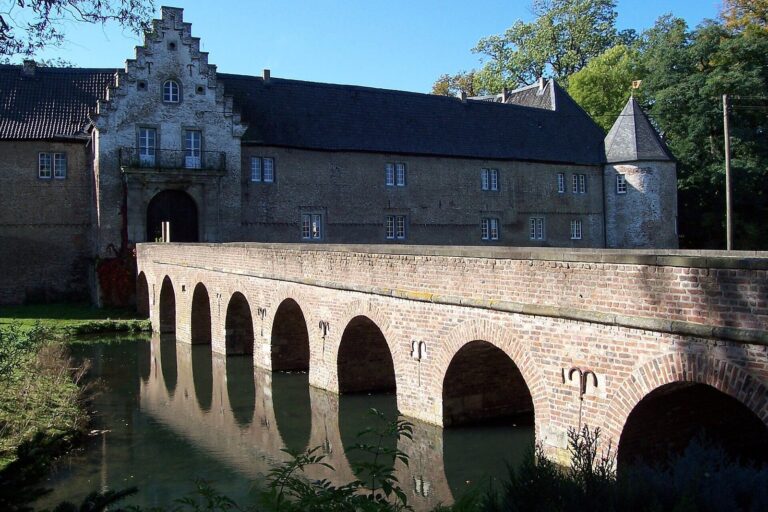
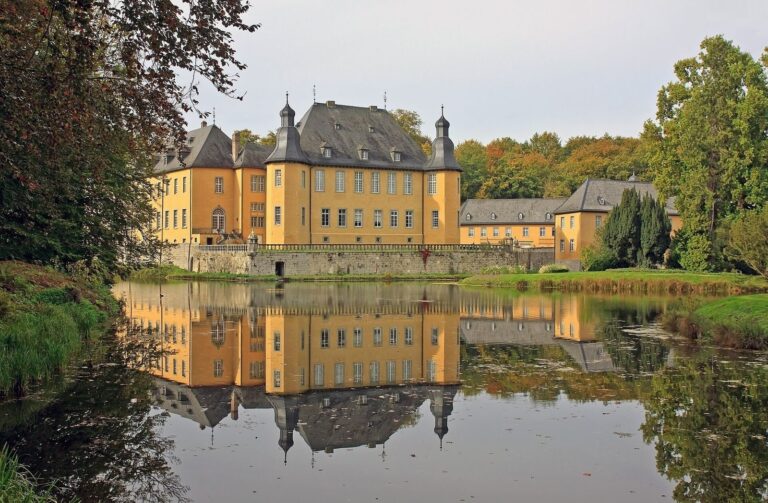
Kloster Langwaden is a monastery in the Langwaden district of Grevenbroich, North Rhine-Westphalia, Germany. Around 1145, Count Christian von Wevelinghoven founded it for Premonstratensian nuns, members of a Catholic religious order also known as Norbertines. The monastery belonged to the Archbishopric of Cologne, whose archbishop provided its protection. It first appears in a record from 1173 by Philipp I of Heinsberg, Archbishop of Cologne.
Baroque rebuilding
In 1693, the church and monastery were rebuilt in the Baroque style under Provost Jakob II Tillmanns and his successor, Ignaz von Witte. A provost is a senior official in a religious community.
Secularization and changing ownership
The monastery was dissolved in 1802 during Napoleonic secularization, the transfer of church property to secular control. In 1805, French general and diplomat Nicolas-Joseph Maison bought the estate and its lands. His heirs sold the property and land to the House of Nesselrode in 1913.
From 1939, the buildings served as a labor camp under the Nazi regime. After the Second World War, they were used to house refugees in an emergency.
Cistercian return and modern community
In 1962, Count Hermann von Nesselrode and Cistercian General Abbot Sighard Kleiner agreed to a 99-year heritable building right, a long-term right to use land for building while ownership remains separate. Cistercian monks from Osek in northern Bohemia moved to Langwaden in 1964, renewing monastic life and establishing its Cistercian affiliation. A monk from Langwaden named Bernhard later became the 48th abbot of Osek.
Alterations were completed in 1970, when Cardinal Joseph Höffner blessed the guesthouse. A rapid-printing shop and bindery opened in 1985, and further extensive changes preceded the inauguration of a new monastic enclosure in 1986. The Cistercian Academy Mehrerau–Langwaden–Berlin was founded in 1997. In 2004, Langwaden became an independent priory, a monastic house governed by a prior, within the Cistercian Order. It remained directly under the order’s General Abbot, its head, until 2022.
In 2022, Langwaden joined the newly established Cistercian Congregation of St. Gertrude the Great, along with the women’s monasteries of Helfta, St. Marienstern and St. Marienthal. Father Bruno Robeck, then Prior of Langwaden, became the congregation’s first president. The monastery now includes a residential home for single and homeless men aged 35 to 60 and an old-age home for men, particularly older residents of the residential home. It also provides worship services for people with disabilities at workshops in Grevenbroich-Hemmerden.
Remains
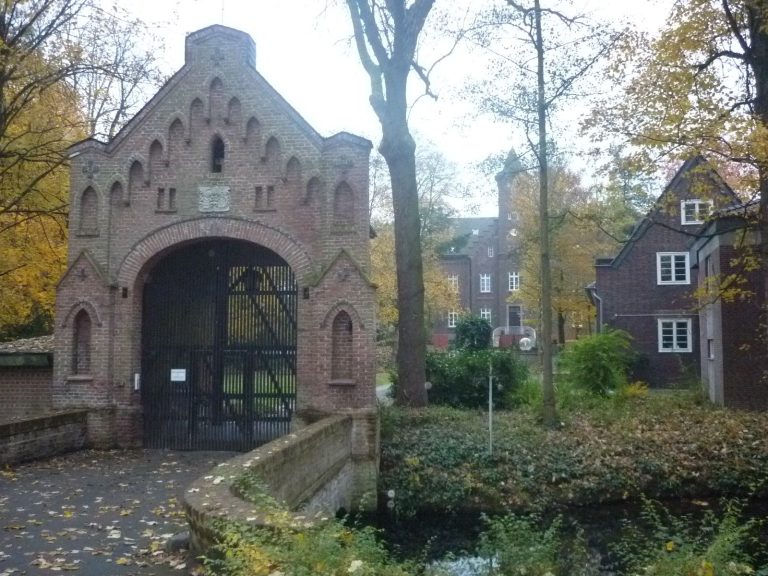
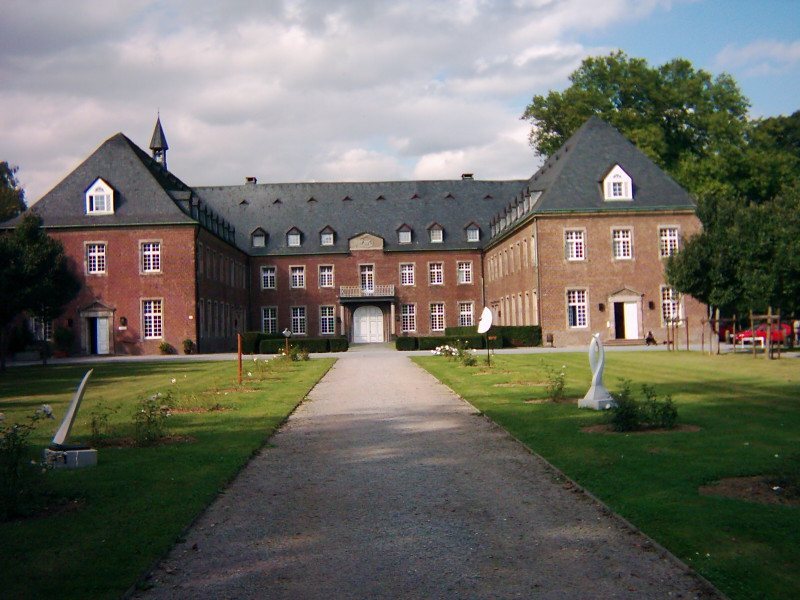
The complex brings together historic monastery buildings, later community and service spaces, and grounds that include a park meadow. Its recorded features range from the monastery’s three-wing arrangement to a barrel-vaulted room and an outdoor sundial.
Monastery buildings
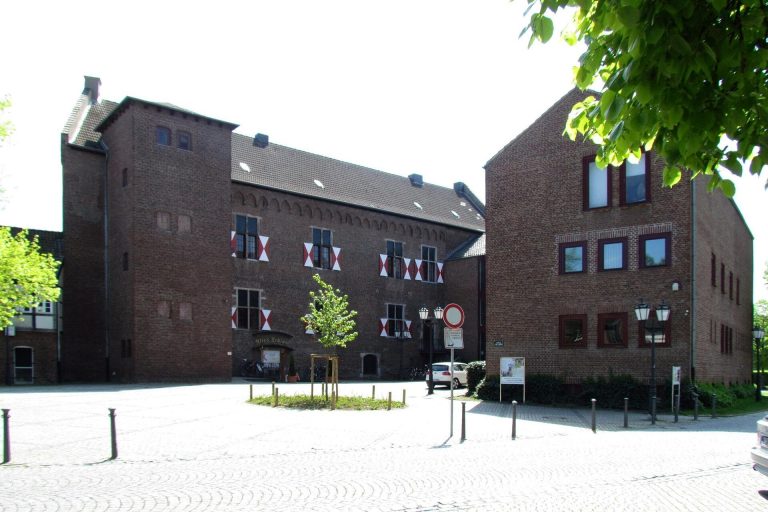
Maison converted the monastery’s three wings into a palace and had its chapel demolished in 1830. The guesthouse, new monastic enclosure, rapid-printing shop and attached bindery form part of the later complex. The enclosure is the area reserved for the community’s monastic life.
Dining and gathering spaces
The monastery restaurant includes a fireplace room, a room with a barrel-shaped vaulted ceiling and a beer garden. Banquets make use of St. Stephen’s Hall, the guest refectory, or communal dining hall, and the Room of St. Benedict.
Park sundial
An analemmatic sundial, which uses an observer’s position and shadow to show solar time, was installed on a meadow in the monastery park and inaugurated in 2019. The shadow indicates Langwaden’s true local solar time, the time standard used there until the end of the nineteenth century. An explanatory panel relates this time to Central European Time and Central European Summer Time. Two sighting stones mark the horizon directions where the sun rises and sets on a given date, and can be used even without sunlight. The dial also indicates sunrise and sunset times.