Kishitsu Shrine: A Shinto Shrine and Medieval Tomb Monument in Japan


Site at a Glance
- Rating
- 3.7
- Popularity
- Very Low
- Country
- Japan
- Primary era
- Medieval
- Eras represented
- Medieval, Modern
- Civilizations
- Ashikaga shogunate, Japanese
- Site type
- Religious
- Remains
- Sanctuary
On this page7 sections
History
Kishitsu Shrine is a Shinto shrine in Japan, located in Hino, Shiga Prefecture, and associated with Kishitsu Shushi, a seventh-century immigrant from Baekje, an ancient Korean kingdom that fell during that century. Shushi is said to have settled in Gamo District, in the historical province of Omi, which corresponds roughly to present-day Shiga Prefecture.
From Buddhist hall to shrine
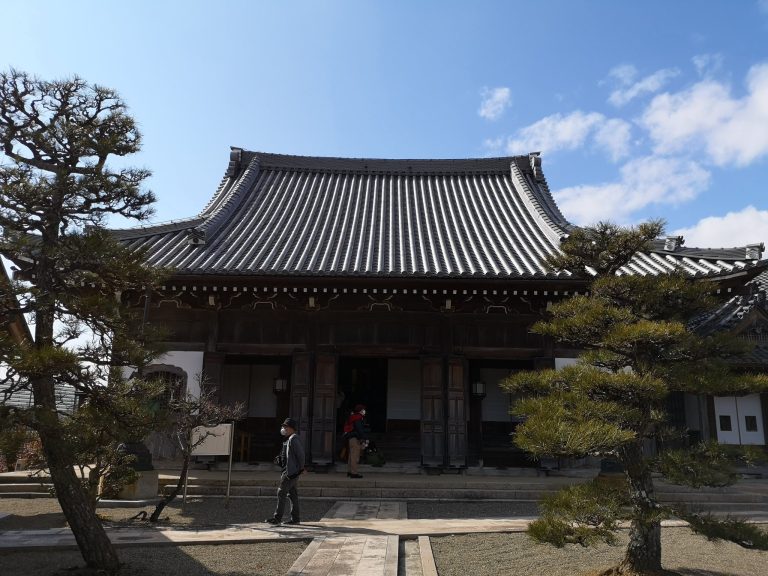
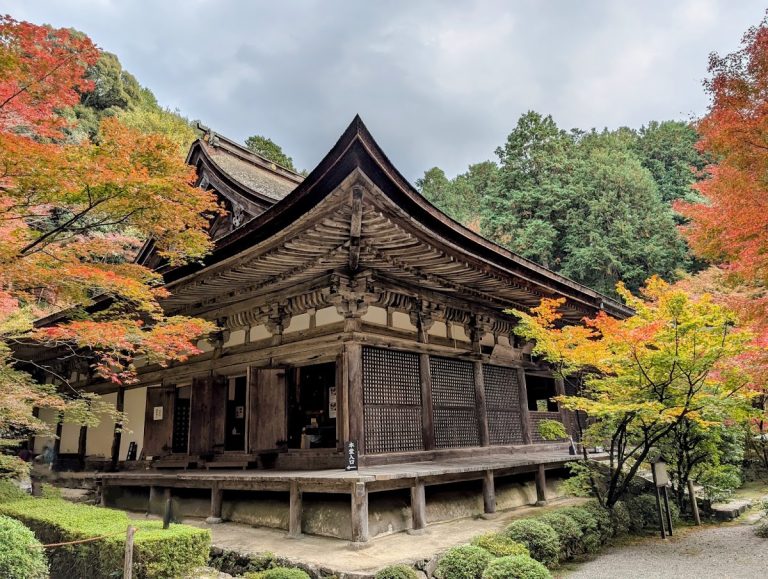
The site began as a Buddhist Fudo hall, a place of worship dedicated to Fudo Myoo, a deity associated with protection and the removal of obstacles. A ridgepole tablet dated 1429 records the construction of a hall there. A map first produced in 1501, however, identified the location as the tomb of another person. This indicates that the later connection with Kishitsu Shushi was not an uninterrupted tradition.
In 1805, Nishinari Atsutada, a physician serving the Ninshoji domain, examined an octagonal stone pillar beside the hall. The following year he identified it as a tomb monument for Kishitsu Shushi and made that interpretation public. The claim drew visitors for a time, although elderly residents reportedly had no knowledge of a tomb at the site.
Meiji reorganization
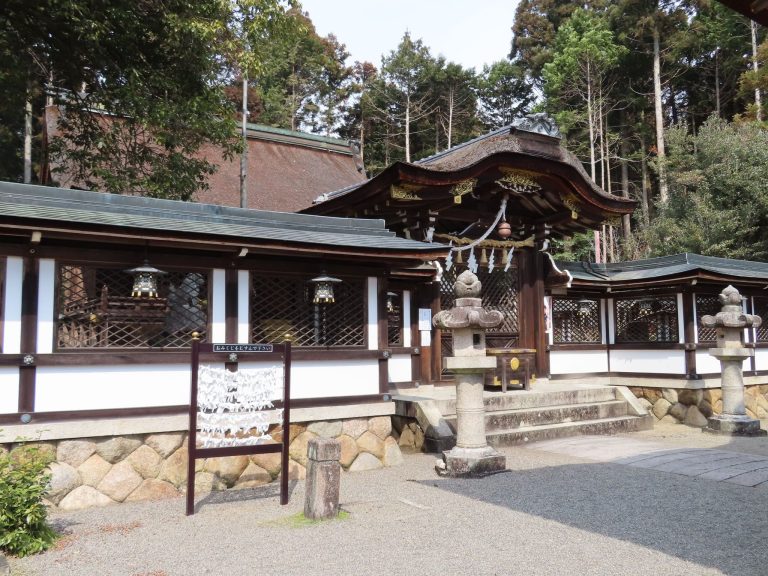
During the Meiji period, the government required Buddhist institutions and Shinto shrines to be reorganized separately. The Fudo hall was consequently renamed Nishinomiya Shrine, and its enshrined deity was changed to Kagutsuchi, a Japanese fire deity. Kishitsu Shushi was later added to the shrine’s group of enshrined deities.
In 1903, Endo Muneyoshi, head of Gamo District, published a study of the monument after the chief priest of Taga Shrine in Shiga urged him to locate and publicize the supposed ancient tomb. The shrine adopted the name Kishitsu Shrine in 1955, taking its name from the monument’s attribution.
Questions surrounding the attribution
The monument’s identification as Kishitsu Shushi’s seventh-century tomb remains doubtful. Its inscription differs in wording from known ancient funerary inscriptions, while the expression “collateral grandchild” has no known ancient parallel. Its date formula also resembles forms that emerged from the tenth century and became common during the Kamakura period. The monument is therefore more likely to belong to the late Heian through late Kamakura periods, or perhaps to the medieval Muromachi period, than to Shushi’s lifetime.
Further uncertainty comes from a medieval or later record associated with Daianji, a historic Buddhist temple, which places a tomb of Kishitsu Shushi at present-day Oshinōhara in Yasu. In 1990, Hino and Eunsan Township in Buyeo County, South Korea, established a sister-city relationship because Shushi’s father, Kishitsu Fukushin, is venerated at Eunsan Byeolsindang. The connection has supported continuing exchanges between the communities, and information at the shrine is presented in Japanese and Korean.
Remains
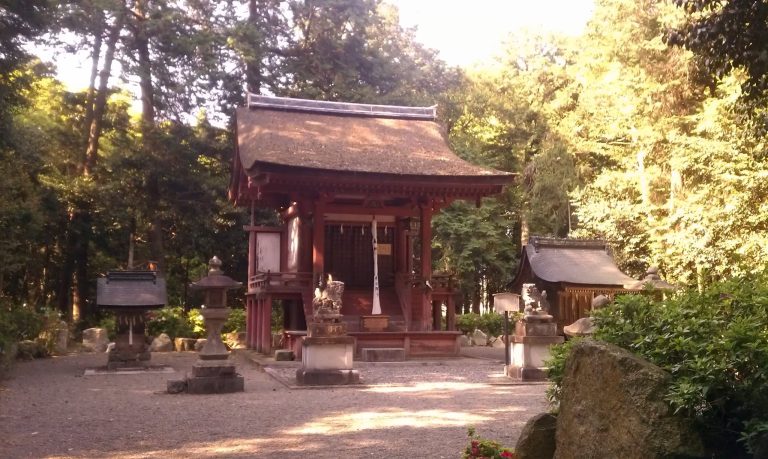
The surviving site combines a principal sanctuary containing a stone shrine with the octagonal stone monument that stands at the center of its historical interpretation. The monument was originally beside the Buddhist Fudo hall and was later protected in a stone container constructed behind the shrine.
Principal sanctuary
The principal sanctuary contains a stone shrine dedicated to Kishitsu Shushi. This physical feature preserves the shrine’s present association with the immigrant figure whose supposed tomb gave the institution its modern name.
Octagonal stone monument
The monument is an octagonal pillar made from locally quarried black biotite granite. It once stood beside the Fudo hall at a feature known as Mermaid Mound, before being interpreted as Kishitsu Shushi’s tomb monument. In 1908, after having been left in the open, it was moved into a stone container built behind the shrine.
Its octagonal shape and the form of its inscribed date formula are important physical grounds for placing it in the medieval period rather than in the seventh century. The monument therefore remains both a visible focus of the shrine and the principal object through which the uncertain tomb attribution is understood.