Dolgelin Church Ruin: A Medieval Fieldstone Church in Germany
Site at a Glance
- Popularity
- Very Low
- Country
- Germany
- Primary era
- Medieval
- Eras represented
- Medieval, Early Modern, Modern
- Civilizations
- German, Holy Roman Empire, Margraviate of Brandenburg
- Site type
- Religious
- Remains
- Church
On this page10 sections
History
Medieval church
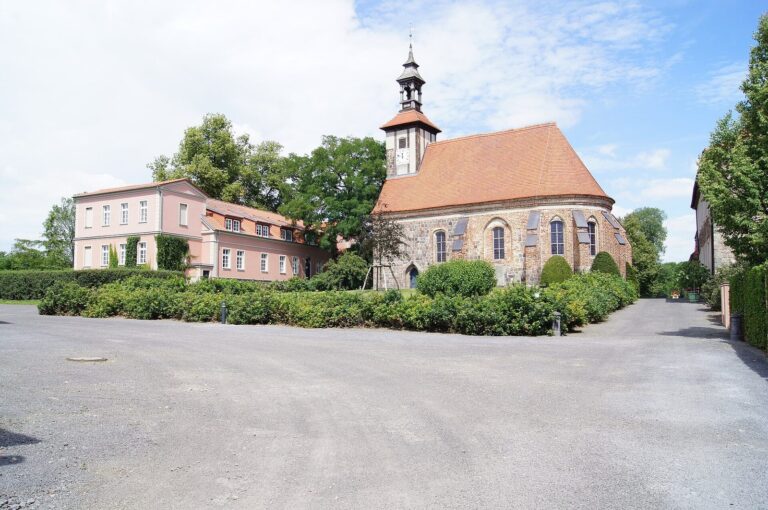
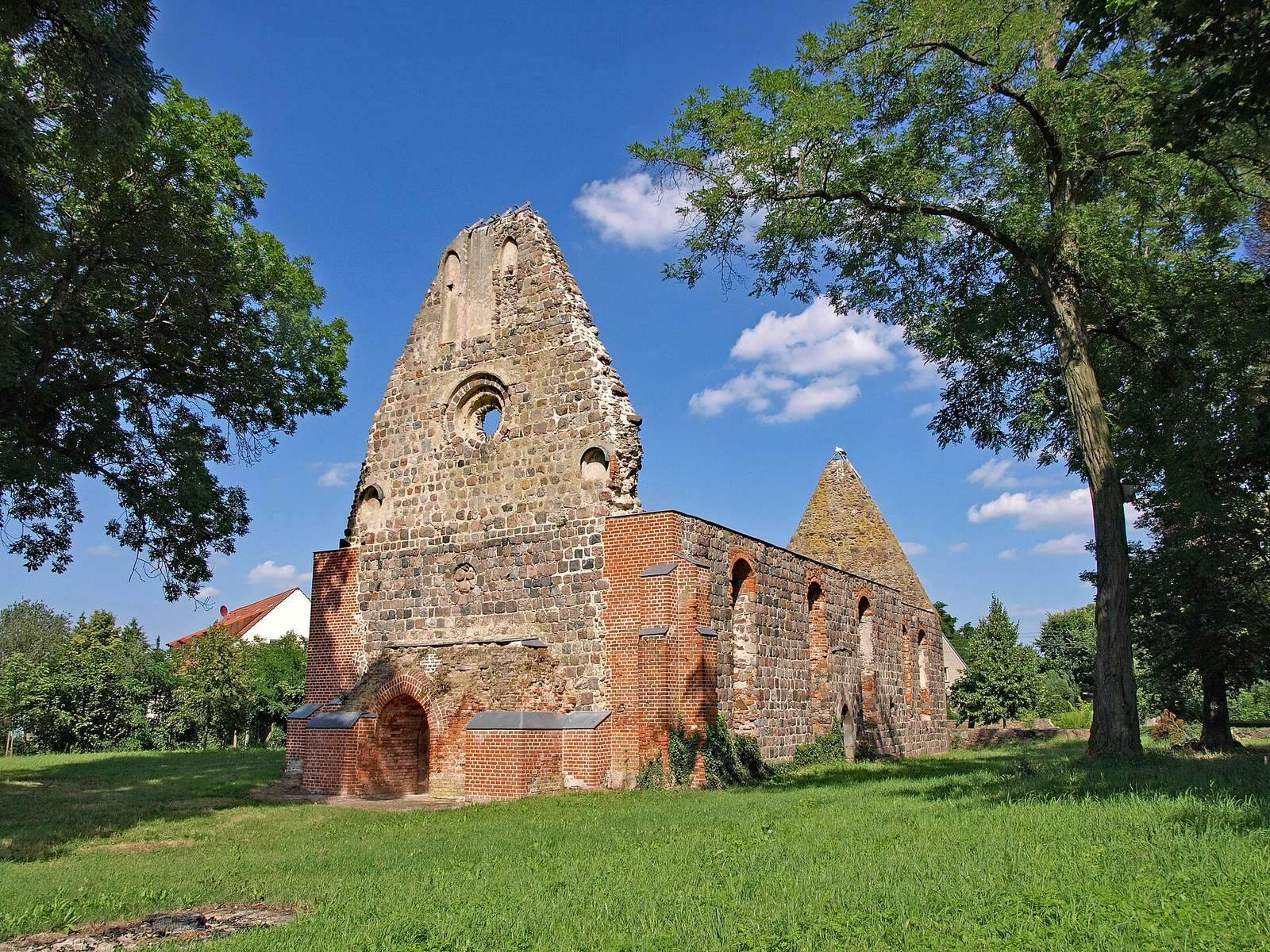
The Dolgelin Church Ruin is a medieval fieldstone church in Dolgelin, Germany, built around 1300. Dolgelin itself first appears in a 1321 deed concerning the sale of a mill. A beam from the church was dated to 1304 by examining its tree rings. The church probably arose under the influence of the Knights Templar and, later, the Knights Hospitaller, medieval religious military orders.
Additions and rebuilding
A sacristy and a church tower were added in the 16th century. A bronze bell donated by the von Schlieben family had been brought to the church in 1500. After one corner of the tower collapsed in 1867, the congregation built a replacement tower in 1870 in Neo-Gothic forms.
War damage and decline
The church was badly damaged on 16 and 17 April 1945, though its tower and roof initially survived. Services continued until 1946. That year, the mayor allowed roofing material to be taken for repairs to homes, and its removal led to the roof structure’s collapse. The church registers burned, and the interior suffered severe losses. In 1957, the congregation acquired two cast-iron bells and placed them in a frame at the rectory. The church tower was blown up on 25 March 1965, but its rubble remained until 1988.
Excavation and conservation
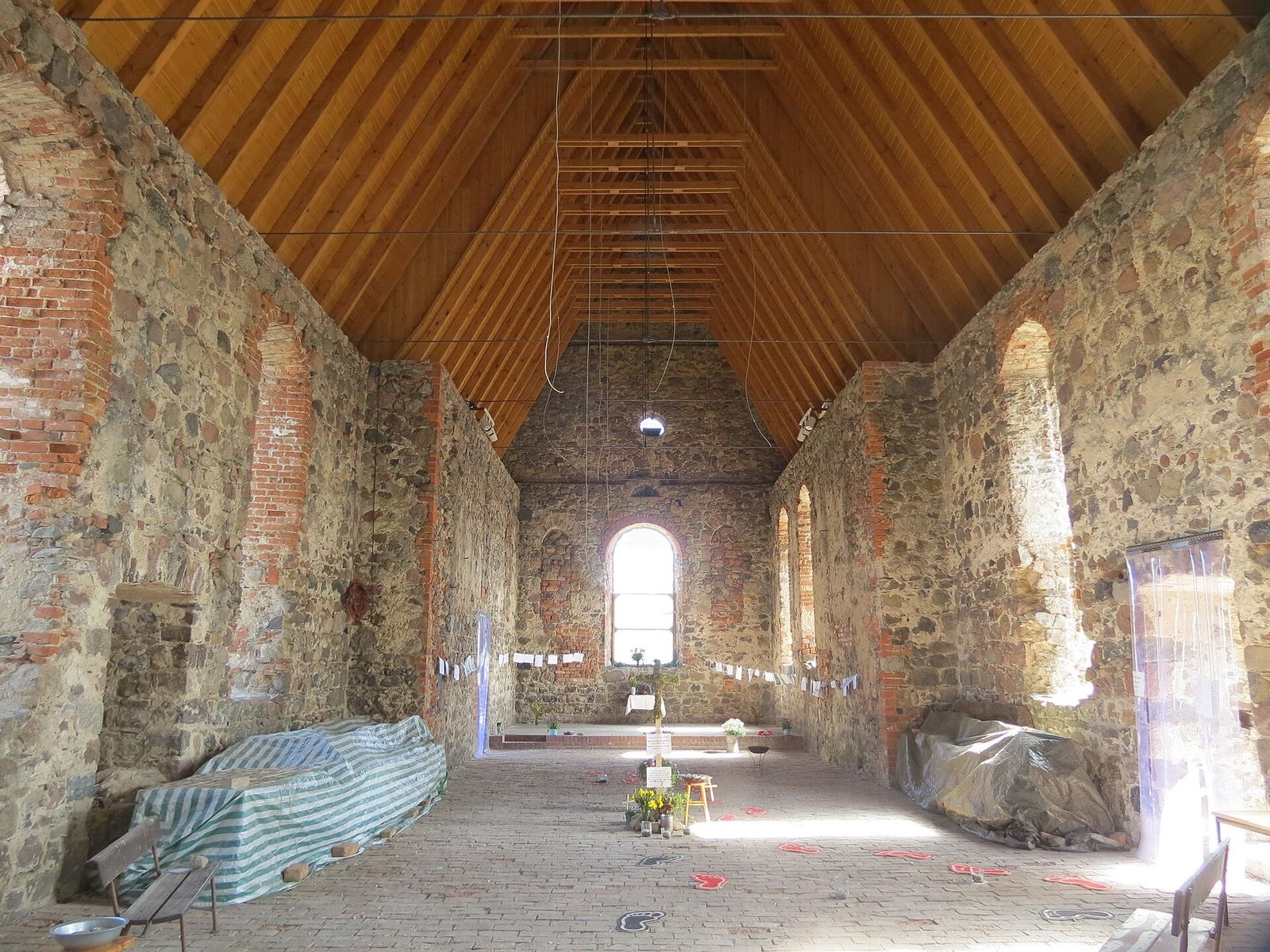
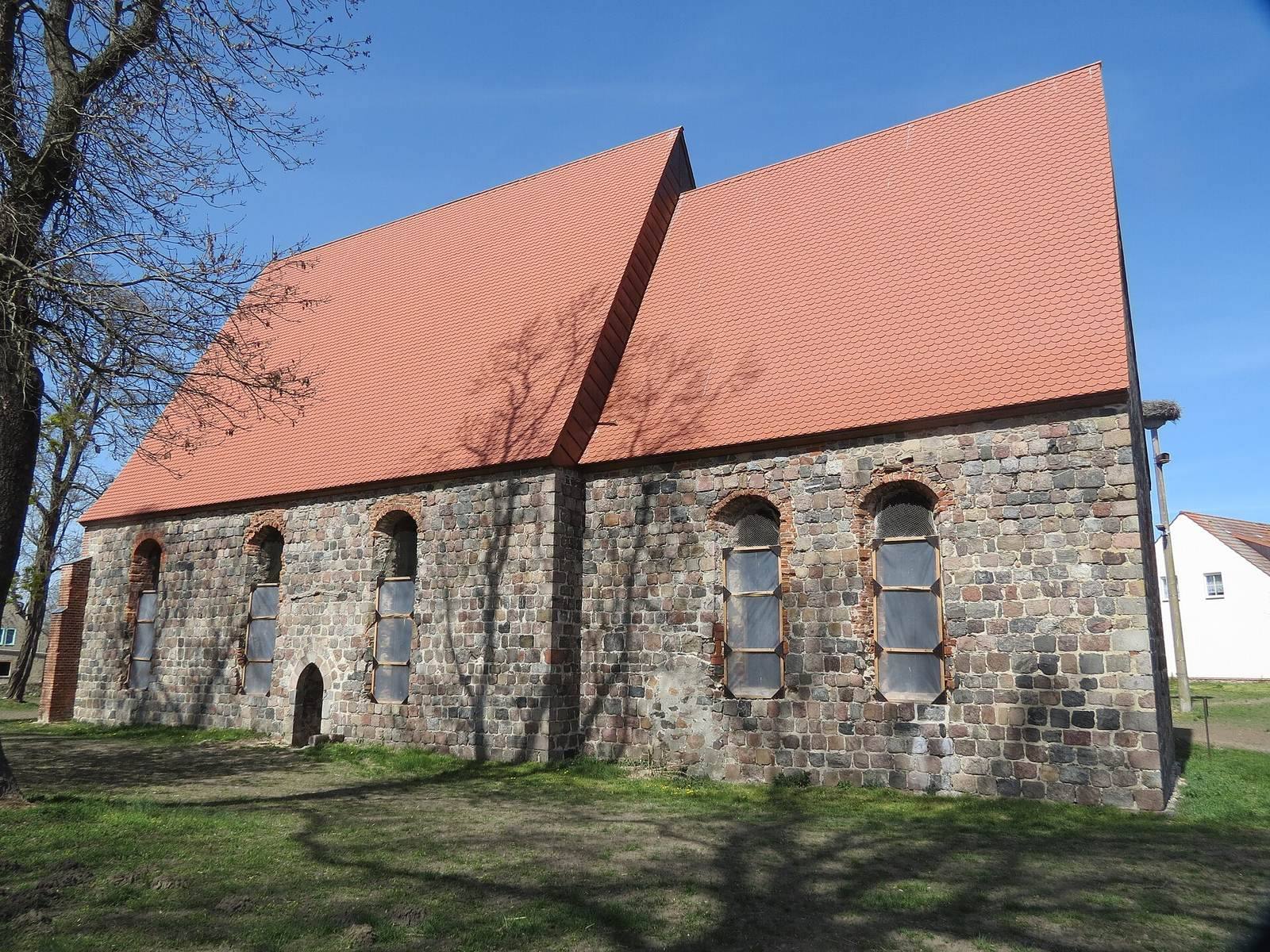
Excavations in 2000 revealed evidence of a small predecessor building. After German reunification, a support association formed in 2002 to prevent further deterioration, and clearance and restoration work began. Repairs included repointing the walls and covering their upper edges by 2013. A topping-out ceremony took place on 1 June 2018, and a new roof was completed by 25 May 2019. The church is part of the Oderland-Spree church district, an administrative division of the Evangelical Church of Berlin-Brandenburg-Silesian Upper Lusatia. Its building shell is also used for events.
Remains
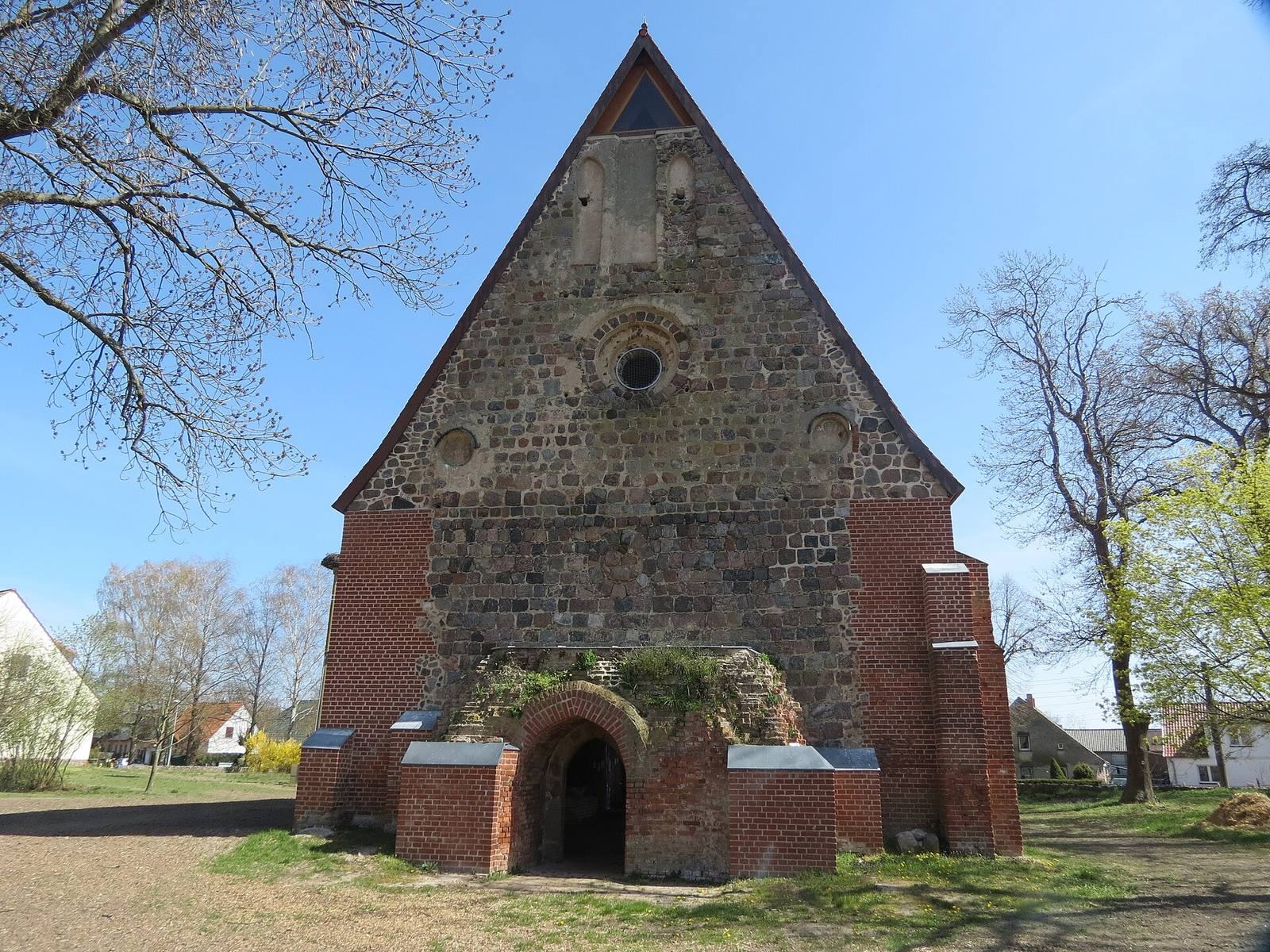
The church stands on an unenclosed plot between Alte Poststraße and Maxim-Gorki-Straße. Its plan has a single main hall for the congregation and a narrower, rectangular area around the altar. Carefully dressed fieldstones, laid in regular courses, form most of the walls; reddish brick was used extensively in repairs.
Sacristy and tower
The 16th-century sacristy is represented by its foundations. The replacement tower was built of reddish brick in Neo-Gothic forms. Following its destruction, the former tower’s piers were rebuilt to a common height. The gable also contains a round window with a surround formed in two steps.
Gable drawings and baptismal font
Two circular panels beside the gable window are coated with lime plaster. Incised drawings in the plaster date to the 13th century. The left panel depicts Adalbert of Prague, a 10th-century bishop and missionary later revered as a saint. The crowned figure holding a book and palm branch on the right may represent Ecclesia and Synagoga, personifications of the Christian Church and Judaism. A baptismal font survived the church’s destruction.
Bells
The two cast-iron bells acquired by the congregation hang in a bell frame at the rectory.
Repaired fabric
The church walls have been repointed and their upper edges covered. A rebuilt entrance arch and a new roof form part of the restored structure.