Kingston Russell Stone Circle: A Prehistoric Monument in Dorset
Site at a Glance
- Popularity
- Medium
- Country
- United Kingdom
- Primary era
- Bronze Age
- Eras represented
- Bronze Age
- Civilizations
- Unclassified
- Site type
- Civic
- Remains
- Megalithic Monument
On this page5 sections
History
Bronze Age origins and interpretation
Kingston Russell Stone Circle is a prehistoric stone circle near Little Bredy in Dorset, United Kingdom. It was probably erected during the Bronze Age, a prehistoric period associated with the use of bronze. The circle belongs to a tradition found across parts of Britain, Ireland and Brittany from about 3300 to 900 BCE, with most construction generally dated to around 3000–1300 BCE.
Stuart and Cecily Piggott regarded Dorset’s stone circles as probably Bronze Age, while allowing that their construction and use might have continued from the Early Bronze Age into the Middle or Late Bronze Age. They also considered that the circles could have been built at different times. Aubrey Burl supported a Bronze Age date, noting that their distribution did not correspond with known Neolithic sites. The purpose of Kingston Russell remains uncertain. It may have served as a religious place, and its builders may have associated the stones with supernatural powers.
Antiquarian accounts and protection
John Hutchins described the circle in his history of Dorset, published after his death in 1774. Influenced by William Stukeley’s ideas, Hutchins called it a “Druidical circle” and attributed it to Iron Age Druids, religious specialists associated with ancient Celtic societies. This was an antiquarian interpretation rather than an established date or account of its origins.
The circle has not been excavated or investigated extensively. It became a scheduled monument in 1916 and is protected under the Ancient Monuments and Archaeological Areas Act 1979. It is in the guardianship of English Heritage.
Remains
Setting and stone arrangement
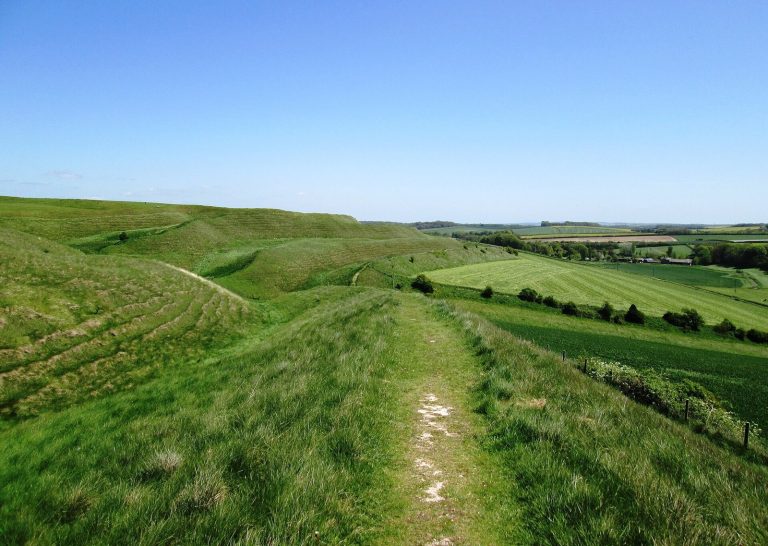
The circle stands on open downland on a chalk ridge west of Portesham, between Abbotsbury and Little Bredy. At 189 metres above sea level, the ridge overlooks Abbotsbury and the sea. The site is also called Gorwell Circle, after Gorwell Farm to its south. Kingston Russell house lies about 1.6 kilometres to the north. The ruined burial chamber known as The Grey Mare and her Colts is a short distance southeast, while the Hellstone and the burial mounds of Black Down lie farther east.
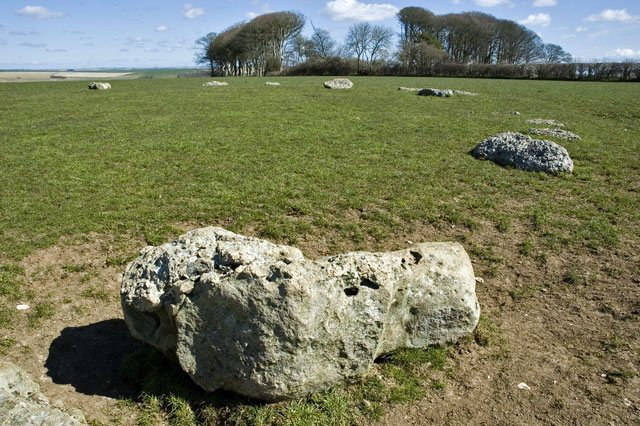
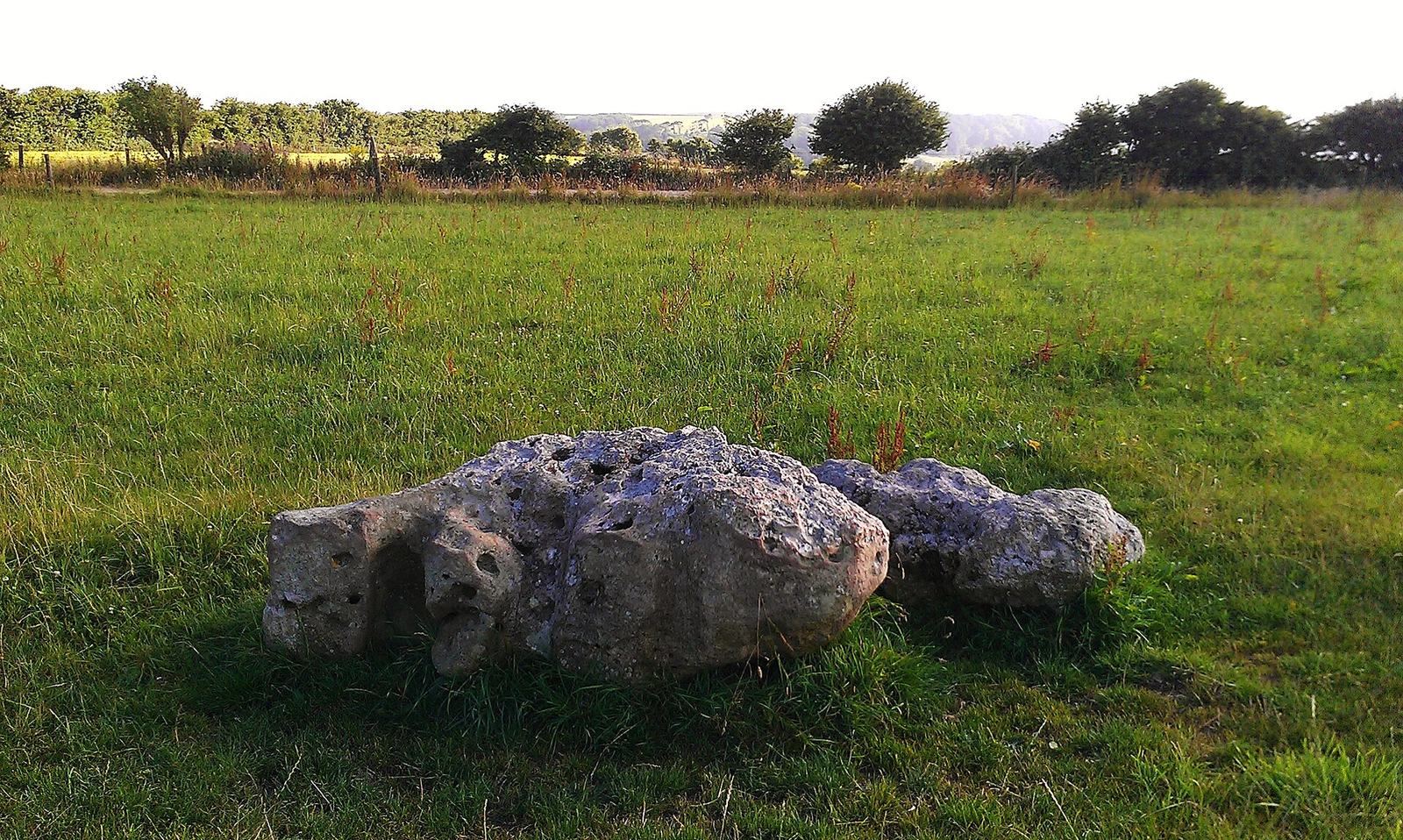
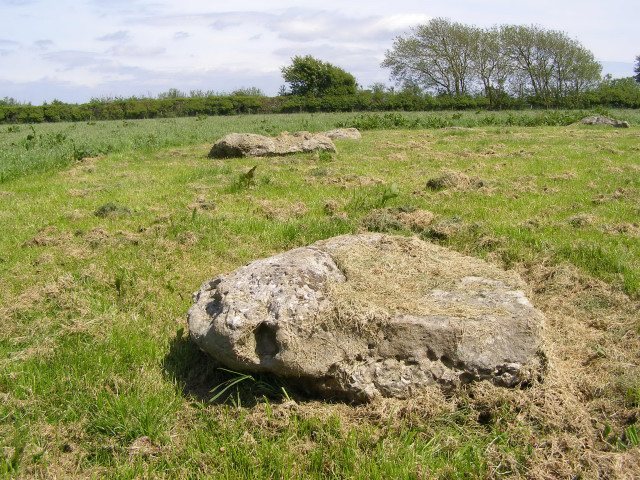
Eighteen stones form an oval about 24 by 27 metres across. The circle is the largest surviving stone circle in Dorset. Its stones are made of sarsen, a hard, silicified sandstone, or conglomerate, a rock of fragments cemented together. Individual stones range from about 1 by 0.3 metres to 2 by 0.5 metres. The longest stand on the north side. Some are broken, making it difficult to tell whether fragments came from a stone’s base or upper portion.
A record from 1815 described one stone on the southern side as upright, but by 1939 all the stones were lying on the ground. The Piggotts considered it possible that the circle still has its original number of stones, although some may have shifted from their first positions. They also suggested that the stones might once have been arranged by height, with the tallest to the north. In 1980, one stone was considered a possible recent addition. Long grass can obscure the stones.