Karakuş: A Commagene Royal Funerary Monument
Site at a Glance
- Popularity
- High
- Country
- Turkey
- Primary era
- Classical
- Eras represented
- Iron Age, Classical
- Civilizations
- Unclassified
- Site type
- Religious
- Remains
- Tomb
On this page13 sections
History
Karakuş is a royal funerary monument of Commagene, a kingdom in southeastern Anatolia, on Gösterge Hill near Çukurtaş, about 12 kilometres north of Kâhta in Türkiye. Mithridates II commissioned it between 30 and 20 BCE for his mother, Queen Isias. The monument was a hierothesion, a royal funerary foundation associated with a ruling family, and was deliberately intended as a burial place for royal women, unlike other Commagene hierothesia.
Royal foundation and dynastic purpose
The women associated with the monument include Isias, Mithridates II’s sisters Antiochis and Laodice, and Antiochis’s daughter Aka I. Isias was the wife of Antiochos I Theos, king of Commagene, and the daughter of Ariobarzanes I, king of Cappadocia. The monument also served the dynasty’s public claims to inherited authority and its royal cult, meaning religious practices that honoured the ruling family.
Its imagery and commemorative purpose connected Commagene’s rulers with local traditions, Greek cultural influence and Achaemenid prestige. The Achaemenids were the ancient Persian imperial dynasty. These associations helped frame the royal family’s authority at a time of expanding Roman power.
A possible earlier ritual role has also been proposed. In 1967, Friedrich Karl Dörner suggested that the hill may have had ritual importance as far back as the Assyrian period, the era of Assyrian power in Mesopotamia and nearby regions. Interpretations of the Greek inscriptions’ wording have linked them to divination rites, which seek meaning in signs, during the Hellenistic period, the era of Greek cultural influence after Alexander the Great’s conquests. Along with the site’s alignment, these readings have prompted the possibility that the monument served for prophetic divination and that the royal women were viewed as supernatural protectors. These remain interpretations, not established functions.
Roman annexation and reuse
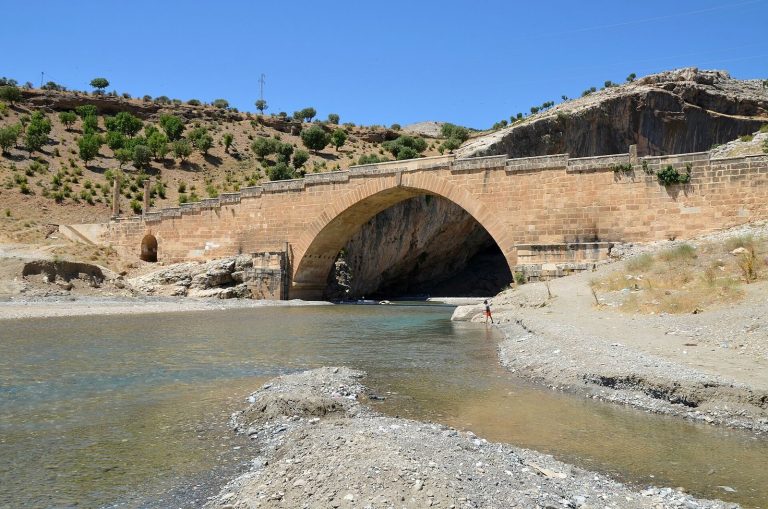
Rome annexed the Kingdom of Commagene in 72 CE under Emperor Vespasian. The tomb chamber was subsequently looted, and stones from the monument’s walls and columns were taken for the construction of Cendere Bridge.
Investigation and modern damage
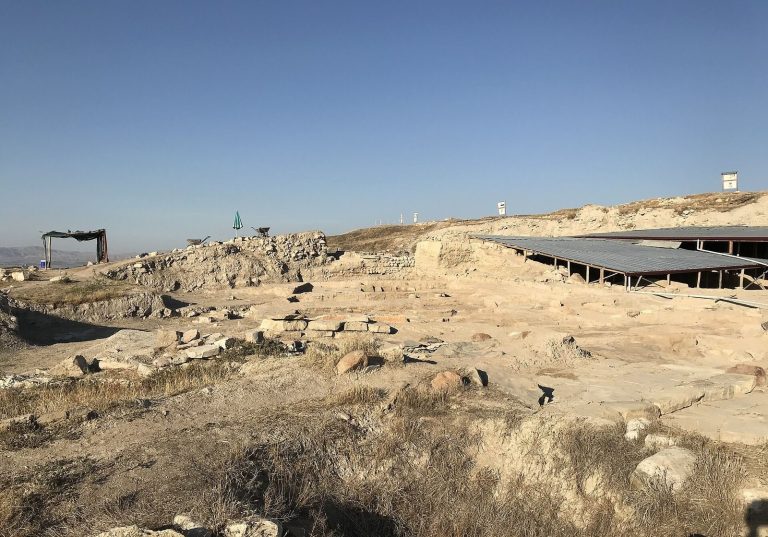
Otto Puchstein and Karl Sester made preliminary examinations of the mound in 1882. In 1883, Ottoman painter and archaeologist Osman Hamdi Bey and sculptor Osgan Efendi prepared a measured survey and photographs, and published a study in French. On 5 June that year, Puchstein and Carl Humann took further measurements and produced sketches and photographs. Puchstein recognized the connection to the royal family but wrongly attributed the monument to Mithridates I Callinicus.
Dörner found another inscription on a column’s upper stone during a visit in 1938. In August 1967, he led a more detailed investigation and used a drilling machine to locate the chamber, reaching it on his seventeenth attempt, about 20 metres from his starting point. He copied the inscription. Jörg Wagner deciphered it in 1979, confirming that Mithridates II commissioned the monument for Isias. Dörner, of the University of Münster, carried out the principal archaeological investigations at the site.
The 2023 Turkey–Syria earthquake severely damaged Karakuş and brought down a column bearing reliefs of Mithridates II and Laodice.
Remains
Mound and layout
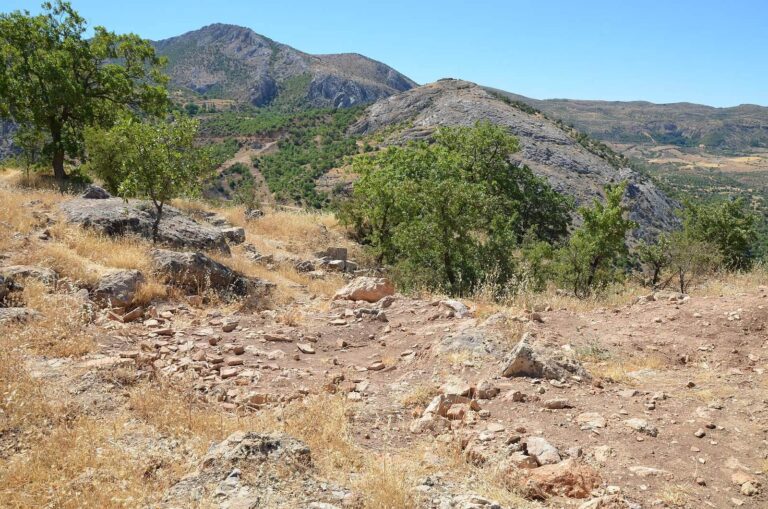
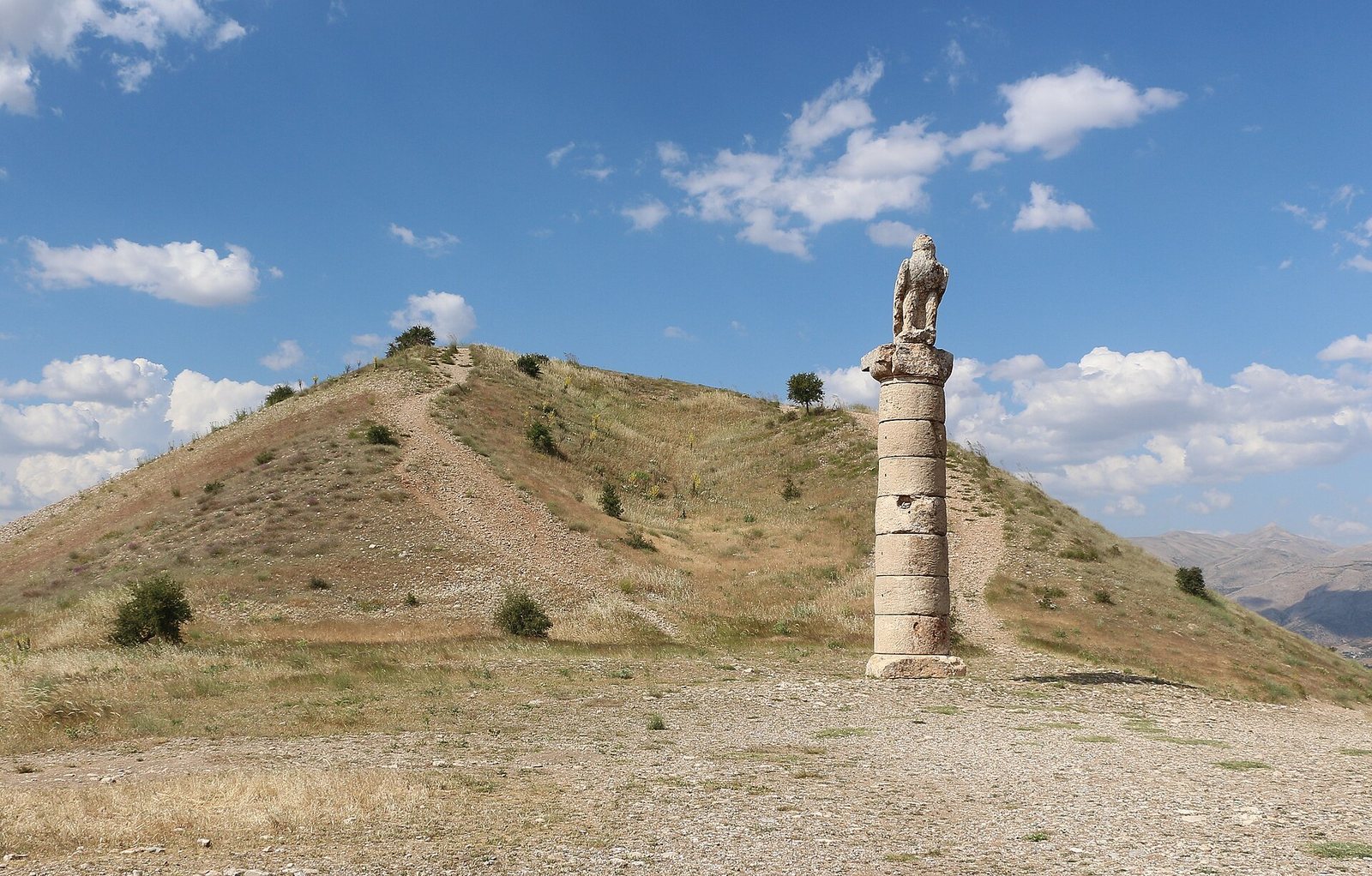
The burial mound stands about 902 metres above sea level in open, hilly terrain, overlooking the surrounding plain. In suitable weather, Cendere Bridge, Yeni Kale, Arsemia and Nemrut Dağı can be seen from the site. The mound is approximately 110 metres across and 30 metres high. Walls enclosed it, and nine columns originally stood around it in three groups of three. Although Karakuş is associated with the Nemrut Dağı region, it lies outside the Nemrut archaeological zone.
Columns and sculptures
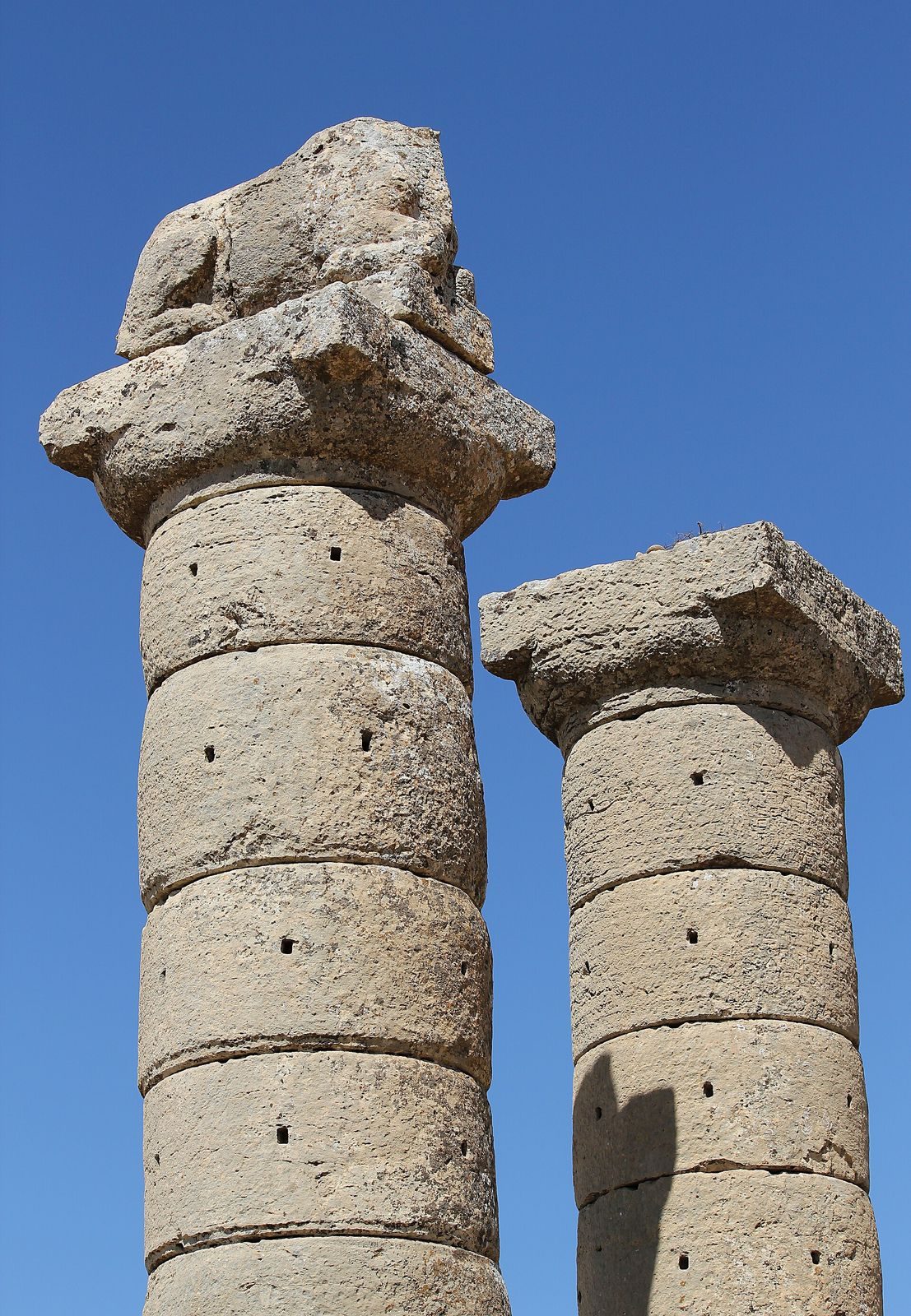
The columns follow the Doric order, a comparatively plain form of ancient Greek column design, and stand about 7 to 9 metres high. Most were assembled from six stone sections. Four columns remained before the 2023 earthquake.
Southern column and eagle
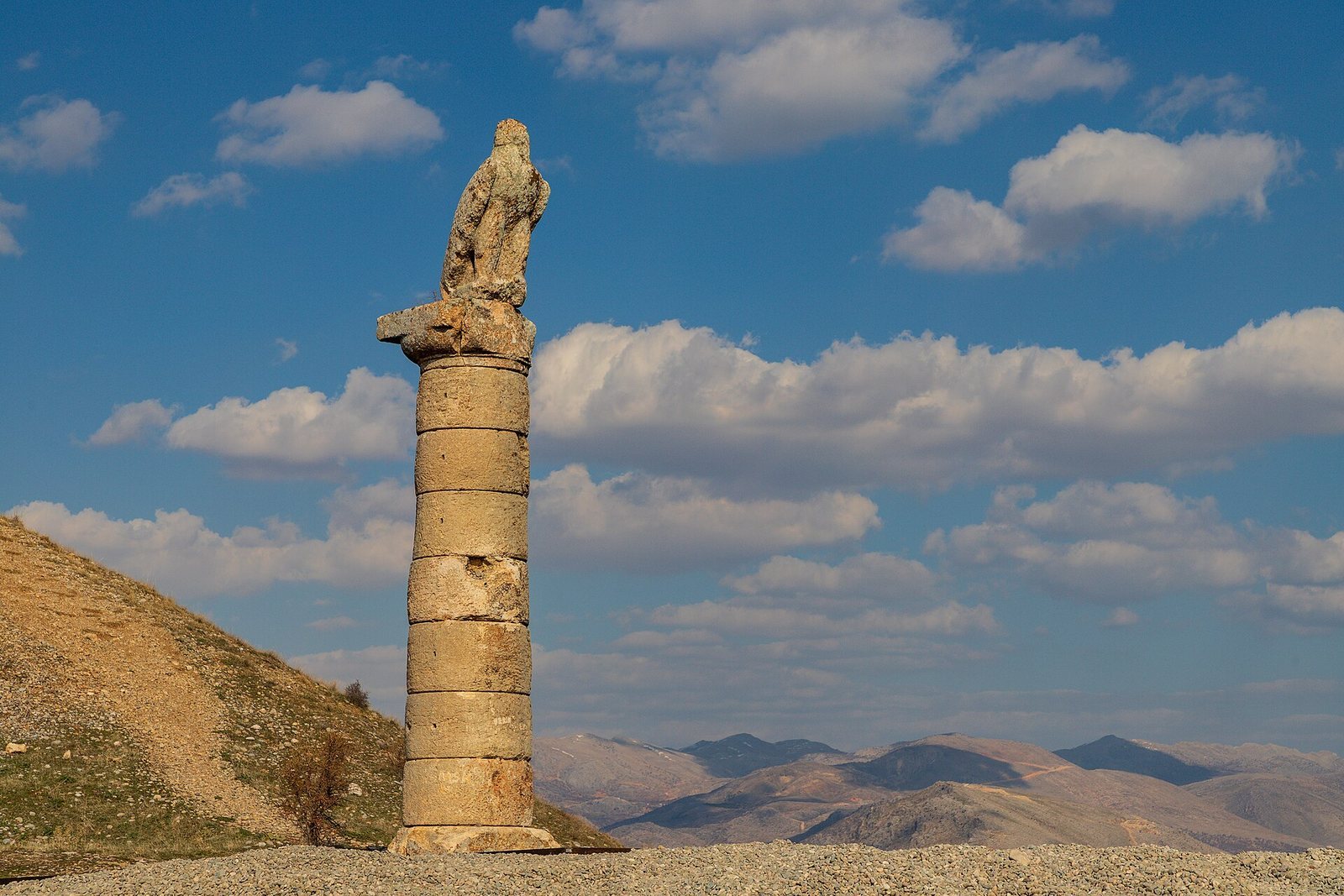
The southern column was erected for Antiochis and her daughter Aka I. It consists of seven stone blocks and is topped by an eagle statue about 2.5 metres high. The name Karakuş means black bird and refers to this eagle figure; the hill’s local name also became the monument’s scholarly name. A bull and a lion are among the other animal figures associated with the columns.
Northwestern relief and inscriptions
The northwestern column bears a relief of Mithridates II beside his sister Laodice. Its inscription identifies Mithridates as the son of King Antiochos and Queen Isias, and commemorates Laodice, the wife of Orodes, a Parthian ruler styled King of Kings. A separate inscription on the upper stone of a northwestern column names Mithridates as the son of Antiochos and Isias and confirms the commission for Isias.
Northeastern sculptures and inscriptions
A northeastern column carries a headless bull and an inscription stating that Mithridates commissioned the hierothesion for Isias, Antiochis and Aka I. A lion found in the same area is thought to have stood on another column in the original arrangement. Greek inscriptions on the outer faces of two stone sections of the central northeastern column identify the monument as Isias’s hierothesion and honour Antiochis and Aka I. The wording of some passages remains uncertain.
Burial chamber
The chamber was constructed from cut limestone containing dolomite. Dörner located its walls during his 1967 investigation.
Earlier material
Ceramic material from the site and early motifs on some stone bases have been tentatively dated to the ninth or eighth centuries BCE. These finds are distinct from the monument’s commissioned date in the first century BCE.
Alignment at sunrise
The columns are positioned so that at sunrise on 21 June, the summer solstice, the eagle statue’s shadow falls at the centre of the mound. This arrangement has been interpreted as possible astronomical symbolism.