Jordan Hill Roman Temple: A Romano-British Shrine in Dorset

Site at a Glance
- Rating
- 4.1
- Popularity
- Low
- Country
- United Kingdom
- Primary era
- Classical
- External website
- Open
- Eras represented
- Classical
- Civilizations
- Roman
- Site type
- Religious
- Remains
- Temple
On this page8 sections
History
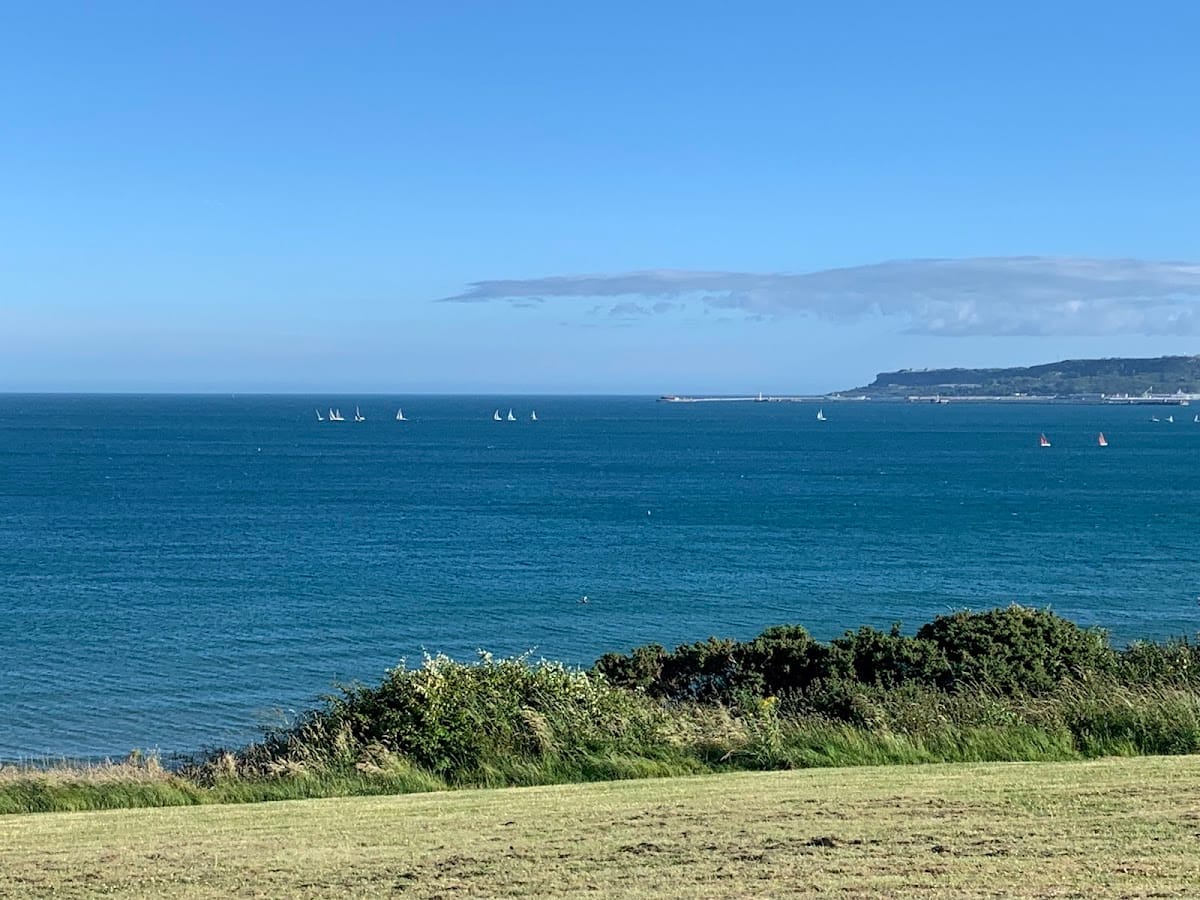
Jordan Hill Roman Temple is a Romano-British temple in the United Kingdom, above Bowleaze Cove near Weymouth on the South Dorset Downs. Its occupation belongs to the later period of Roman rule in Britain, when regional economic and social structures were beginning to fragment. The temple reflects the adaptation of Roman religious and social practices within the culture of the native British population.
Construction and Religious Use
The date of construction remains uncertain. One interpretation places it approximately in AD 69–79, while another considers a fourth-century origin more likely. Archaeological activity at the site continued from approximately AD 69–79 until the late fourth century.
The temple’s ritual use has been interpreted as evidence for the continuation of older Celtic religious traditions under Roman rule, including after Christianity became the official religion of the Roman Empire. It may have served both British and Roman worshippers. Professor William Buckland attributed the shrine to Asclepius, the Greco-Roman god associated with healing, but this dedication remains an interpretation rather than a confirmed identification.
Excavation and Protection
James Medhurst, an amateur archaeologist, investigated the site between 1843 and 1846. C. D. Drew and C. S. Prideaux excavated it again in 1931–32, locating the bases of four portico columns and contributing to the proposed chronology. In 1933 the site entered state care, first under the Ministry of Works and later under the guardianship of English Heritage. The temple and associated remains became a Scheduled Monument in 1981, a form of statutory protection for nationally important archaeological sites and historic monuments in England.
The Wider Romano-British Landscape
Jordan Hill formed part of a wider Romano-British landscape. Nearby features included a villa at Preston, a small Roman port at Radipole to the west, and a similar temple within the hillfort at Maiden Castle. A late-fourth-century role as a signal station or beacon has also been proposed, although the interpretation of the site as a temple remains the prevailing one.
Remains
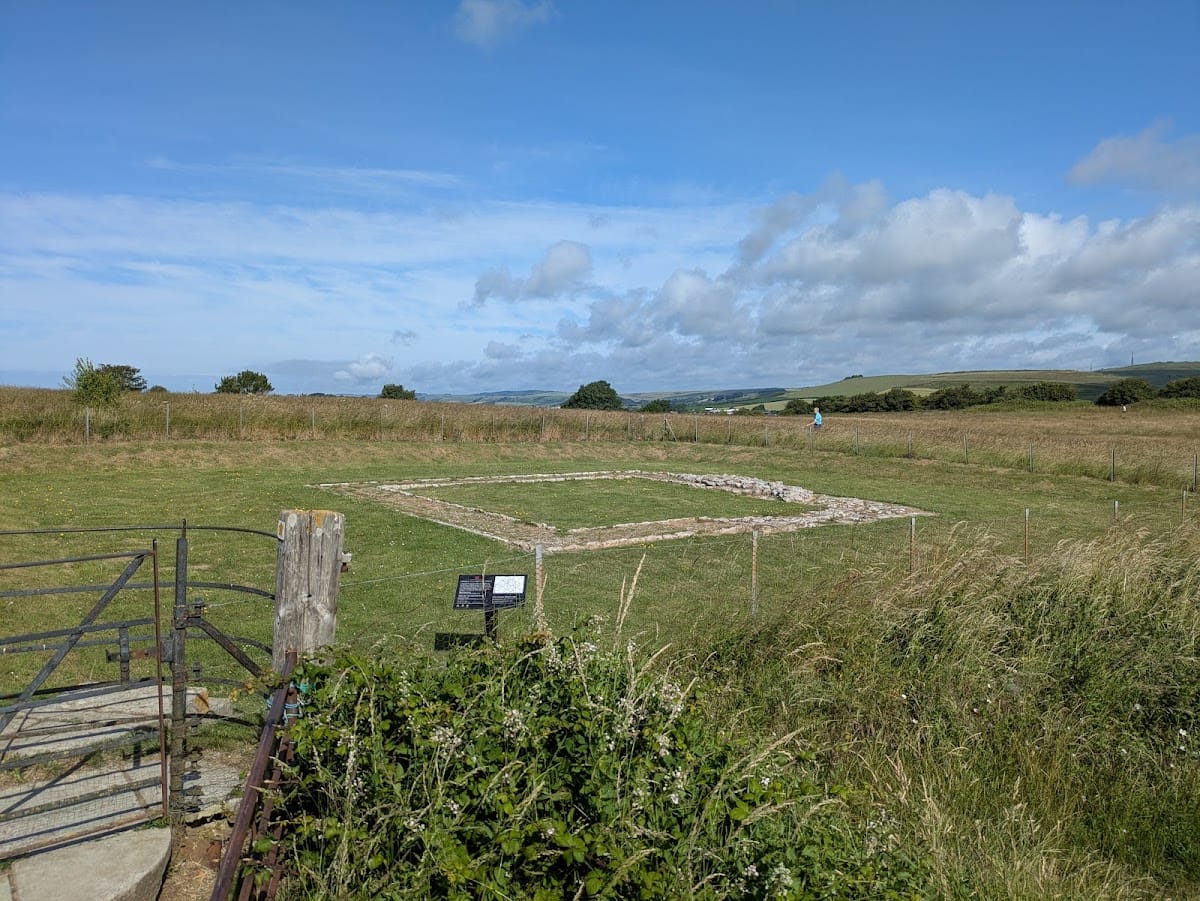
The surviving structure is a small square Romano-Celtic temple within a large walled sacred enclosure, or precinct, measuring approximately 30 metres square. Its design combined a central enclosed sanctuary with a surrounding roofed colonnade, reflecting both classical and native British religious traditions.
Temple and Enclosure
A raised central cella, the principal enclosed sanctuary, stood within a low portico, a roofed colonnade that apparently surrounded it on all four sides. The cella measured approximately 6.8 square metres. The twentieth-century excavations uncovered four portico-column bases. The capital and base of a fifth column were found loose beside the cella’s north wall and are preserved in Dorchester Museum. A southern entrance has been proposed, although its position is not certain.
Ritual Pit and Offerings
Beneath the south-east corner of the sanctuary wall was a carefully lined, well-like pit approximately 4 metres deep. Sixteen alternating layers of ash and charcoal were separated by roofing slabs. A bird bone and a small coin lay between successive layers, while a stone cist at the bottom contained two urns, a sword, and a spearhead. One of the coins dates to the reign of Theodosius I, who ruled from AD 379 to 395.
The precinct also contained numerous animal bones, including bull horns, together with ceramics and fourth-century coins. These deposits have been interpreted as remains of animal sacrifice and other ritual offerings. A hoard of several hundred Roman silver coins was found near the temple during ploughing in 1812, and more than 4,000 Roman bronze coins were discovered nearby in 1928. The bronze coins probably represented offerings accumulated at the shrine over many years. Some of the silver coins later entered the county museum collections in Dorchester, while the bronze hoard was entrusted to museums in Dorchester, Portland, and Yeovil.
Northern Cemetery
A large cemetery lay north of the temple. More than 80 individuals were represented by cremations and inhumations, with some burials placed in wooden coffins and others in stone cists. Grave goods included pots, combs, jewellery, beads, bracelets, arrowheads, a sword, a spear, and a sling. Some finds are preserved in Dorchester Museum, while material from the 1930s excavations is also held by the British Museum.