Kat Hing Wai: A Walled Village in Hong Kong, China
Site at a Glance
- Country
- China
- Primary era
- Early Modern
- Eras represented
- Early Modern, Modern
- Civilizations
- British, Qing
- Site type
- Military
- Remains
- Fortified Town
On this page7 sections
History
Kat Hing Wai is a Punti walled village in Kam Tin, Hong Kong, China, founded by a Tang clan member and two companions during the Ming Chenghua reign (1465–1487). The Punti were long-established communities of the Pearl River Delta and the first people to settle in Hong Kong. The Tang clan was one of the New Territories’ Five Great Clans, historically prominent lineages of the region.
Tang settlement and fortification
An ancestor of the Tang clan had settled in the area during the Northern Song period. Around 400 Tang descendants live in the village, where residents speak Weitou, a local variety of Yue, the Chinese language group that includes Cantonese.
Kat Hing Wai began without enclosing walls. Tang Chue-yin and Tang Chik-kin built them in the early Kangxi reign (1661–1722), when the settlement’s coastal position exposed it to pirates and other raiders. The village became a stronghold against bandits, rival clans, and wild tigers. Four cannon towers were added during the Qing dynasty for defense against bandits. Nearby walled villages built around the same period include Wing Lung Wai, Tai Hong Wai, and Kam Hing Wai.
Resistance in 1899 and the gate’s return
Opposition to British control of the New Territories included resistance to interference in local land ownership. In October 1898, residents of Kam Tin began raising money in protest. When the British takeover began in April 1899, the Tang clan joined other Punti clans in resisting. During the Six-Day War, the 14–19 April 1899 conflict between British forces taking control of the New Territories and local clans resisting them, Kat Hing Wai served as a defensive position. Villagers held the walls and moat, but British forces bombarded and entered the village, causing many deaths and injuries. After occupying it, the British arrested residents who had resisted. A Hero Shrine in a garden elsewhere in the area is the burial place of people killed in the fighting whose names are unknown.
After the occupation, village elders surrendered the iron entrance gate as a sign of submission. Governor Henry Blake took it to his home in Ireland. The Tang clan repeatedly sought its return, and a clan member renewed the request in 1924. On 26 May 1925, Governor Sir Edward Stubbs attended a ceremony marking the gate’s return, and a commemorative monument was erected.
The village is privately owned. In 2002, the Antiquities and Monuments Office was negotiating with the owners over its preservation as a monument. In 2010, the entrance gate, shrine, four watchtowers, and enclosing walls were collectively listed as Grade I historic buildings.
Remains
Kat Hing Wai retains a compact, enclosed layout organized around a central axis. Its walls define the village’s boundary, while a main street links the entrance with the settlement’s interior.
Village layout and shrine
The rectangular village measures about 100 by 90 metres and has an orderly, axially symmetrical plan. Houses and narrow lanes occupy the interior. A main street runs from the entrance to a small shrine at the far end, which serves fifteen deities.
Walls, towers, and moat
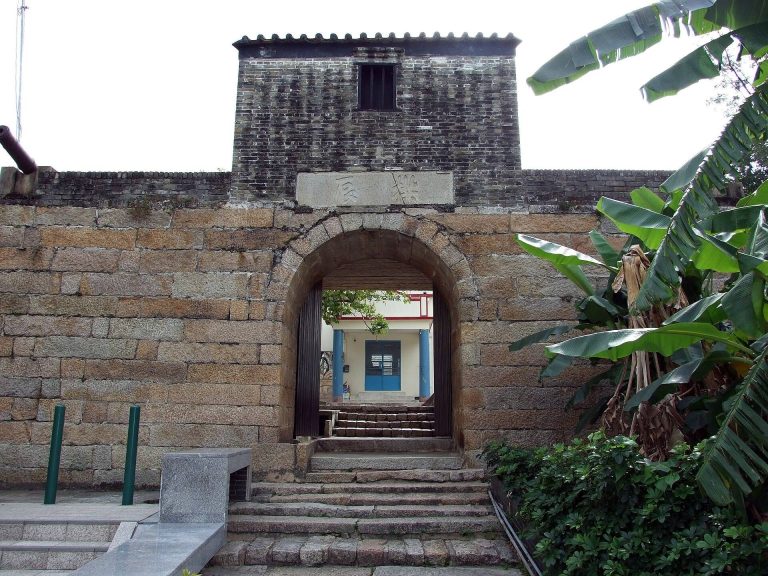
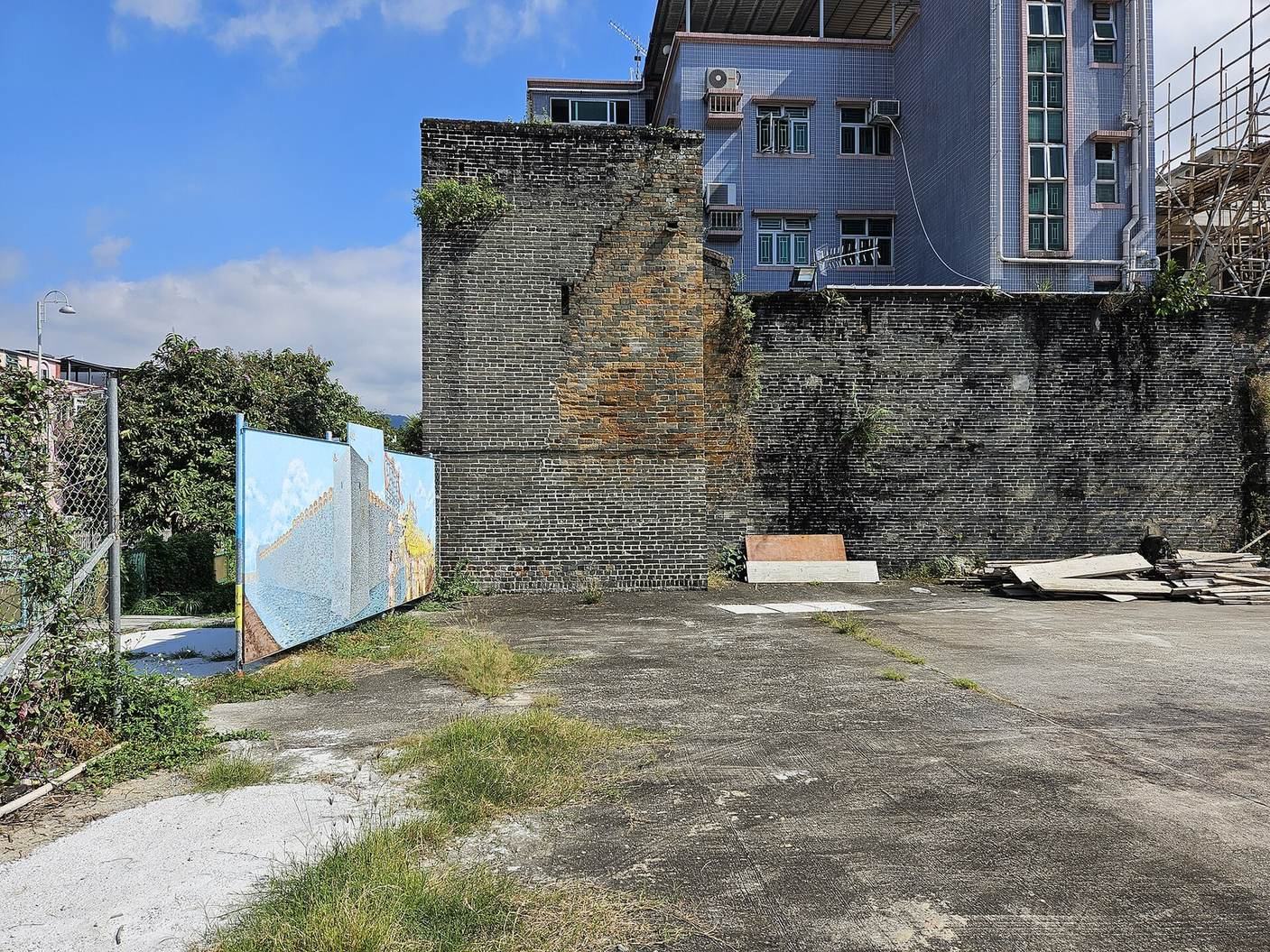
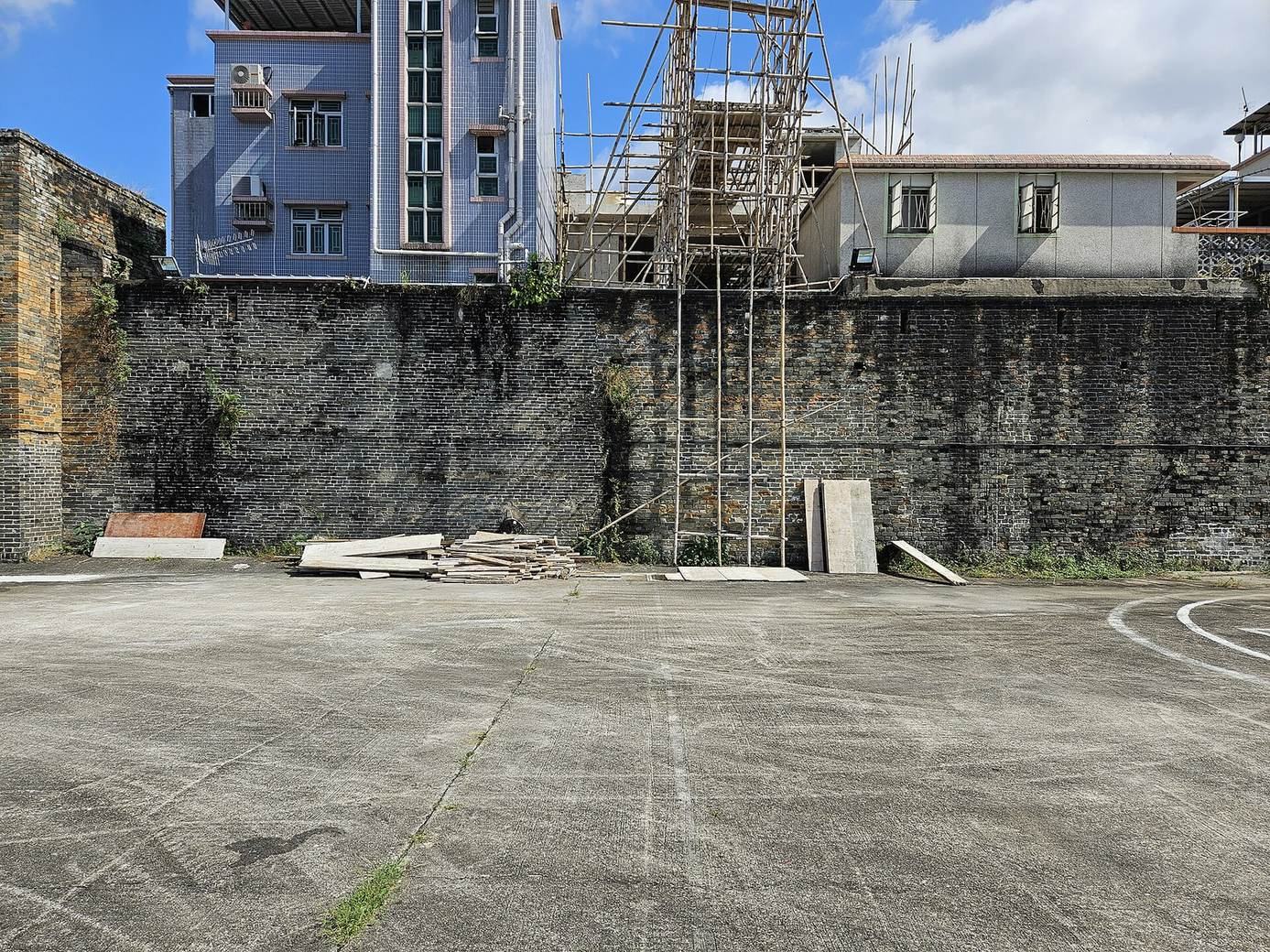
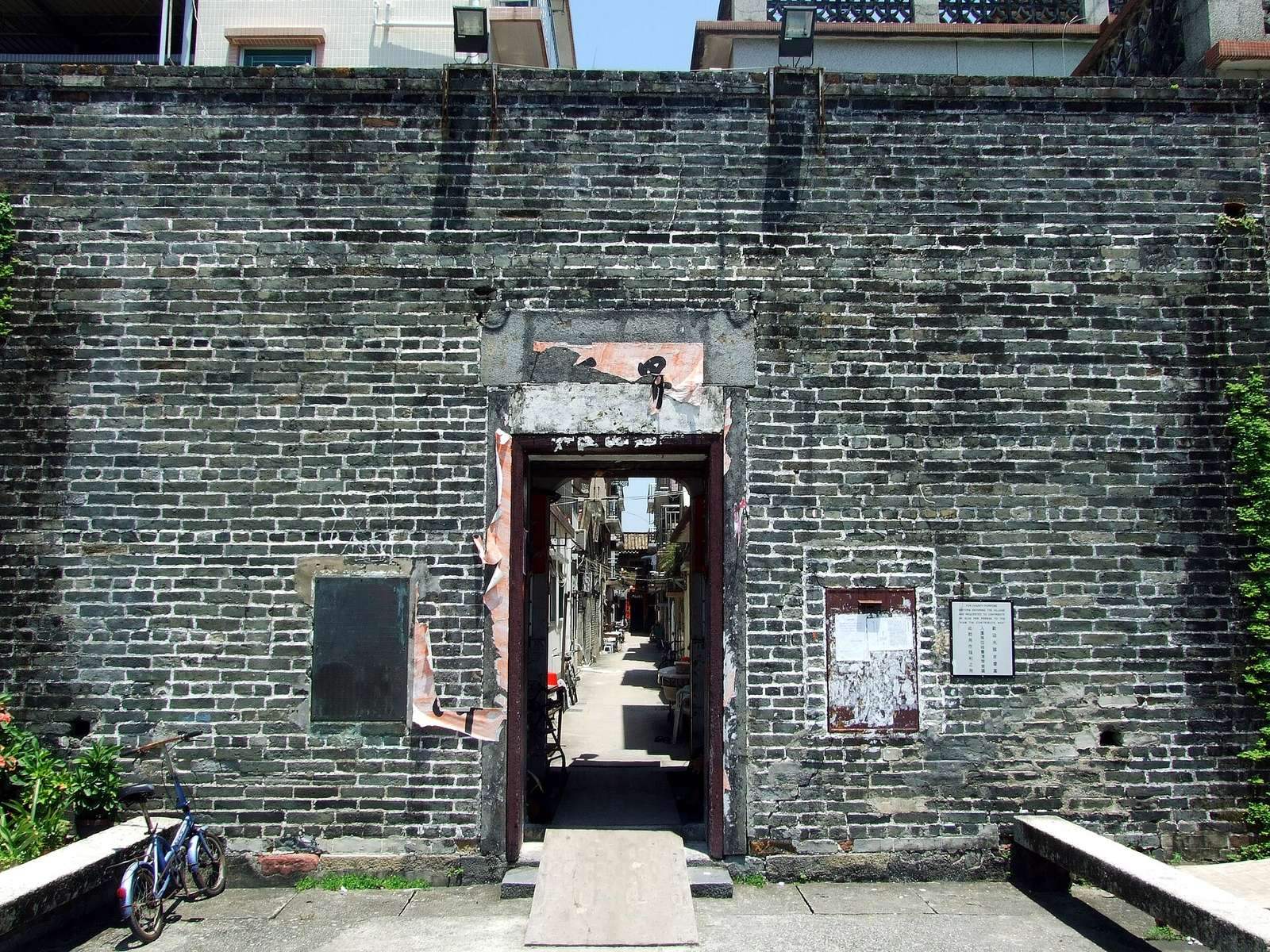
Blue-brick walls about six metres high and approximately 18 inches thick stand on stone-built foundations. Gunports pierce the walls, and four watchtowers, also known as cannon towers, occupy the corners. A moat more than ten metres wide once surrounded the settlement. The section beside the entrance was later filled in. A stretch facing Kam Tin Road still holds water and is several metres wide, while two other sides are open drainage channels. Moat remains also survive outside the walls.
Entrance and surviving village fabric
A single narrow entrance has a mismatched pair of iron gates. The right-hand gate is the one returned in 1925; the left-hand gate originally belonged to Tai Hong Wai and was given to Kat Hing Wai. A copper plaque outside the entrance recounts the Tang clan’s history, and a separate tablet describes the gate incident. The walls continue to enclose the village, although urban development has changed its historic appearance. Most older houses have been rebuilt as modern buildings, some of which rise above the walls or extend beyond them.