Fortaleza do Monte: A Jesuit Fortress in Macao
Site at a Glance
- Rating
- 4.4
- Popularity
- Medium
- Country
- China
- Primary era
- Early Modern
- Eras represented
- Early Modern, Modern
- Civilizations
- Ming, Portuguese
- Site type
- Military
- Remains
- Fort
On this page12 sections
History
Construction and defense of Macao
Fortaleza do Monte is a hilltop fortress in Macao, China, built by Jesuits, members of the Catholic religious order called the Society of Jesus, between 1617 and 1626. The Jesuits had erected an earlier defensive structure on the site in 1606. They built the present fort to protect their properties in Macao, especially from pirates, before Portuguese colonial authorities took control of it for the city’s defense.
The fort belonged to the Acropolis, a fortified high point or citadel within a city, a complex that also contained St Paul’s College and the Cathedral of Mater Dei. In 1622, Fortaleza do Monte played a decisive part in repelling a Dutch invasion attempt. Its guns were used in combat on that occasion and no other. The fort later served as a model for coastal fortifications built elsewhere in China.
Government and military use
From 1623 until the mid-18th century, the fort was the residence of Macao’s governor and the commander of the city’s defenses, as well as a political and military centre. Francisco Mascarenhas, Macao’s first governor, arrived in 1623. The governor’s home moved to the Governor’s Palace on Praia Grande Bay in 1746, ending that residential role for the fort.
In September 1808, British troops under Rear Admiral William O’Bryen Drury occupied Fortaleza do Monte and Guia Fortress. They said the action was intended to protect the Portuguese colony from a possible advance by Napoleon’s forces. The British withdrew later that year, after about 80,000 Chinese soldiers assembled outside Macao.
From 1810 to 1841, two companies of the Prince Regent’s battalion were stationed at the fort and served as a police force. In 1835, a fire destroyed St Paul’s College and partly burned the church of St Paul. It also caused irreparable damage to buildings inside the fort, which were not rebuilt.
Later use and heritage
The fort’s military function ended in 1965, when its barracks were converted into a weather observatory and the site opened to the public. The observatory operated from 1966 until 1996, when it closed and moved to Taipa. The Macau Museum opened at the fort in 1998. Fortaleza do Monte forms part of the Historic Centre of Macao, added to the UNESCO World Heritage List in 2005.
Remains
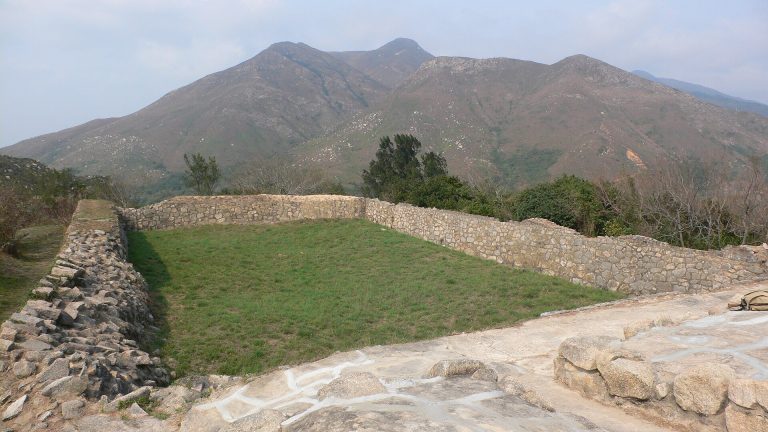
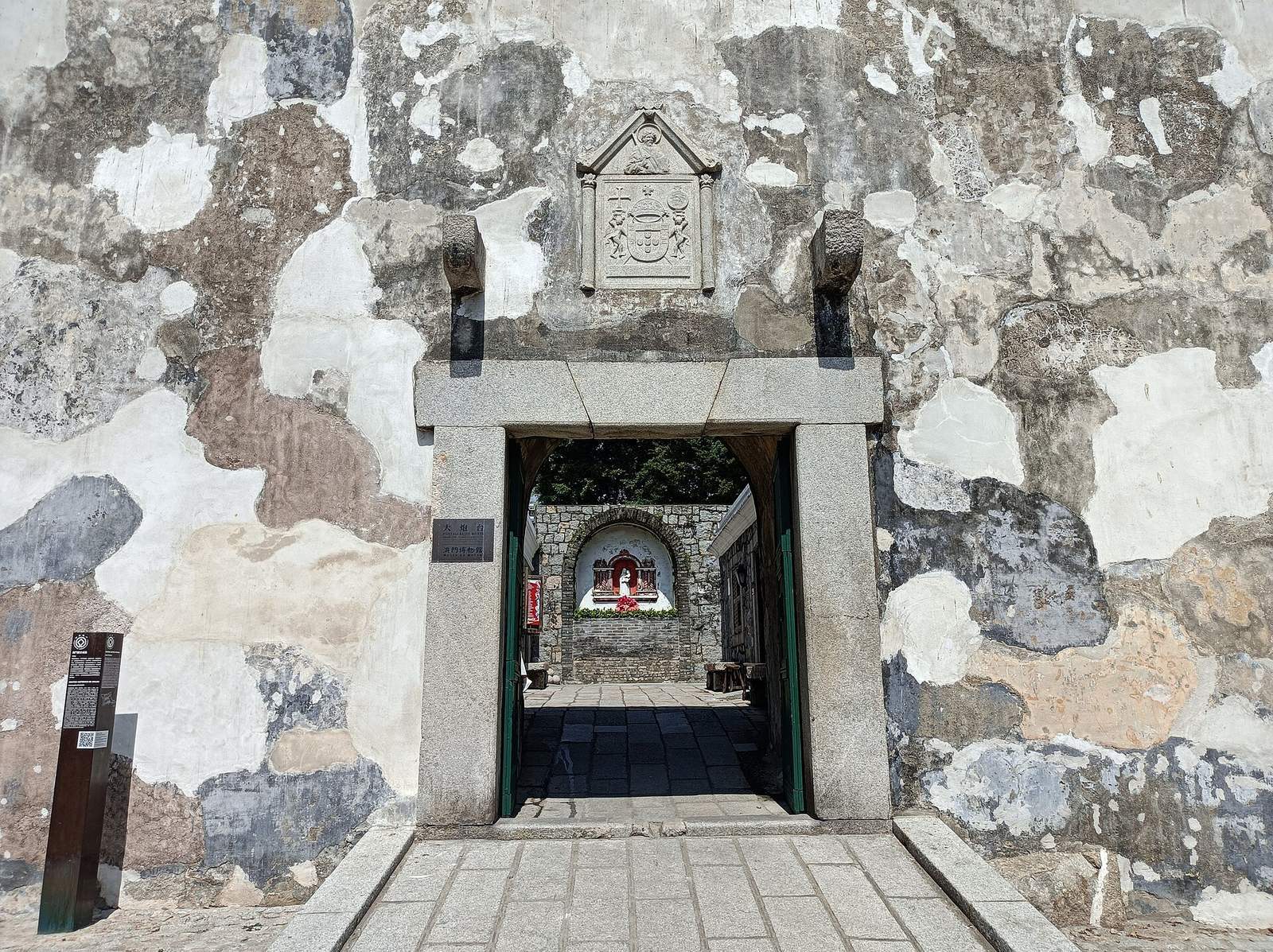
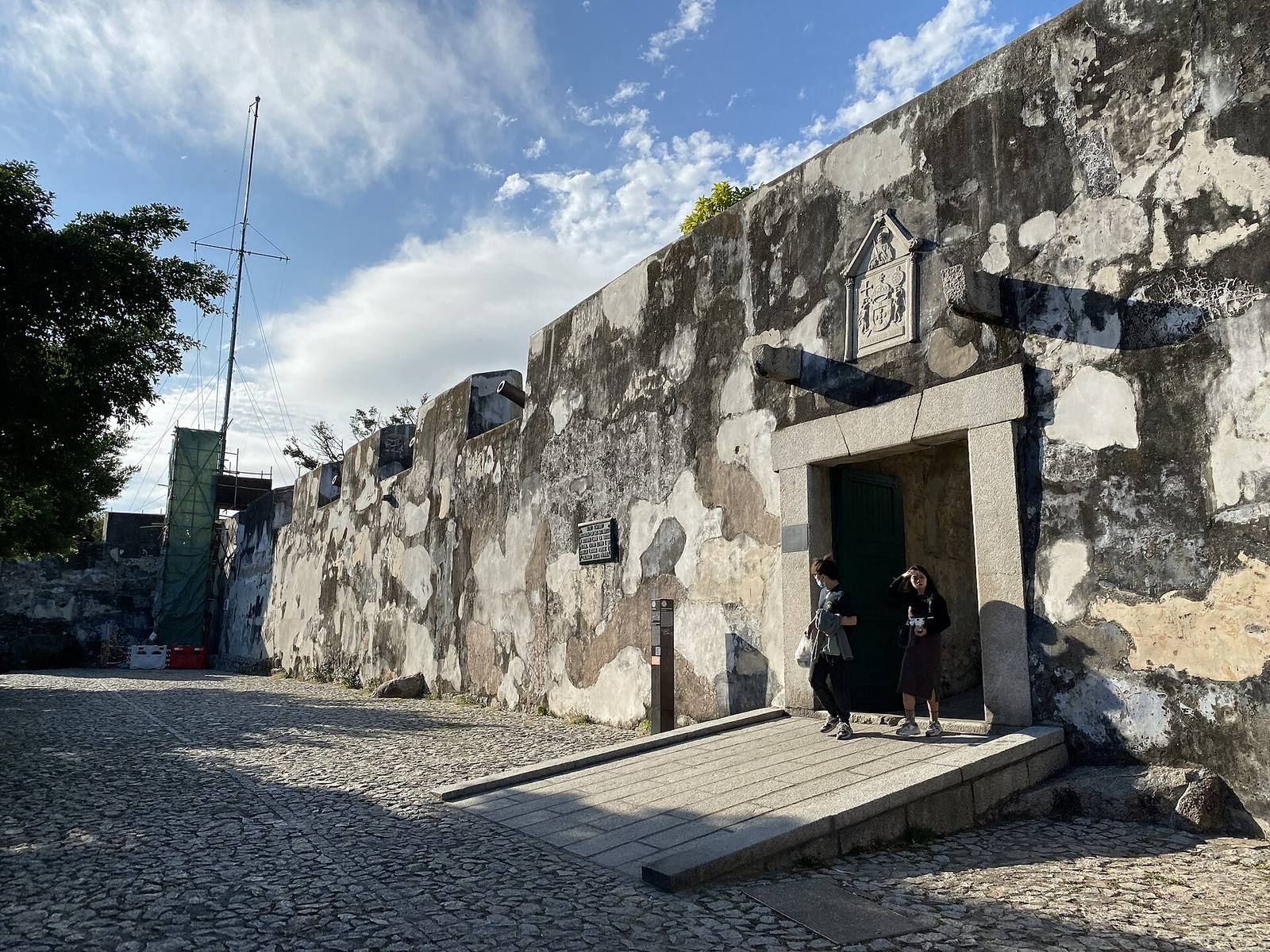
The fortress occupies the 52-metre-high Colina do Monte, directly east of the ruins of St Paul, and covers about 8,000 square metres. Its four-sided plan is trapezoidal, with a projecting bastion, or defensive section, at each corner. The arrangement has been interpreted as prioritizing defense against attacks from the sea.
Walls and bastions
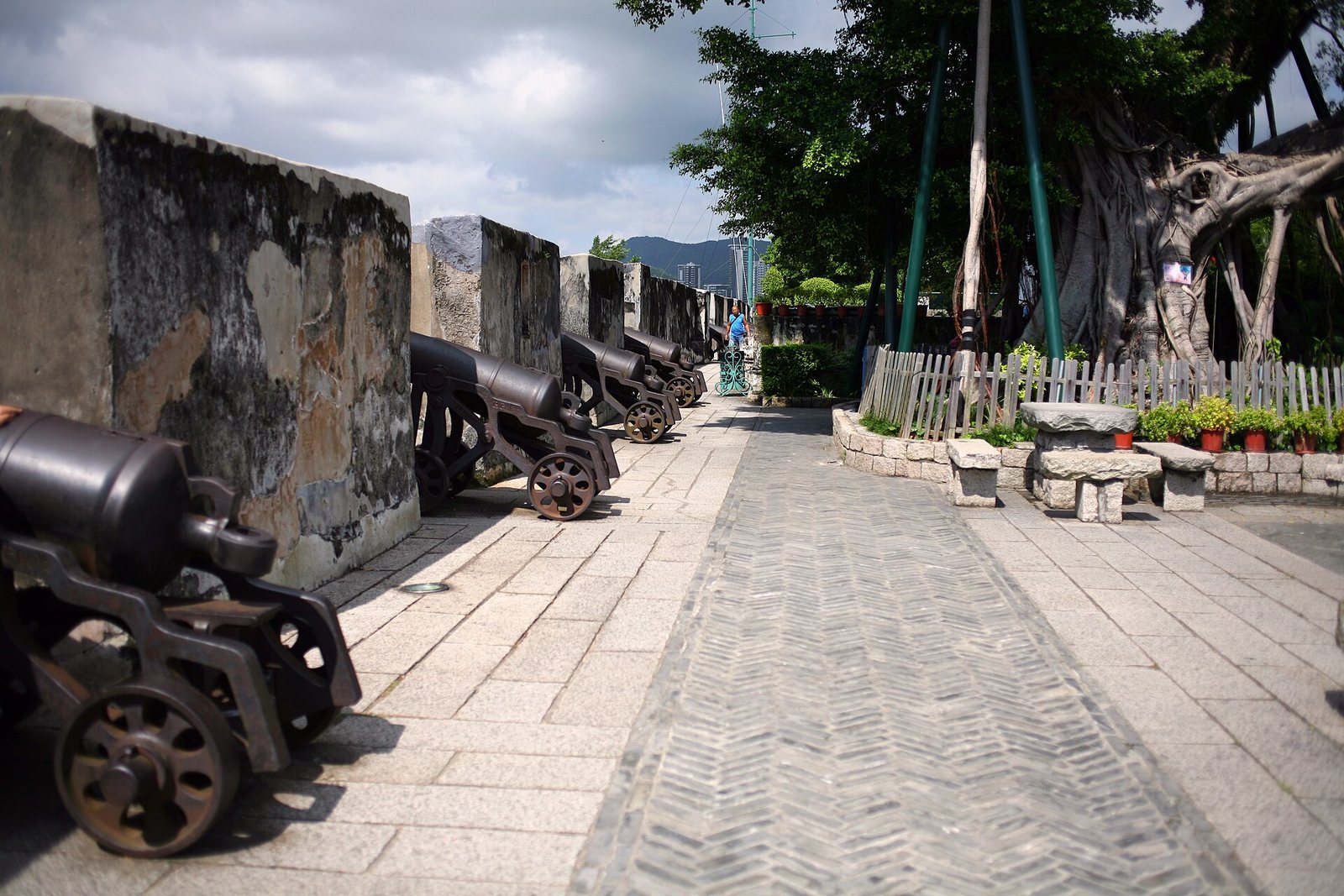
The northwest, southeast, and southwest walls are each about 100 metres long and 9 metres high. They rest on granite bases roughly 3.7 metres wide, while the walls narrow to about 2.7 metres in thickness at the top. Their construction combines earth with dense mortar containing ground oyster shells. Thirty-two muzzle-loading cannons, loaded through the open end of the barrel, were mounted along the walls. Small watchtowers stood on the southeastern bastions.
Interior structures and storage
Upper platform
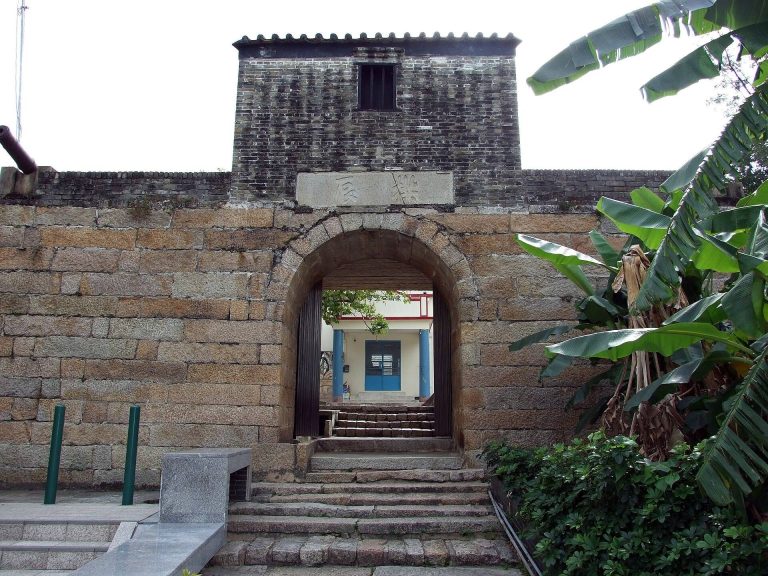
A short, winding path leads from the main entrance in the southeastern wall to the upper platform. A three-storey, cannon-armed tower once stood there, beside four rows of houses for the governor, officials, and soldiers. Stairs on either side of the sleeping hall connected the upper level with lower parts of the fort.
Garrison buildings and magazines
The fort’s facilities included barracks, wells, warehouses, an arsenal, and ammunition storage intended to help the garrison withstand a siege lasting as long as two years. A powder magazine stood near the former entrance. An ammunition depot occupied underground chambers in the western bastion, where the granite provided added stability.
Museum and summit features
Macau Museum
The Macau Museum has two underground levels, and its exterior dimensions match those of the military barracks once on the site. Its Inner Harbor Exhibition Area occupies the location of the fort’s cistern, while a gallery is situated in the western bastion. Museum displays cover Macao’s fortifications, cultural relics, archaeological finds, and legends associated with the fort.
Statue and summit park
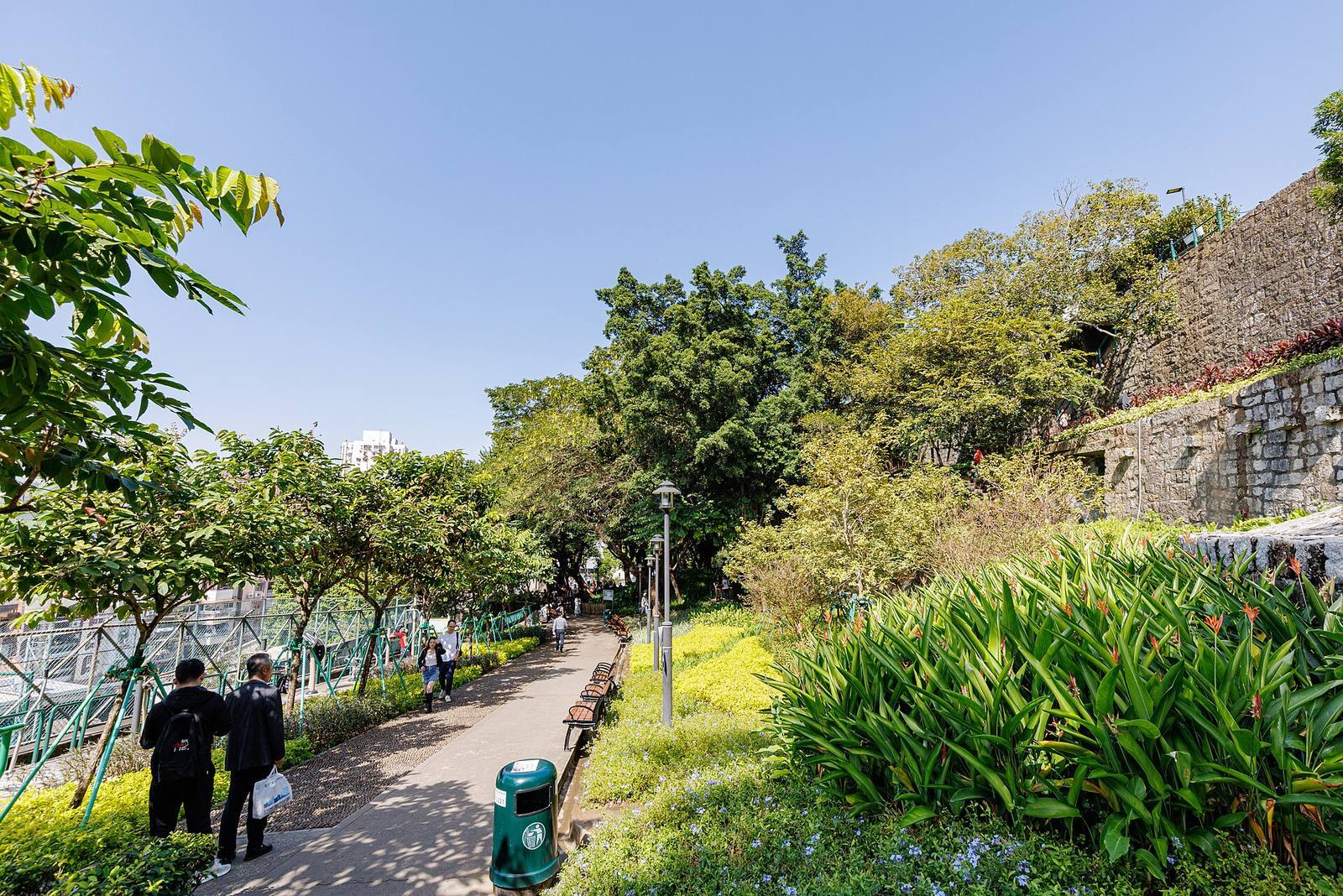
A statue of Matteo Ricci, an Italian Jesuit missionary and scholar who worked in China, stands within the fort. A park at the summit offers panoramic views over Macao.