Hushan Great Wall: A Contested Frontier Fortification in Liaoning
Site at a Glance
- Country
- China
- Primary era
- Medieval
- Eras represented
- Classical, Medieval
- Civilizations
- Goguryeo, Han, Ming
- Site type
- Military
- Remains
- Wall
On this page8 sections
History
The Hushan Great Wall is a frontier fortification in Kuandian Manchu Autonomous County, Liaoning, China. The Ming Shilu, annals of the Ming dynasty (which ruled China from 1368 to 1644), dates construction of a wall in the Hushan area to 1479, during the 15th year of Chenghua, an imperial era name. Its identification as part of the Ming Great Wall remains disputed.
Earlier frontier fortifications
Older walls and fortresses at Hushan date to the periods of the Four Commanderies of Han, imperial administrative districts on the northeastern frontier, and Goguryeo, an ancient kingdom in the Korean peninsula and neighboring parts of northeast Asia. Many were built to defend against nomadic groups from the north. The historical city of Posuo, also known as Bakjak, lay near present-day Jiuliancheng, south of Hushan.
Ming frontier defenses
Ming-era records and poems describe a frontier wall reaching the banks of the Yalu River as part of the dynasty’s northern defenses. The fortifications were intended to deter Jurchen raiders, a people of northeastern Asia later associated with the Manchu, who attacked villages in Ming China and Joseon, the contemporary Korean dynasty.
Identification and debate
Surveys led by architectural historian Luo Zhewen in the late 1980s and early 1990s identified the Hushan ruins as the eastern terminus of this stretch of the Great Wall. North and South Korean scholars have questioned that identification, pointing to limited documentary evidence. Some South Korean archaeologists and other experts consider it probable that Ming and Joseon forces built the fortifications together against Jurchen raids. Critics have also alleged that China’s classification of the remains as part of the Ming Great Wall distorts history for political purposes.
Remains
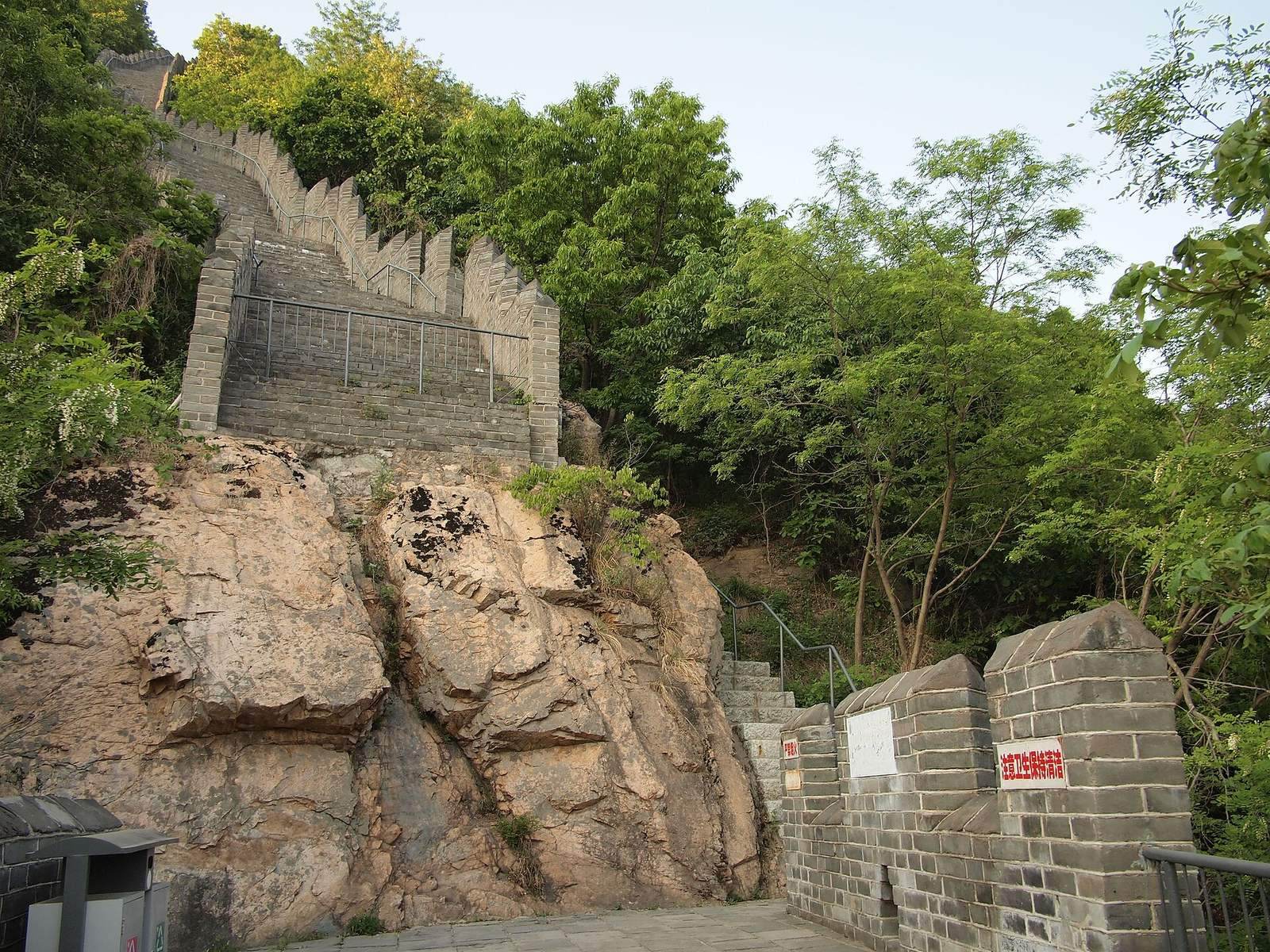
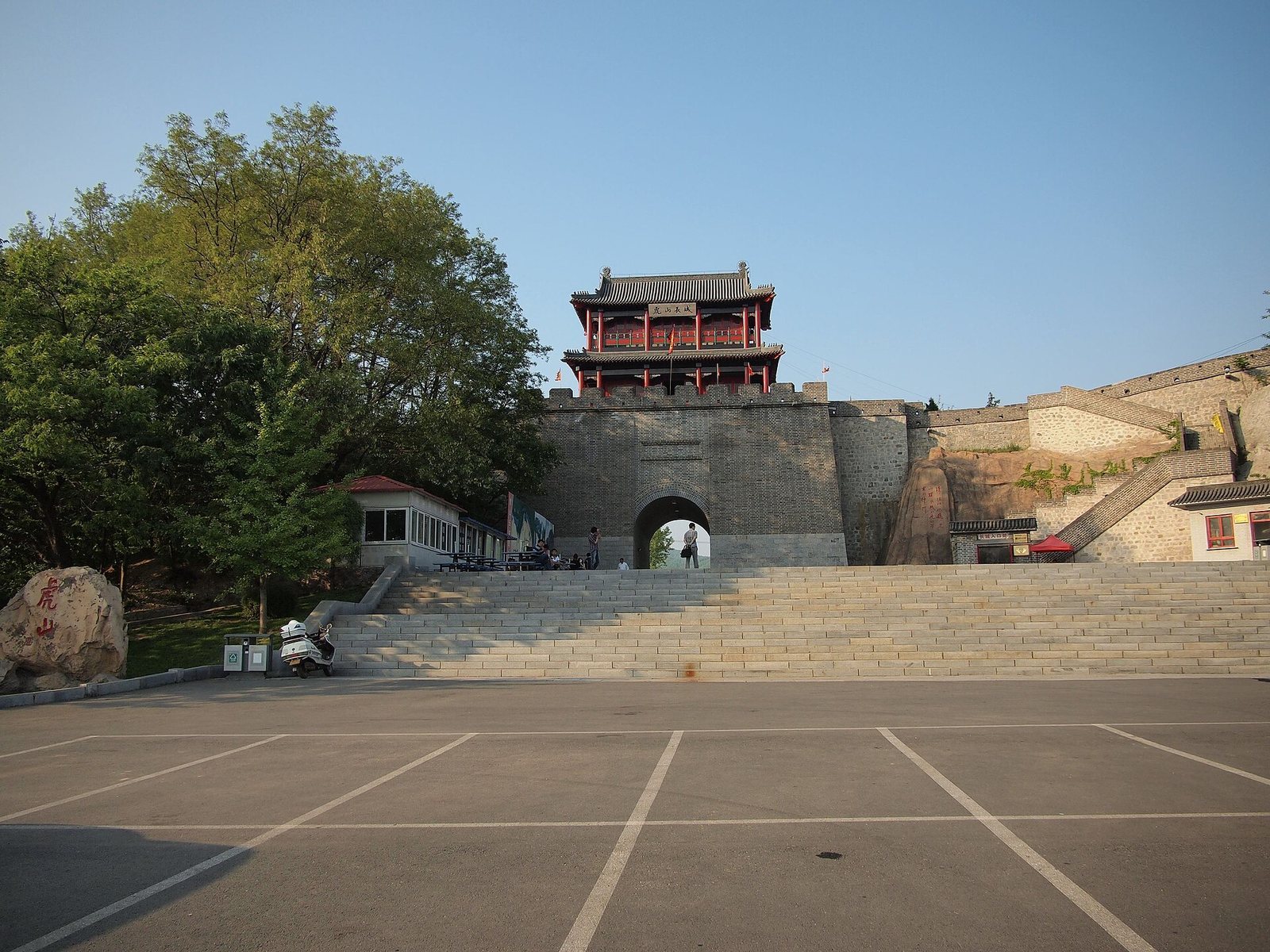
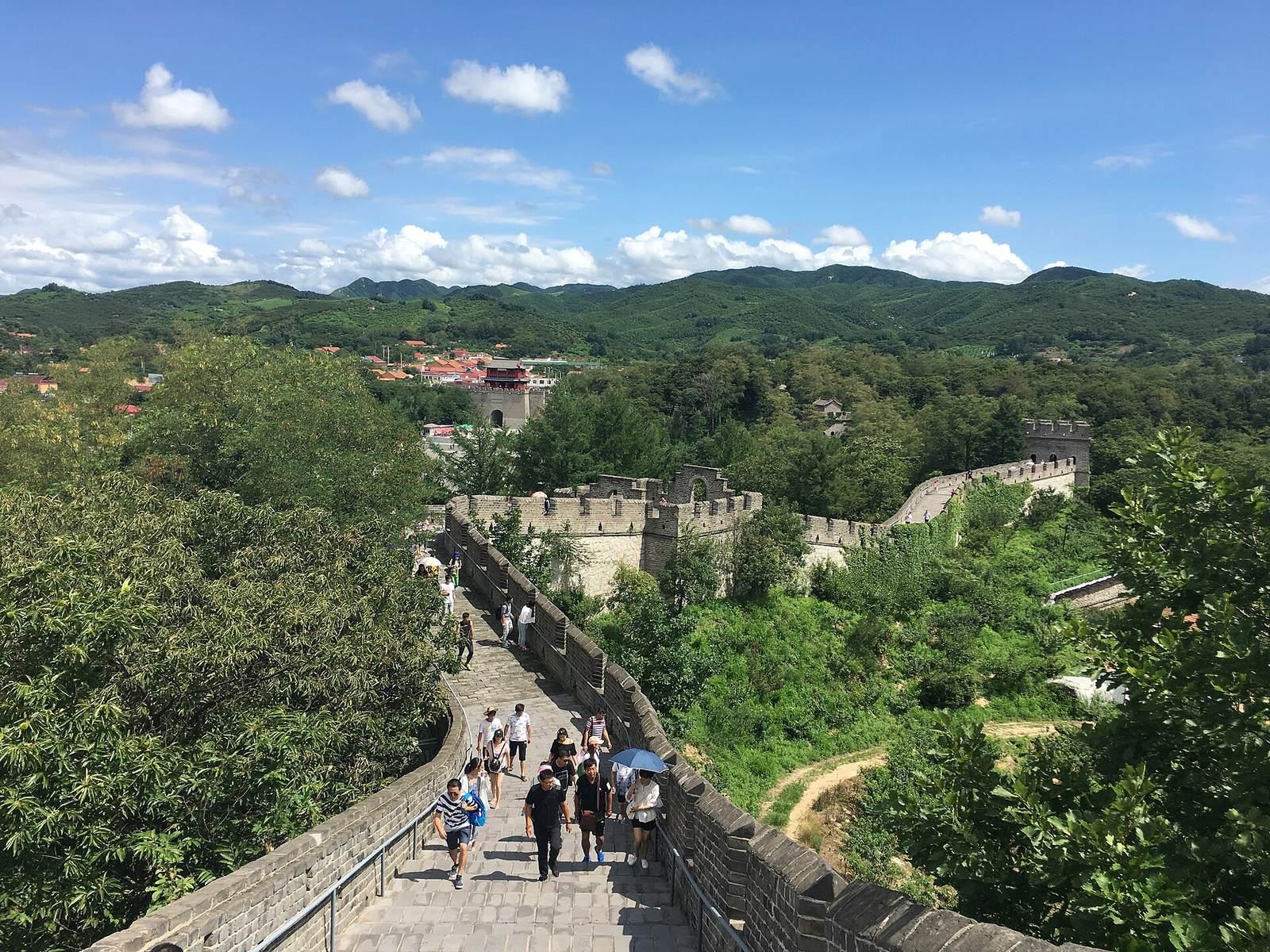
The surviving wall route crosses Hushan, or Tiger Mountain, beside the China-North Korea border and about 15 kilometres northeast of Dandong. It runs for roughly 1,200 metres over the mountain, with older fortress ruins also present at Hushan.
Fortifications at Hushan
Wall route
The route climbs steeply to a stated height of 146.3 metres, then descends the opposite side of the mountain. A 1,250-metre section was restored in 1992.
Older fortifications
Ruins of older fortresses remain at Hushan. Similar sites have also been found elsewhere in Liaoning and in North Pyongan and Chagang provinces in North Korea.