Kasteel De Wildenborch: A Medieval Castle and Estate in the Netherlands


Site at a Glance
- Rating
- 4.4
- Popularity
- Low
- Country
- Netherlands
- Primary era
- Medieval
- External website
- Open
- Eras represented
- Medieval
- Civilizations
- Holy Roman Empire
- Site type
- Domestic
- Remains
- Castle
On this page6 sections
History
Kasteel De Wildenborch is a fourteenth-century brick castle and estate in the Netherlands, in the municipality of Bronckhorst, Gelderland. Older sections survive within the castle, which was first mentioned in 1372 as the possession of Sweder Rodebaert van Wisch. Its position among extensive marshes gave the stronghold both a strategic setting and a place of refuge for the Lords of Wisch, a prominent noble family in the medieval Duchy of Guelders, a principality in the eastern Netherlands and adjoining areas.
The Lords of Wisch and the Guelders conflicts
Wildenborch was used as a refuge after raiding expeditions carried out by the Lords of Wisch in the County of Zutphen and Overijssel. The castle became involved in regional conflict in 1490, when citizens of Deventer besieged it. At the same time, citizens of Zutphen attacked Kasteel Wisch at Terborg. Neither siege achieved much.
Duke Charles of Guelders later besieged Wildenborch three times without success. Under continued pressure from the duke, the castle lord Johan van Wisch surrendered in 1512. Wildenborch then became a ducal open house. An open house, or fortified residence placed at a higher lord’s disposal, could be used for military or political purposes.
Johan’s grandson Joachim van Wisch resumed raiding in 1519. In response, the duke stationed a permanent garrison at Wildenborch in 1523 and ordered the castle’s fortifications demolished. The inheritance passed in 1544 through Ermgard van Wisch to her husband, Herman Georg van Limburg Stirum. After that transfer, the Lords of Wisch no longer held the estate.
Aristocratic ownership and the Staring family
In 1757, Willem Otto Frederik des H.R. Rijksgraaf von Quadt gave the Wildenborch estate to the Maastricht architects Matheius and François Soiron. The gift recognized their work on Schloss Wickrath near Mönchengladbach. The brothers sold the estate in 1769 to Colonel Albert Dominicus des H.R. Rijksgraaf van Limburg Stirum.
After the colonel’s death, his son Otto Ernst Gelder Count of Limburg Stirum inherited the property and sold it in 1781 to D. H. Staring, father of the poet A. C. W. Staring. The Staring family remained closely connected with Wildenborch. A. C. W. Staring became one of its best-known members, while his son Winand Staring was born at the castle in 1806 and later came to be regarded as a founder of geology and agricultural science in the Netherlands.
After A. C. W. Staring’s death, the estate passed to his grandson Jan Isaac Brants, the father of Maurits Anton Brants. It remained in that family until 1931, when it returned to the Staring family. In 1976, the family placed the house and estate in a foundation established to preserve the property into the future. A family member continues to live at and manage the estate and maintains the extensive Staring Archive held at Wildenborch.
Changes to the estate landscape
The estate originally occupied a landscape of large marshes. Partial drainage in 1792 made it possible to establish an extensive mixed deciduous forest, changing the character of the grounds around the castle. The later history of the woodland included a major loss in 1907, when the 630-hectare estate was sold. Timber merchants bought the largest forest for 660,000 guilders and felled almost all of it within several weeks. Some less valuable timber remained, and ponds were still being filled with tree remains from the felling in 1924.
The estate now covers approximately 300 hectares. Kasteel De Wildenborch has been a Dutch national monument, or Rijksmonument, since 1 November 2004 under monument number 527513. This status recognizes a building, site, or other cultural heritage asset as a nationally important monument in the Netherlands.
Remains
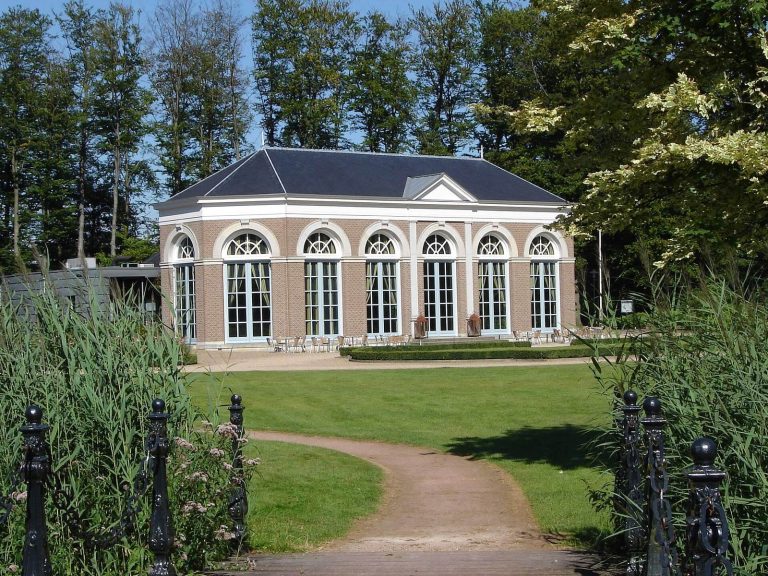
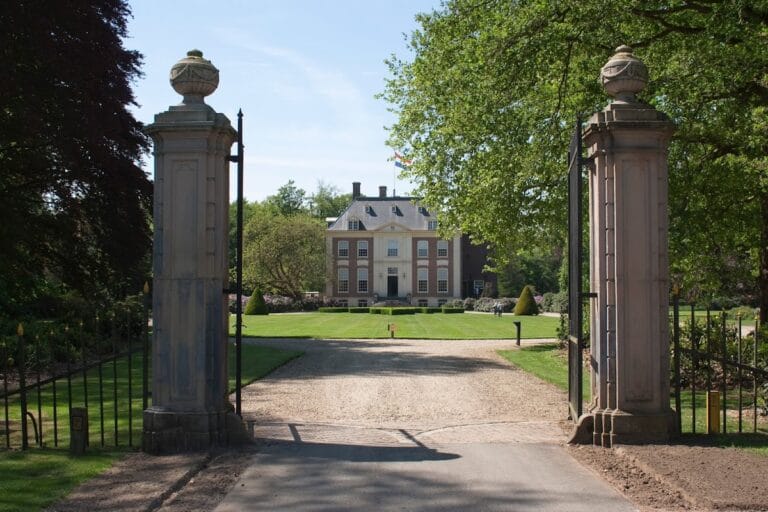
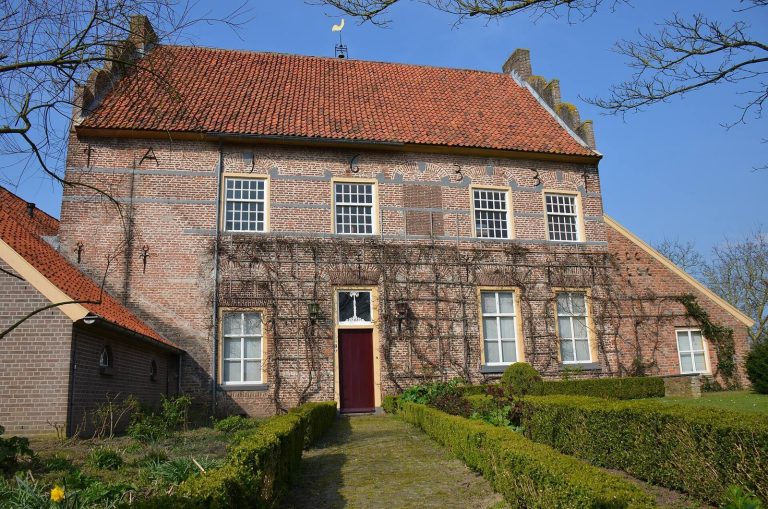
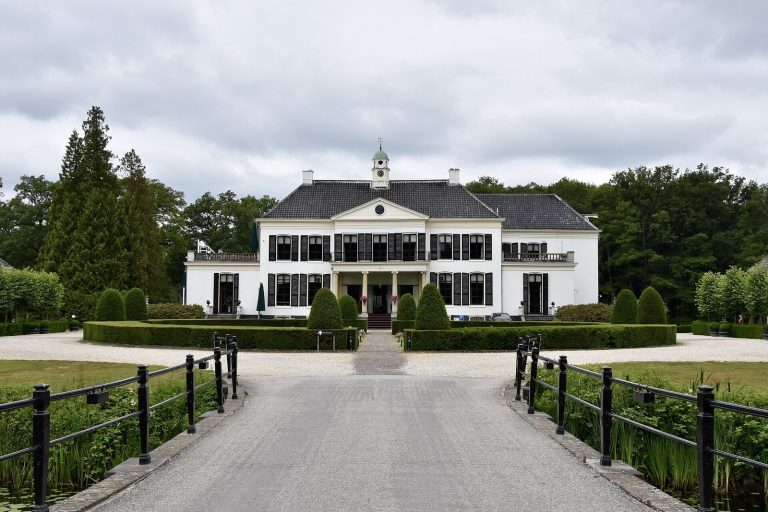
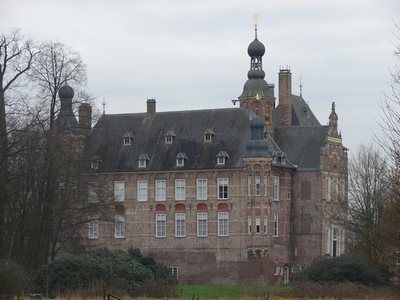
Kasteel De Wildenborch is a brick castle with fourteenth-century origins and older sections incorporated into the surviving structure. It forms part of the De Wildenborch estate, situated just over 5 kilometres from Vorden and slightly less than 5 kilometres from Lochem. The hamlet of Wildenborch lies directly north of the castle. The defensive works that once reinforced the residence were demolished in 1523 after the permanent ducal garrison was installed, leaving the castle’s surviving fabric as part of a later estate setting. The building remains privately inhabited.
Estate woodland and surroundings
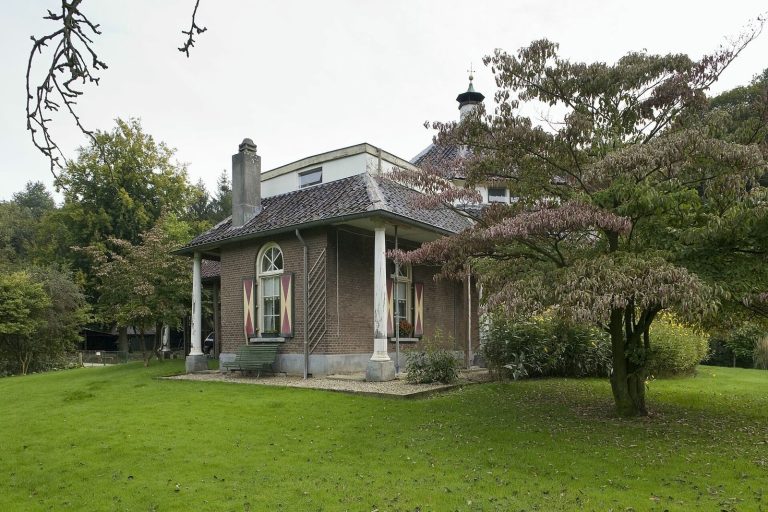
The castle stands within an estate landscape shaped by the partial drainage of the surrounding marshes in 1792. That work allowed the development of mixed deciduous woodland. In 1886, the botanist F. W. van Eeden described the forest as exceptionally wild, with thick oak trunks arranged irregularly and ground vegetation that included lily-of-the-valley, Solomon’s seal, red and blue bilberries, and lady fern.
The wider estate includes the hill called the Zunnebelt approximately 2 kilometres southwest of the castle and Pinetum De Belten about 1 kilometre to the west. A pinetum is a landscaped collection devoted mainly to pine trees and other conifers. Together with the woodland and marsh-drainage landscape, these features form the physical setting of the privately inhabited castle estate.