Ibrahim Pasha Palace: An Ottoman Imperial Court Residence in Istanbul


Site at a Glance
- Rating
- 4.6
- Popularity
- Low
- Country
- Turkey
- Primary era
- Early Modern
- Eras represented
- Early Modern
- Civilizations
- Ottoman
- Site type
- Domestic
- Remains
- Palace
On this page7 sections
History
Ibrahim Pasha Palace is an Ottoman imperial court residence in Istanbul, Turkey, built beside the former Hippodrome of Constantinople. Its construction date is unknown, although one interpretation places it during the reign of Sultan Bayezid II, from 1481 to 1512. The palace belongs to the Ottoman architectural tradition, and the building was repaired in 1521.
The Hippodrome Palace
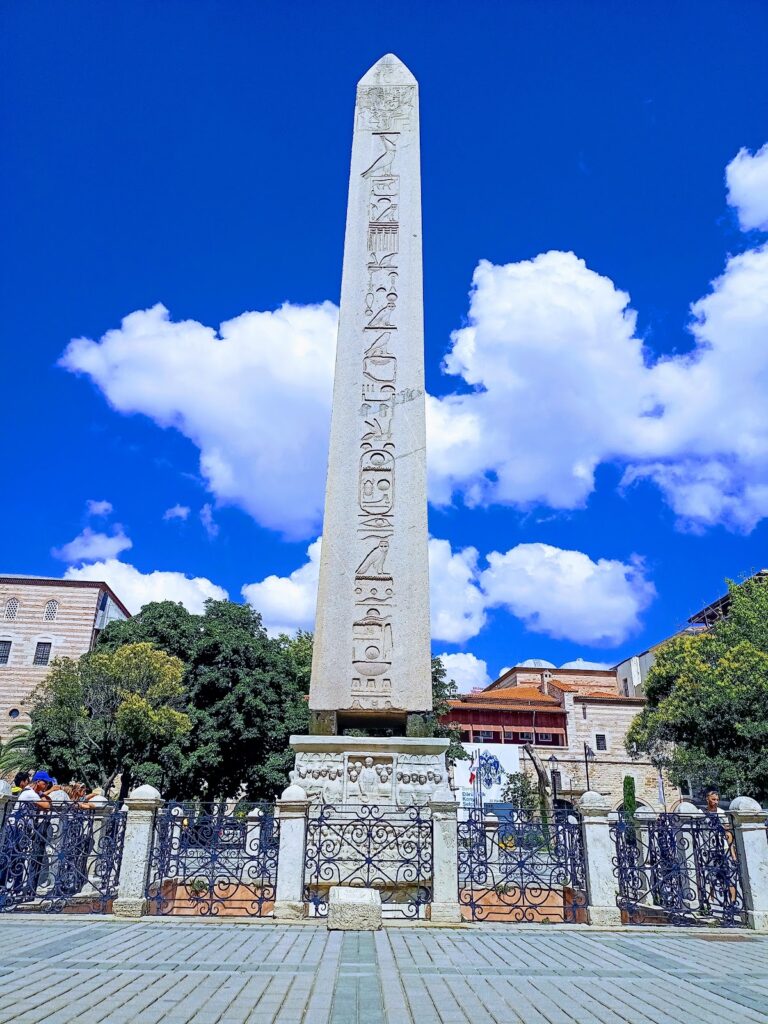
The complex originally stood beside the Hippodrome of Constantinople, the large public arena of the Eastern Roman imperial capital used for races, ceremonies, and political gatherings. The historical grounds now form part of Sultanahmet Square. For this reason, the residence was initially known as the Hippodrome Palace.
The palace took its present name from Pargalı Ibrahim Pasha, who became Grand Vizier in 1523. The Grand Vizier was the Ottoman Empire’s highest-ranking chief minister and principal executive official beneath the sultan. Ibrahim Pasha served Sultan Suleiman the Magnificent, who reigned from 1520 to 1566, until his execution in 1536.
Residence and Later Uses
One historical interpretation holds that Suleiman gave the palace to Ibrahim Pasha and Hatice Sultan as a wedding gift in 1524, following their presumed marriage. Hatice Sultan was an Ottoman princess. The palace also hosted weddings, festivities, celebrations, civil disorder, and revolts, giving it a role in both court life and public unrest.
After Ibrahim Pasha’s execution, successive Grand Viziers used the palace as a residence. In later periods, its spaces served an embassy, military quarters, a military band, a revenue office, sewing workshops, and a prison.
Preservation in the Republican Era
After the establishment of the Republic of Turkey in 1923, the complex fell into neglect. Architect Sedat Çetintaş found the building vacant and defended its historical value in an article published by Cumhuriyet on June 5, 1938. His intervention helped prevent its demolition for a proposed palace of justice.
The section containing the harem and the ambassador’s hall was later demolished. Çetintaş continued working for twelve years to preserve the remaining building. One argument advanced for demolition was that the palace had at some point been renovated by an Armenian and therefore could not be considered part of Turkish national heritage. The decision to retain the palace was taken during the presidency of İsmet İnönü in 1946.
Since 1938, the surviving palace has housed the Turkish and Islamic Arts Museum. Another section accommodated the Ministry of Justice’s judicial archives from 1983 until 2012. When the archives moved out, that space was transferred to the Ministry of Culture for incorporation into the museum, while another part of the complex continued to house the Istanbul Directorate of Land Registry and Cadastre. Former Culture Minister Ertuğrul Günay also campaigned for reconstruction of the demolished section. The palace remains state-owned and is preserved as a historical building.
Remains
Ibrahim Pasha Palace survives as part of an Ottoman architectural complex in Sultanahmet Square, within Istanbul’s Fatih district. The buildings occupy a portion of the former Hippodrome grounds. The preserved complex includes structures used primarily by the Turkish and Islamic Arts Museum, together with sections that have served institutional purposes.
Surviving Palace Buildings
The surviving structures represent the remaining parts of a former imperial court residence. Their present arrangement reflects the continued use of the complex for museum and government functions. One intact section formerly held the judicial archives, while another is occupied by the Istanbul Directorate of Land Registry and Cadastre.
Demolished Palace Section
The original complex included a harem and an ambassador’s hall. This section was demolished during the Republican era, leaving the palace physically incomplete. Efforts to reconstruct the lost portion were later promoted by Ertuğrul Günay, while the surviving buildings continued to be preserved and adapted for institutional use.
Nearby sites