Castle de Lalaing: A Moated Castle Estate in Belgium
Site at a Glance
- Popularity
- Medium
- Country
- Belgium
- Primary era
- Early Modern
- Eras represented
- Medieval, Early Modern
- Civilizations
- County of Flanders, Habsburg, Habsburg Spain, Holy Roman Empire, Spanish
- Site type
- Military
- Remains
- Castle
On this page7 sections
History
Castle de Lalaing, also known as Hof van Lier, is a castle estate in Zandbergen, Belgium, with origins in the thirteenth century. Its earliest fortification was built to defend territory and control the Dender valley.
Early fortifications and acquisition
A motte, or raised mound forming a castle’s fortified core, was built around 1220–1230 by the lord of Wedergraete. It was probably destroyed and abandoned around 1356. Separate from the motte, the castle of the lords of Zandbergen dates to the early fifteenth century. The de Lalaing family acquired Zandbergen through marriage in 1554 and thereby came into possession of the castle.
Destruction, transfer, and rebuilding
Around 1580, the Geuzen, rebels in the Dutch Revolt against Spanish Habsburg rule, destroyed the medieval castle. Rebuilding began soon afterward. In 1657, François-Philippe de la Pierre, lord of Wedergraete and impoverished by wars, pledged the motte and surrounding meadows to Ferry de Lalaing, lord of Zandbergen, for a loan of 4,000 guilders. After de la Pierre failed to repay it, the land was seized around 1670–1680 and permanently incorporated into the Zandbergen castle estate.
In December 1708, troops of John Churchill, the English military commander known as the Duke of Marlborough, plundered and destroyed the castle. A later restoration rebuilt most of it.
Decline, new uses, and restoration
The de Lalaing family left its castle for its Brussels residence in the early nineteenth century. After the count died in 1816, his widow and two young sons remained away; the sons later served as diplomats abroad. During about a century without the family, the castle fell into severe decay.
From 1875, the building successively housed a convent for nuns, an elementary school for children from Zandbergen and nearby hamlets of Denderwindeke, and a novitiate, a place where people prepared to enter a religious order. Restoration in 1911–1913 used the castle’s seventeenth-century appearance as its model.
Remains
Castle, enclosure, and approaches
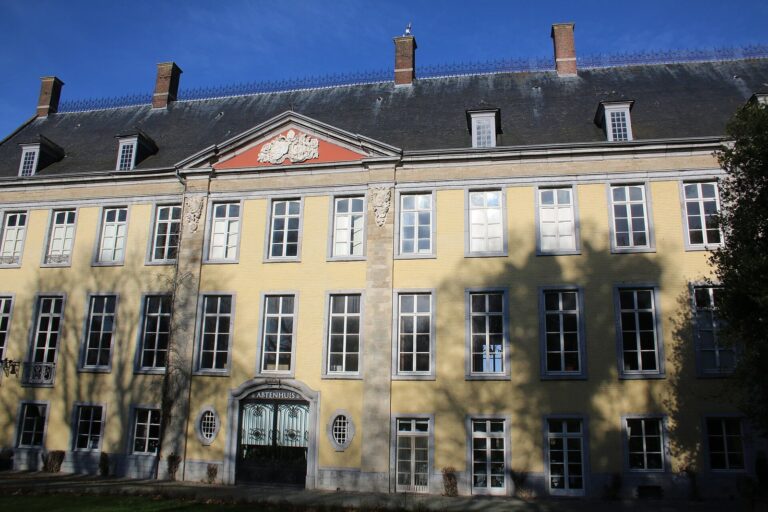
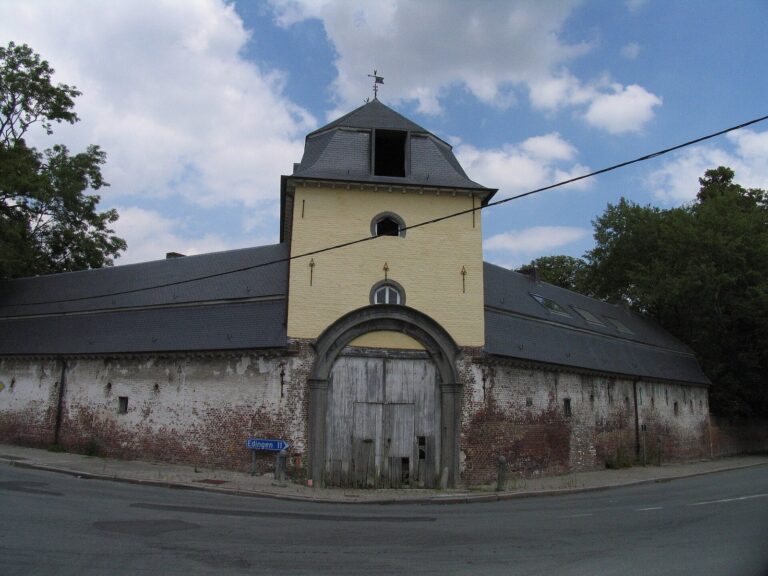
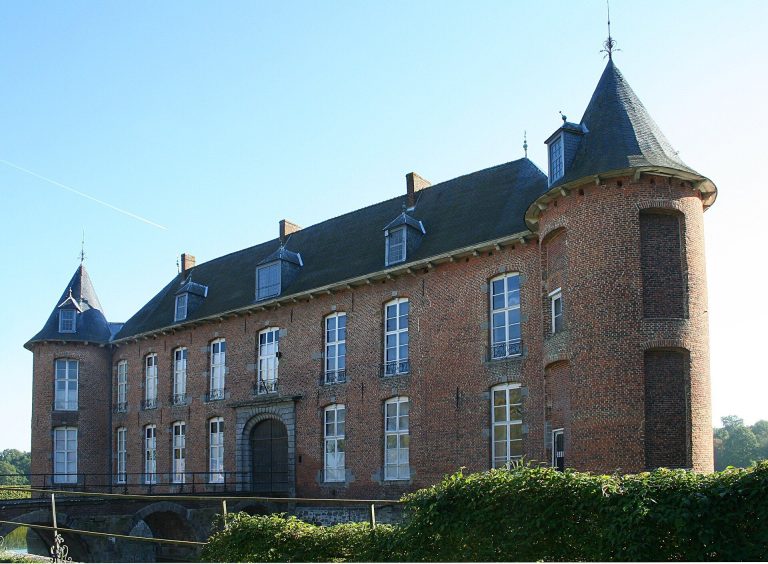
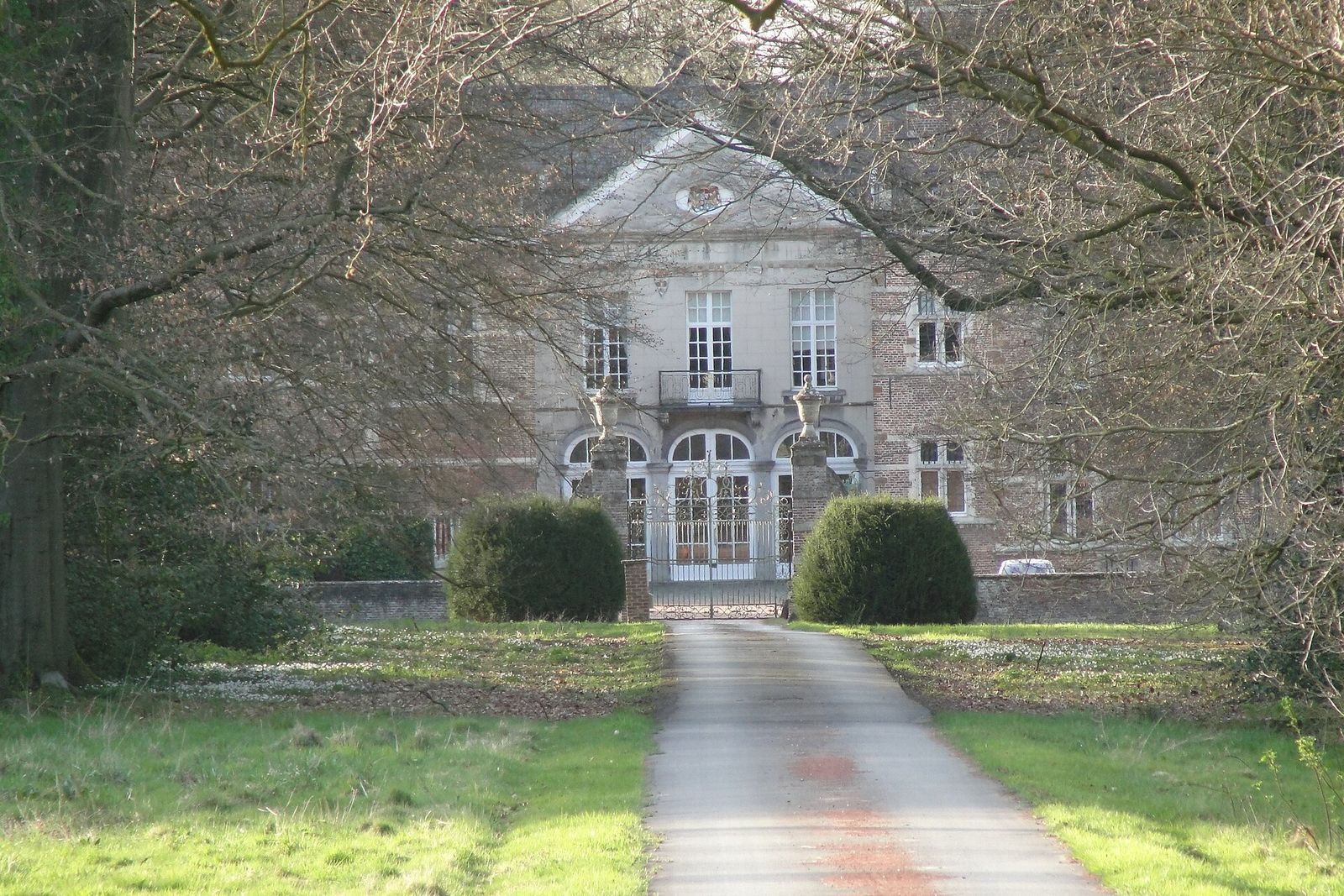
The estate extends across Zandbergen and Denderwindeke. Near the Dender, the castle is encircled by a moat, while a square fortified enclosure surrounds the castle and its service buildings. Two fixed bridges cross the moat. Two tree-lined entrance drives, marked by gates and small cast-iron columns, lead to the castle, whose main entrance faces Hof van Lierstraat. The building combines brick and sandstone, with a sandstone base dating to the sixteenth and seventeenth centuries. Its original water-castle form was substantially altered in the eighteenth century in a classicizing style, drawing on forms associated with classical antiquity. Anchors in the northeast wing indicate that at least this section dates to 1613. The early twentieth-century restoration partly reconstructed the building, including cross-mullioned windows, divided by intersecting bars, and stepped gables whose edges rise in tiers.
The motte
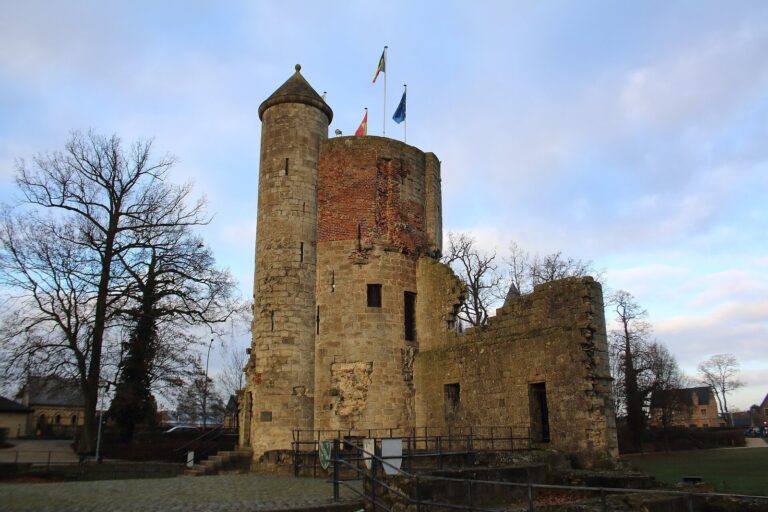
The old motte remains visible within the castle estate from the towpath along the Dender.