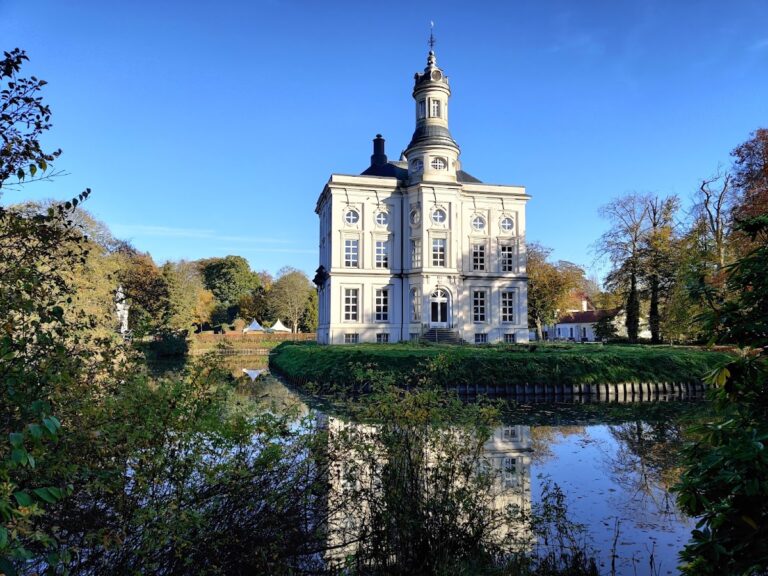
Kasteel Altena: A Water Castle Complex in Belgium


Site at a Glance
- Rating
- 3.8
- Popularity
- Very Low
- Country
- Belgium
- Primary era
- Modern
- External website
- Open
- Eras represented
- Early Modern, Modern
- Civilizations
- Belgian, Habsburg
- Site type
- Domestic
- Remains
- Castle
On this page7 sections
History
Kasteel Altena is a water castle complex in Kruibeke, Belgium, southwest of Antwerp. A water castle is a fortified or castle-like residence surrounded by water, usually by a moat. The present complex developed from a fortified noble estate that was destroyed by a major fire in 1584, after which its owners built a new complex in 1594.
The de Lanfranchye estate
The de Lanfranchye family owned Kasteel Altena and the surrounding lands for several centuries. The family also held the Lordship of Kruibeke until about 1850. Jan Frans de Lanfranchye served as mayor of Kruibeke in 1818, linking the castle’s owners with the administration of the municipality.
The le Boucq de Beaudignies period
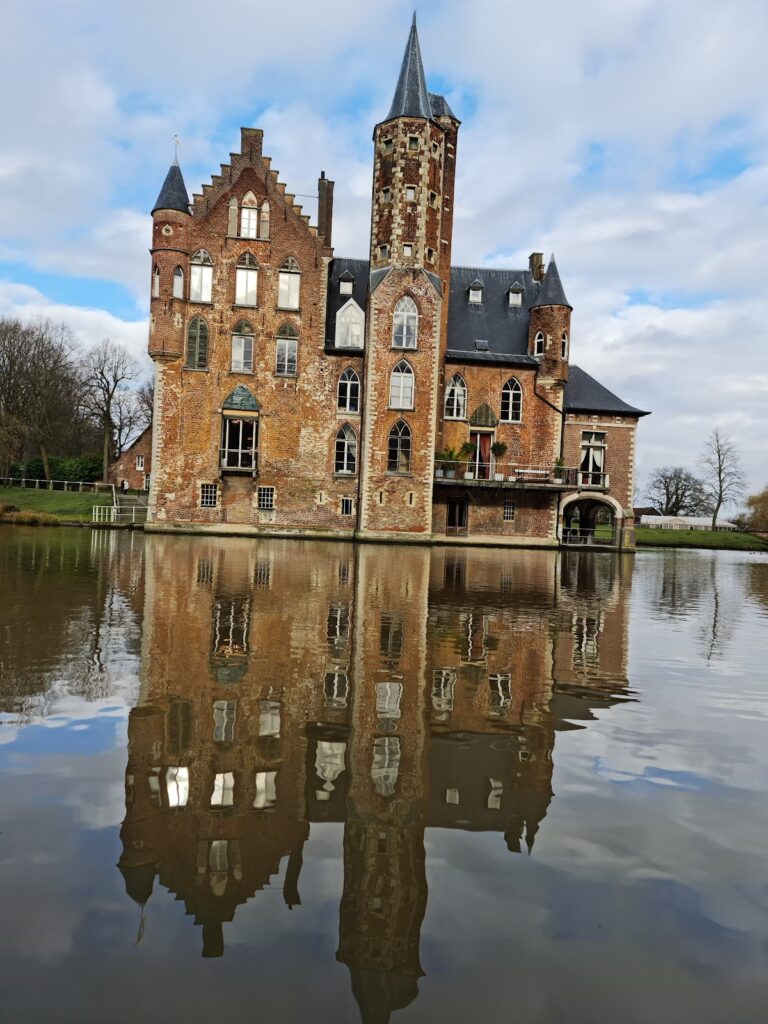
After Jan Frans de Lanfranchye died, ownership passed to the le Boucq de Beaudignies family. Eduard le Boucq de Beaudignies became the owner in 1848 and was mayor of Kruibeke that year. In 1878, Julius le Boucq de Beaudignies commissioned a major reconstruction and enlargement. Designed by the architect Joseph Schadde, this campaign gave Kasteel Altena its present appearance.
Changing uses
In the following decades, members of several noble families used the castle as a summer residence. During the mid-twentieth century, the complex was converted into a home for elderly people. Sisters of the Daughters of Charity of Saint Vincent de Paul, a Catholic congregation associated with charitable care for the sick, poor, and elderly, cared for the residents.
From 2000 until 2014, the castle housed a training centre for the Catholic Congregation of the Brothers of Charity. The organisation ended its lease and left in 2014. In 2018, a care centre for people with disabilities was proposed, with new buildings beside the castle and administrative and therapy spaces inside it, but the plan never received final approval. Kasteel Altena is municipally owned, was recognised as an architectural monument in 2023, and is described as restored.
Remains
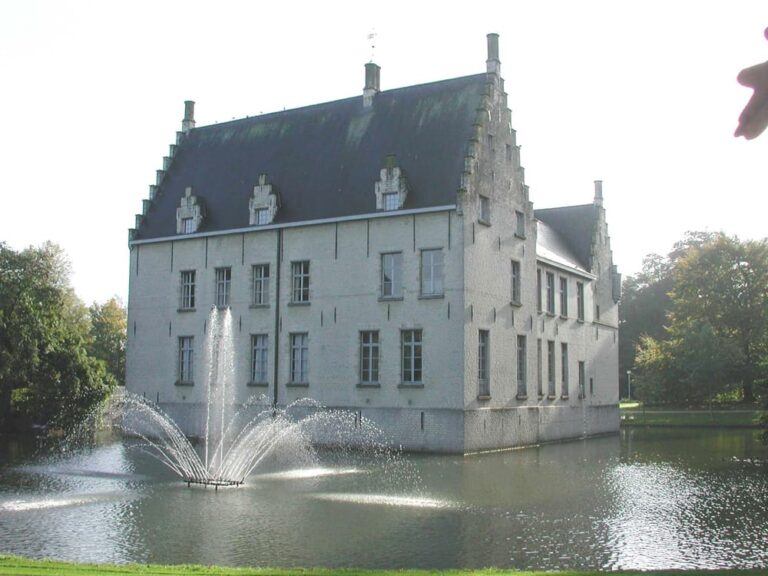
The complex is arranged around a large rectangular main building, projecting towers, ornamental entrances, and water features. Brick, sandstone, and stone form the principal materials, while the surrounding moat and ponds preserve the character of the 1594 water castle. The moat was supplied with water from the Scheldt River.
Main building and towers
The main building is a large rectangular structure of two storeys, built in brick and sandstone on a stone foundation. Its upper mansard storey lies beneath a high roof with steep slopes. A tall octagonal tower projects from the southwest side and serves as a decorative bergfried, a high tower characteristic of medieval European castles. Two projecting round towers with conical roofs are attached to the north side.
The principal entrance stands at the centre of the southern facade, with a stair tower to its left. Rich stucco decoration, sandstone banding, stepped gables, and other ornamental details shape the exterior. Some facade gables end in stepped forms. The castle also contains an open gallery and a projecting polygonal, tower-like structure.
Park and entrances
The grounds include a park, several modern service buildings, the moat, and ponds. The main gate leading into the castle park is made of blue stone and carries ornamental decoration. The park is described as considerably neglected, while the castle complex itself is described as restored.
Nearby sites