Kasori Shell Mound: A Prehistoric Jōmon Settlement in Japan
Site at a Glance
- Rating
- 4.3
- Popularity
- Medium
- Country
- Japan
- Primary era
- Stone Age
- Eras represented
- Stone Age
- Civilizations
- Jomon
- Site type
- Settlement
- Remains
- Village
On this page9 sections
History
Kasori Shell Mound is a prehistoric settlement and shell-midden complex in Japan, on a plateau along the Sakatsuki River. People occupied the site from about 7,000 years ago, and large-scale midden formation began around 5,000 years ago during the middle Jōmon period. The Jōmon period was a prehistoric era in Japan associated with pottery, including vessels marked with cord-impressed patterns. Kasori is also a type site, meaning its remains help define and classify an archaeological culture or period.
Jōmon settlement and midden formation
The northern midden developed during the middle Jōmon period, roughly 5,000 to 4,000 years ago. Small middens and dwellings came before a zone where people repeatedly discarded shells and pottery fragments. This accumulation gradually formed a ring over about 1,000 years. Midden formation later shifted to the south, where a second midden developed during the late Jōmon period, around 4,000 to 3,000 years ago, also taking about 1,000 years to form.
During the early and middle Jōmon periods, sea levels in the region were about 5 to 6 metres higher than today, and temperatures were about 2°C warmer. Many Jōmon communities in the Kantō region of eastern Japan lived near the coast. Pottery from location E in the northern midden became known as Kasori E-type, associated with the latter part of the middle Jōmon period. Pottery from location B in the southern midden, called Kasori B-type, is associated with the latter part of the late Jōmon period. These forms are important reference types for the site’s chronology.
Archaeological study and preservation
Ueda Eikichi brought Kasori to scholarly attention in 1887. In 1907, the Tokyo Anthropological Society identified it as Japan’s foremost shell midden. Tokyo Imperial University, then the name of the institution now known as the University of Tokyo, carried out the first excavation in 1924.
The site faced damage in 1963, when Toyo Prefab Industry bought land there and began leveling it, destroying part of the southern midden. A preservation campaign led by a local high-school teacher who was also an archaeologist attracted broad public support. Chiba City bought more than five hectares around the northern midden in 1964 to create a park, and acquired the land containing the southern midden by 1972. The northern midden became a National Historic Site in 1971, with the southern midden added in 1977. In 2017, Kasori became a National Special Historic Site, a designation for places of exceptional historical importance and the first such designation awarded to a shell midden in Japan.
Recent damage and investigation
In 2019, a typhoon-related tree fall tore a hole about 1.5 metres deep and 4 metres wide, exposing part of the midden and scattering artifacts. In 2024, an excavation in the northern midden, its first in 57 years, uncovered late Jōmon dwelling remains and artifacts. These finds raised the possibility that people continued to live in the northern area later than previously thought.
The Kasori Shell Mound Museum opened in 1966 to exhibit finds from the site. In 1977, middle-school students stole more than 160 objects from its collection and traded them with an antiques dealer.
Remains
The site covers about 13.4 hectares on a tongue-shaped plateau roughly two kilometres upstream along the Sakatsuki River, a tributary of the Miyako River. The plateau measures about 500 metres from east to west and 800 metres from north to south. Its western side is flat, while the ground slopes gently eastward. Midden-bearing soil extends across the eastern edge for roughly 300 metres east to west and 400 metres north to south; the site lies at an elevation of about 30.2 metres.
The linked midden complex
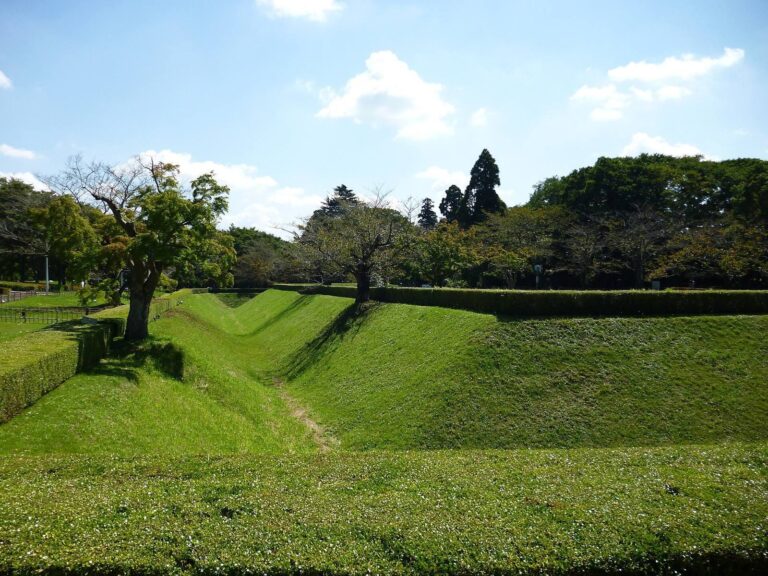
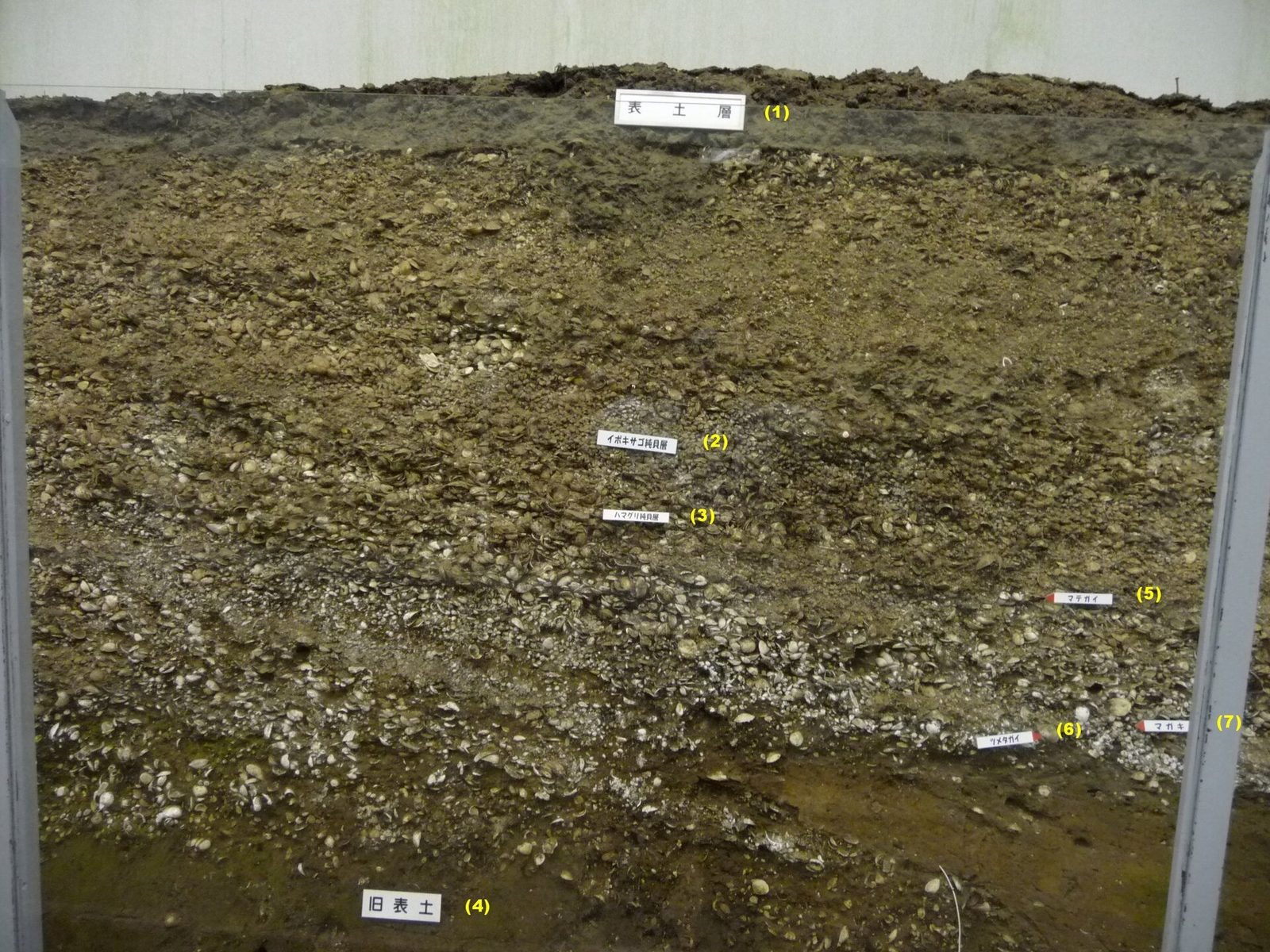
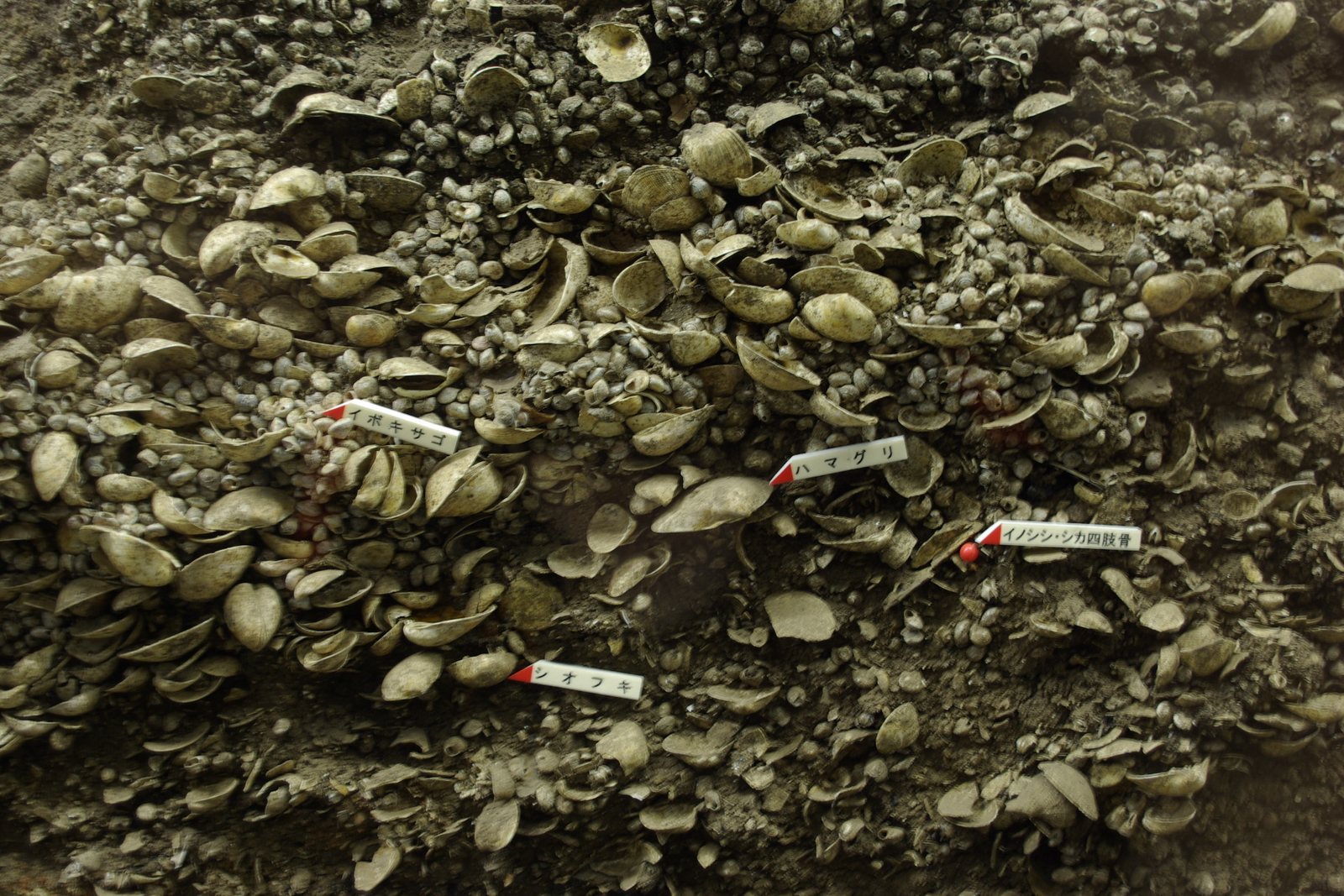
The two principal middens form a connected figure-eight shape and a double-ring settlement complex. The northern midden is approximately circular and about 130 metres in diameter. The southern midden has a horseshoe shape and a long axis of about 170 metres. Repeated deposits of shells and pottery fragments make up the midden layers.
Dwellings and surrounding features
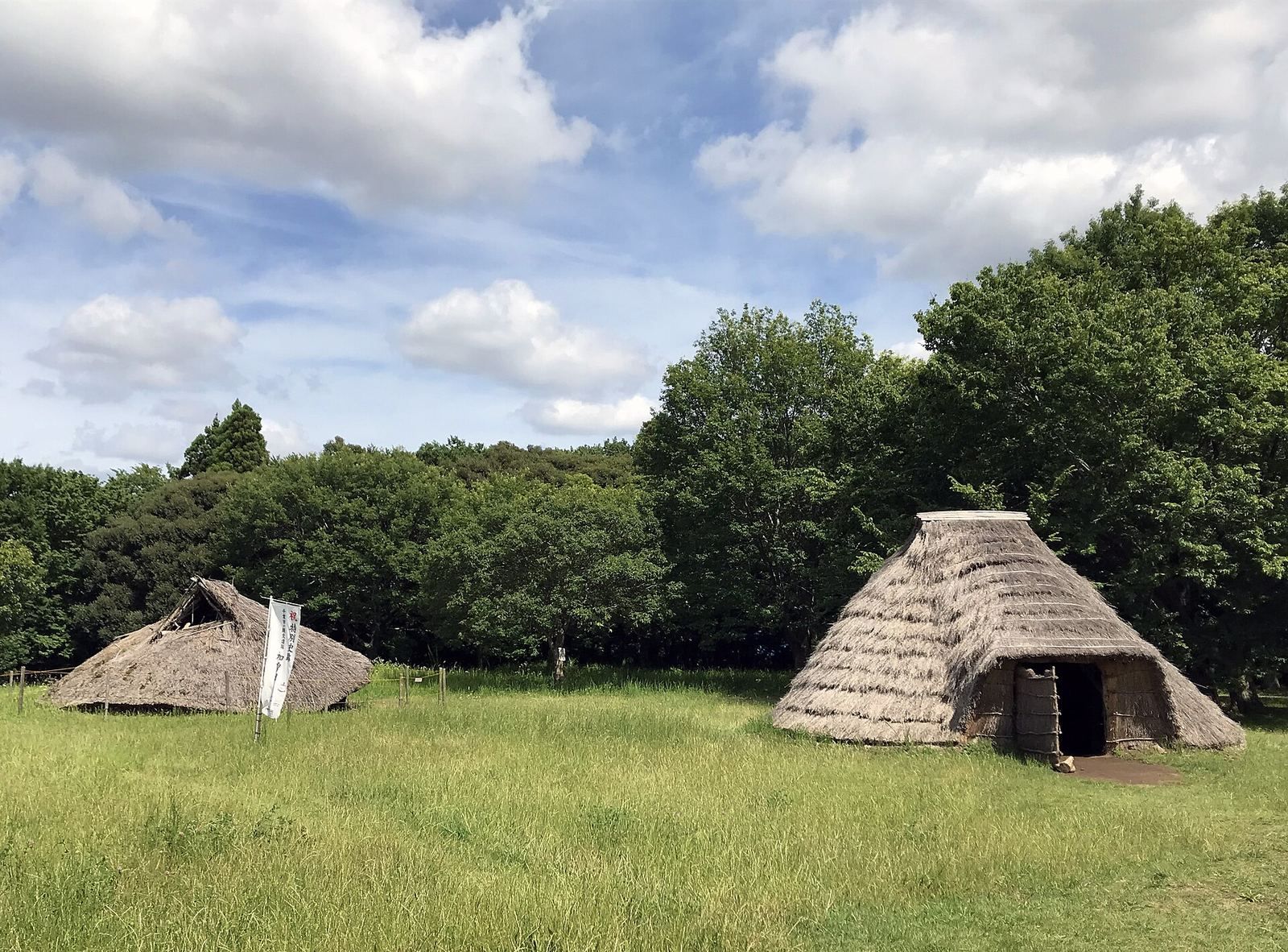
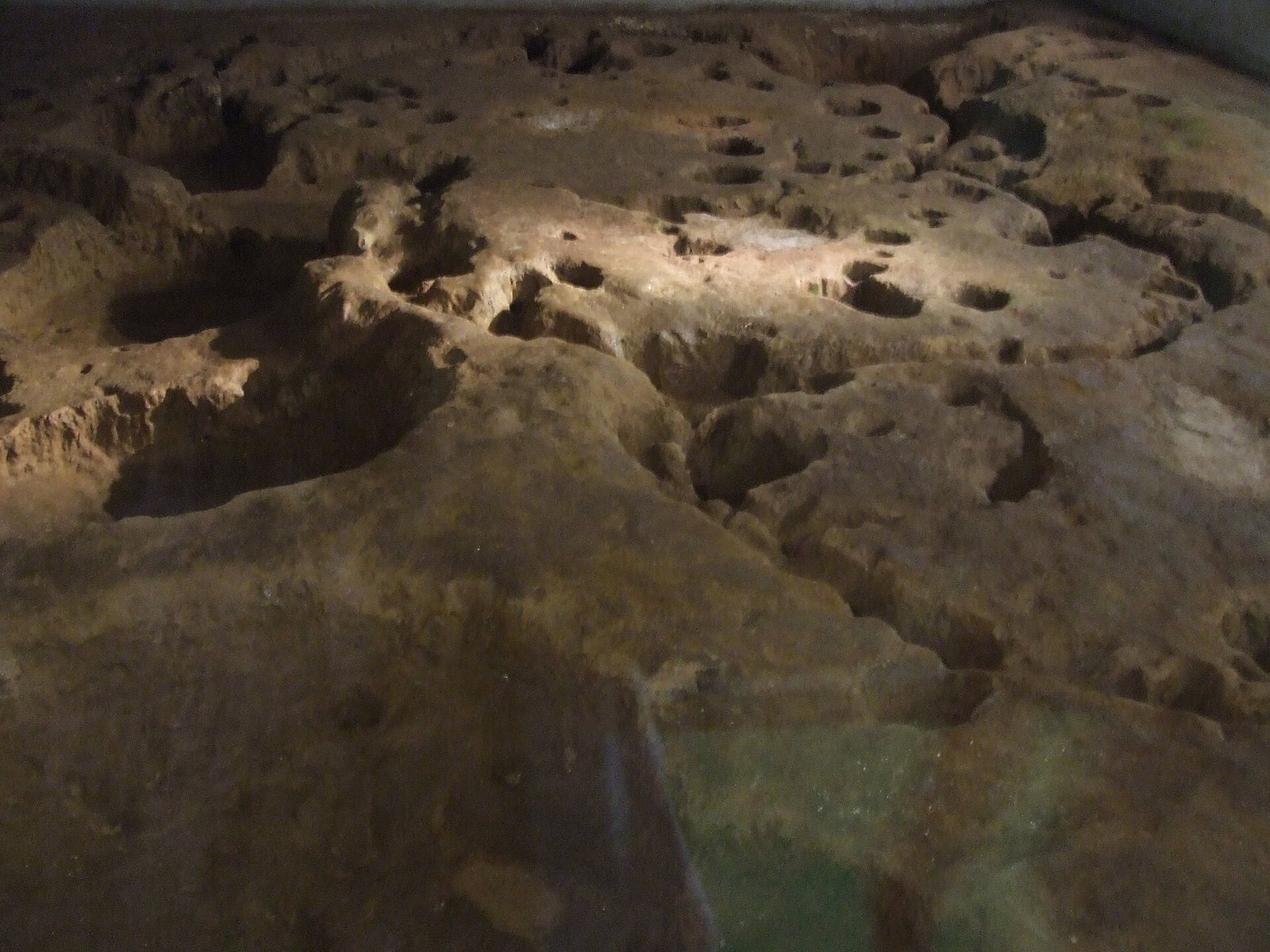
Smaller Jōmon-period middens and dwelling remains are distributed around the two main deposits. The wider site contains 110 pit dwellings, houses with floors below ground level and roofs supported above them. Of these, two belong to the early Jōmon period, 73 to the middle period, 34 to the late period and one to the final period. The largest dwelling measured more than 19 metres across.
Food remains, tools and burials
Excavated midden material includes clam and oyster shells, bones of fish such as black sea bream and sea bass, and remains of Japanese chestnuts, walnuts and acorns. Fishhooks made from boar and deer bones and antlers were also recovered. Excavations yielded 53 human remains: 14 from the middle Jōmon period, 35 from the late period and four from the final period. The finds also include bones representing six dogs; dog remains were buried with human remains.
The museum and archaeological investigation
The Kasori Shell Mound Museum stands in the park, within the Special Historic Site. Its aging building displays pottery, stone tools, animal bones and other material excavated at Kasori. Across 37 excavations at 14 locations, about 8 percent of the site has been excavated.