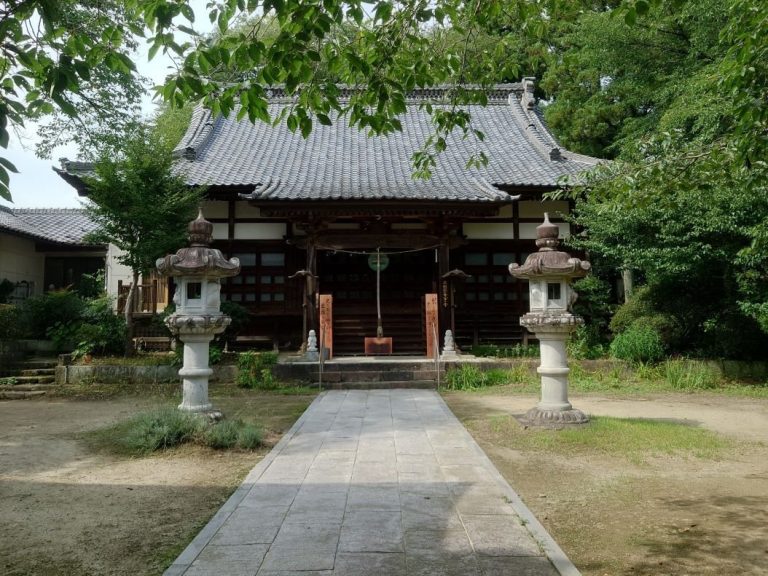
Kashōzan Ryūge-in Temple: A Sōtō Zen Temple in Japan


Site at a Glance
- Rating
- 4.2
- Popularity
- Low
- Country
- Japan
- Primary era
- Unclassified
- External website
- Open
- Eras represented
- Unclassified
- Civilizations
- Unclassified
- Site type
- Religious
- Remains
- Monastery
On this page10 sections
History
Foundation tradition
Kashōzan Ryūge-in Temple is a Sōtō Zen temple in Japan, located in Numata on the mid-slope of Mount Kashōzan, with a foundation tradition dating to 848. Its formal name is Kashōzan Ryūge-in Miroku Gokokuji, and it is also called Mirokuji or simply Kashōzan. The temple’s principal image is Shō Kannon, a Buddhist manifestation of Avalokiteshvara associated with compassion.
The traditional account connects the temple’s foundation with Prince Kuzuhara, a son of Emperor Kammu who later served as governor of Kōzuke. Emperor Kammu ruled from 781 to 806. Prince Kuzuhara is said to have invited Ennin, a prominent ninth-century monk of the Tendai school, to establish the temple. Tendai is a major Japanese Buddhist tradition centered institutionally on Mount Hiei and based on teachings transmitted from China.
The chronology of this foundation tradition is difficult to reconcile with the known careers of its participants. Prince Kuzuhara had already left the provincial governorship by 848, while Ennin had only recently returned from Tang China. Ennin is therefore regarded as the nominal founder rather than necessarily the person who historically established the temple.
Sōtō revival
In 1456, the temple was revived and converted to the Sōtō school under the monk Tenson Keijun, who became its revitalizing founder. Sōtō is a Zen school emphasizing seated meditation and monastic discipline. This change gave Kashōzan its later religious identity while preserving the temple’s association with the mountain and its earlier foundation tradition.
Tokugawa patronage
During the Edo period, Kashōzan became a prayer site of Tokugawa Ieyasu. The temple received a vermilion-seal stipend of 100 koku, an Edo-period measure of rice used to express income and institutional standing, together with formal status associated with 100,000 koku.
Fires and rebuilding history
A fire in 1879 destroyed the main hall, founder’s hall, bell tower, monks’ quarters, and other buildings. Kashō Hall was destroyed by a second fire in 1885. Another fire in 1929 destroyed the monks’ quarters, bell tower, main gate, and additional structures, repeatedly altering the physical form of the temple complex.
The Kashōzan tengu tradition
Kashōzan’s religious identity is also linked with a tengu, a supernatural mountain being associated in Japanese tradition with ascetic practice and extraordinary powers. The temple’s legend tells of a highly gifted disciple of Tenson Keijun who guided ascetics to a rock shelter at the mountain gate and to steep rocky places that ordinary people could not reach. Although he retained a youthful appearance, he later declared himself an incarnation of Kashō Buddha, one of the Buddhas of the Buddhist past.
After Tenson transferred the abbacy to the second abbot, the disciple vowed to remain spiritually present on the mountain to relieve the suffering of future beings. He then ascended from a mountain peak, leaving a tengu mask behind. This story became the basis for a customary pilgrimage practice. On a first visit, a pilgrim borrows a tengu mask from a hall on the temple grounds; on a later visit, the mask is returned with a newly purchased one, and another mask is borrowed.
Remains
Kashōzan Ryūge-in Temple occupies a mid-mountain setting on Mount Kashōzan in northern Numata. Its physical and religious landscape includes the temple buildings, a hall associated with the tengu-mask practice, the principal image of Shō Kannon, and the Horse-Hiding Cedar, a cedar recognized as a Numata City natural monument.
Temple complex
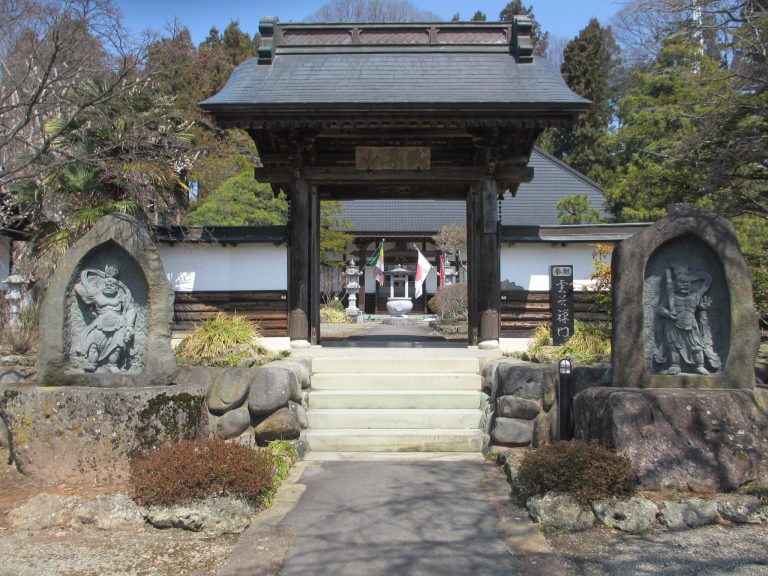
The temple complex historically comprised a main hall, founder’s hall, bell tower, monks’ quarters, main gate, and Kashō Hall. These buildings formed the principal architectural elements of the institution as it developed through its Tendai foundation tradition, its fifteenth-century Sōtō revival, and its later history. The repeated fires of the nineteenth and twentieth centuries shaped the buildings and their arrangement over time.
Tengu hall and mountain features
A hall on the grounds is associated with the practice of borrowing and returning tengu masks. The legend of the mountain disciple also identifies a rock shelter at the mountain gate and steep rocky areas on Mount Kashōzan as places connected with ascetic activity and the disciple’s extraordinary powers. These features link the temple’s built setting with the sacred mountain landscape described in its tradition.
Horse-Hiding Cedar
The Horse-Hiding Cedar is an associated cedar on the temple grounds and is designated as a natural monument by Numata City. It forms part of the natural setting through which Kashōzan’s religious traditions are understood.