Karlevi Runestone: A Late 10th-Century Memorial on Öland
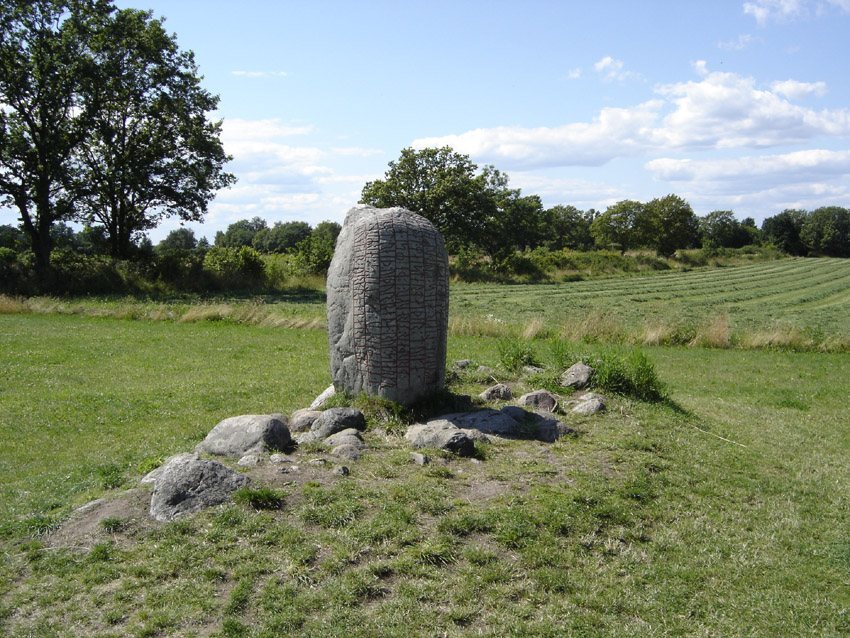
Site at a Glance
- Popularity
- Medium
- Country
- Sweden
- Primary era
- Medieval
- Eras represented
- Medieval
- Civilizations
- Norse
- Site type
- Civic
- Remains
- Monument
On this page5 sections
History
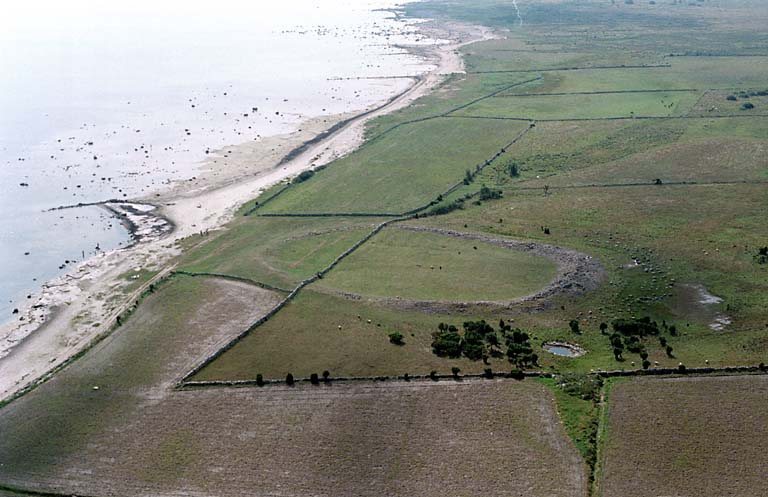
The Karlevi Runestone is a late-10th-century memorial on the coast of Kalmarsund, west of Karlevi on the Swedish island of Öland. It is considered contemporary with the Battle of Fýrisvellir, a conflict known from medieval Scandinavian history and generally associated with the area around Uppsala. Warriors who took part in the battle may have raised the stone in memory of their lord. Its prose inscription names Sibbi Godi, son of Foldarr, and says that Sibbi’s retinue set it up. Godi was a title for a local leader with religious and political authority.
The Scandinavian runic-inscription catalog Rundata lists the stone as Öl 1. Its text preserves the earliest known written stanza of skaldic verse, poetry composed by Norse poets, and the only complete skaldic stanza preserved on a runestone.
Remains
The stone and its inscriptions
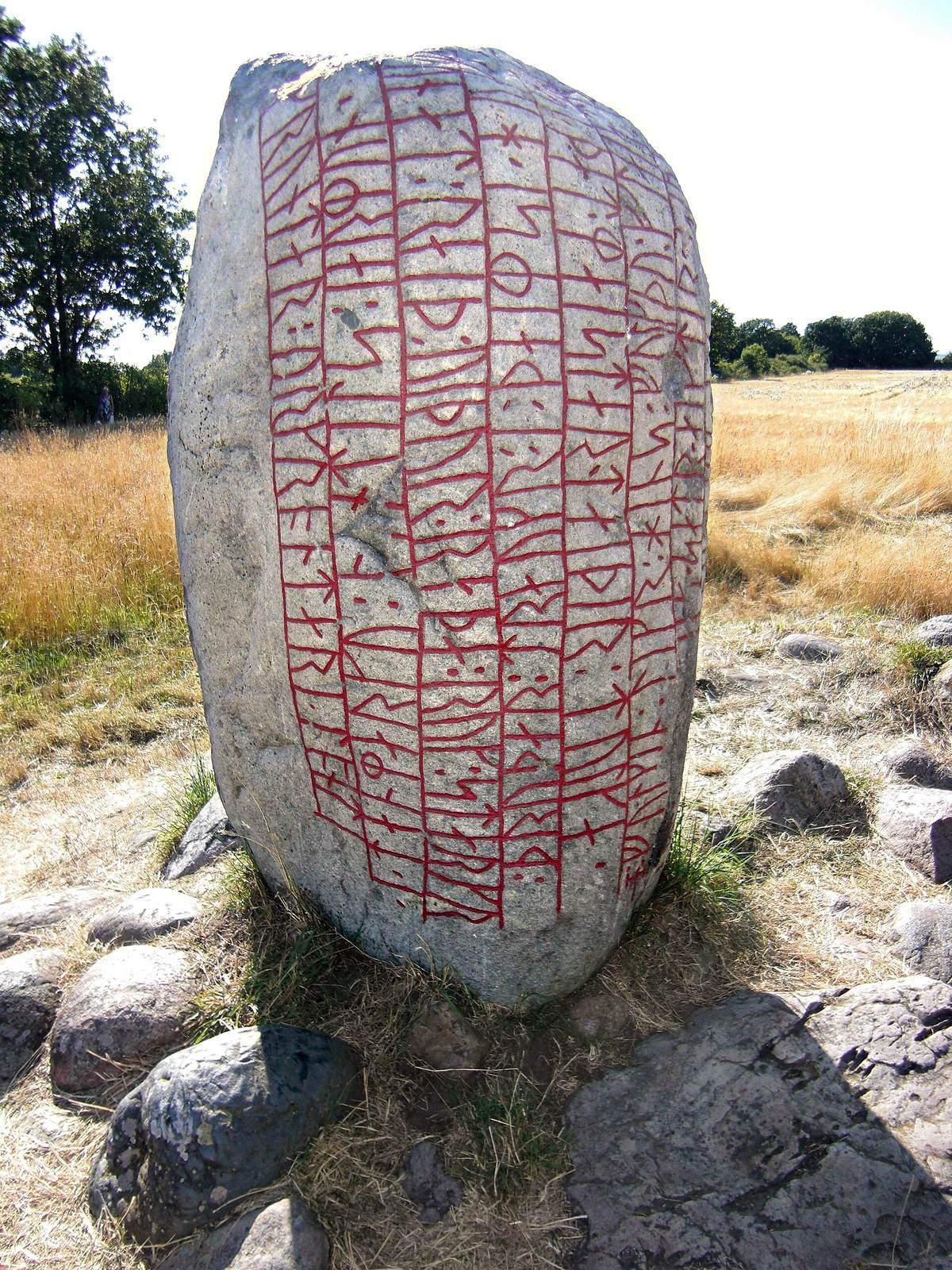
The granite stone stands 1.4 metres high on the Kalmarsund coast, west of Karlevi on Öland. Its runes are arranged in bands in RAK style, with straight band ends and no attached dragon or serpent heads.
Runic inscription
The runic text, in Old Norse in a Swedish-Danish dialect, combines prose and verse. The poem describes a leader of great deeds lying concealed in a burial mound, praises his strength in battle, and says that Denmark will not again be ruled by a leader of comparable force. The precise meaning of the reference to Denmark is uncertain. The verse also invokes Endill’s broad realm; Endill is a sea-king figure in Norse poetry.
The poem uses kennings, figurative expressions that replace a direct name or description. These include ‘battle-tree of Þrúðr,’ referring to Þrúðr, a figure identified as Thor’s daughter, and Ræið-Viðurr, interpreted as a warrior or possibly a seafarer. Viðurr is another name for Odin.
Marks on the reverse
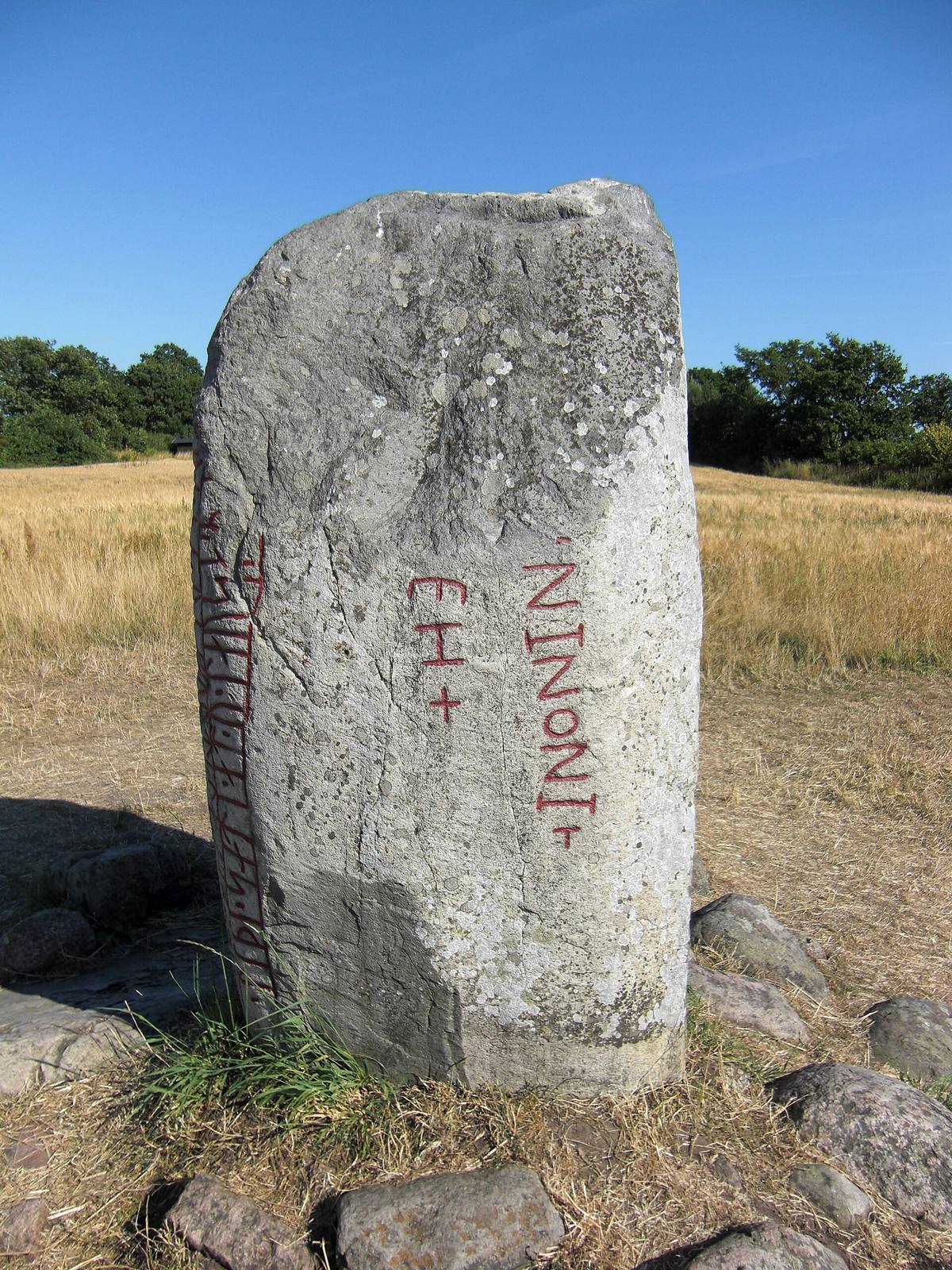
A non-runic inscription on the reverse may read ‘In the name of Jesus.’ A small Christian cross and a representation of Thor’s hammer, Mjöllnir, appear alongside it.