Sassen Dolmens: Prehistoric Megalithic Tombs in Germany
Site at a Glance
- Popularity
- Very Low
- Country
- Germany
- Primary era
- Stone Age
- Eras represented
- Stone Age
- Civilizations
- Unclassified
- Site type
- Burial
- Remains
- Necropolis
On this page12 sections
History
Construction and reuse
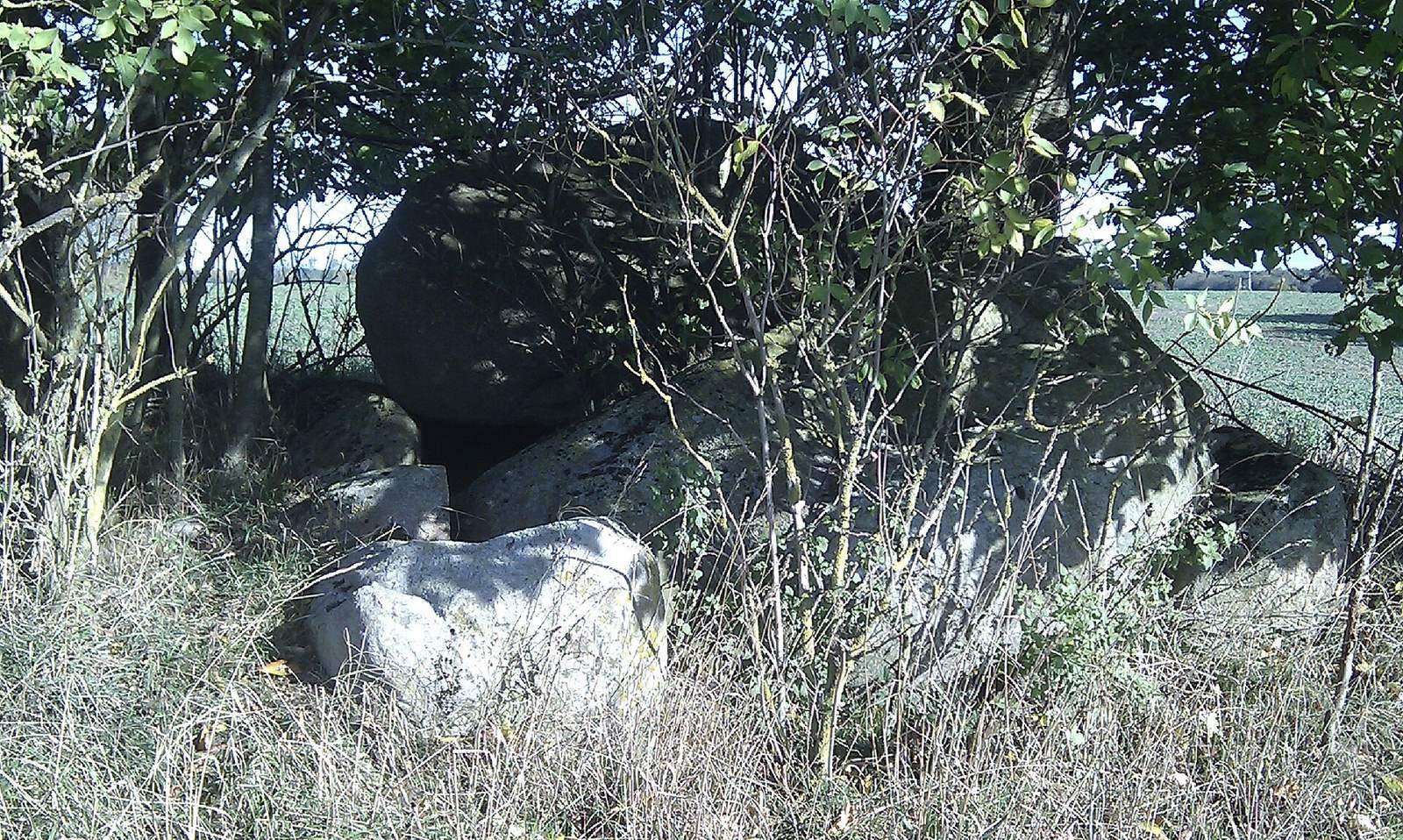
The Sassen Dolmens are a group of megalithic tombs east of Sassen, near Loitz in Germany, built by the Funnel Beaker culture, a prehistoric European archaeological culture, between 3500 and 2800 BCE. A dolmen is a burial chamber made from upright stones supporting large capstones. The five investigated tombs served as graves and were later reused by people belonging to other prehistoric cultural groups.
Sassen 2 was used again by communities associated with the Single Grave culture and the Elbe-Havel group, as well as the Globular Amphora culture, named for a characteristic pottery form. Sassen 4 was reused by people of the Single Grave culture, while Sassen 6 saw later use by communities linked to all three groups.
Excavation
German archaeologist Ewald Schuldt excavated five of the tombs in 1968. Two nearby structures, Sassen 3 and Sassen 5, were not investigated.
Remains
Setting and construction
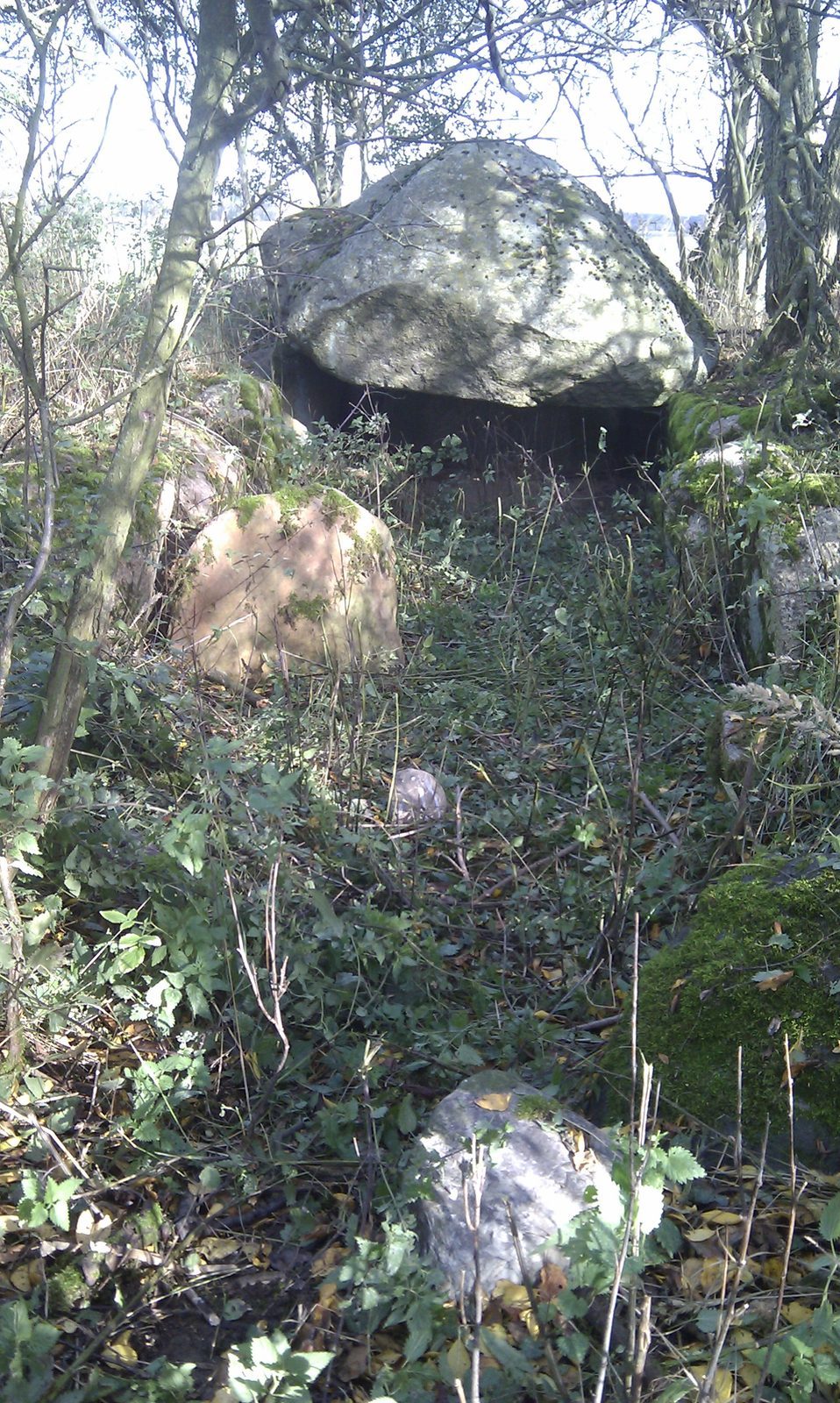
The five investigated tombs share a northeast–southwest alignment and occupy earthen mounds covered by a thin layer of rounded stones. The stone covering may have helped limit erosion or made the mounds look like stone-built structures. The tomb chambers are formed from upright supporting stones and capstones, with red sandstone slabs used for floors in several chambers.
Individual tombs
Sassen 1
Sassen 1 measures 5 metres long, 1.8 metres wide and 1.4 metres high. All seven supporting stones remain in its chamber. One of its four capstones lies over the northern part of the chamber and bears seven cup marks, small cup-shaped depressions carved into stone. Stones are missing around the entrance, leaving the forechamber, an entrance-side chamber, open to view; granite slabs bound it on one side. Red sandstone slabs form the floor. Although loose stones give the tomb a neglected appearance, it is well preserved. Finds included seven pottery sherds and a transverse arrowhead.
Sassen 2
Sassen 2 is 4 metres long, 2 metres wide and 1.4 metres high. Its nine chamber supports and one capstone remain in their original positions. Another capstone is broken inside the chamber, while pieces of a third lie both within and beside it. The two marked capstones bear 18 and 44 cup marks. At the southwest end, a trapezoidal forechamber separates off the narrower entrance, which has a 0.7-metre passage. The floor combines red sandstone slabs and clay, reddened by firing. Dense vegetation disturbs the structure.
Finds from Sassen 2 included cremated remains, charcoal, 95 pottery sherds, 12 transverse arrowheads and six blades. Other objects included four double-conical vessels, four globular amphorae, two flat axes, two scrapers, two narrow chisels, two amber beads, two shoulder vessels and two tall pots. The assemblage also contained an axe with an angled butt, a heart-shaped arrowhead, a hammerstone, a drill, a wide-mouthed vessel and a wide-mouthed pot.
Sassen 4
Sassen 4 measures 4.75 metres long, 2 metres wide and 1.4 metres high. All eight chamber supports remain, and one of the two capstones tilts partly into the chamber. Supports are missing from the entrance, as is the capstone at the chamber’s southern end. Granite slabs set between pairs of wall stones define the open forechamber. Its floor consists of red sandstone slabs reddened by firing. Finds included cremated remains and charcoal, 75 sherds, eight transverse arrowheads, six blades, two tall pots, an amber bead, a flat axe, a hammerstone, an axe with an angled butt, a bowl and a stone axe.
Sassen 6
Sassen 6 is 4.8 metres long and 1.4 metres wide, narrowing to 1.1 metres at the front; it stands 1.4 metres high. Its supporting stones are buried in the ground. All remain in place, along with three of the chamber’s four capstones; the passage capstone is missing. Red sandstone slabs and clay form the floor, which was reddened by firing. The finds comprised cremated remains, charcoal, 85 sherds, 13 transverse arrowheads and five blades. They also included three amber beads, one shaped like a double axe, three flat axes, two hammerstones, two globular amphorae, a spherical bowl and an axe with an angled butt.
Sassen 7
Sassen 7 measures 4.4 metres long, 2.1 metres wide and 1.5 metres high, narrowing to 1.5 metres at the front. Its nine supporting stones and all three chamber capstones remain in their original positions. The passage capstone is missing. The floor is clay reddened by firing.
Sassen 3 and Sassen 5
Two additional damaged structures, Sassen 3 and Sassen 5, lie nearby.