Arsameia: A Commagenian Royal and Cult Center in Türkiye
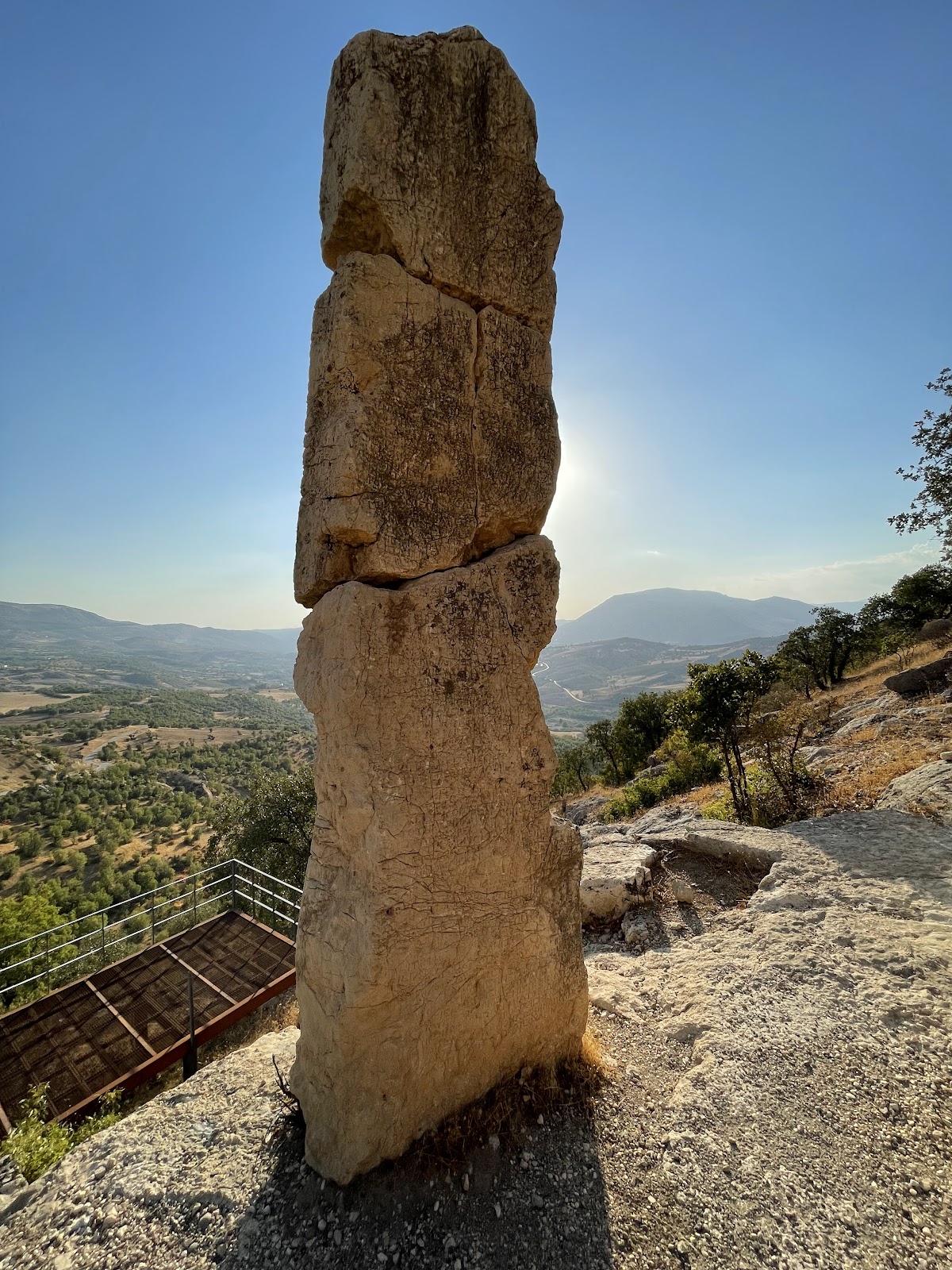
Site at a Glance
- Rating
- 4.5
- Popularity
- Low
- Country
- Turkey
- Primary era
- Classical
- Eras represented
- Classical
- Civilizations
- Unclassified
- Site type
- Civic
- Remains
- Palace
On this page14 sections
History
Foundation in the Hellenistic period
Arsameia is a Hellenistic royal and cult center in Türkiye, near Old Kâhta beside the Kahta River, ancient Nymphaios. The Kingdom of Commagene established the site as a royal seat during the third century BCE. Commagene was a small kingdom that combined Greek and Iranian royal traditions, and its rulers used architecture, inscriptions, and religious imagery to express links between both cultural spheres.
The settlement was formerly called Nymphaios. In the third century BCE, the Armenian king Arsames renamed it Arsameia, a name traditionally associated with his reign between 255 and 225 BCE. Archaeological interpretations place the initial establishment of the site around the middle of that century, although the precise history of its foundation remains partly uncertain. Arsames is also associated with the foundation of the Kingdom of Commagene.
In 235 BCE, Arsameia was taken by Antiochus Hierax, who was fleeing his brother Seleucus II. The fortification of the settlement has been interpreted in the setting of the military conflicts of this period. Built on a mountainous double summit beside the river, Arsameia occupied a defensible position that later supported its royal and ceremonial functions.
Royal center under Antiochus I
During the reign of Antiochus I, Arsameia served as a royal and administrative center and as the kingdom’s summer residence. The Commagenian ruler moved from the primary capital to a palace on the hill during the warmer season. Antiochus expanded the palace and established a hierothesion, a royal burial and cult complex, for his father, King Mithridates I Kallinikos.
The Arsameia hierothesion combined the burial place of Mithridates I with an area for ritual activity. Its processional route, rock-cut chambers, inscriptions, reliefs, and summit buildings formed a connected architectural and religious setting. The Site III inscription names Antiochus I, Mithridates I, and Queen Laodice, Mithridates’ wife and Antiochus’ mother, while also setting out the lineage of the royal house and the rites required at the complex.
Roman and medieval phases
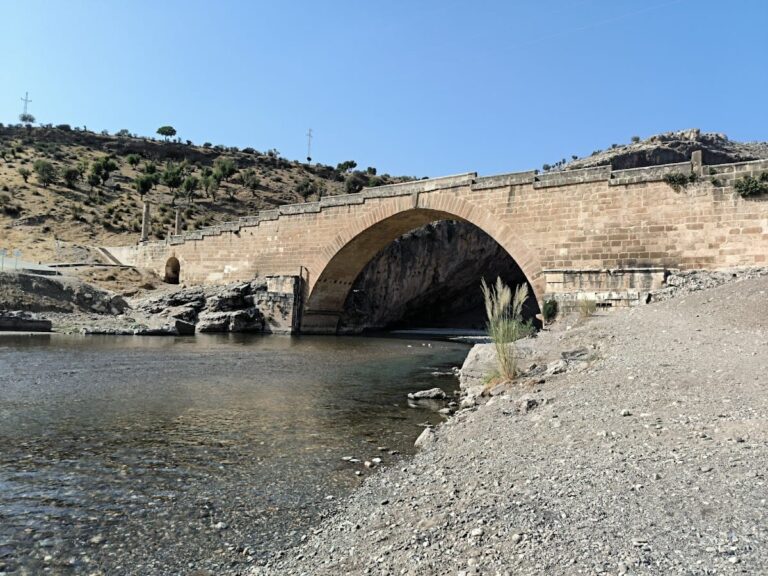
Arsameia remained part of the wider history of the region after the Hellenistic period. In AD 72, Emperor Vespasian incorporated Commagene into the Roman Empire. Soldiers of Legio XVI Flavia Firma, a large organized unit of the imperial Roman army, then used ancient buildings at Arsameia as a quarry. Stone taken from the site was used to construct the Cendere Bridge, and Roman soldiers also removed stones from local graves for the same project.
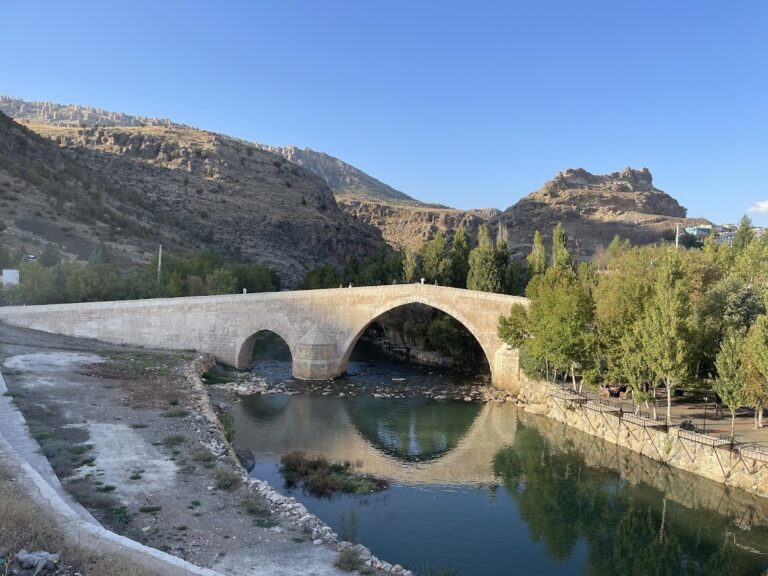
Across the Kahta River stood the palace area and fortress later known as Yenikale, or New Castle. The Site III inscription places the palace buildings of the Commagenian rulers there, while the surviving fortress is principally a Mamluk-period structure. An earlier fortress was conquered and destroyed in 1286 by Kara Sonkar, governor of Aleppo. Inscriptions in the surviving castle record construction and restoration under the Mamluk sultans Qala’un, Al-Ashraf Khalil, and al-Nasir Muhammad.
A structure called the Pigeon Castle supplied water to Yenikale and carried it across a bridge to Arsameia. Its pigeon house continued to serve communications in the thirteenth century, including the gathering of information about Ilkhanate troop movements before the Second Battle of Homs. To the west of Yenikale and Arsameia, Friedrich Karl Dörner and Wilhelm Winkelmann identified an iron-smelting area connected with the wider settlement.
Rediscovery and excavation
Modern identification of Arsameia began in 1951, when a local resident directed the German archaeologist Friedrich Karl Dörner to a carved stone known as the Picture Stone during Dörner’s research on Mount Nemrut. Dörner identified the carving as a relief of Mithras. The subsequent discovery of the Site III inscription established the location as the Commagenian royal seat of Arsameia.
Dörner began systematic excavations in 1953. Working with the American archaeologist Theresa Goell, his team investigated the reliefs, tunnels, inscriptions, and other remains, especially between 1953 and 1956. Further excavations began in 1963, and Dörner continued regional work until 1987. Some objects from Arsameia are exhibited in the Archaeological Museum of Gaziantep. A head attributed to a statue of Antiochus I was reported missing and is believed to have been taken abroad, although its present location is unknown. The site is administered as an archaeological site by the Adıyaman Museum Directorate.
Remains
Hilltop layout and ceremonial approach
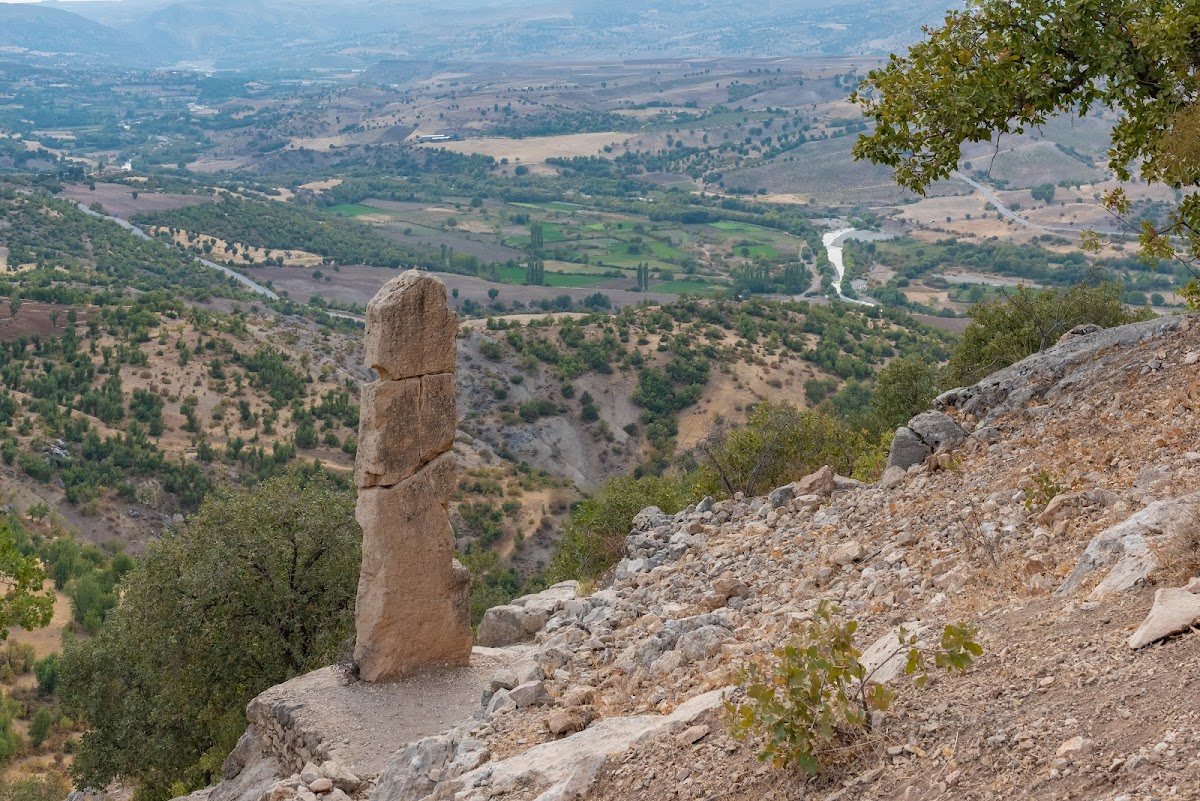
Arsameia occupies a mountainous site beside the Kahta River, opposite the later Yenikale fortress. The settlement was built on the double summit of a hill enclosed by a defensive wall. A steep, zigzagging route climbs toward the summit and probably follows the ancient ceremonial way. Dörner identified its principal archaeological locations as Sites I, II, and III, with the route continuing upward to the acropolis, the elevated central area of the settlement.
Rock-cut and relief complexes
Site I
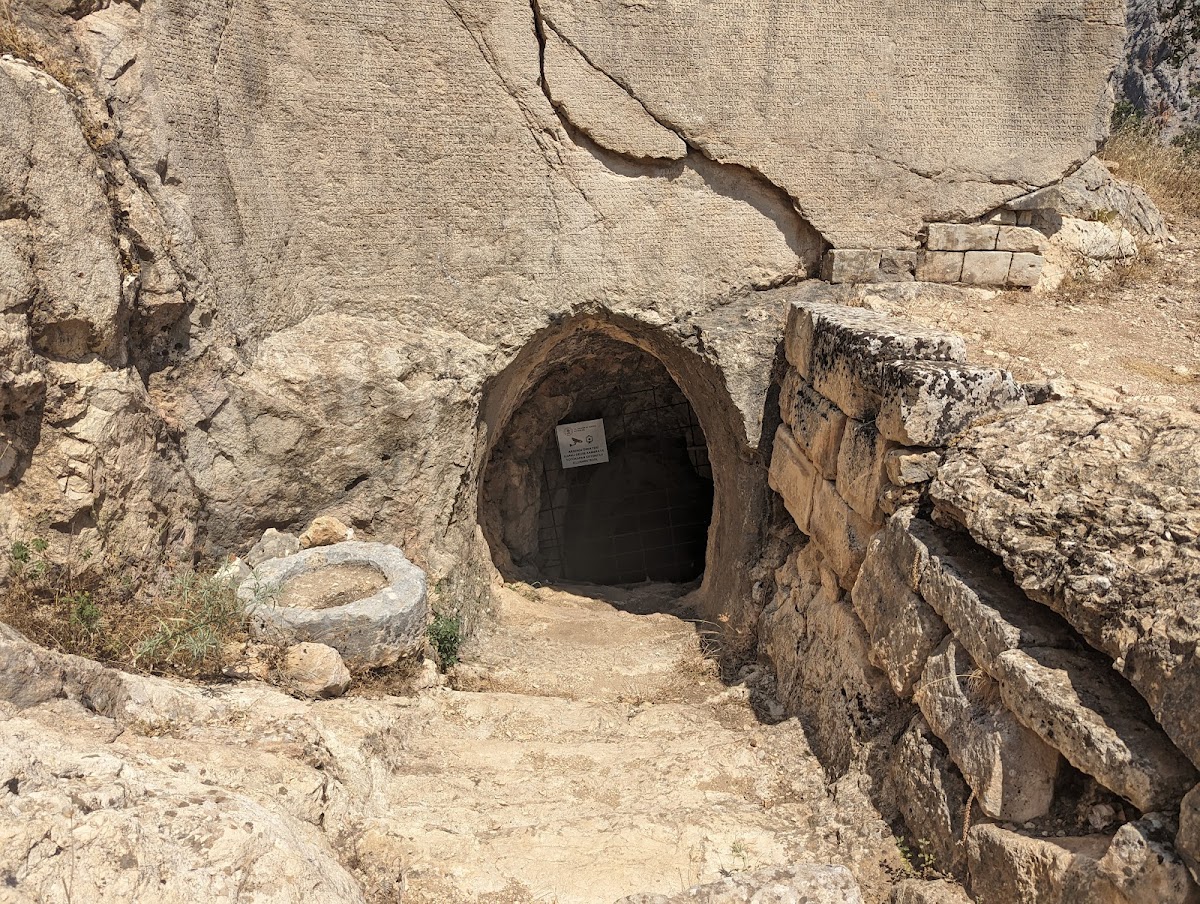
Site I contains natural caves used by people in prehistoric times and a monumental rock-cut niche with an arched ceiling. A passage from the niche descends by 14 steps toward a vertical tunnel and a chamber approximately 8 by 8 metres and 9 metres high. The chamber’s function remains uncertain. Dörner interpreted it as a temple of Mithras, while other archaeologists have proposed that it was the burial chamber of Mithridates I Kallinikos.
A poorly preserved dexiosis relief stands beside the entrance to the Site I tunnel. Dexiosis was an ancient convention showing a ruler or deity shaking hands with a divine or heroic figure. Mithras can probably be recognized on the right by his radiant head, while the other figure remains unidentified. Two blocks in front of the niche bear reliefs of human or divine figures, and inscriptions cover their sides and backs.
Site II
Site II contains the so-called Mithras Relief, the surviving right-hand portion of a dexiosis scene. Mithras is shown shaking hands with either Antiochus I or Mithridates I, and the identity of the other figure remains uncertain. Mithras wears a Phrygian cap, has radiating solar rays, and holds a barsom, a ritual bundle of twigs used in Iranian religious ceremonies. Inscriptions cover the back of the stone block.
Dörner reassembled the surviving upper and lower sections of the relief, so its present appearance includes a modern archaeological reconstruction. Mithras was a solar deity worshipped in Iranian religious traditions and later in the Roman world. At Arsameia, the image formed part of a wider program linking the Commagenian royal house with divine and heroic figures.
Site III
Site III preserves the best-preserved dexiosis relief at Arsameia. It shows King Mithridates I shaking hands with the naked, bearded hero Heracles, who is identified by his club. Mithridates wears royal robes and a tall Armenian-style crown called a kitaris. Heracles served here as the king’s divine or heroic counterpart, while the handshake expressed a relationship of equality or close association.
Above the entrance to the Site III tunnel, a Greek inscription is arranged in five columns. It describes the foundation of Arsameia, the construction of the hierothesion, the royal lineage, associated buildings and reliefs, and the religious rites to be performed there. It also gives the titles of Antiochus I, Mithridates I, and Queen Laodice. Earth protected much of the inscription from antiquity, leaving it in an exceptionally good state of preservation. It is described as one of the longest Greek inscriptions in Anatolia.
An inscription behind a dexiosis relief names two priests appointed to serve participants at festivals for Antiochus, Mithridates, Apollo, Helios, and Hermes. Above the inscribed wall is another greeting scene, showing either Antiochus I or Mithridates I welcoming Heracles. This is the best-preserved example of the greeting scenes at the site.
Site III tunnel
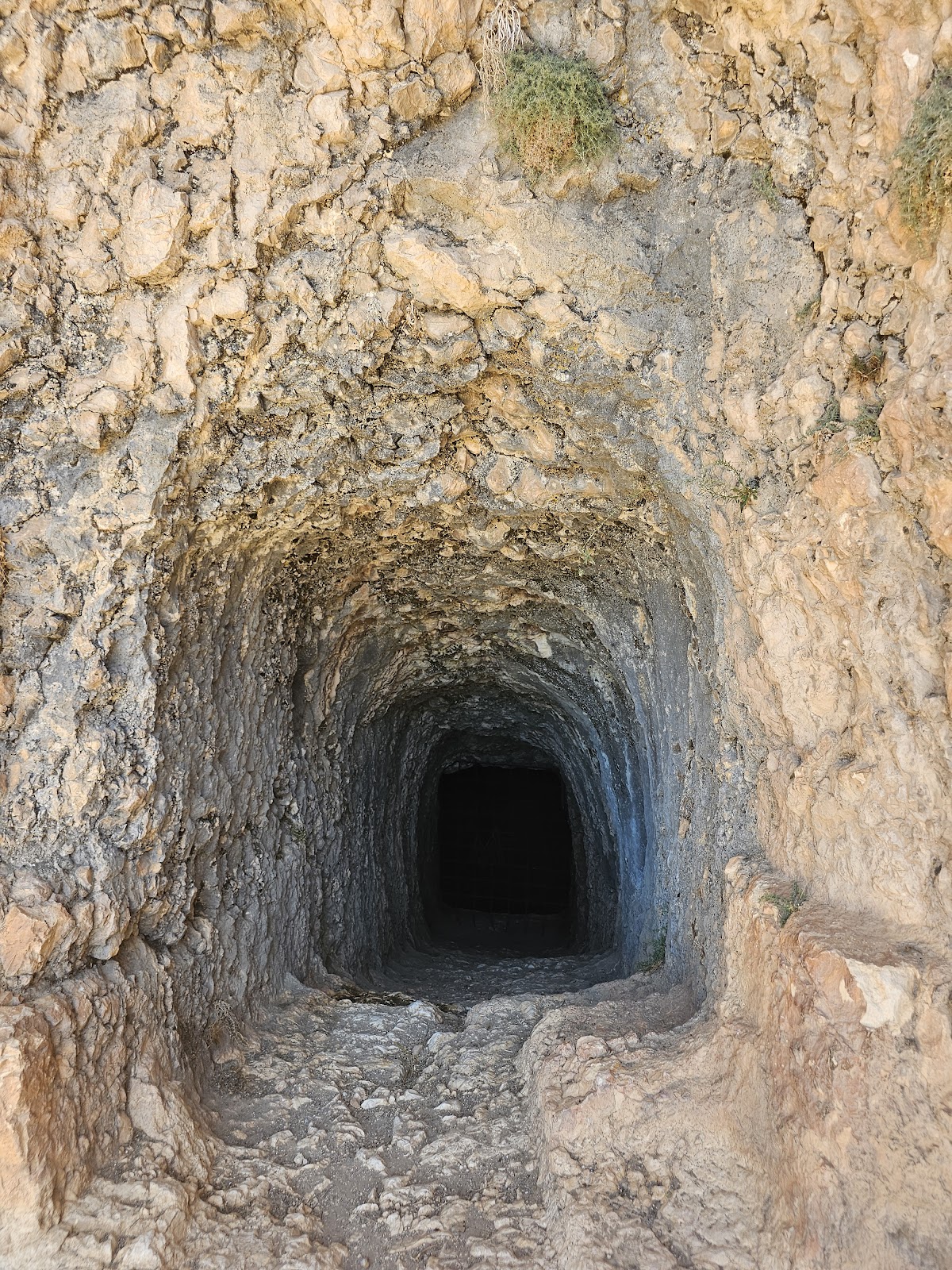
Below the inscribed wall, a rock-cut passage descends steeply for approximately 158 metres. The route includes worn steps, becomes lower and steeper, and has at times been affected by flooding. Stones and pottery fragments were found at its lower end. Its purpose remains unknown, but its scale and position form an important part of the physical arrangement around the Site III complex.
Acropolis and summit buildings
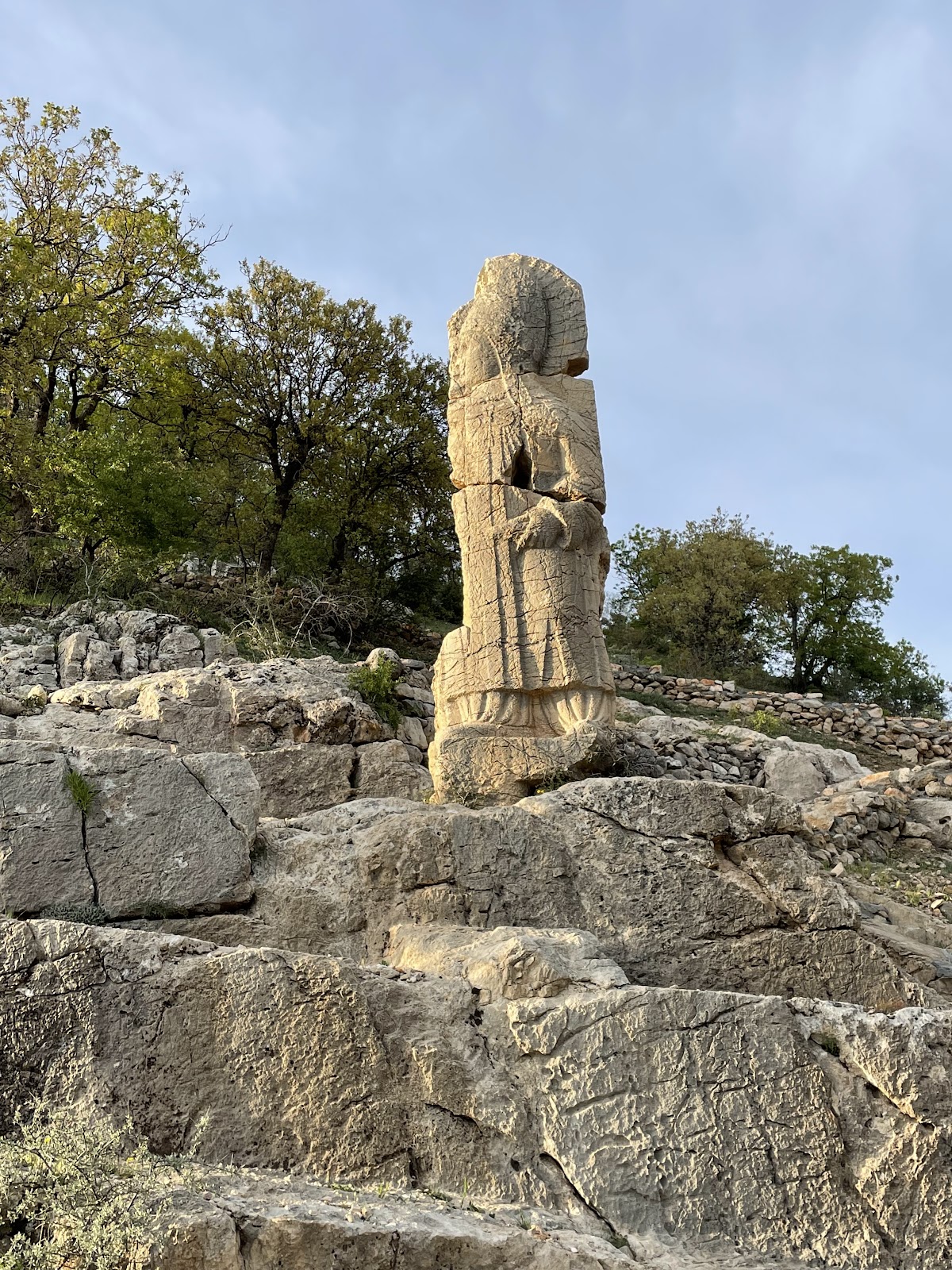
Foundations of summit buildings survive at the acropolis, along with mosaic floors dated to the second century BCE. Excavation recovered sculpture fragments representing Antiochus I and his mother Laodice. These finds led Dörner to propose that a mausoleum of Mithridates I once stood at the summit and was decorated with the statues. The identification remains an interpretation rather than a confirmed conclusion.
Iron-smelting area
West of the two hills containing Arsameia and Yenikale, an iron-smelting area preserves evidence of industrial activity associated with the wider settlement. Its remains include furnace walls, slag, pieces of residual pig iron known as salamanders, sharp metal fragments, and coins. Together, these materials add an industrial component to the royal, administrative, and ritual remains on the hills.