Kangelo Castle: A Sassanian Fortress and Religious Site in Iran
Visitor Information
Google Rating: 4.5
Popularity: Low
Country: Iran
Civilization: Sassanid
Site type: Military
Remains: Fort
History
Kangelo Castle is located in the village of Kangelo, within the municipality of Savadkuh, Iran. This ancient fortress was established by the Sassanian civilization roughly 1,500 years ago during late antiquity. Its origins lie in a time when the Sassanian Empire was a dominant political and cultural force in the region.
During the Sassanian period, Kangelo Castle was constructed not only as a military stronghold but also held a religious significance. Archaeological evidence points to its use as a place of worship dedicated to Mithra, the ancient Indo-Iranian deity associated with covenant and light. Some findings also suggest that it might have served as a sanctuary for Anahita, the goddess of water and fertility, indicating the castle’s multifaceted religious role.
Throughout the early Islamic conquests, Kangelo Castle continued functioning as a site of Zoroastrian worship, specifically as a fire temple. Despite the expanding influence of Islam, local military leaders, known as spahbeds, maintained the longstanding religious traditions of their ancestors within this fortress. The castle’s strategic location and construction allowed it to resist invasions, enduring several attacks by Arab and later Mongol forces without losing its defensive integrity.
By the modern era, the castle had largely fallen into ruin but retained its historical importance. It was officially recognized as a national heritage site of Iran on July 22, 2000, a formal acknowledgment of its cultural and historical value.
Remains
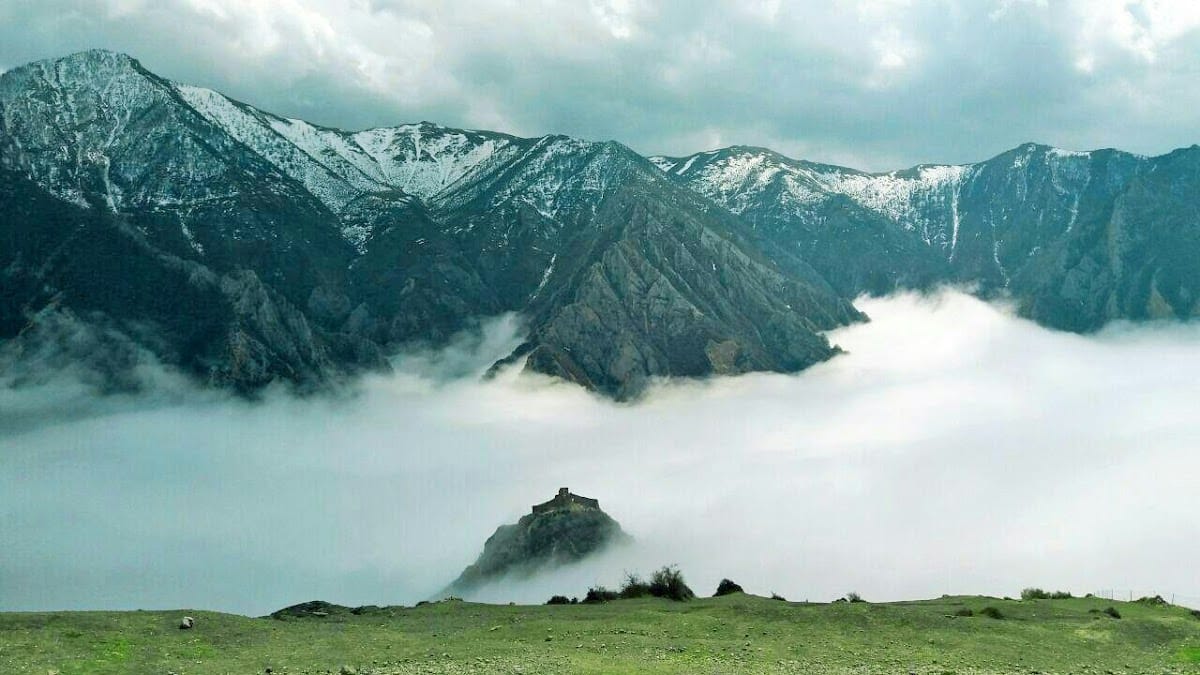
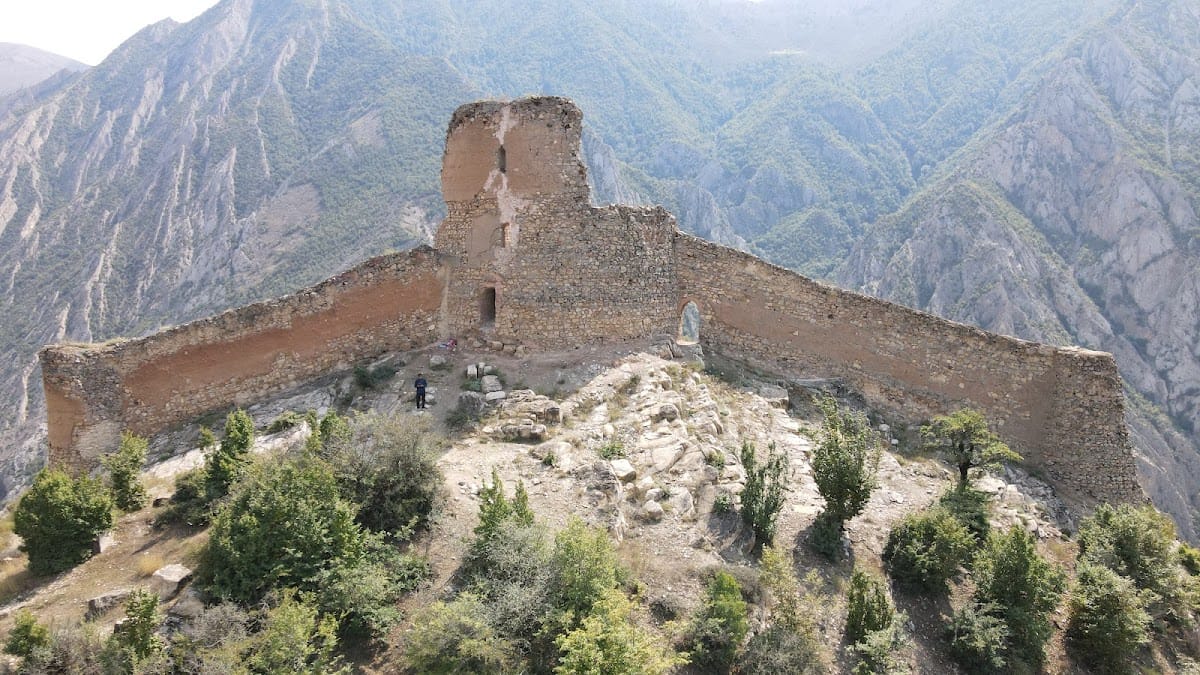
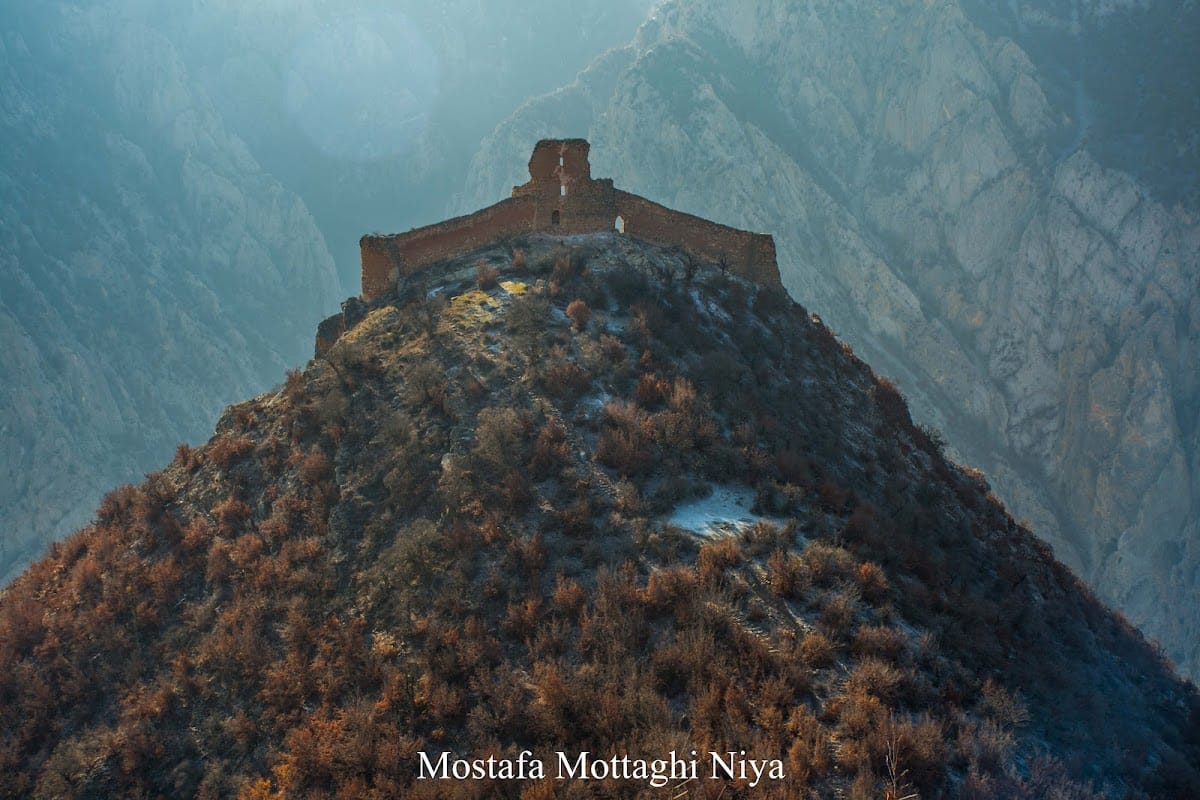
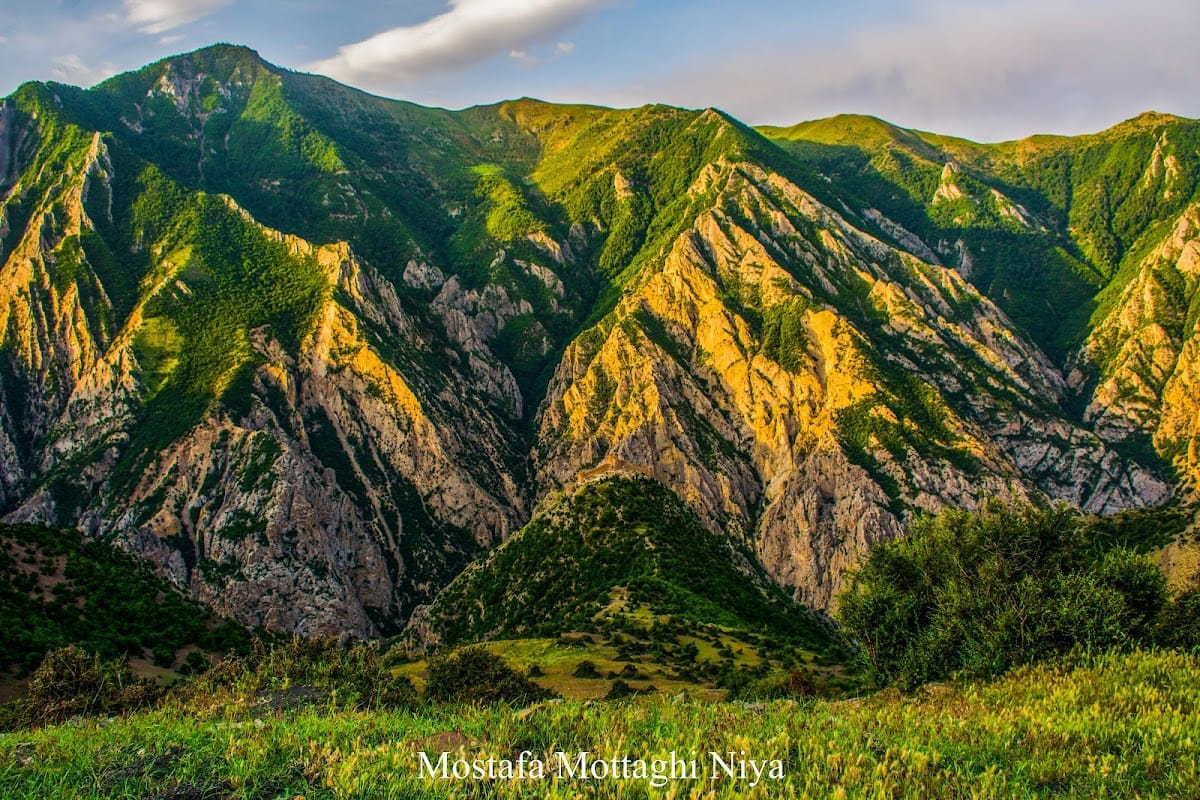
Kangelo Castle was originally a three-story fortress built on a large rock at an elevation of 1,811 meters. Although much of the structure is now dilapidated, the first two floors remain partially intact, preserving the circular internal layout that was unique for its time. Constructed primarily from rubble stone bound with lime mortar and smaller stones, the fortress also features elements made with gypsum and sarooj—a traditional waterproof mortar—to enhance durability.
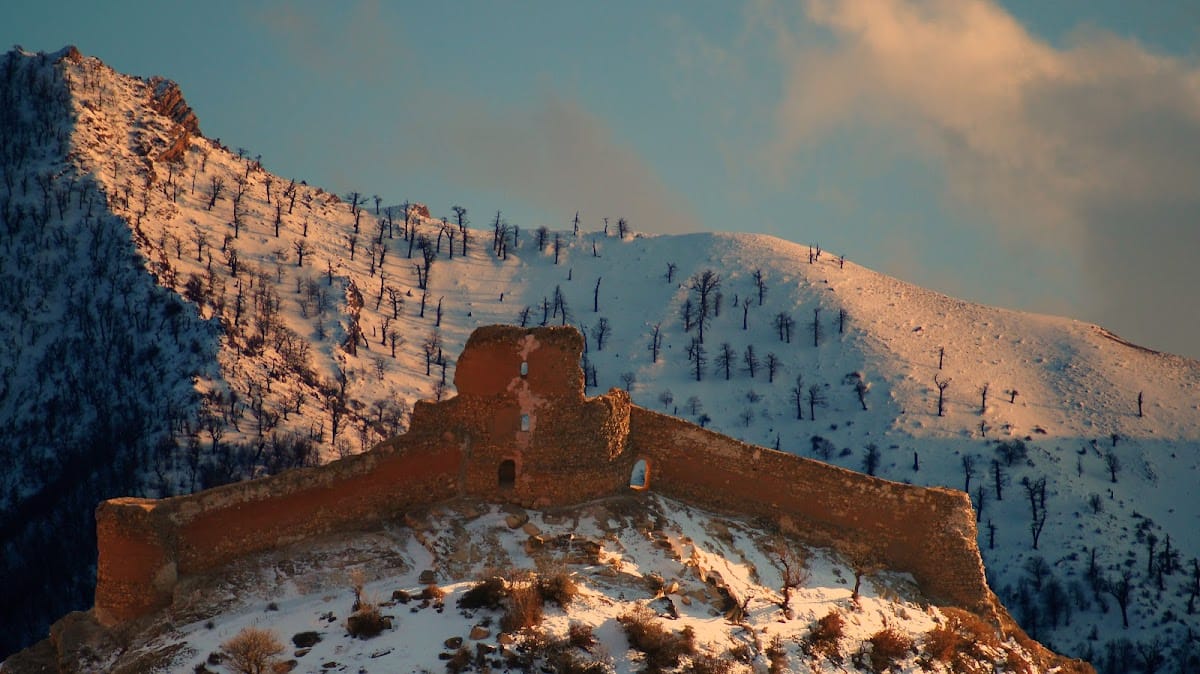
The castle’s external defenses include two large stone ramparts shaped like open arms, designed to protect against enemy assaults. Integrated into these ramparts are several watchtowers, including a central and side towers; notably, the side towers are solid structures that reinforce the walls and connect to the main circular tower or citadel. Access to this citadel was controlled by a small entrance located at its base, emphasizing the fortress’s defensive purpose.
Inside, the second floor houses three distinct rooms: a central rectangular chamber flanked by two semicircular rooms. These spaces are built above a gypsum mortar floor that covers the first level. Architectural features such as partition walls, window arches, niches, and doorways are documented, revealing complex design and construction techniques that were employed to serve both residential and military functions.
Archaeological excavations around the castle uncovered a stone and mud-brick grave to the west, containing a skeleton placed in a fetal position, an indication of ancient burial customs. Alongside the remains, artifacts including an agate ring inscribed in Pahlavi script and a carved six-pointed sun emblem linked to Mithraic symbolism were found, confirming the site’s religious significance. The fortress’s positioning also strategically blocks access to a steep, sugarloaf-shaped mountain path, effectively preventing enemy approaches from that direction.
Together, these features attest to Kangelo Castle’s role as a well-fortified religious and military site during the Sassanian era and beyond, with layers of use that highlight both its spiritual importance and its function in regional defense.