Kamatsuka Kofun: A Fifth-Century Elite Burial Mound in Japan
Site at a Glance
- Rating
- 4.1
- Popularity
- Very Low
- Country
- Japan
- Primary era
- Classical
- Eras represented
- Classical
- Civilizations
- Unclassified
- Site type
- Burial
- Remains
- Burial Mound
On this page7 sections
History
Kamatsuka Kofun is a large Japanese burial mound in Itoshima, Fukuoka Prefecture, built during the first half of the fifth century in the middle of the Kofun period. This was an era, conventionally dated from approximately the third through sixth centuries, when political leaders were buried in substantial mounds. Kamatsuka is regarded, together with the fourth-century Ichikiyama Choshizuka Kofun, as the burial place of a major leader from the Itoshima region.
Regional connections and construction
The tomb’s early pit-type horizontal-entrance stone chamber, a burial room reached through a side passage and incorporating features derived from earlier pit burials, has been interpreted as evidence of connections with the Korean Peninsula. Its surrounding moat has likewise been interpreted as evidence of links with the Yamato polity, an early Japanese political center in the Kinai region of central Japan whose influence expanded through alliances and relationships with regional leaders. The decision to build such a large mound on low, marshy ground was unusual.
Opening and archaeological investigation
The stone chamber was said to have been opened around 1885. A coffin and arrowheads were found, although further details of the burial goods and their present whereabouts are not known. The earliest known documentary reference to the tomb is the name “Kamatsuka” in the 1929 Itoshima County Gazetteer.
Archaeological investigations took place in 1973, 1980, and from 2001 to 2003. Japan designated the site a National Historic Site on May 7, 1982, and expanded the designated area on March 10, 2020. Site improvements have since preserved the mound and its archaeological remains. Finds from Kamatsuka Kofun are kept and displayed at the Ito-koku Historical Museum. The wooden Iwami-type object recovered from the moat became an Itoshima City tangible cultural property in 2009.
Remains
Mound and surrounding enclosure
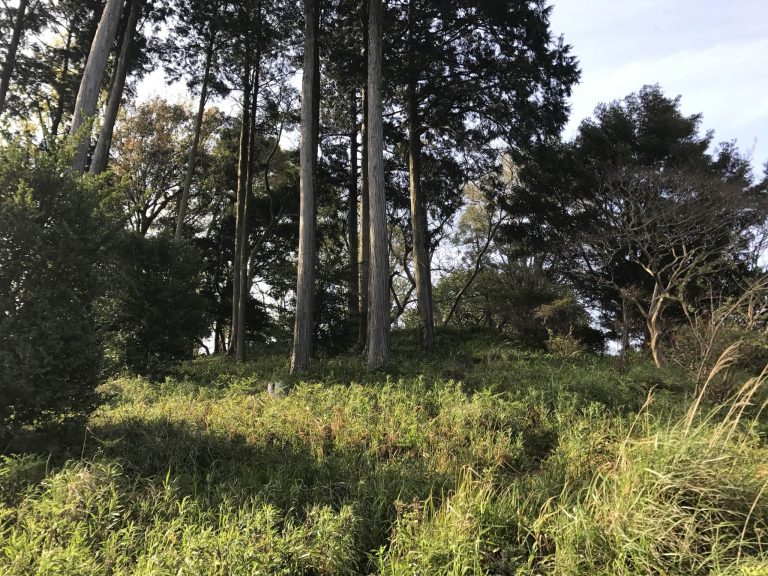
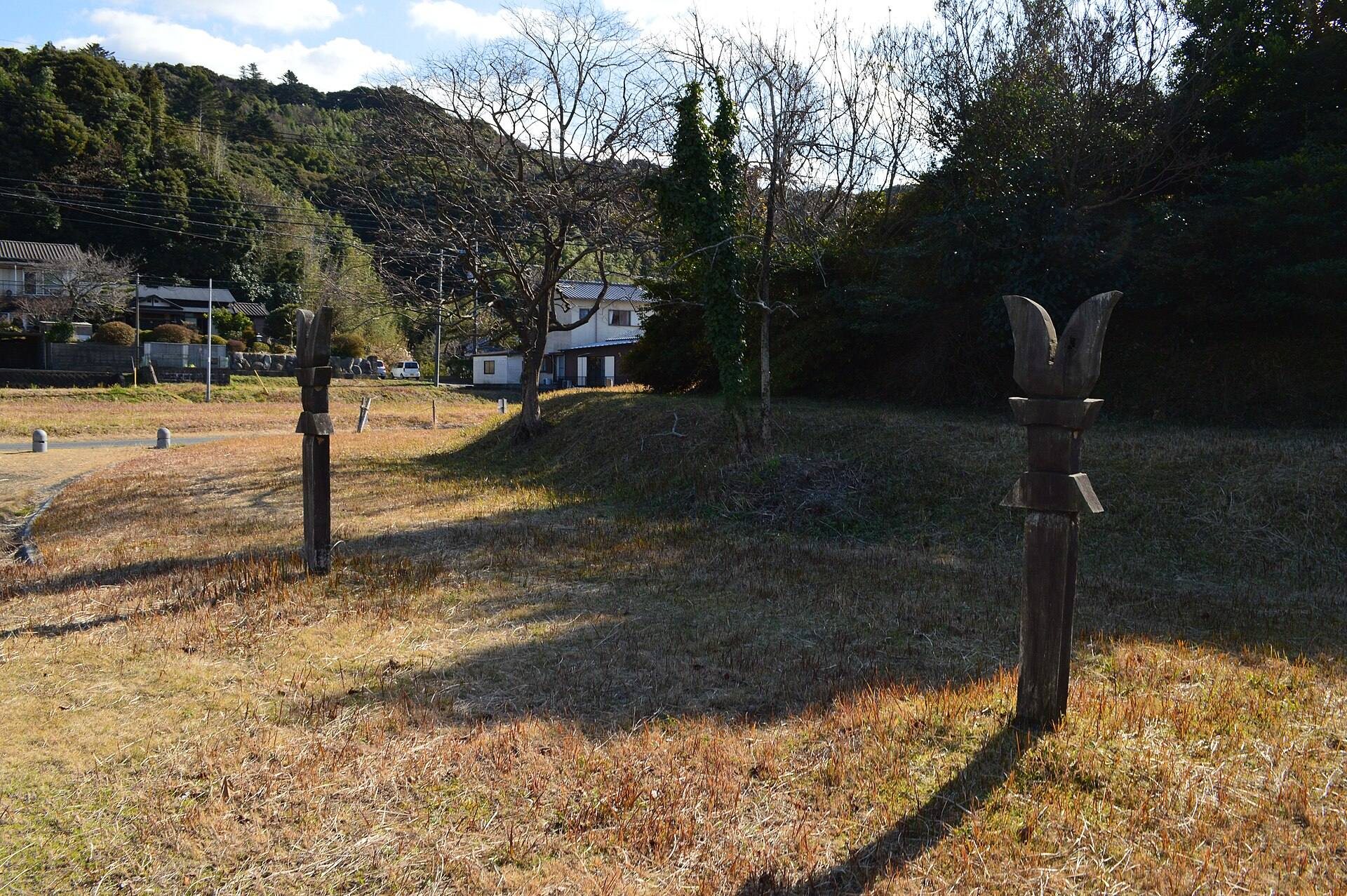
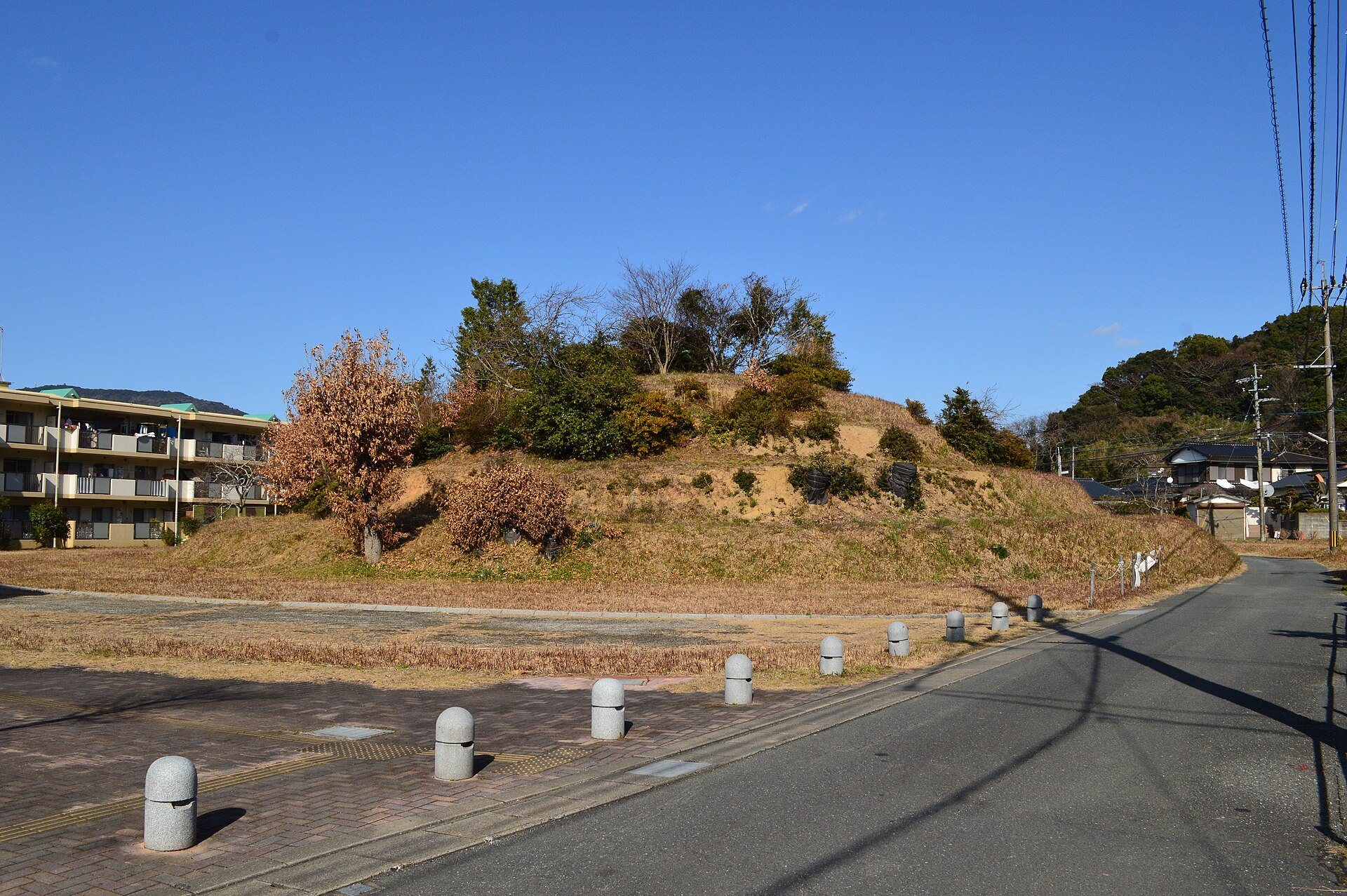
Kamatsuka Kofun is a circular enpun, the circular-mound form of kofun, built on marshy lowland on the east bank of the former mouth of the Nagano River in western Fukuoka Prefecture. The mound is approximately 56 meters in diameter and 10 meters high. It was originally constructed in three tiers, and its exterior carried cylindrical and figurative haniwa, fired-clay objects placed on burial mounds. The examples included morning-glory-shaped pieces and figures in shield and house forms. Stones known as fukiishi, which protected and reinforced the earthwork’s surface, were also used.
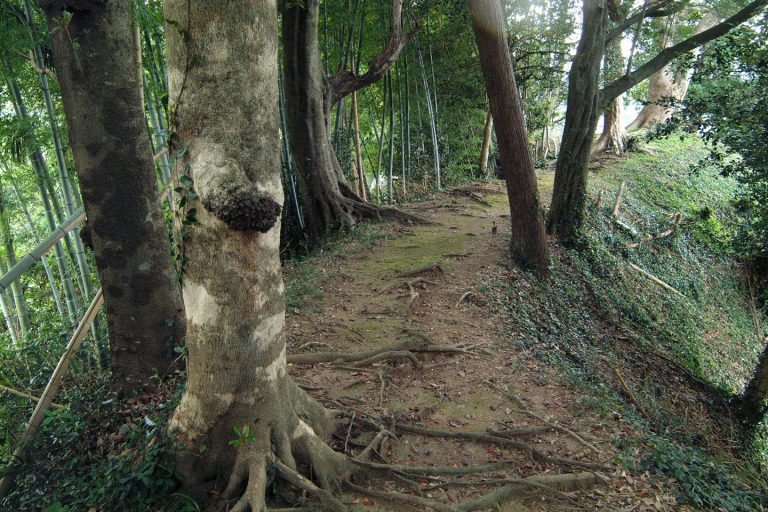
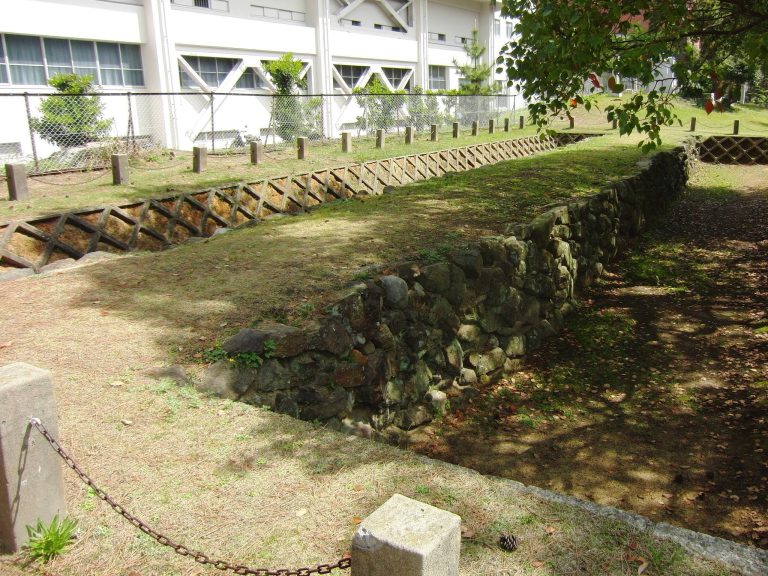
A moat between 5 and 8 meters wide surrounds the mound. Investigations identified a crossing embankment, or earthen bridge, on the northern side within the moat, as well as parts of an outer bank beyond it. With the outer bank included, the complex measures approximately 89 meters across. Around 1965, the mound was altered into five terraces for use as fields. Photographs from the late Taisho period show an earlier, more regular bowl-shaped profile.
Burial chamber
The burial facility lies beneath the center of the mound, below its summit, and faces southeast. It is an early pit-type horizontal-entrance stone chamber containing a box-shaped stone sarcophagus. The chamber is approximately 3.8 meters long and 2.7 to 2.9 meters wide. Its walls were made from small split stones laid with their narrow faces outward, while large slabs formed the entrance walls. A projecting element occupies the center of the rear wall.
A short passage extends from the front of the chamber in a slightly widening, V-shaped plan. Its floor stands one step above the chamber floor, and a pit-like grave passage connects with it from above. These arrangements represent an early form in the development of horizontal-entrance stone chambers. The chamber has been backfilled to preserve it.
Moat find
The moat produced a wooden object identified as Iwami-type, measuring 204.8 centimeters in length. It is considered one of the earliest examples of its kind excavated in Japan.