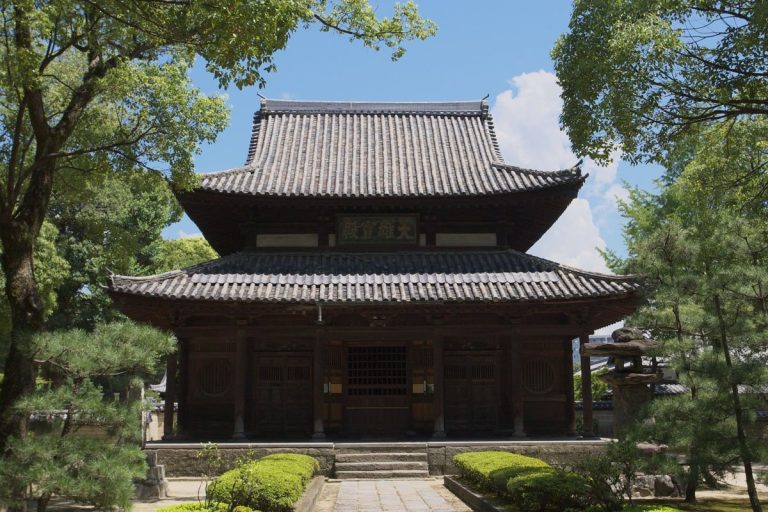
Washio-atago Shrine: A Shinto Shrine on Mount Atago in Fukuoka


Site at a Glance
- Rating
- 4.4
- Popularity
- Medium
- Country
- Japan
- Primary era
- Unclassified
- External website
- Open
- Eras represented
- Unclassified
- Civilizations
- Unclassified
- Site type
- Religious
- Remains
- Sanctuary
On this page9 sections
History
Washio-atago Shrine is a Shinto shrine in Japan, located on Mount Atago in Fukuoka, whose foundation tradition dates to AD 72 during the reign of Emperor Keiko. The site brings together the former Washio Shrine and Atago Shrine, two institutions merged in 1901 after centuries of religious and political change.
Early foundation and Buddhist administration
Washio Shrine, also called Washio Gongen, was traditionally founded when Izanagi and Ame-no-oshihomimi were enshrined on Mount Washio, the former name of the mountain. A local tradition says that Hikosan Gongen was first enshrined there before being transferred to Mount Hiko, although this account remains uncertain.
During the Tenryaku period, a monk from Meinohama named Ura Sakyo collected funds to rebuild shrine buildings that had been damaged. Timber donations reportedly gathered in large quantities, while worshippers supplied continuous voluntary labor. Washio Shrine later came under the administration of monks from Torin-ji, a Tendai Buddhist institution associated with mountain asceticism, and served as the mountain’s tutelary shrine.
Medieval fortress and wartime decline
During the Mongol invasions of the Kamakura period, the shogunate established the Chinzei Tandai at Hakata. This military and administrative office governed northern Kyushu, and a fortress was built on the mountain overlooking the Genkai Sea. The stronghold was known as Washio Castle, Tandai Castle, Meinohama Castle, and Ura Castle.
After the Hakata headquarters fell during the anti-shogunate movement led by Emperor Go-Daigo, the fortress on Mount Washio was burned. One tradition says that the Tandai official Akahashi Hidetoki died by suicide there. During the Northern and Southern Courts period, members of the Isshiki and Shibukawa families occupied the fortress, which was repeatedly drawn into warfare.
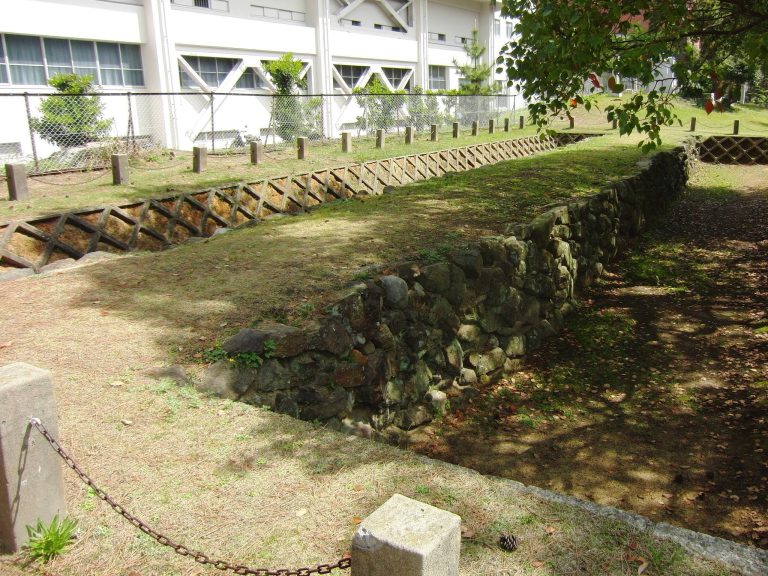
Repeated destruction during these conflicts brought Washio Shrine into decline. Its estate, sacred treasures, and documents were lost, and Torin-ji became the remaining institution associated with the mountain.
Atago Gongen and the Fukuoka domain
In 1634, Kuroda Tadayuki, the second lord of the Fukuoka domain, enshrined Atago Gongen on the mountain after attributing his survival during the Kuroda Disturbance to its miraculous power. Atago Gongen was a Buddhist-Shinto manifestation associated with protection from fire. At this shrine, the tradition was represented by Kagu-tsuchi and Izanami, whose former institution was known as Atago Shrine or Atago Gongen.
The deity was transferred from Hakuun-ji on Mount Atago in Kyoto, where the present Atago Shrine stands. The Fukuoka domain assigned the Atago institution an estate yielding more than 20 koku, a historical measure of rice yield, together with a stipend for four people, 10,000 tsubo of mountain forest, and 40,000 tsubo of entrusted mountain land. Washio Gongen became a subordinate shrine within the Atago Gongen precinct, while both institutions were administered by the Shingon Buddhist temple Enman-ji.
Torin-ji was abolished during the Hōreki period, and the mountain subsequently became known as Mount Atago. The shrine’s religious tradition also came to include fire protection and danji, practices of prayer and making vows.
Merger and modern status
On September 27, 1901, Washio Shrine and Atago Shrine were merged as Washio Atago Shrine. Washio Shrine was not treated as an institution that should be reduced to subordinate status, so the two traditions were united under the merged name.
The shrine was designated a village shrine in 1913 and a township shrine in 1931. After the Second World War, it received Beppyo status from the Association of Shinto Shrines. A Beppyo shrine has special institutional standing because of its history or significance. Washio-atago Shrine is also described as one of Japan’s Three Great Atago Shrines and belongs to a network of about 900 Atago shrines headed by Atago Shrine in Kyoto.
An Atago ropeway company was established in 1928, and a ropeway ran between Meiji-dori, National Route 202, and the summit from 1928 to 1943. It carried worshippers, tourists, and school excursion groups before being dismantled during the Second World War, when its ropes, wire, and cars were requisitioned for wartime use. The shrine continues to draw worshippers from nearby and distant places, with approximately 700,000 people visiting during the first three days of the New Year.
Remains
Washio-atago Shrine occupies a hilltop on Mount Atago. Its physical setting includes the shrine precinct, a worship hall, a memorial panel for the former ropeway, and a landscape of approximately 2,000 cherry trees in and around the grounds. The hilltop location is associated with views over the surrounding area and the nearby Momochihama district.
Shrine precinct
Worship hall
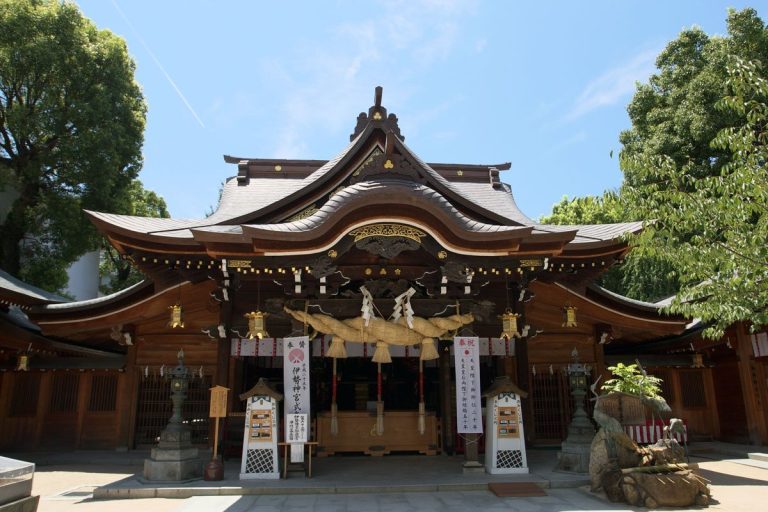
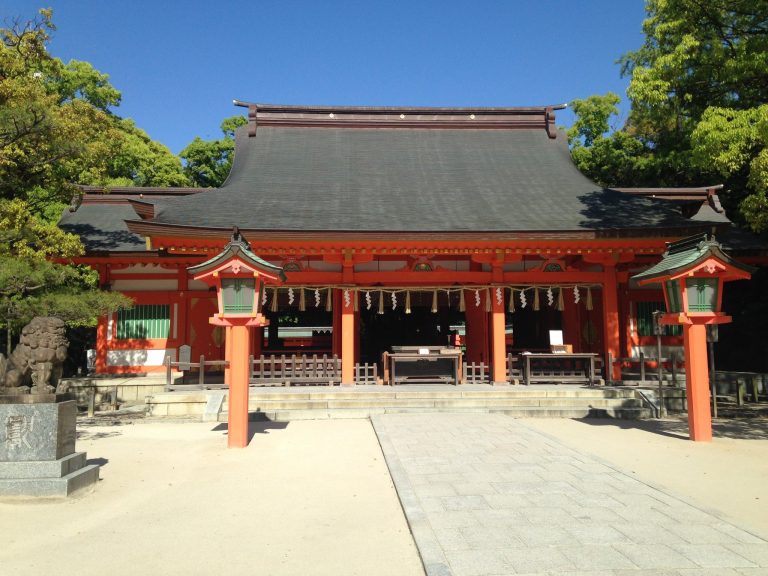
A worship hall forms part of the shrine complex on the mountain summit. It provides the principal identified architectural setting for worship within the present precinct and belongs to the site created by the merger of the Washio and Atago traditions.
Ropeway memorial and cherry trees
Beside a teahouse near the shrine, a panel commemorates the former Mount Atago ropeway, which connected the Meiji-dori area with the summit between 1928 and 1943. Approximately 2,000 cherry trees bloom in and around the precinct, giving the hilltop a recognized cherry-blossom viewing landscape.