Kafir-kala: An Ancient Fortress Guarding Samarkand’s Southern Border
Site at a Glance
- Rating
- 4.8
- Popularity
- Very Low
- Country
- Uzbekistan
- Primary era
- Medieval
- External website
- Open
- Eras represented
- Classical, Medieval
- Civilizations
- Unclassified
- Site type
- Military
- Remains
- Citadel
On this page10 sections
History
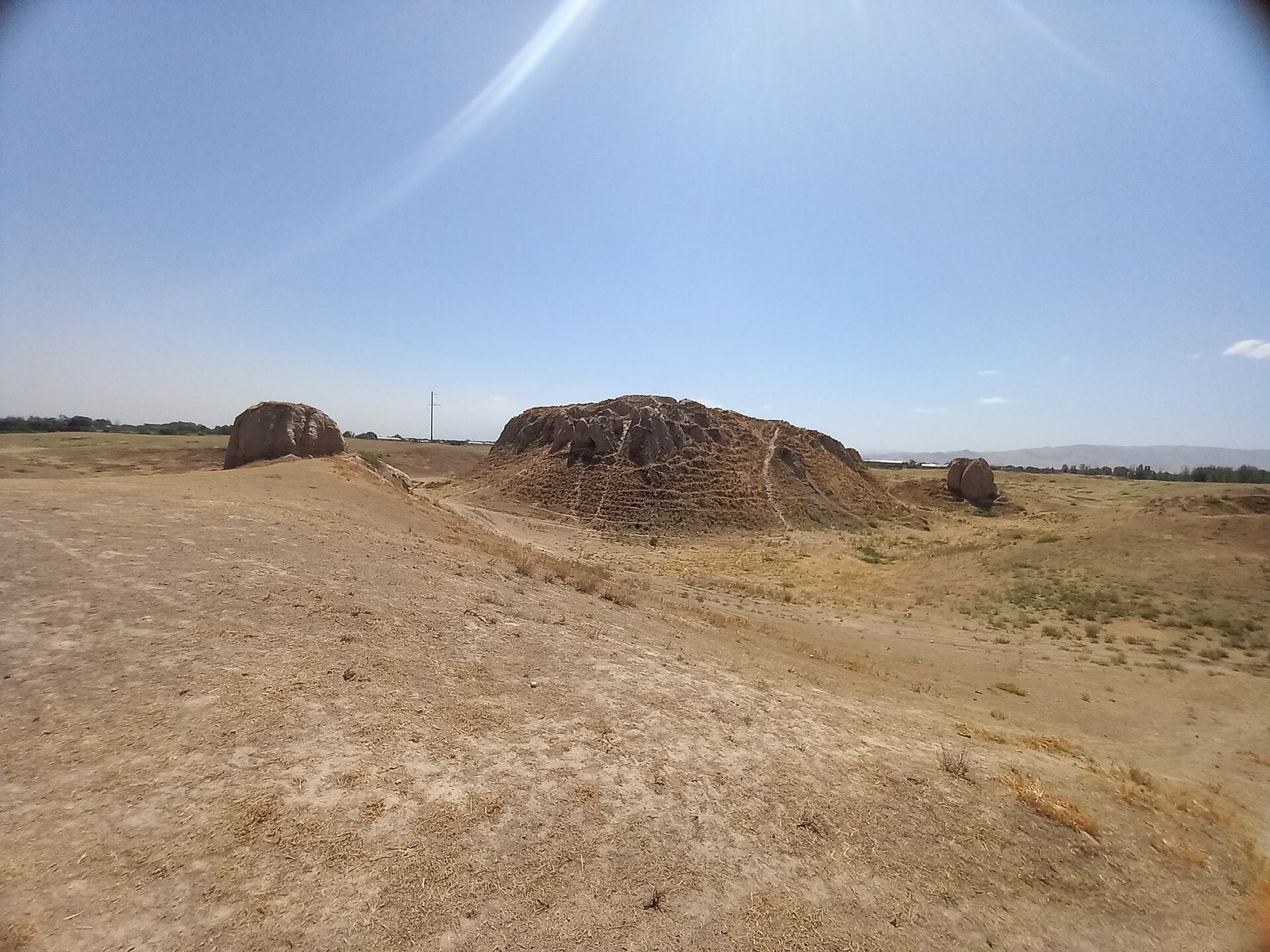
Kafir-kala is an ancient fortress in Uzbekistan, about 12 kilometers south of Samarkand beside the Dargom River. First occupied during the fourth or fifth century CE by the Kidarites, a late-antique Central Asian ruling group associated with the Hunnic world, it protected the southern border of the Samarkand oasis.
Kidarite occupation
Coins, clay sealings known as bullae, and numerous seals connect the early citadel with the Kidarites. One seal refers to “the king of the Oghlar Huns, the great Kushanshah, the ǝfšyan of Samarkand.” Kushanshah means “King of the Kushans,” while ǝfšyan was a title associated with a ruler or high official of Samarkand. The inscription also shows the use of the Bactrian language and identifies a Samarkand authority with Hunnic associations.
Coins recovered at Kafir-kala trace the change from Sogdian traditions, centered on the Iranian language and culture of the Samarkand region, to Islamic rule. The fortress therefore preserves evidence for a political and cultural transition in the Samarkand area.
Destruction in 712 CE
The palace was destroyed during the Islamic conquest of Samarkand in 712 CE. Archaeological work at the site has examined coins, sealings, pottery, and carved wooden elements, helping to reconstruct the fortress’s political and religious setting.
Remains
Citadel and palace
Mudbrick citadel
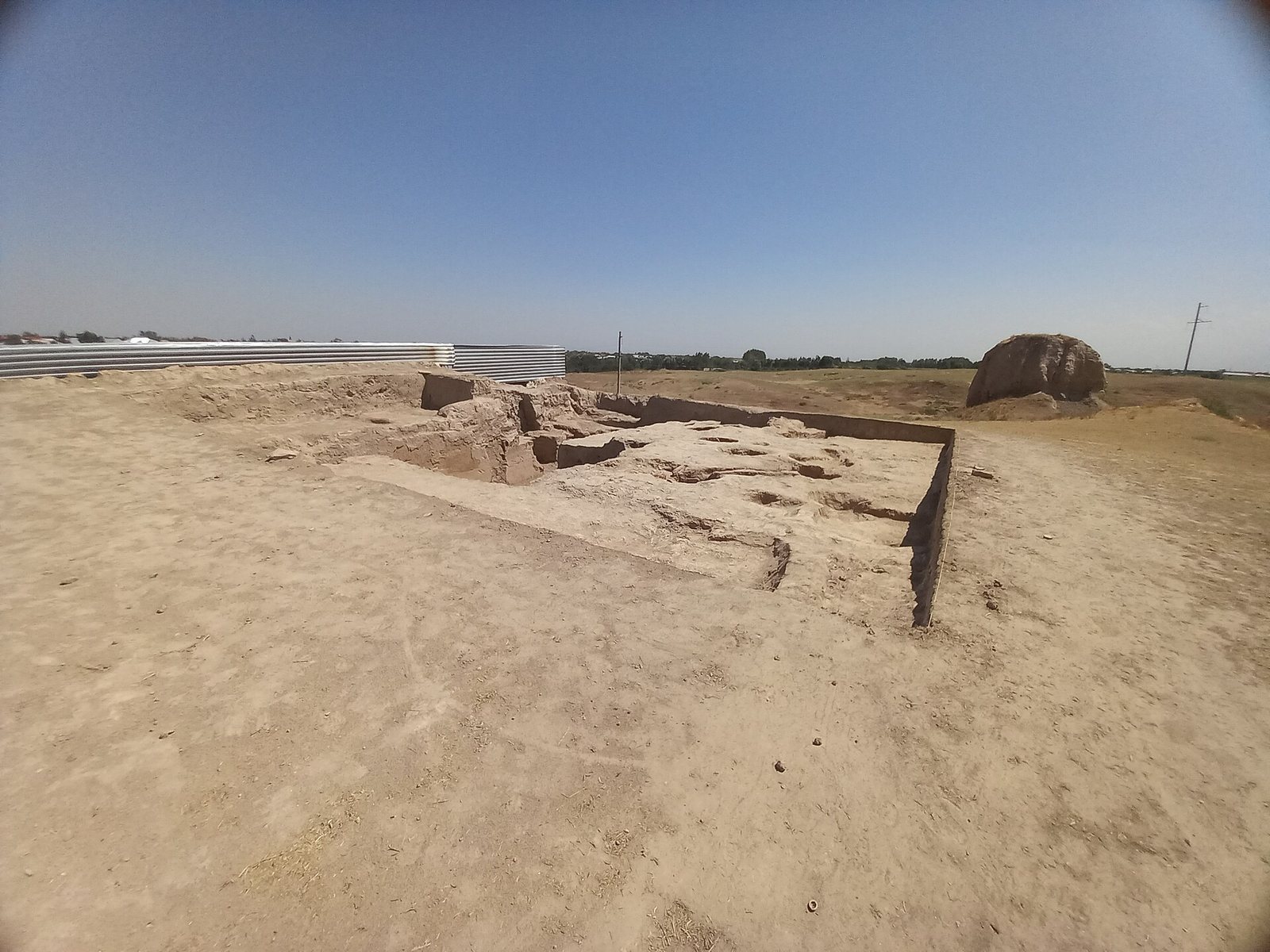
Kafir-kala is organized around a central mudbrick citadel measuring approximately 75 by 75 meters at its base. Six towers strengthened the enclosure, and a moat remains visible around it. The citadel survives as ruined mudbrick walls and related ruins, while living quarters stood outside the fortified center.
Carved wooden gate
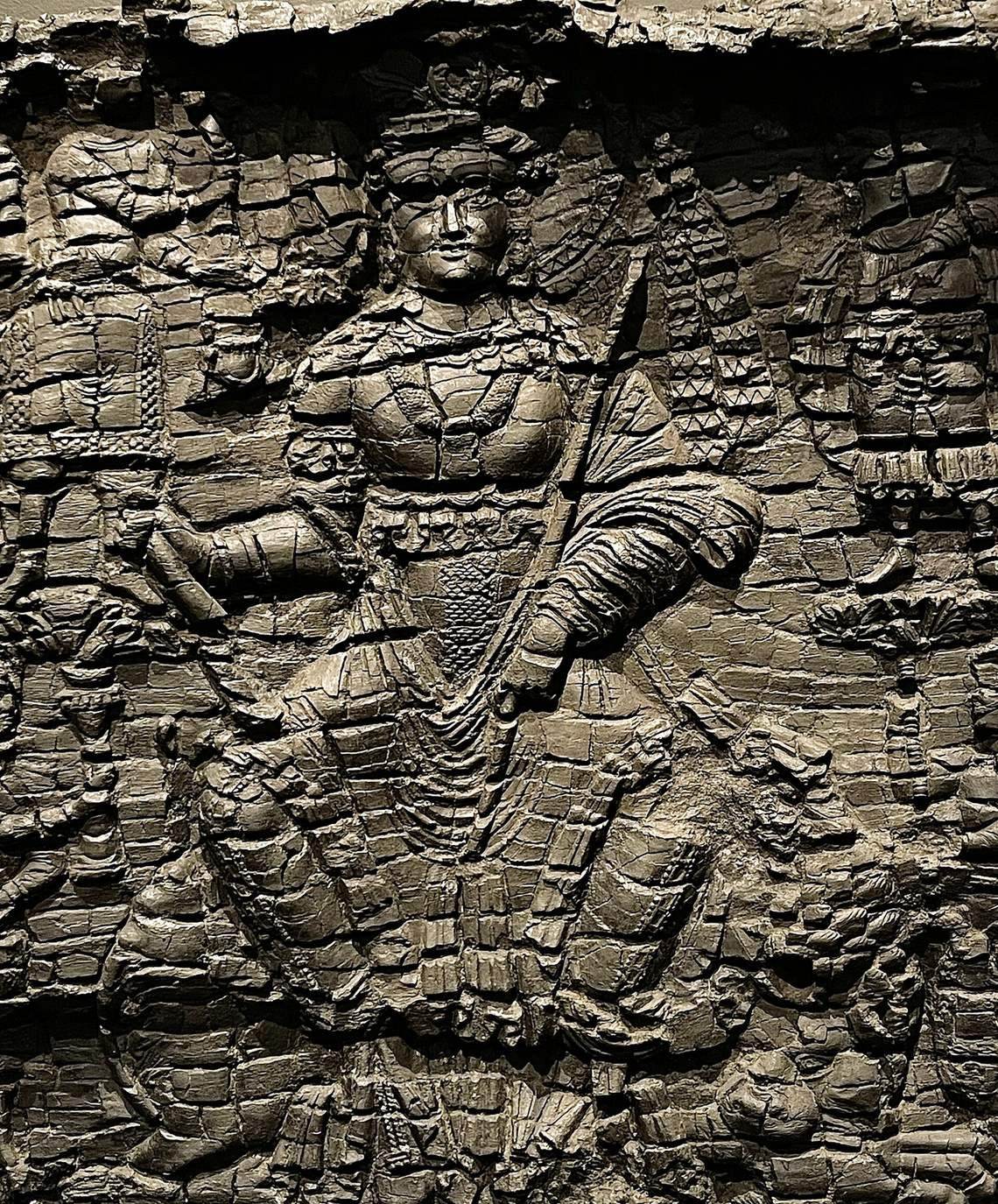
A heavily decorated wooden gate discovered in the throne room in 2017 probably formed the entrance to the room itself. It dates to the first half of the sixth century CE, approximately 500–550 CE, and carries elaborate low-relief carvings.
The reliefs show scenes of adoration honoring Nana, a powerful Central Asian goddess commonly represented on a lion throne. She is seated centrally in majesty, while the worshippers wear knee-length tunics, long boots over trousers, large necklaces, and shoulder ribbons associated with Hephthalite nobility. The clothing and attendant figures have parallels in the murals of Penjikent, a major Sogdian settlement whose paintings date to around 500 CE.
Fire charred the gate in an apparent attempt to destroy it. Parts of the carved relief became charcoal through partial carbonization, a process that helped preserve the forms rather than reducing them completely to ash.
Funerary and small finds
Zoroastrian ossuary
A sixth- or seventh-century Zoroastrian ossuary was found at Kafir-kala. Such containers held the bones of the dead after the flesh had been removed as part of Zoroastrian funerary practice. Although this ossuary is cross-shaped, it is not associated with Christianity.
Seals and pottery
Other finds include additional seals and pottery objects. One seal depicts a sheep- or goat-like creature, while a miniature pottery vase carries a geometric design. Together with the coins and sealings, these objects add material evidence for the people, administration, and religious traditions connected with the citadel.