Jōbutsu-ji Temple: A Jōdo Buddhist Temple in Yokohama
Site at a Glance
- Rating
- 3.8
- Popularity
- Very Low
- Country
- Japan
- Primary era
- Early Modern
- External website
- Open
- Eras represented
- Early Modern
- Civilizations
- Tokugawa
- Site type
- Religious
- Remains
- Monastery
On this page11 sections
History
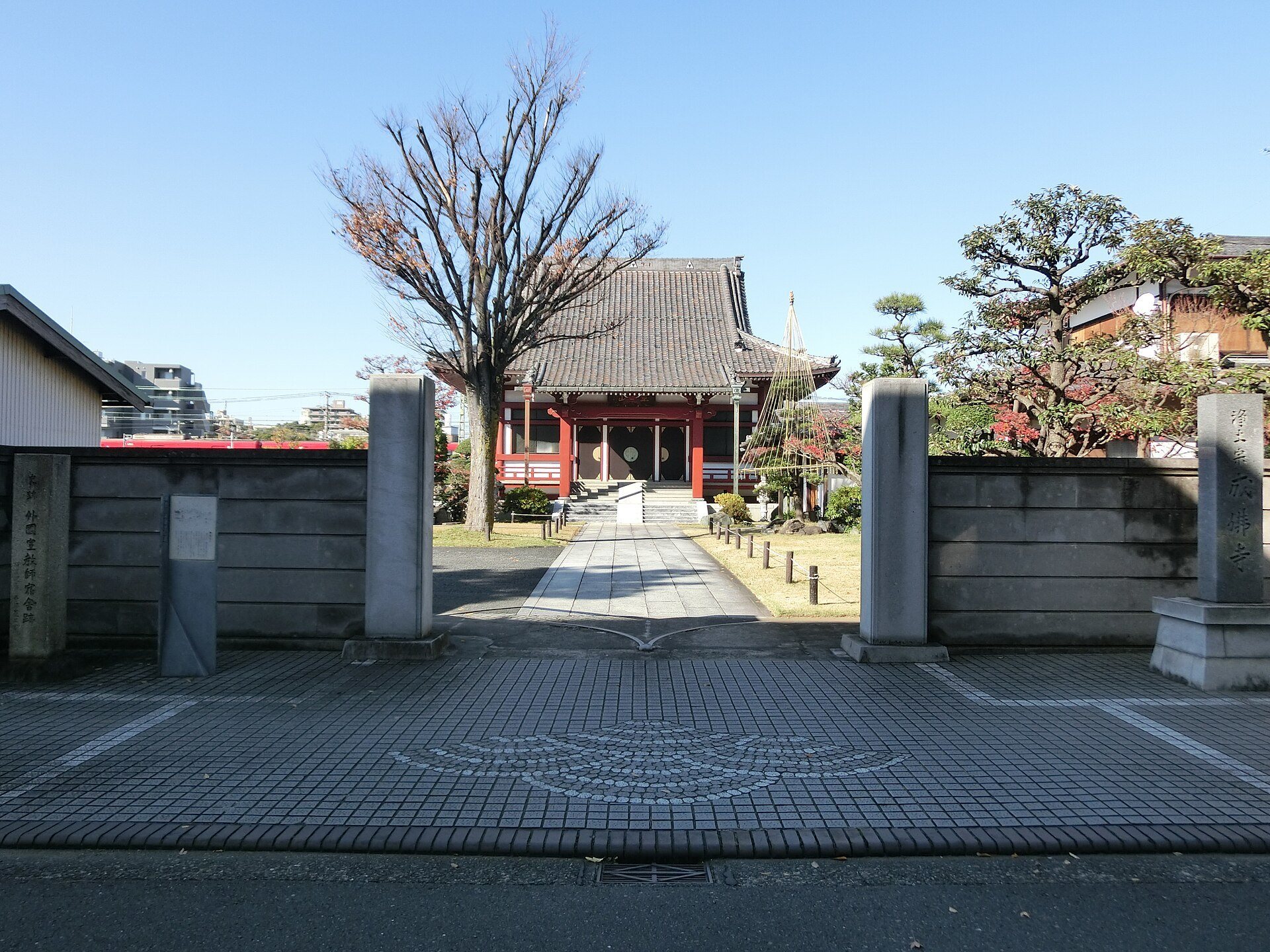
Jōbutsu-ji Temple is a Jōdo Buddhist temple in Yokohama, Japan, founded in the late thirteenth century by Kakushin, also known as Hottō Enmyō Kokushi. Originally called Jinkōzan, it followed four Buddhist traditions: Shingon, an esoteric tradition; Zen, centered on meditation; Ritsu, concerned with monastic discipline; and Pure Land Buddhism, which emphasizes devotion to Amitabha Buddha.
Foundation and medieval development
During the fifteenth century, Emperor Go-Komatsu designated the Kumano Gongen shrine at Morooka as an imperial prayer site and granted it the twelve villages of Morooka Estate as a shrine estate. Twelve temples in the area were assigned responsibility for the shrine’s affairs, with Jōbutsu-ji placed first in rank. The temple is traditionally associated with the title Go-Komatsu-in from this period.
Under the Tokugawa shogunate
In April 1590, Toyotomi Hideyoshi, the military ruler who unified Japan in the late sixteenth century, issued a prohibition covering the twelve villages of Morooka Estate at the temple gate. During the Keichō era, Tokugawa Ieyasu, founder of the Tokugawa shogunate, granted Jōbutsu-ji a red-seal estate producing 10 koku of rice, together with a precinct measuring three chō.
In 1623, by order of Tokugawa Iemitsu, the third Tokugawa shogun, Jōbutsu-ji ended its four-tradition system and became exclusively a Pure Land temple. It then became a direct branch of Chion-in, the head temple of the Jōdo school. Hon’yō Donmu, also known as Man’gyō Shōnin, is regarded as the first leader associated with this change.
In 1630, a residence known as Kanagawa Palace was built inside the precinct to lodge Iemitsu during his journey to Kyoto. Jōbutsu-ji was moved to its present site as a result, and the temple developed into a large institution with six subtemples. Four of the six had disappeared by 1707. The remaining two were abolished after the Kanagawa Great Fire of 1868, while the Kumano shrine was separated from the temple under the ordinance that divided Buddhism and Shinto.
Rebuilding and international connections
Sen’yō Reisatsu rebuilt the main hall in 1717. Later, the temple was damaged by the Great Kantō Earthquake and by the Yokohama air raids. The present temple buildings were rebuilt in 1962, followed by the priests’ residence in 1968.
The present site formerly lay within Kanagawa-juku and was associated with the conclusion of the Treaty of Peace and Amity between the United States and Japan. After Shimoda was opened, the main hall served as lodging for foreign missionaries. James Curtis Hepburn, an American missionary and physician whose romanization system became widely used for Japanese in Latin script, stayed there, as did the missionaries Brown and Ballagh and the writer Francis Hall. A Japanese-language school was held at the temple, and the British diplomat and Japan scholar Ernest Satow studied there.
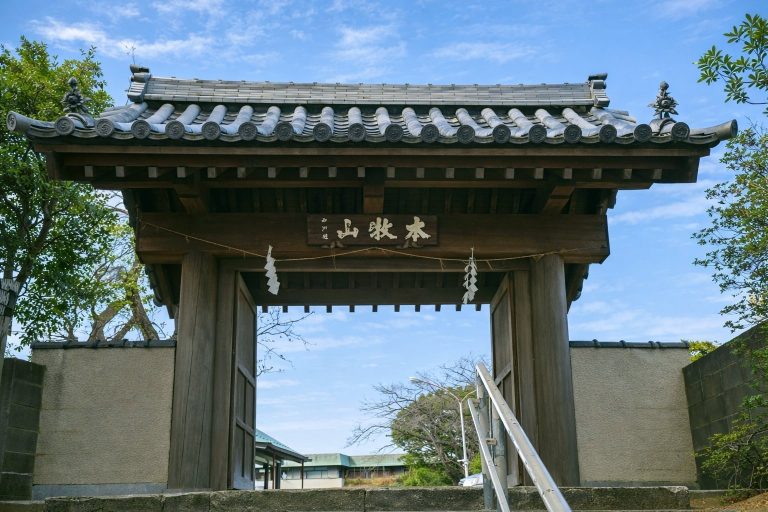
A tradition that Hepburn first stayed at Jōbutsu-ji is linked to the temple gate. Later investigation proposed nearby Hongaku-ji as the location instead, leaving the association with Jōbutsu-ji as a continuing historical tradition rather than a settled identification.
Jōbutsu-ji bears the formal mountain name Shōgakuzan and the institutional name Hōuin. Its principal object of worship is a seated image of Amitabha, the Buddha central to Pure Land devotion.
Remains
Temple buildings and surviving religious images
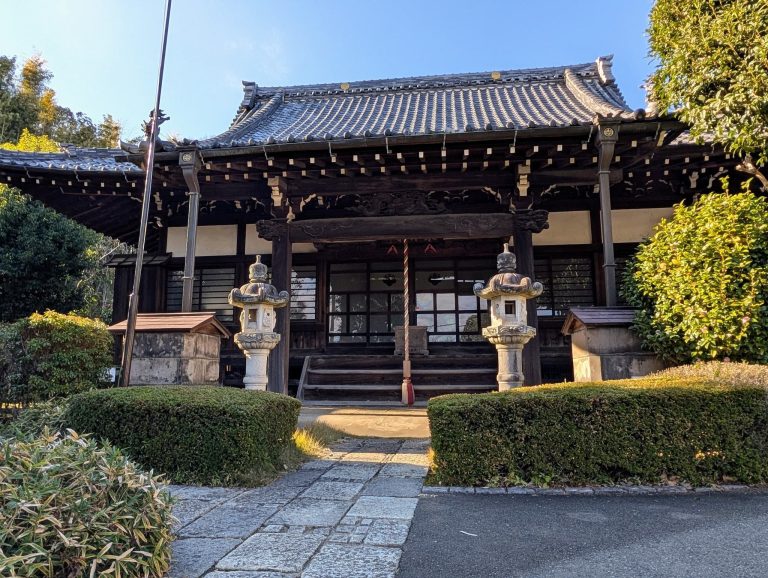
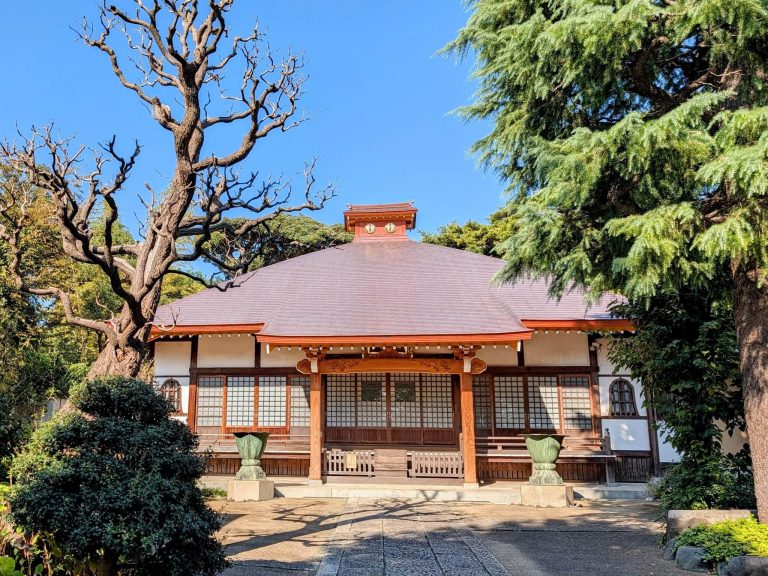
The temple’s historical arrangement included six subtemples, all of which were later abolished. The current buildings reflect the rebuilding of the main temple complex in 1962 and the reconstruction of the priests’ residence in 1968, following earlier damage from the Great Kantō Earthquake and the Yokohama air raids.
Principal Amitabha image
The principal image is a seated Amitabha Buddha measuring 76 centimeters in height. Carved from ginkgo wood, it bears an inscription dated April 8, 1791. The image expresses the temple’s identity as a Jōdo Buddhist institution and remains the central object of worship.
Attendant bodhisattvas
The Amitabha image is accompanied by standing figures of Avalokiteshvara and Mahasthamaprapta, bodhisattvas traditionally associated with Amitabha’s Pure Land. Both are made of Himekomatsu pine and were donated after the Second World War.
Other Buddhist images
The temple also houses standing images of Shandao, known as the Shandao Great Master and an influential Chinese Pure Land teacher, and Honen, known as Enkō Daishi and the founder of Japan’s Jōdo school.
Namiishi stone
A stone called Namiishi traditionally indicated changes in the tide through the wetness and dryness visible on its surface. It is also known as Namidaishi, or “tear stone,” because a legend connects it with Urashima Taro. In the story, Urashima Taro returned from Horai, or the Dragon Palace, and found that even his former surroundings had disappeared. He then sat on the stone and wept.
The stone is also called Senkanseki, or “thousand-kan stone,” because it is unusually heavy and difficult to move despite not being exceptionally large. It preserves a physical feature around which several names and traditions have developed.
Historic road setting
The roads around the former Kanagawa-juku, including those in front of Jōbutsu-ji, form part of Yokohama’s designated Historic Road of Kanagawa-juku. This setting connects the temple’s surviving precinct with the historic road network of the former settlement.