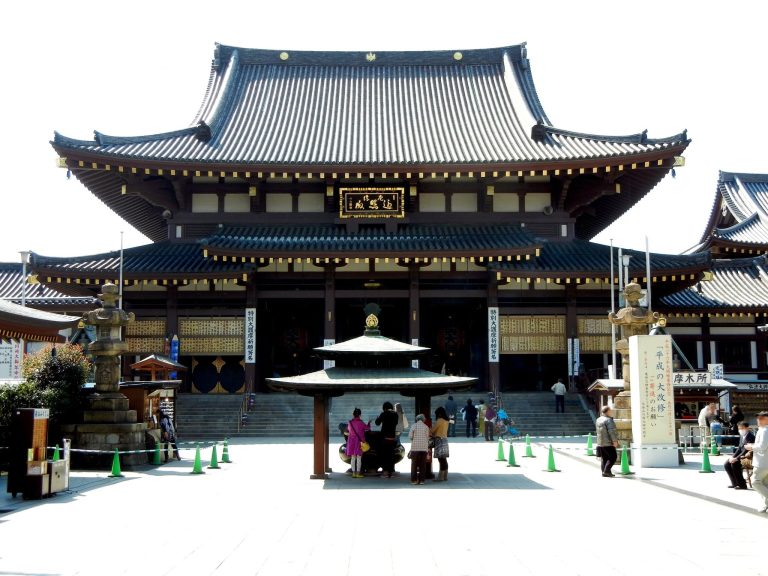
Sōji-ji Temple: A Principal Head Temple of Sōtō Zen in Yokohama


Site at a Glance
- Rating
- 4.3
- Popularity
- Medium
- Country
- Japan
- Primary era
- Modern
- External website
- Open
- Eras represented
- Early Modern, Modern
- Civilizations
- Japanese
- Site type
- Religious
- Remains
- Monastery
On this page17 sections
History
Sōji-ji Temple is a major head temple of the Sōtō school of Zen Buddhism in Japan, located in Yokohama. Its institutional foundation is conventionally dated to 1321, when the Zen master Keizan Jōkin transformed an earlier Shingon Buddhist chapel into a Sōtō monastery. Together with Eihei-ji, Sōji-ji serves as one of the school’s two principal head temples, known in Japanese as daihonzan. Its mountain name is Shogakuzan, its principal image is Shaka Nyorai, and its temple crest is the five-seven paulownia.
From chapel to Zen monastery
The site’s predecessor was a small chapel connected with Morooka Hiko Jinja shrine in Noto. Traditionally dated to around 740 and associated with the Buddhist monk Gyōki, the chapel was known as Morooka-dera or the Shogaku Kannon Hall. Gyōki was an eighth-century monk remembered for organizing religious communities and public works, although his connection with this foundation belongs to tradition. By 1296, a donation of land provided sufficient income for a resident priest, the esoteric ritual master Jōken.
In 1321, after the shrine and Jōken had moved to a neighbouring estate, Jōken entrusted the former chapel to Keizan. Keizan changed its affiliation from Shingon, a Japanese esoteric Buddhist tradition, to Sōtō Zen, renamed it Sōji-ji, and gave it the mountain name Shogakuzan. The earlier chapel therefore represents the institution’s predecessor, while 1321 marks the conventional foundation of Sōji-ji as a Sōtō temple.
Keizan formally opened the monks’ quarters in 1324. Twenty-eight monks were ordained at the opening, establishing the site as a functioning Zen monastery, and Keizan’s disciple Gasan Jōseki became abbot several months later. Jōken retained full control until three years after Keizan’s death in 1325. The monastery continued to be called Morooka-dera in records until the end of 1341.
Imperial patronage and institutional growth
Sōji-ji received patronage from Emperor Go-Daigo, who reigned from 1318 to 1339, and became associated with the emperor’s burial after his death. Donations and official directives issued between 1327 and 1341 supplied land and support for monthly chanting, esoteric prayers, rituals intended to protect the imperial court, and worship of Shōden, an esoteric Buddhist deity associated with ritual practice.
After 1354, Gasan attracted patrons who supported a more exclusively Zen-oriented form of practice. Sōji-ji then developed a large affiliated network, partly by sending monks into rural areas. There, monks converted small chapels associated with the Tendai or Shingon schools into full-time temples. Tendai and Shingon were two major Buddhist traditions whose institutions preceded or interacted with Sōji-ji’s Sōtō identity.
The monastery’s rise was closely tied to rivalry with Yōkō-ji, another institution founded by Keizan. From the late fourteenth century, Sōji-ji redirected support from Yōkō-ji, strengthened Gasan’s lineage, and used rotating appointments of abbots to maintain a regular succession of leaders. The dispute continued into the Edo period, and conflicting institutional claims made some surviving accounts difficult to reconcile.
Recognition as a head temple
By the sixteenth century, Sōji-ji possessed the largest affiliated network in the Sōtō school. Its struggle with Eihei-ji concerned religious authority, institutional precedence, and recognition of their respective lineages. The imperial court recognized Sōji-ji as the school’s principal temple in 1589. In 1615, the Tokugawa shogunate recognized both Sōji-ji and Eihei-ji as head temples and issued separate disciplinary codes for them.
The two institutions were formally reconciled during the Meiji period. In 1872, disputed matters were assigned to teachings associated with Dōgen and Keizan. Dōgen founded the Japanese Sōtō lineage, while Keizan was one of its major medieval patriarchs. In 1877, Keizan was recognized as a patriarch equal in status to Dōgen, and Sōji-ji came to be generally accepted as a head temple equal to Eihei-ji.
Further conflict in the 1890s led dissidents at Sōji-ji to form a reform association and withdraw recognition of Eihei-ji in early 1892. The attempted secession lasted about two years and ended after government intervention. By the end of 1893, leaders on both sides had been required to resign and apologize. The resulting principle of “two head temples, one principle” treated the teachings of Dōgen and Keizan as different expressions of one religious doctrine.
Destruction, relocation, and modern history
A fire completely destroyed the Noto monastery in 1898. After several years of rebuilding, Sōji-ji was transferred to its present site in Tsurumi, Yokohama, in 1911. The move partly aimed to expand the presence of Sōtō Zen in eastern Japan. The former Noto monastery became Sōji-ji Soin, the “parent” monastery associated with monk training.
The newly relocated grounds were used as the starting point for a 10,000-metre race during an international Olympic qualifying event on November 19, 1911. On September 3, 1923, two days after the Great Kantō Earthquake, police commander Ōkawa Tsunekichi transferred Koreans sheltering at Sōji-ji to the Tsurumi police station for protection. The following morning, a massacre of Koreans took place in front of the temple; those responsible were later arrested and prosecuted.
In August 1945, shortly before the end of the Second World War, the Yokohama Guard Unit of the Tokyo Guard Army, stationed near Sōji-ji, attempted an uprising in support of continued resistance. The unit was commanded by Sasaki Takeo. A fire destroyed the Jōshōden on March 6, 1970. The former Noto monastery was later badly damaged in the 2007 Noto earthquake.
Sōji-ji remains a major training centre for monks from Japan and abroad, overseeing approximately 200 monks and novices. Its abbot holds the title Zenji, meaning “Master of Zen.” The temple also supports Buddhist education through the Sōji Gakuen school corporation, which includes Tsurumi University, a junior college, affiliated middle and high schools, and a kindergarten. Childcare facilities and a hospital form part of the wider institutional complex.
Continuing practices include the annual Mitama Festival, begun in 1947 to commemorate victims of the Yokohama air raid and the Tsurumi Station train derailment accident. Sōji-ji also holds an annual Setsubun ceremony involving exorcism and the scattering of beans to seek protection from illness and misfortune. Its distinctive cry is “Good fortune in,” rather than the customary “Demons out.” The grounds contain graves of prominent figures including Asano Sōichirō, Kiyoura Keigo, Antonio Inoki, Kuroiwa Shūroku, Toshiro Mayuzumi, and Toshiko Sekiya.
Sixteen buildings, including the Buddha Hall, were registered as tangible cultural properties in 2005. Yokohama designated the temple’s tea house in 1996 and the Great Temple Bell in 1995. These recognitions form part of the modern institutional history of a temple whose present compound grew from the 1911 relocation.
Remains
Sōji-ji’s present compound occupies approximately 500,000 square metres and contains about twelve major buildings, numerous halls, and educational facilities. Its central arrangement follows a Shichidō garan, the organized core layout of a Zen monastery, in which principal ritual, administrative, residential, and training buildings form the heart of the complex. Most of the compound was built after the 1911 relocation, with substantial wooden buildings dating mainly from the Taishō period and the early Shōwa period. A small number of structures transferred from elsewhere date from the late early-modern period.
Principal halls and monastic buildings
Buddha Hall
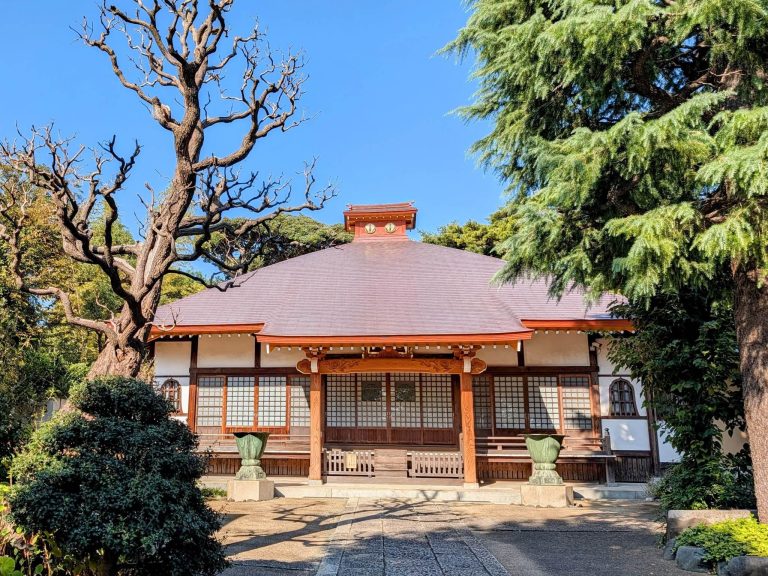
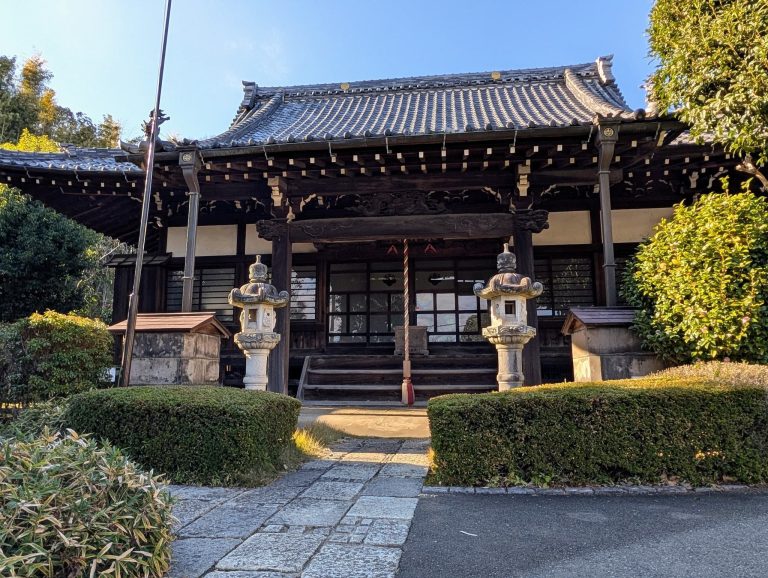
The Butsuden, or Buddha Hall, houses Sōji-ji’s principal image, a statue of Shaka Nyorai, the historical Buddha Gautama. It serves as the principal image hall within the monastery’s central group, although it is smaller than the Daisodō. The building is among the substantial wooden structures that form the principal architectural fabric of the post-relocation temple.
Daisodō
The Daisodō, also called the Hattō, is dedicated to Keizan and other founding patriarchs. Larger than the Butsuden, it functions as a major hall for the temple’s ancestral and institutional lineage. Architect Itō Chūta designed the building, while the present structure is a postwar building of reinforced concrete.
Training halls and living quarters
Itō Chūta also designed the Senbutsujō, the principal training hall for monks and a place of ordination. The complex includes the shuryō, a meditation hall used for seated meditation, and the Koshakudai, which contains the monks’ living quarters. Together these buildings express the training and residential functions that support Sōji-ji’s continuing role as a working monastery.
Sanmon gate
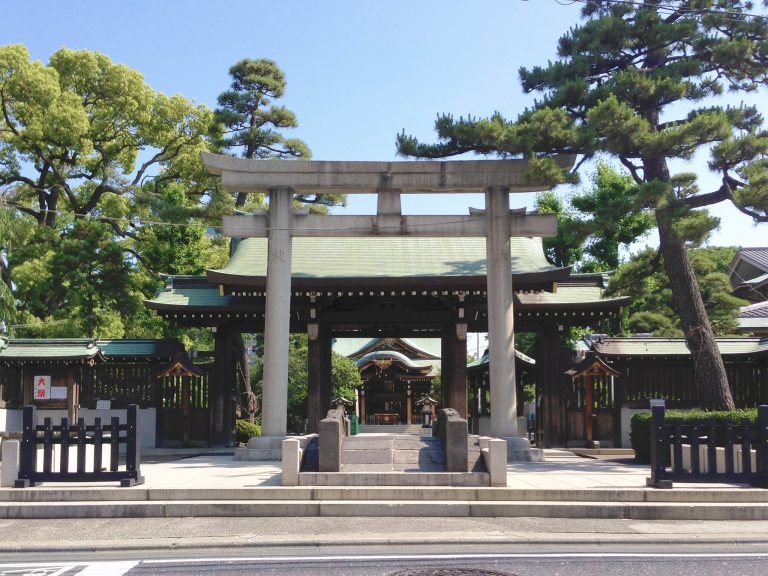
The Sanmon gate was built in 1969 as a postwar reinforced-concrete structure. It forms one of the principal architectural elements of the compound and belongs to the group of large buildings that define the approach to the central monastery.
Ritual, public, and commemorative features
Sanshōkaku
Built in 1990, the Sanshōkaku is a centre for visitors and public religious practice. It contains computers and other modern facilities and hosts practice sessions and workshops for lay participants, extending the compound’s functions beyond monastic training.
Shōkurō
The Shōkurō contains the bonshō, a large Buddhist temple bell, together with a drum, a cloud gong called an umpan, and a wooden drum known as a moppan. These instruments signal the monks’ daily routine.
Hōkōdō
The Hōkōdō is used for memorial rites for laypeople’s ancestors. Monks conduct the associated services in this hall, which forms part of the temple’s continuing ritual facilities.
Tea house and Great Temple Bell
The compound also includes a tea house and the Great Temple Bell. Both are recognized as cultural properties by Yokohama, with the tea house designated in 1996 and the bell in 1995. The grounds additionally contain memorial monuments for victims of the 1951 Sakuragichō railway accident and the 1963 Tsurumi railway accident.
Associated cultural properties and former monastery
Sōji-ji’s cultural properties include paintings, portraits, ritual textiles, and other objects connected with the temple’s religious history. They include a portrait of Keizan Jōkin, a painting of Devadatta, a portrait of the wife of Maeda Toshiie, an embroidered lion-roar ceremonial coat, and an illustrated origin history of the Kannon Hall.
Sōji-ji Soin occupies the former Noto location and remains physically distinct from the Yokohama temple. It is regarded as the parent or predecessor monastery and is associated with monk training. The site sustained substantial damage in the 2007 Noto earthquake, while the Yokohama compound preserves the relocated institution’s principal halls, training facilities, ritual buildings, and educational complex.