Kamienya Tsukiyama Kofun: An Elite Kofun-Period Burial Mound in Japan
Site at a Glance
- Rating
- 3.8
- Popularity
- Very Low
- Country
- Japan
- Primary era
- Medieval
- Eras represented
- Medieval
- Civilizations
- Yamato
- Site type
- Burial
- Remains
- Burial Mound
On this page7 sections
History
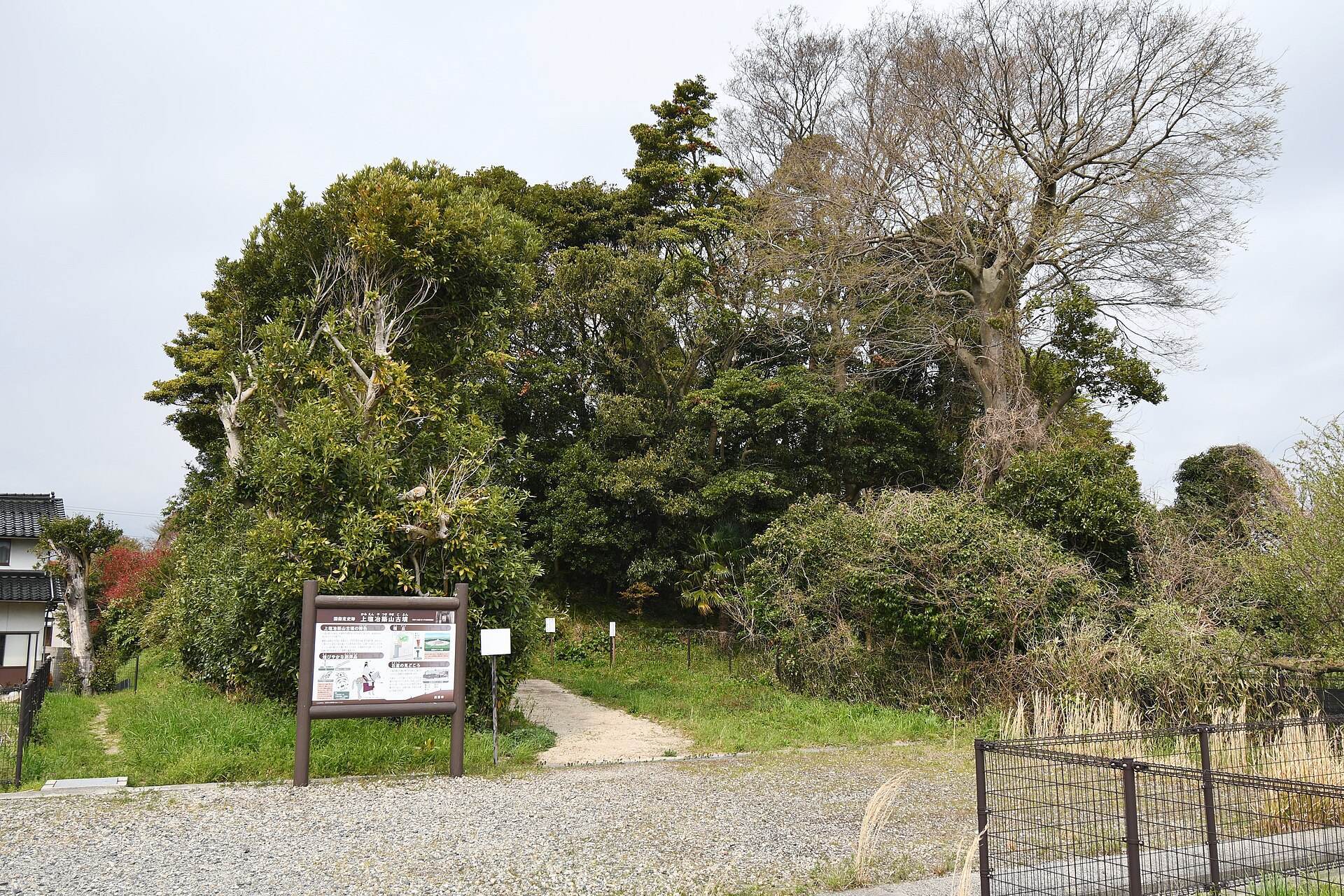
Kamienya Tsukiyama Kofun is an elite burial mound in Izumo, Japan, built by the society of the Kofun period during the late sixth century. The Kofun period was an era, conventionally dated from about the third to the seventh century, when high-status people were buried in large earthen mounds. The mound stands in Kamienya-cho on the north bank of the Kobe River in northeastern Shimane and formed part of the Tsukiyama Kofun Cluster. Its large stone chamber and rich burial goods identify it as the tomb of a regional leader or ruling elite. In the sequence of major Izumo burials, it followed the Imaichi Dainenji Kofun.
Construction in the late Kofun period
The mound was probably built around the end of the sixth century, although a date in the latter half of that century has also been proposed. Its burial arrangements reflect the resources and status available to an important local leader. The chamber contained two carved stone sarcophagi shaped like houses, together with weapons, ornaments, and equipment associated with burial practices of the period.
Discovery and archaeological investigation
The stone burial chamber was discovered in 1887, when grave goods were recovered. William Gowland, a British archaeologist and metallurgist who investigated Japanese burial mounds, recorded the mound as keyhole-shaped in 1907. In 1919, Sueji Umehara identified it as circular, an interpretation reflected in its present classification.
Archaeological work around the mound continued from fiscal year 1985. A distribution survey took place in 1985, followed by investigations to confirm its extent in fiscal years 2000 to 2001 and 2005. An excavation connected with drainage works was conducted in 2007. Many grave goods had been retained by the local landowner before Izumo City acquired them in 1959. They are now preserved at the Izumo Yayoi no Mori Museum.
Kamienya Tsukiyama Kofun became a National Historic Site in 1924, and its protected area was expanded in 2020. The excavated artifacts were designated collectively as a National Important Cultural Property in 2018, following their earlier designation as prefectural cultural properties in 1961.
Remains
Mound and surrounding enclosure
The surviving monument is a circular earthen mound, or enpun, approximately 46 meters across and 6 meters high. The ground around it has been partly leveled. A moat about 16 meters wide encircles the mound, creating an enclosed area approximately 77 meters in overall diameter. Cylindrical haniwa, clay objects placed on or around burial mounds, were found on or near the mound. Sue ware, a high-fired gray ceramic tradition of the Kofun period, was also recovered, including a jar fitted with smaller attached jars.
Stone chamber and sarcophagi
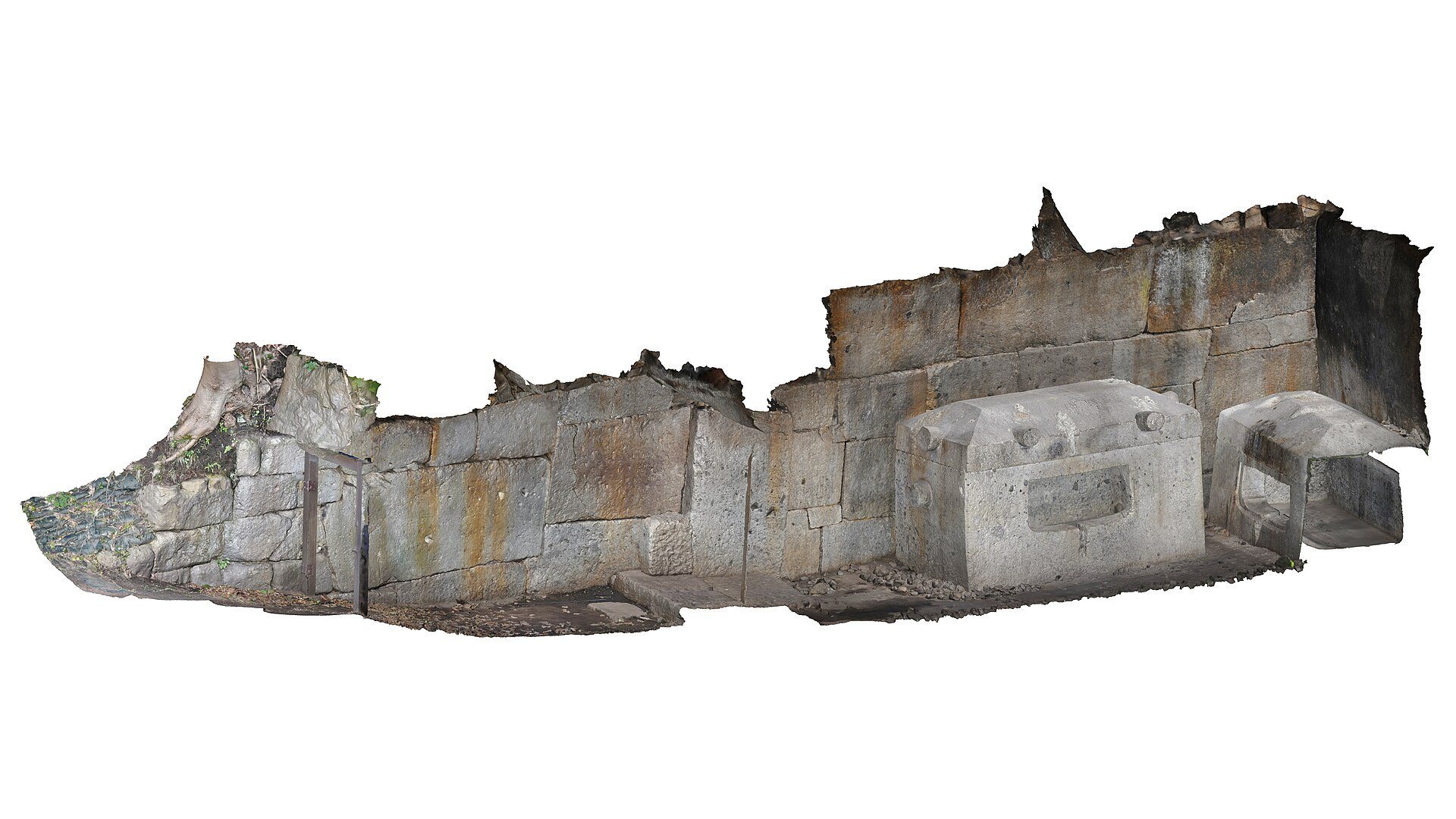
The burial facility is a large horizontal chamber entered through a passage from the west-southwest side of the mound. Including the passage, it measures 14.6 meters, the longest recorded burial chamber in the San’in region, the historical coastal area along western Honshu. The chamber itself is 6.6 meters deep, 2.8 meters wide at the rear wall, and 2.9 meters high.
Cut tuff stone forms the chamber walls. The rear wall is made from a single stone, while the side walls consist of four courses, or horizontal rows, of stone. Natural stones form the ceiling and lintel stones above the entrance, and river stones cover the floor. The passage has side walls arranged in three courses of cut stone and a ceiling made from natural stone.
Two carved house-shaped stone sarcophagi occupy the chamber. This type of sarcophagus imitates a dwelling and opens through a side entrance. The smaller sarcophagus stands at the rear, with its long side against the rear wall and its opening facing the entrance. The larger one is positioned in front, with its long side against the west wall and its opening facing east. Six projections for holding ropes remain on the lid of the larger sarcophagus.
Burial goods
The smaller sarcophagus held jade beads, a gilt-bronze crown, an iron sword, and iron daggers. A horse harness had been placed on its lid. The larger sarcophagus contained an iron sword with a round pommel, iron spears, iron arrowheads, silver rings, and other objects. Numerous additional burial goods came from both sarcophagi, many of them remaining in good condition.