Jinn Mosque: A 14th-Century Neighborhood Mosque in Baku
Site at a Glance
- Popularity
- Medium
- Country
- Azerbaijan
- Primary era
- Medieval
- Eras represented
- Medieval
- Civilizations
- Shirvanshah
- Site type
- Religious
- Remains
- Mosque
On this page5 sections
History
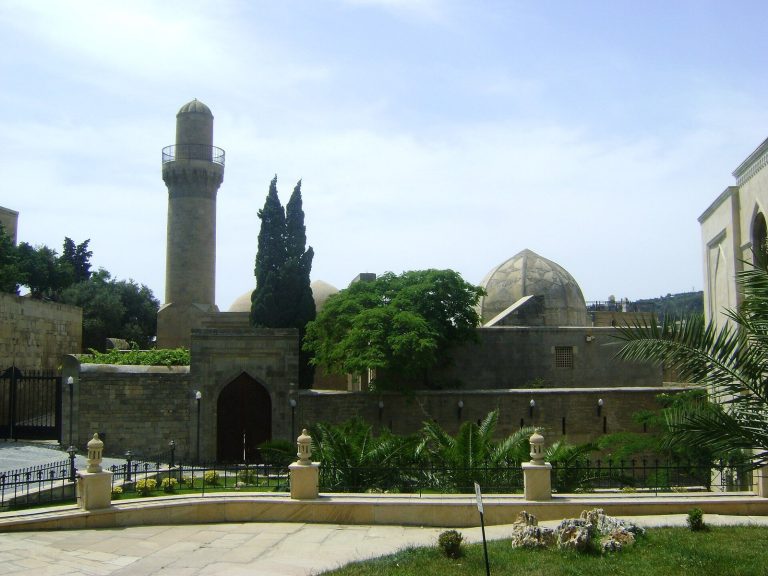
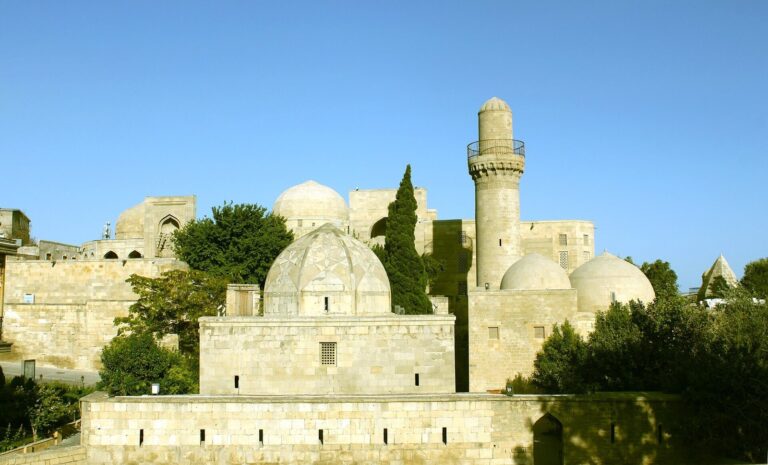
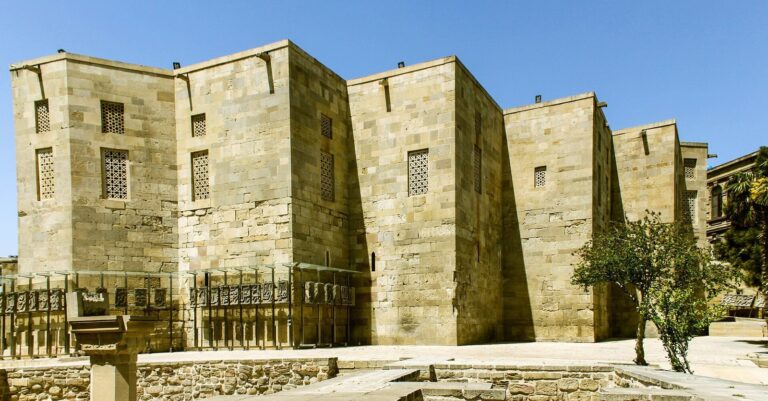
The Jinn Mosque is a 14th-century neighborhood mosque within the Palace of the Shirvanshahs complex in Baku’s Old City, Azerbaijan. It is believed to have been built by the Shirvanshahs, the ruling dynasty of Shirvan, a historic region in the eastern Caucasus. The mosque is associated with the Shirvan-Absheron school, a regional architectural tradition of Shirvan and the Absheron Peninsula.
It served as a neighborhood mosque until 1928. Its name is thought to refer to Al-Jinn, a chapter of the Qur’an, Islam’s scripture.
From 1928 to 1991, the building was used for secular purposes. After restoration, it began serving as a museum in 2001. That year, Azerbaijan registered it as a national architectural monument under Cabinet decision No. 132, dated August 2.
The mosque forms part of the UNESCO World Heritage property Walled City of Baku with the Shirvanshah’s Palace and Maiden Tower, inscribed in 2000. UNESCO, the United Nations Educational, Scientific and Cultural Organization, administers the World Heritage program. The property was on the List of World Heritage in Danger from 2003 to 2009.
Remains
Architecture and interior
Plan and façade
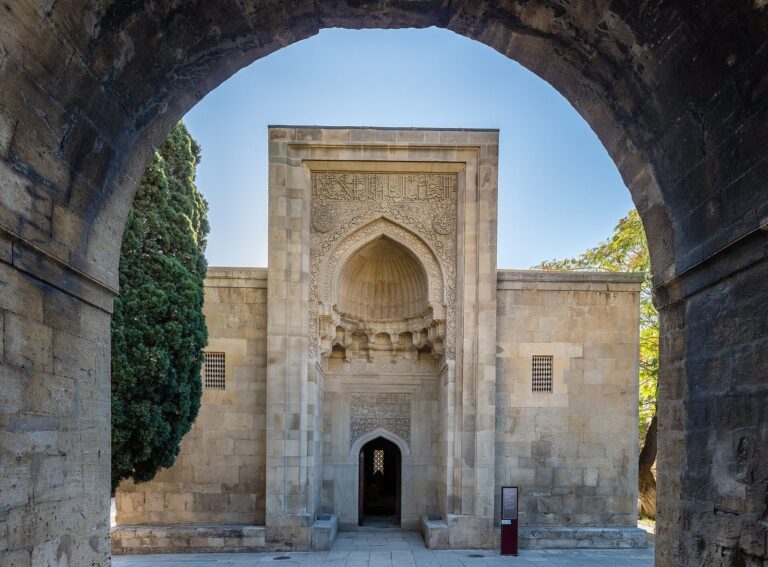
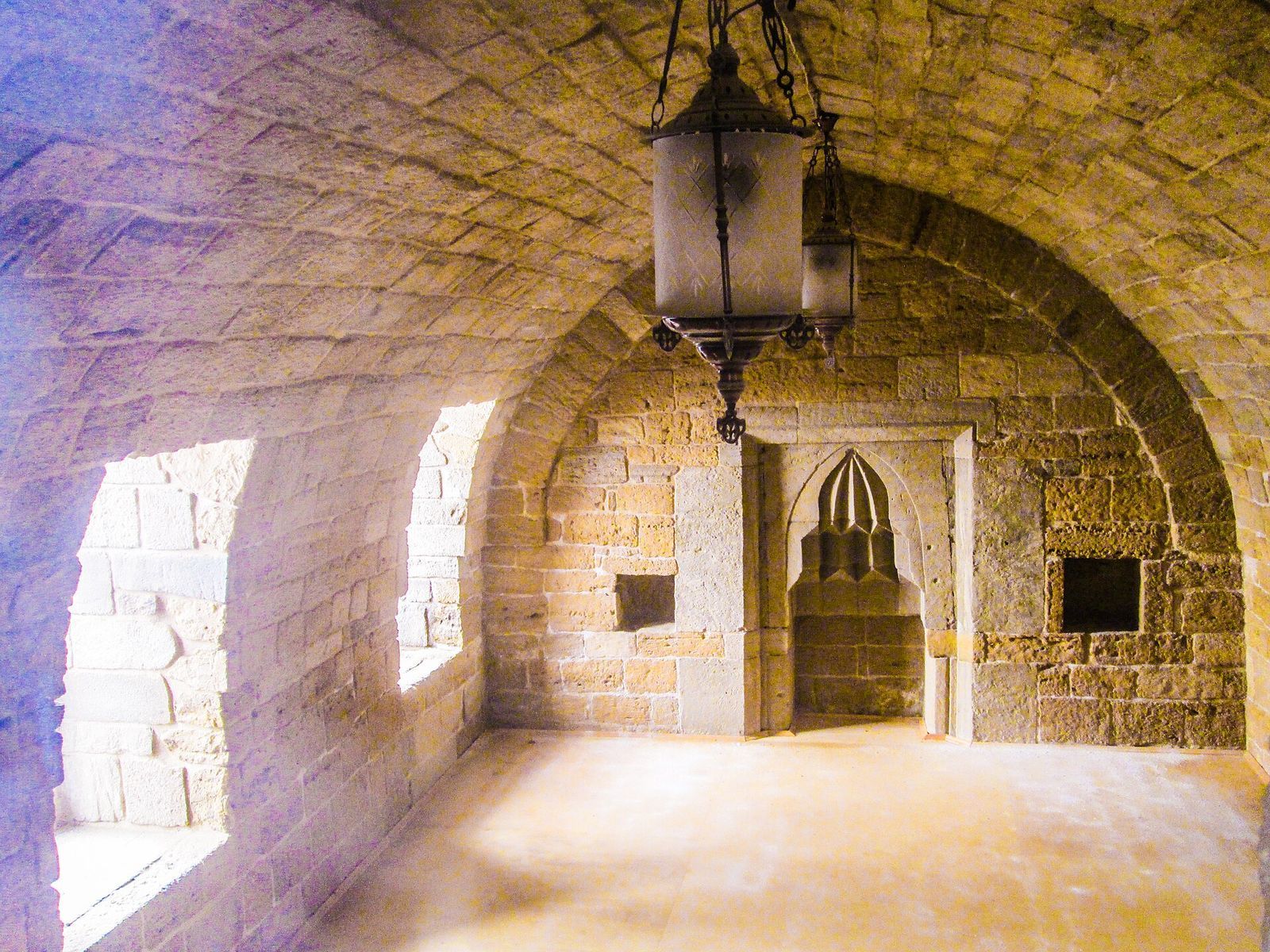
The mosque stands at the Gala turn, in the lower part of the Eastern Gate, within the Palace of the Shirvanshahs complex. Its rectangular plan contains a single-room prayer hall covered by a pointed stone dome. The asymmetrical main façade has a substantial, strongly defined composition, emphasized by a classical-style entrance portal.
Prayer niche
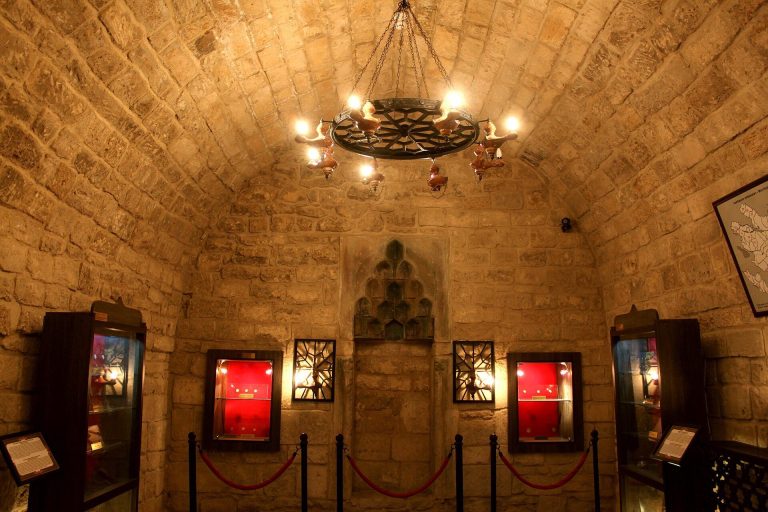
A mihrab (prayer-direction niche) is set into the south interior wall within a rectangular frame. Columns and smaller niches mark its edges, while its upper shell is carved in five tiers of muqarnas (tiered, niche-like architectural ornament).