Chin Mosque: A Fourteenth-Century Mosque and Numismatic Museum in Baku
Site at a Glance
- Rating
- 4.6
- Popularity
- Very Low
- Country
- Azerbaijan
- Primary era
- Medieval
- Eras represented
- Medieval
- Civilizations
- Shirvanshah
- Site type
- Religious
- Remains
- Mosque
On this page7 sections
History
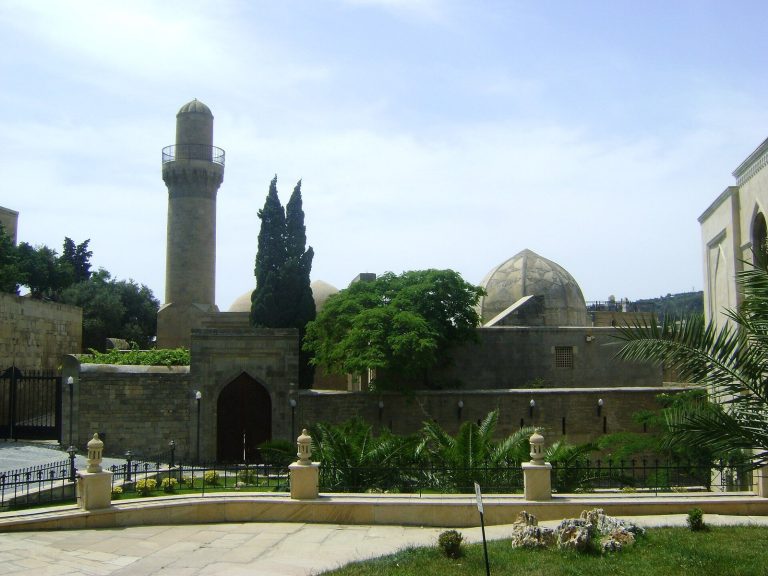
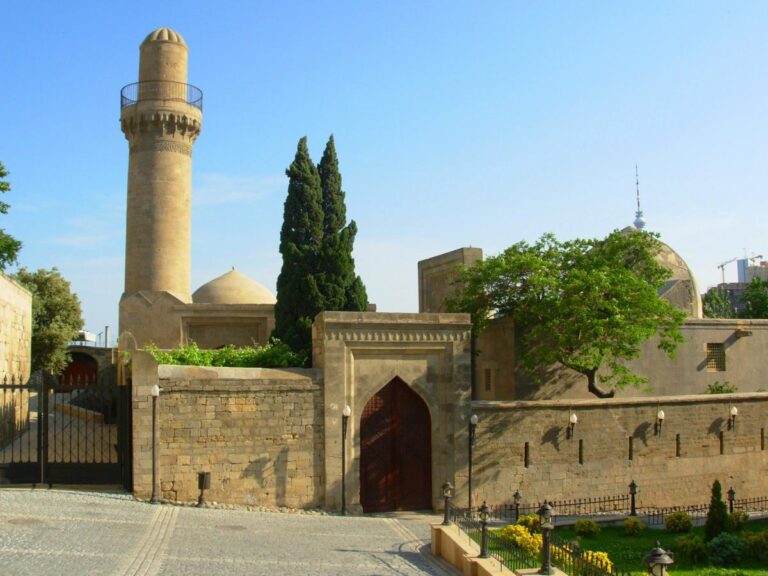
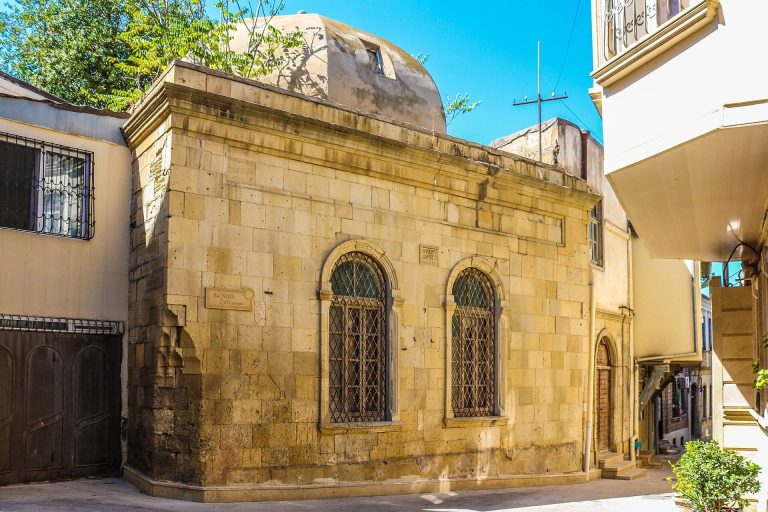
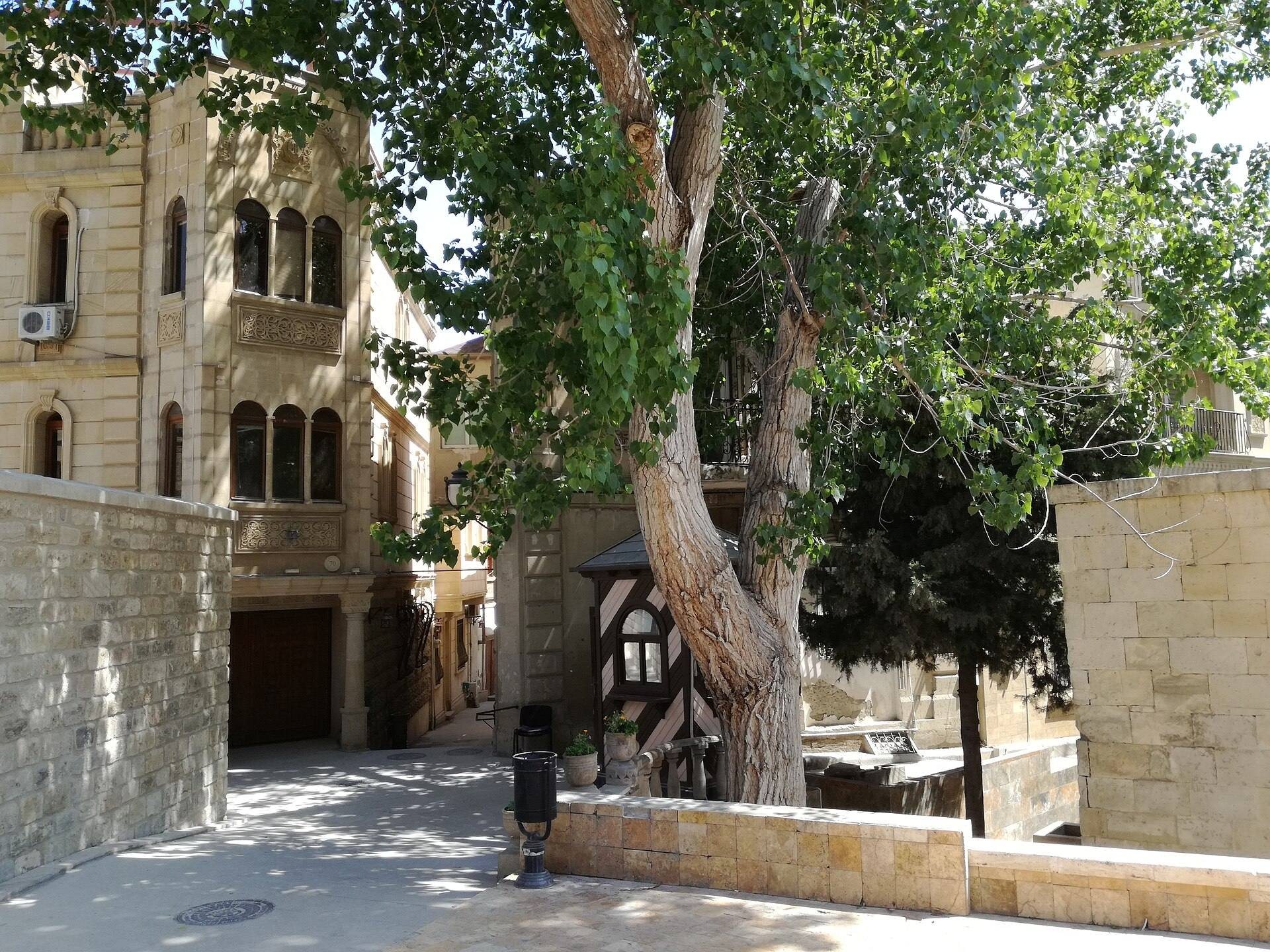
Chin Mosque is a fourteenth-century mosque in Baku, Azerbaijan, built in 1375 in the Shirvan-Absheron architectural tradition. It stands in the Old City on Kichik Gala Street, near the Palace of the Shirvanshahs, the seat associated with the medieval ruling dynasty of Shirvan. The building is also known as the Gazi Fezlullah bin Osman Mosque because its foundation inscription names Fazlullah Imam ibn Osman Shirvani as the person at whose will it was erected.
Foundation in 1375
An inscription above the entrance gives the construction date as 1375, or 777 AH. The AH, or Hijri calendar, begins with Muhammad’s migration from Mecca to Medina. This carved text is an epigraphic inscription, meaning a written statement placed on a durable surface, and it preserves the mosque’s foundation record together with the name of its patron.
Restoration and later use
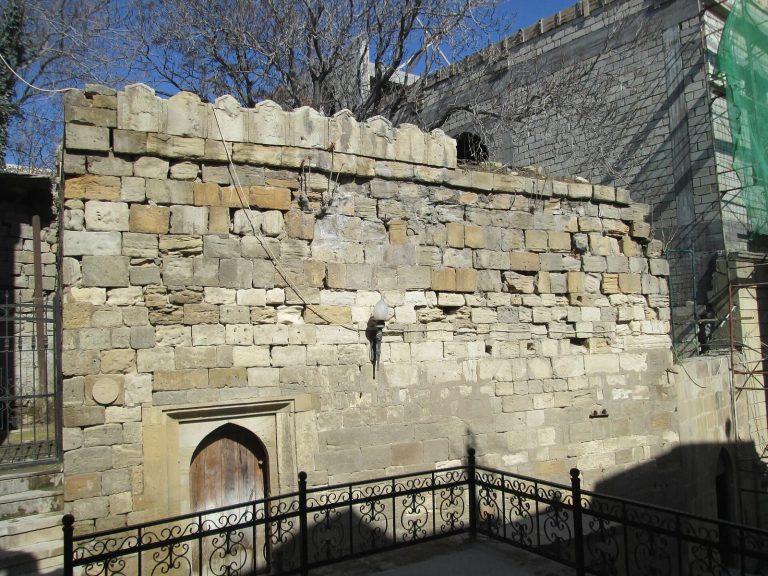
Further inscriptions on the facade record a restoration carried out in 1772 and 1773, corresponding to 1186 AH, under Masood Ali. The building therefore preserves evidence of both its fourteenth-century foundation and its later repair in the eighteenth century.
In 2012, Chin Mosque was repurposed as a numismatic museum, a museum devoted to coins, currency, and monetary history. It became part of the National Museum of History of Azerbaijan, and the former mosque no longer functions as a place of worship. Major repair and restoration work was undertaken that year by the Old City State Historical-Architectural Reserve Department. On August 2, 2001, the Cabinet of Ministers of the Republic of Azerbaijan registered Chin Mosque as a national architectural monument under decision No. 132.
The name “Chin” is explained in folk tradition by the belief that the wishes of people who visited the mosque would come true. This popular association accompanies the building’s recorded historical name and its later museum function.
Remains
The surviving building combines a compact, asymmetrical composition with a strongly defined entrance portal and carved Arabic epigraphy. Its architectural character belongs to the Shirvan-Absheron school, a regional Islamic tradition associated with Shirvan, the Absheron Peninsula, and historic Baku. The former prayer space now also accommodates displays of ancient coins and related exhibits.
Facade and portal
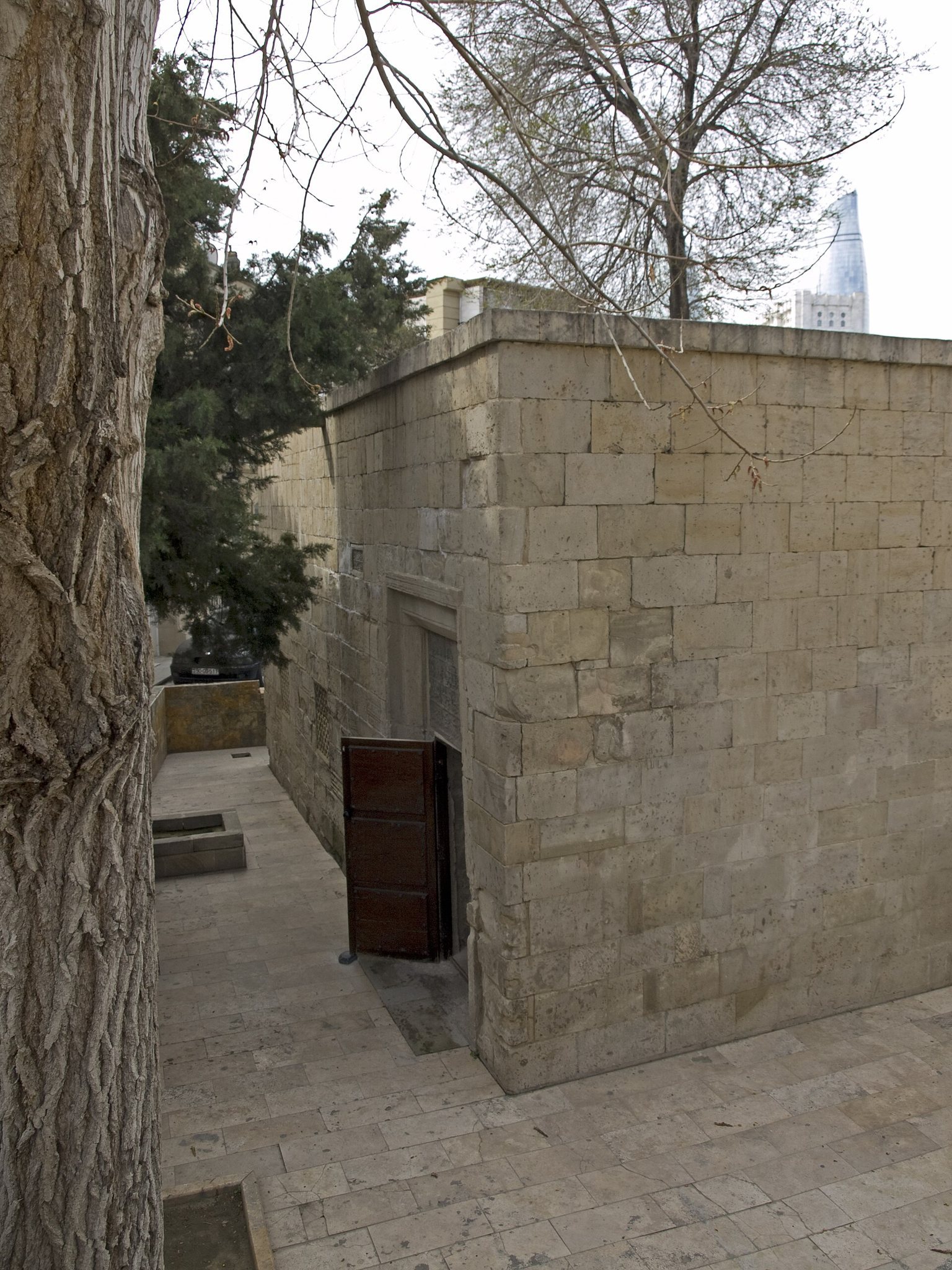
The principal facade is asymmetrical, while its rigid and substantial composition is organized around a classical-type portal. The entrance has a precisely profiled rectangular frame, a recessed section shaped with further profiling, and an Arabic epigraphic heading arranged in a formal classical manner across the facade wall. The portal is described as the most classical example among the city’s medieval eastern-style portals. Arabic inscriptions and carved decorative work are incorporated into the facade itself.
Mihrab
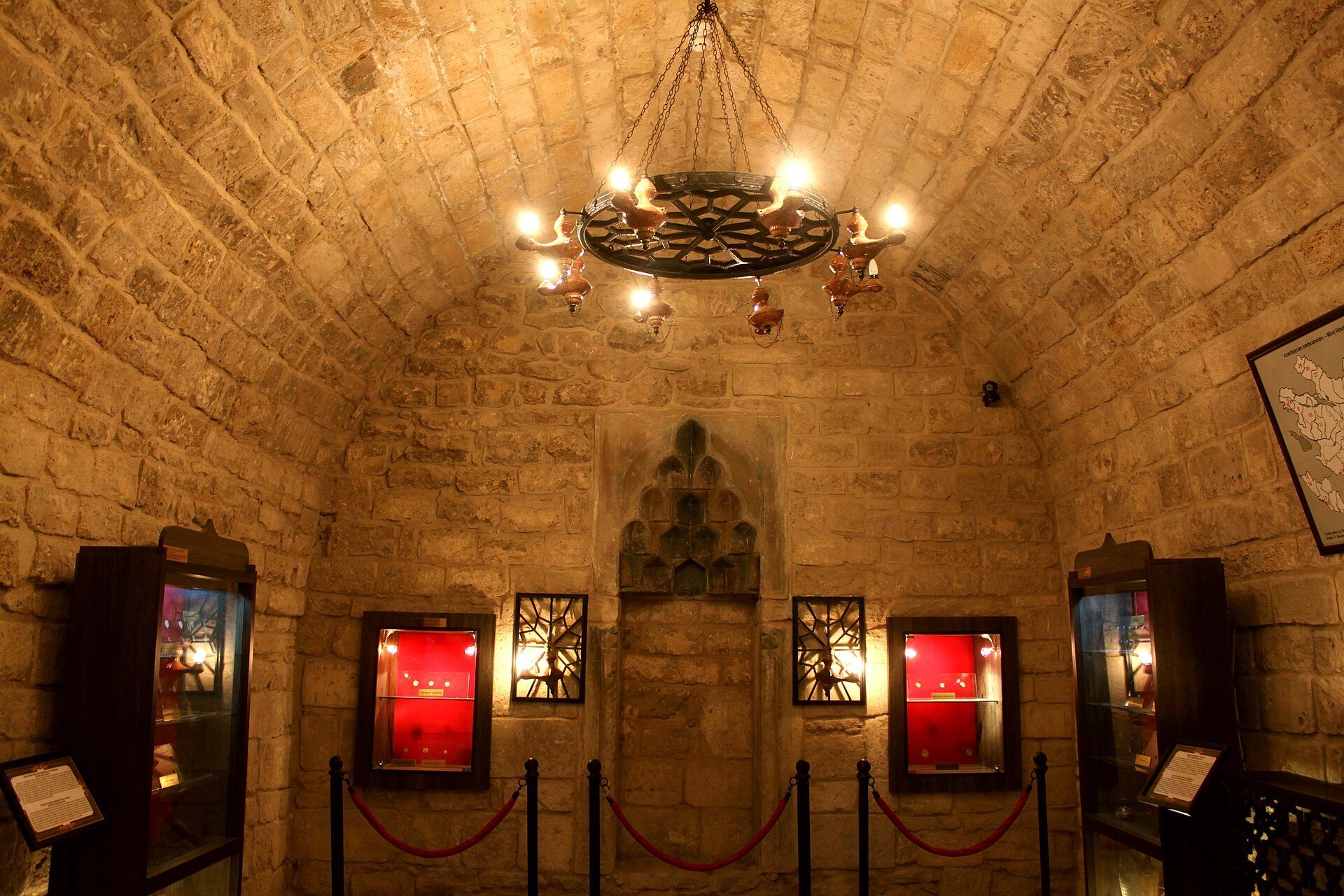
On the southern wall, the interior contains a five-tier stalactite mihrab. A mihrab is the prayer niche that indicates the direction of Mecca. Here, the niche is enclosed by a rectangular frame, with small niches placed along its edges. Its stalactite, or muqarnas, surface uses tiered three-dimensional forms to create a cellular architectural pattern.
Numismatic collection
The former mosque preserves and displays ancient coins and other ancient exhibits. The numismatic collection includes currency units and coins from the Sasanian, Safavid, and Shirvanshah periods, as well as other periods connected with the history of money circulation in Azerbaijan. The Sasanians and Safavids were major Iranian dynasties, while the Shirvanshahs ruled Shirvan during the medieval and early-modern periods.
Objects are arranged chronologically in separate showcases. Boards placed outside the cases explain the general characteristics, specifications, and types associated with each period, together with the locations linked to its currency. In this arrangement, the building’s architectural remains and its later museum displays present both the history of the mosque and changing monetary traditions in Azerbaijan.