Izumi Koganezuka Kofun: A Keyhole-Shaped Burial Mound in Japan
Site at a Glance
- Rating
- 3.8
- Popularity
- Very Low
- Country
- Japan
- Primary era
- Classical
- External website
- Open
- Eras represented
- Classical
- Civilizations
- Yamato
- Site type
- Burial
- Remains
- Burial Mound
On this page10 sections
History
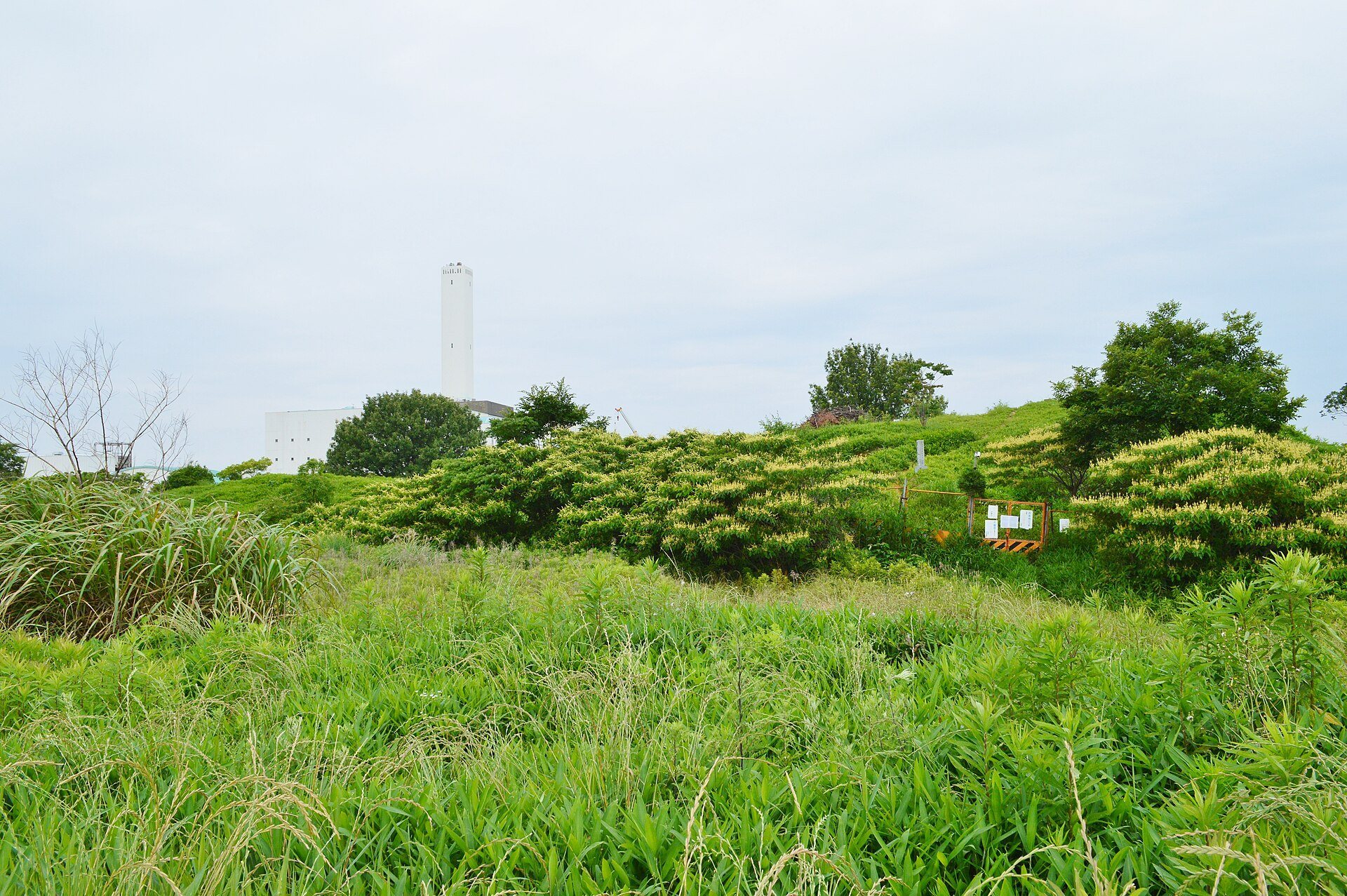
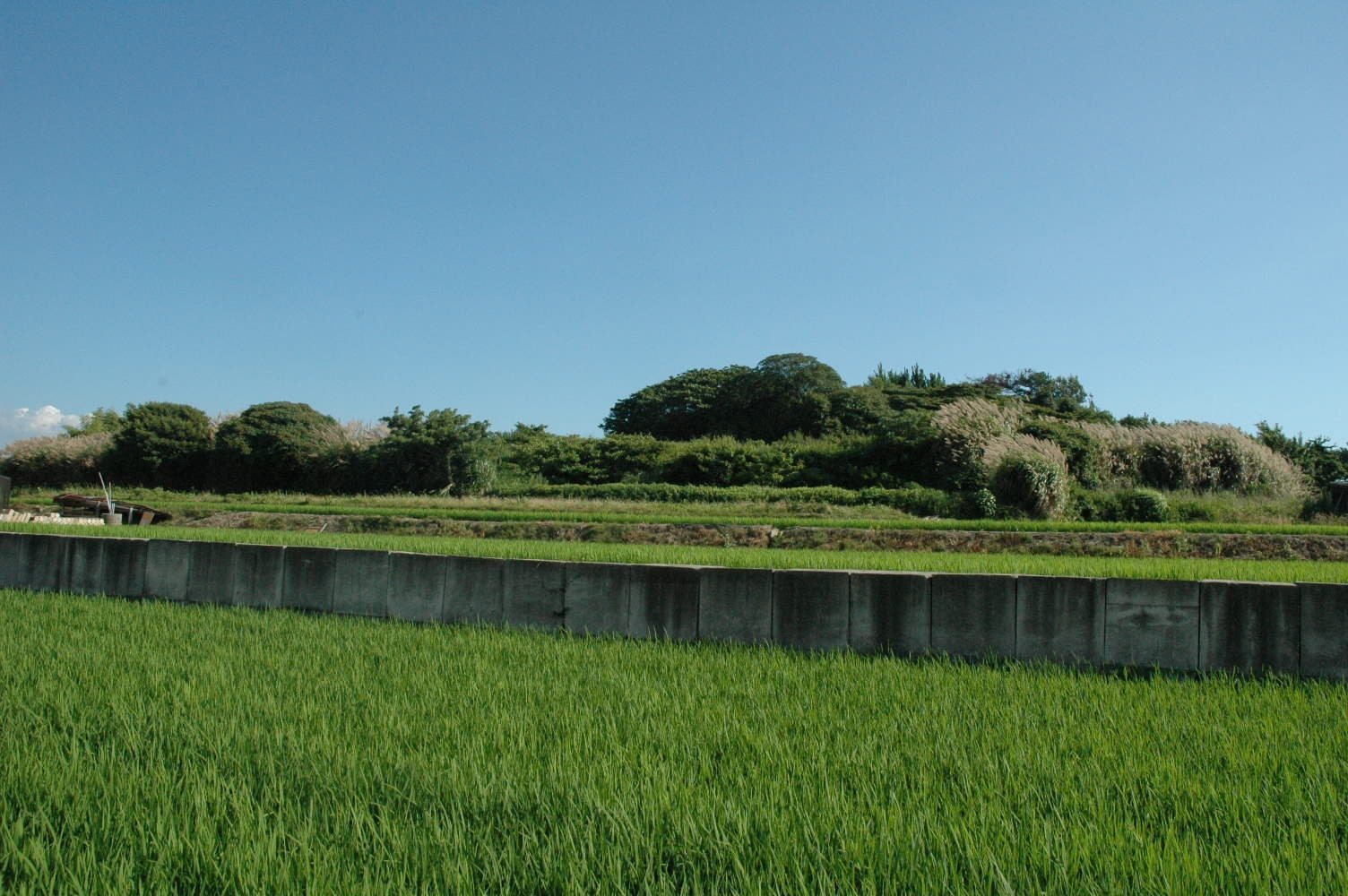
Izumi Koganezuka Kofun is a Kofun-period burial mound in Izumi, Osaka, Japan, thought to have been constructed in the latter half of the fourth century, near the end of the early Kofun period. A kofun is a large mound built as a burial monument in ancient Japan. The site belongs to the keyhole-shaped type, which combines a rectangular front section with a circular rear section.
Discovery and investigation
The mound had long been known, but its condition had deteriorated severely by November 1945. Koichi Mori, then a 17-year-old student who later became a professor at Doshisha University, noticed the damage and conducted an emergency investigation with the archaeologist Masao Suenaga. Their work took place beside trenches associated with the former Shintayama Army Training Ground. They recovered a lacquer-coated leather shield with three tomoe-shaped bronze fittings, along with a short cuirass, an iron sword, and chipped stone arrowheads.
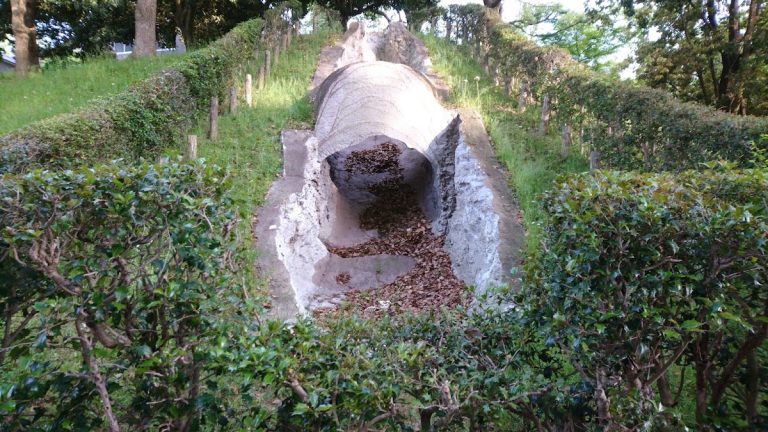
A joint investigation by the Osaka Prefectural Board of Education and the Japanese Archaeological Association followed in 1950 and 1951. It revealed three burial facilities in the mound’s rear circular section. Each contained a wooden coffin, and the facilities were arranged parallel to the mound’s main axis. The central coffin held the remains of a woman, while the eastern and western coffins held the remains of two men.
Later excavations and protection
Excavations carried out by the Izumi City Board of Education from 2001 to 2005 confirmed the scale of the mound and recovered many cylindrical and figurative haniwa. Haniwa are clay objects placed on or around burial mounds, including both simple cylinders and representational figures. Particularly large numbers were found near the mound’s eastern waist.
Izumi Koganezuka Kofun was designated a National Historic Site of Japan on March 28, 2008. Its protected area received additional designations in 2012 and 2026. The excavated objects were collectively designated a National Important Cultural Property in 1972 and are held by the Tokyo National Museum.
Remains
Mound form and haniwa
Izumi Koganezuka Kofun stands at the northwestern end of Shintayama Hill, within a landscape that includes terraced rice fields. It lies near the former provincial capital of Izumi. The keyhole-shaped mound measures approximately 94 meters in length and is thought to have been built in two stepped tiers. Its circular rear section is about 57 meters across and 9 meters high. The rectangular front section is estimated at about 42 meters wide and 6.5 meters high.
A row of cylindrical haniwa was found along the foot of the front section, helping establish the mound’s dimensions. Many figurative haniwa and haniwa fragments came from the eastern waist. Together, these clay objects provide physical evidence of the arrangements around the mound.
Burial facilities
Central burial facility
The central clay-coated burial facility contained a wooden coffin approximately 8.7 meters long. A clay-coated burial facility is a structure in which a wooden coffin is enclosed or protected by packed clay. Objects associated with the central burial included a semi-triangular-rimmed mirror decorated with two deities and two animals, magatama beads, jujube-shaped beads, tubular beads, stone bracelets, wheel-shaped stones, and other jewelry.
Outside the coffin were a pictorial-banded mirror showing four deities and four animals, an iron sword, an iron blade, an iron axe, and an iron sickle. The mirror bears an inscription dated to 239. Some archaeologists have proposed a connection between this object and the account that Queen Himiko, a third-century ruler of Wa, received 100 bronze mirrors from the Wei emperor. Wa was the name used in Chinese records for the polity or peoples of ancient Japan.
Eastern burial facility
The eastern clay-coated burial facility held a wooden coffin approximately 4 meters long. Its contents included a triangular-rimmed mirror decorated with a dragon and tiger, two pictorial-banded mirrors with four deities and four animals, armor, a helmet, magatama beads, jujube-shaped beads, tubular beads, a hoe-shaped stone, and a large faceted crystal bead said to be the largest of its kind in Japan.
Outside the coffin were an iron spear, iron halberds, and iron arrowheads. The excavated material also includes a bronze mirror with ring-shaped bosses and deity-and-beast motifs from this facility, together with armor fragments and other iron weapons.
Western burial facility
The western clay-coated burial facility contained a wooden coffin approximately 4.37 meters long. Like the central and eastern facilities, it lay within the circular rear section and followed the mound’s principal axis.
Additional funerary objects
The excavated assemblage includes the lacquer-coated leather shield fitted with three tomoe-shaped bronze fittings, iron weapons, armor fragments, bronze mirrors, jewelry, and haniwa. These objects are collectively preserved as a National Important Cultural Property, while the mound’s surviving form, burial facilities, and clay objects preserve evidence of its construction and funerary use during the late fourth century.