Chōfuku-ji Temple: A Rinzai Zen Temple in Kyoto
Site at a Glance
- Rating
- 3.3
- Popularity
- Very Low
- Country
- Japan
- Primary era
- Early Modern
- Eras represented
- Early Modern
- Civilizations
- Tokugawa
- Site type
- Religious
- Remains
- Monastery
On this page10 sections
History
Chōfuku-ji Temple is a Japanese Buddhist temple in Kyoto, Japan, founded in 1169 and now belonging to the Rinzai school of Zen Buddhism. Tradition attributes its establishment to the nun Shinri of the Umetsu family, which led the development of Umetsu. The temple later became an important religious institution with imperial connections and an extensive network of affiliated buildings.
Foundation and Early Development
In 1169, Shinri established the temple’s buildings. A “New Hall” was constructed in the Umetsu Upper Estate in 1190, after which the earlier temple became known as the “Original Hall.” In 1300, the nun Chien assumed responsibility for the institution, and Chōfuku-ji thereafter functioned as a nunnery.
The temple originally belonged to the Tendai Jimon school, a branch of Japanese Tendai Buddhism historically associated with the temple complex at Onjo-ji. In 1339, the Rinzai monk Gatsurin Dōkō entered Chōfuku-ji with the support of the Umetsu family. He converted it to Rinzai Zen and led its revival.
Imperial Connections and Medieval Reconstruction
Chōfuku-ji received estate land from Emperor Emeritus Hanazono in 1345. Five years later, it became an imperial prayer temple of Emperor Emeritus Kōgon of the Northern Court. When Kōgon’s consort, Yōroku-mon’in, died in 1352, she was buried at the temple.
Umetsu Kiyokage, a member of the Umetsu family, donated rice fields to Chōfuku-ji in 1440. The temple was later burned during the Ōnin War, a fifteenth-century civil conflict fought largely in and around Kyoto. Yamana Sōzen, a leading warrior and military commander of the period, rebuilt it.
Early-Modern Organization
In 1592, Chōfuku-ji was placed among the Zen temples classified as shozan, a rank within the traditional institutional hierarchy of Rinzai Zen. During the Edo period, it was a vermilion-seal temple, meaning that its landholding was recognized through a shogunal vermilion-seal grant. The temple held 350 koku of land, a historical measure of rice production used to assess land revenue.
A plan from 1732 depicts Chōfuku-ji at its height, with a mountain gate, Buddha hall, Dharma hall, abbot’s quarters, and 28 subtemples. By the early-modern period, it had become a branch temple of Nanzen-ji, a major Rinzai temple in Kyoto and the head institution of its branch. An affiliated-temple register from 1789 lists eight branch temples and 11 temple residences.
Chōfuku-ji remains a Rinzai Zen temple of the Nanzen-ji branch. Its mountain name is Daibaisan, and its principal image is Amitabha Buddha, the Buddha associated with rebirth in the Western Pure Land.
Remains
Principal Buildings
The precinct contains a group of surviving religious and architectural features, including the Buddha hall, abbot’s quarters, mountain gate, inner gate, bell tower, and Oil-Poured Jizo Hall. A stone pagoda is also associated with the temple grounds. The buildings reflect successive rebuilding, especially during the seventeenth century.
Buddha Hall
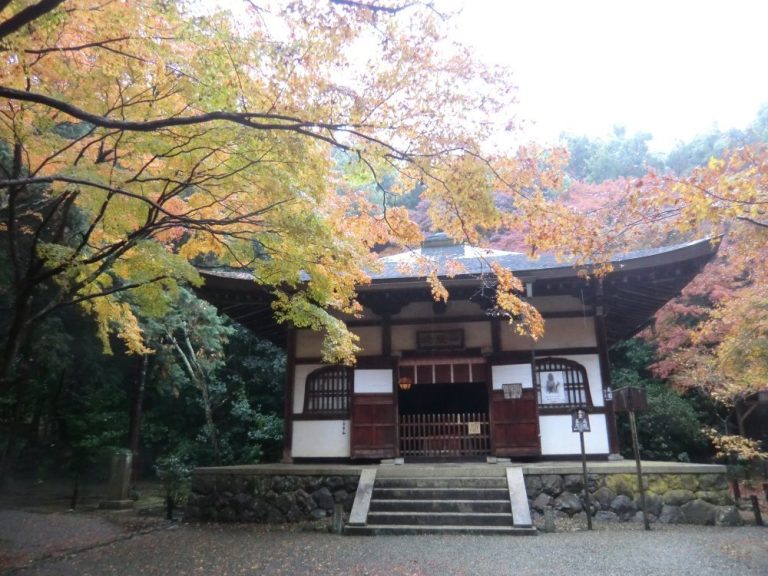
The Buddha hall was rebuilt in 1695. It has a mokoshi, a lower pent-roofed enclosure placed beneath the main roof and giving the building an additional roofline. The hall is regarded as one of Kyoto’s representative three-bay Zen-style Buddha halls from the middle of the early-modern period.
Abbot’s Quarters
The abbot’s quarters were rebuilt in 1668. They form part of the principal group of buildings within the temple precinct.
Gates and Bell Tower
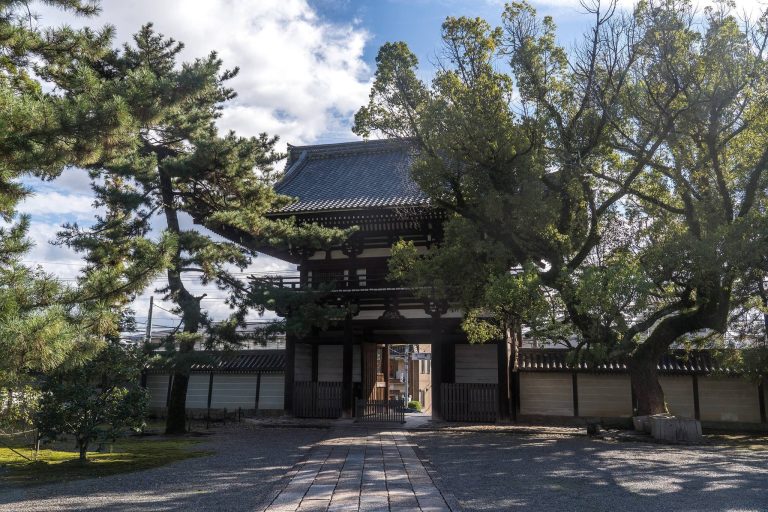
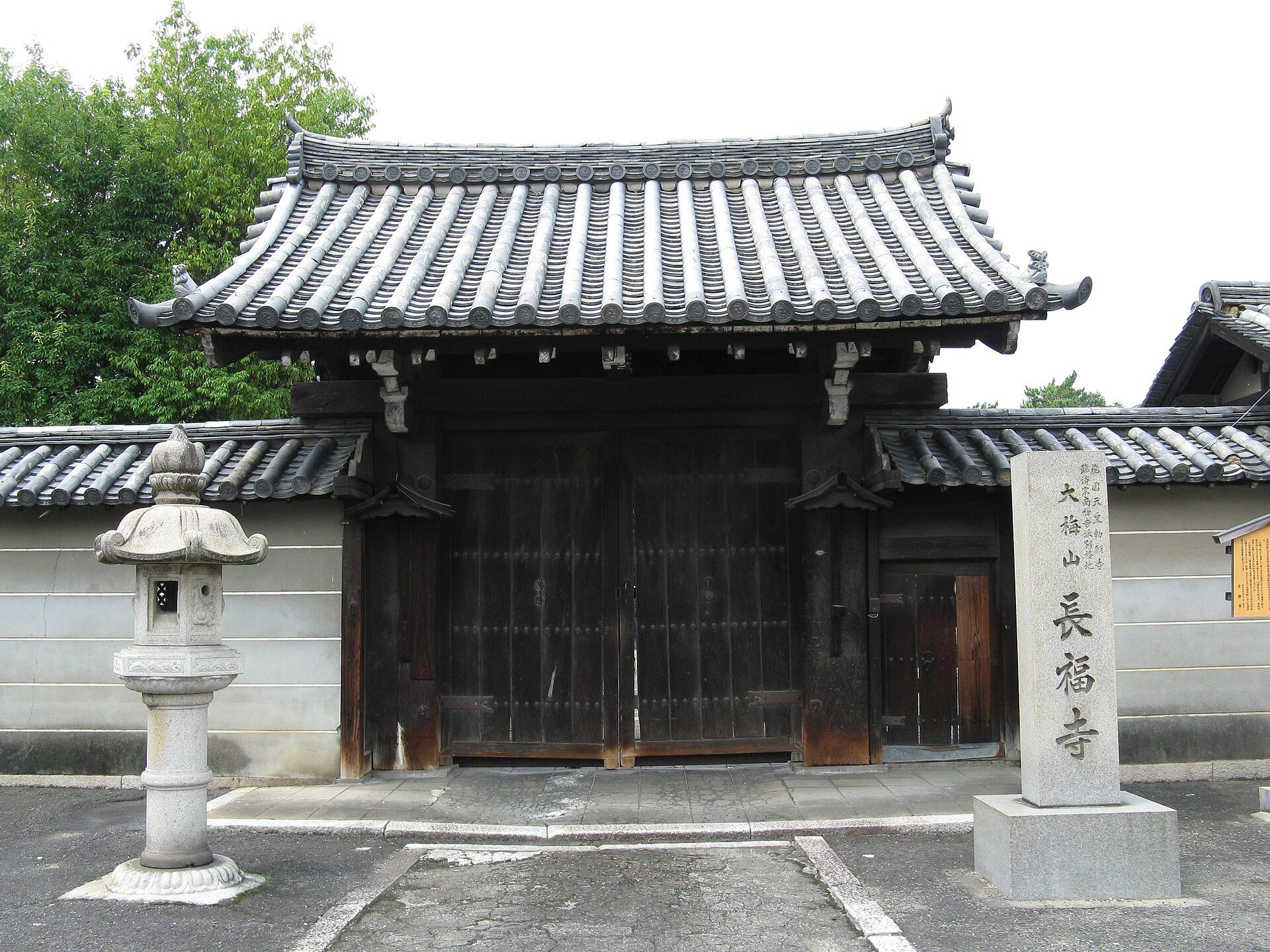
The temple’s main entrance is a seventeenth-century yakui-mon, a traditional roofed gate with side posts. This entrance is also identified as the mountain gate. An inner gate stands among the precinct’s principal structures, while the bell tower was rebuilt during the seventeenth century.
Oil-Poured Jizo Hall and Stone Pagoda
The Oil-Poured Jizo Hall is another named building within the precinct. A stone pagoda is associated with the temple grounds and forms part of its surviving religious landscape.