Suemura Kiln Site: A Major Ancient Sue-Ware Production Center in Japan


Site at a Glance
- Rating
- 3.4
- Popularity
- Very Low
- Country
- Japan
- Primary era
- Medieval
- External website
- Open
- Eras represented
- Classical, Medieval
- Civilizations
- Yamato
- Site type
- Economic
- Remains
- Production Complex
On this page11 sections
History
The Suemura Kiln Site is a major ancient Sue-ware production center in Japan, distributed across the southern Osaka hills around Sakai, Osaka, and established during the formative phase of Sue-ware manufacture from the end of the fourth century to the beginning of the fifth century. Sue ware was a high-fired ceramic tradition that developed in Japan during the Kofun period under strong technological influence from the Korean Peninsula. Production at Suemura continued for approximately 500 years, from the middle Kofun period through the early Heian period, and the complex is counted among Japan’s three major ancient kiln centers.
The name and early foundation
The name “Suemura” comes from a tradition preserved in the Nihon Shoki. During the reign of Emperor Sujin, Yamatototohimomosohime received a divine oracle telling her to find Ōta Taneko in Suemura, in Chinu district, and appoint him chief priest of Ōmononushi, the deity associated with Mount Miwa in Yamato. The tradition says that this action calmed an epidemic and other disasters. In that account, Suemura referred to a place known through tradition, rather than specifically to the later kiln-producing region. The complex is also known as the Southern Osaka Kiln Group, Hannan Ancient Kiln Group, and Senboku Hills Kiln Group.
The earliest production phase dates to around the end of the fourth century and the beginning of the fifth century. TG232 is placed in the oldest or formative stage, followed by TG231, ON231, and the Nigoriike Sue-ware Kiln. Together, these early sites show that substantial and continuous production was already under way at Suemura near the beginning of Sue-ware manufacture.
Expansion under the early Yamato polity
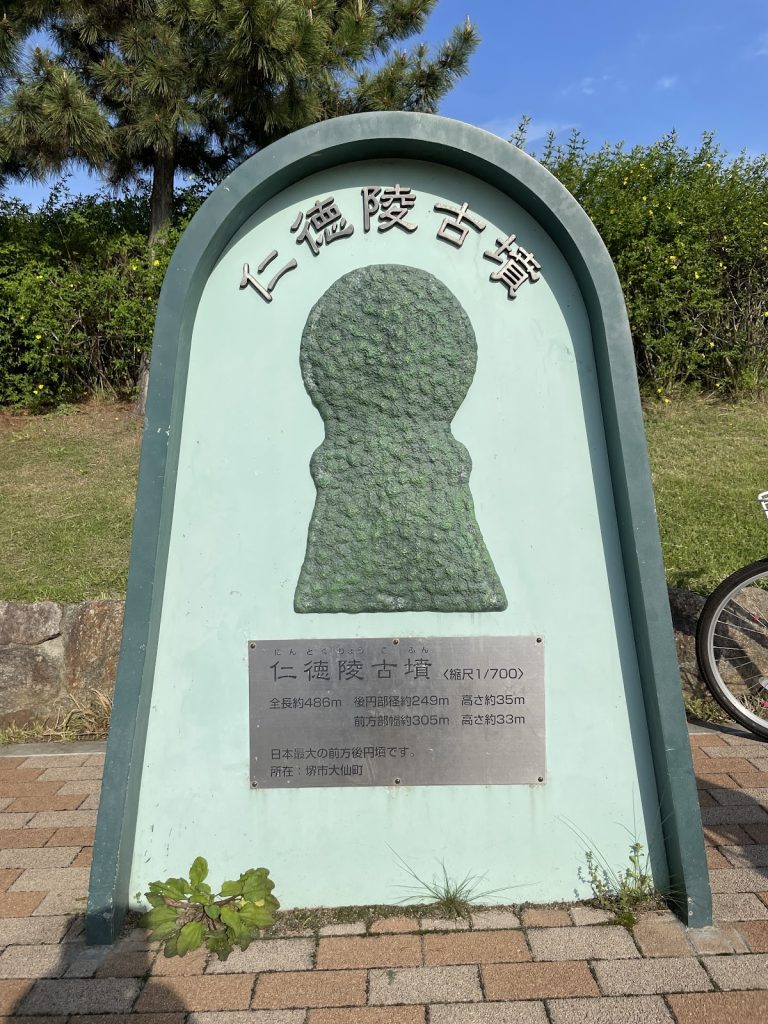
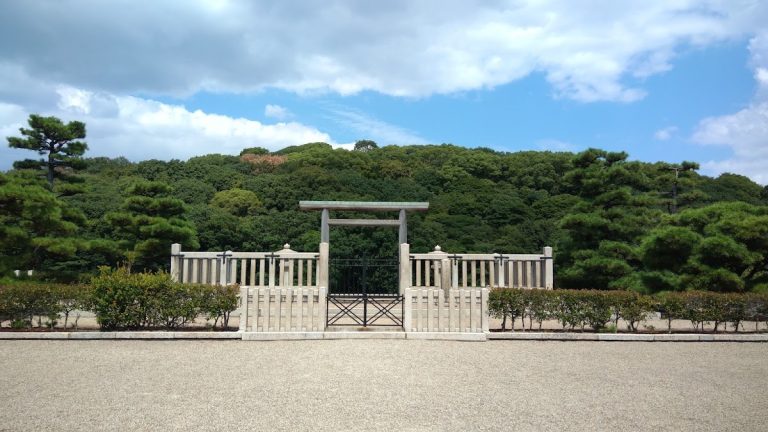
Suemura’s establishment is considered directly related to the central early Yamato polity, the political center that developed in the Kinai region and later formed the basis of the Japanese imperial state. The polity was responsible for major burial mounds in the Mozu Kofun Group north of the kiln complex, including the Daisenryo Mound, constructed in the fifth century. The Kofun period was an era of large keyhole-shaped burial mounds and the consolidation of early Japanese political authority, generally dated from about the third to the sixth century.
The kiln sequence used to organize Suemura’s history places TG232 in the earliest stage. TK73 and TK216 belong to the succeeding early fifth-century phase, while TK208, TK23, and TK47 represent development toward the end of the fifth century. A later phase of the sixth century includes MT15, TK10, TK43, and TK209. From the fifth century through the Heian period, Suemura remained one of Japan’s largest ceramic-production regions and is regarded as one of the places where Japanese kiln production originated.
Decline, research, and preservation
Production began to decline from the seventh century and ended around the latter half of the ninth century. One proposed cause was the depletion of local forest resources. Charcoal production had shifted from renewable broadleaf trees to red pine growing in degraded secondary woodland, increasing competition for dwindling fuel supplies. This pressure is reflected in the “Tōzan firewood dispute” of 859.
Koichi Mori proposed the first chronology based on Suemura Sue ware in 1958, followed by chronological schemes developed by Shozo Tanabe and Hiroshi Nakamura. Mori began investigating the kiln group after visiting the Minoyama Kiln, now identified as Takakura-dera Kiln 29, on October 5, 1941. He continued distribution surveys until February 16, 1964, helping to clarify the complex’s extent and character. Kilns are commonly identified by abbreviations taken from survey districts, including MT for Toki, TK for Takakura-dera, TG for Toga, KM for Komyo-ike, ON for Ono-ike, and TN for Taniyama-ike. These labels became established through early excavation reports, although their use has been criticized for replacing the kilns’ formal names.
From the 1960s, construction of Senboku New Town brought large-scale development into the area. Many kiln sites were robbed or destroyed, but more than 400 locations were excavated. Their finds established the Suemura chronology as a reference framework for dating Sue ware from the Kofun period through antiquity throughout Japan. Materials once stored and displayed at the Senboku Sue-mura Museum were transferred to the Sakai City Museum after the former museum closed on September 30, 2016. The kiln group’s excavated materials include a nationally designated Important Cultural Property assemblage designated in 2005, while a further 87 finds from TG231 and TG232 received prefectural designation in 2022. Takakura-dera Kilns 73 and 74 have been prefecturally designated historic sites since 1993.
Remains
Kiln landscape
The Suemura complex extends approximately 15 kilometers from east to west and 9 kilometers from north to south across the southern Osaka hills. More than 1,000 kilns were built within this area, which was divided by several small rivers into districts including Toki, Takakura-dera, Toga, Komyo-ike, Ono-ike, and Taniyama-ike. Individual kiln features are identified by district abbreviations and numbers, such as TK73, MT15, and TG232. The earliest kilns were concentrated in the northern part of the complex, on land near the plain and at the entrances to the hills. As production developed, new kilns were established farther inside the hills.
Early kiln sites
TG232 and TG231
Excavation at the Obadera Site in Sakai in 1991 exposed the TG232 and TG231 kilns together with remains of a Kofun-period settlement. Both produced large quantities of early Sue ware strongly influenced by ceramic traditions from the Korean Peninsula. TG231 yielded 12 Sue-ware pieces, four pieces of soft-fired earthenware, and one clay object. TG232 produced 65 Sue-ware pieces, one piece of soft-fired earthenware, one clay object, and three kiln implements. These finds form the 87-piece assemblage given prefectural designation in 2022.
ON231 and the Nigoriike kiln
ON231 lies slightly more than 1 kilometer west of TG231 and TG232. It began operating somewhat later and also produced large quantities of early Sue ware. Approximately 2 kilometers farther west, in Izumi, the Nigoriike Sue-ware Kiln belongs to a phase immediately following TG232 and likewise produced material from the earliest period of Sue-ware manufacture.
Excavated materials
The nationally designated assemblage associated with the kiln group contains 2,572 Sue-ware pieces, three kiln implements, and ten objects related to roof tiles and bricks. The Sakai City Museum preserves and displays these materials. Together with the excavated kiln locations, they provide the physical evidence for reconstructing Suemura’s production sequence and for dating Sue ware found at sites throughout Japan.
Takakura-dera kilns
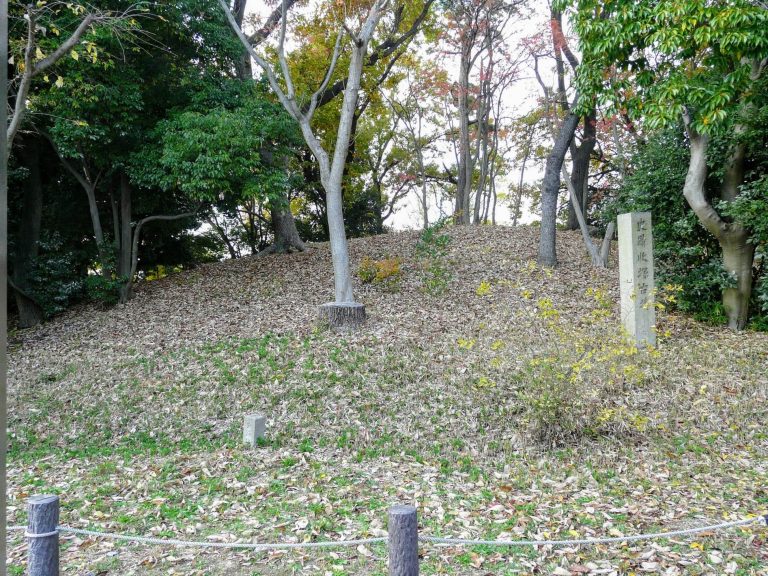
Takakura-dera Kilns 73 and 74 are archaeological kiln features within the wider Suemura complex. Their designation as prefectural historic sites dates from 1993, placing these surviving kiln remains among the protected physical evidence for the region’s long period of ceramic production.
Nearby sites