Kabushima Shrine: A Maritime Shinto Shrine in Hachinohe, Japan


Site at a Glance
- Rating
- 4.3
- Popularity
- Medium
- Country
- Japan
- Primary era
- Medieval
- External website
- Open
- Eras represented
- Medieval, Modern
- Civilizations
- Japanese
- Site type
- Religious
- Remains
- Sanctuary
On this page11 sections
History
Kabushima Shrine is a Shinto shrine in Hachinohe, Japan, traditionally founded in 1269 when fishermen invited the worship of Enoshima Benzaiten to Kabushima’s summit. Shinto is Japan’s indigenous religious tradition, centered on reverence for kami, or sacred beings associated with places, nature, ancestors, and myth. The shrine developed as a place where fishermen prayed for safety at sea and successful catches.
Maritime worship and religious associations
The shrine’s principal deities are the three Munakata goddesses, Ichikishimahime no Mikoto, Tagirihime no Mikoto, and Takitsuhime no Mikoto. Traditionally associated with maritime protection, these three Shinto kami helped define the shrine’s connection with the sea. Kabushima Shrine has also been revered as the Benzaiten of Kabushima. Benzaiten, a Buddhist goddess associated with eloquence, music, learning, and prosperity, was also widely worshipped in Japan as a protector of water and maritime activities. Enoshima, a sacred island near Kamakura, was historically associated with her worship.
The shrine contains an image of Benzaiten, and black-tailed gulls became part of its religious identity. They were regarded as messengers of Benzaiten and as birds whose movements could indicate fishing grounds. Falling gull droppings came to be viewed as a sign of good luck, extending the birds’ place in the shrine’s popular religious traditions.
Island protection and changing connections
Kabushima’s black-tailed gull breeding ground received designation as a national Natural Monument in 1922. In Japan, this designation protects an important natural feature, habitat, or species site. The island was later included in Sanriku Fukkō National Park in May 2013. It was also damaged by the tsunami generated by the 2011 Tohoku earthquake.
A major physical change came in 1942, when the former Japanese Navy carried out a two-year land-reclamation project commissioned by the Home Ministry and Navy Ministry. The work connected Kabushima to the mainland, changing the island’s relationship with the surrounding coast while retaining its role as a shrine and gull breeding ground.
Fire and reconstruction
Kabushima Shrine has been rebuilt several times. In the early hours of 5 November 2015, the shrine burned completely. Reconstruction began in November 2016 and took approximately five years. Work was suspended during the black-tailed gull breeding season from April to August, and the rebuilt shrine was completed in 2020. The new structure primarily uses timber from Aomori Prefecture.
The annual Kabushima Festival continues near the shrine on the third Sunday of April. The origin of the name Kabushima remains uncertain. Suggested explanations connect it with flowering wild rapeseed, expressions for a place where a deity is worshipped, or Ainu words interpreted as “black-tailed gull” and “rocky place.”
Remains
Kabushima is a small island at the northern end of the Tanesashi Coast. It covers approximately 0.017 square kilometers, has a coastline of about 0.8 kilometers, and rises to a maximum elevation of 19 meters. The shrine stands at the summit. A staircase approach leads from a torii at the foot of the island to the shrine entrance, while a path encircles the shrine precinct.
Shrine precinct
Rebuilt shrine
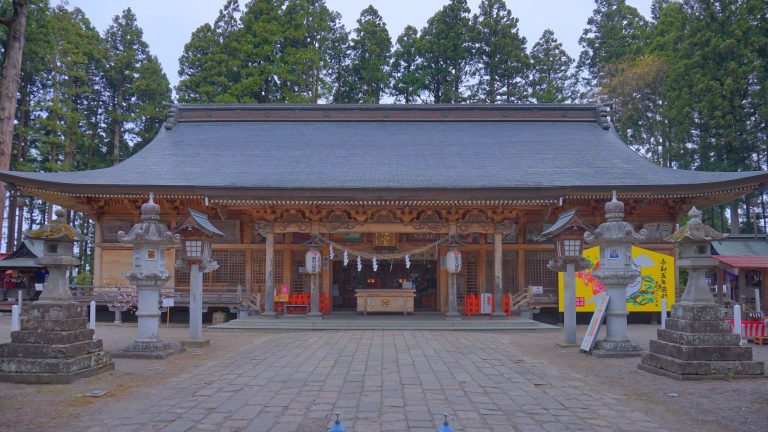
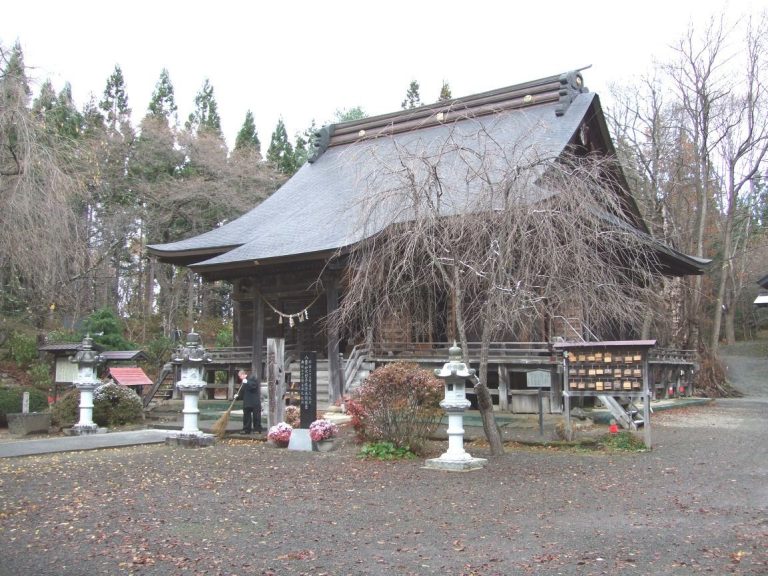
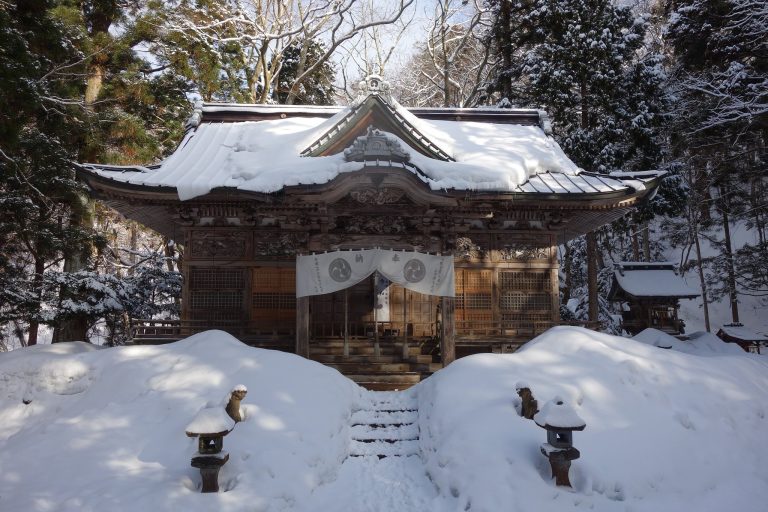
The present shrine is the timber structure completed in 2020 after the 2015 fire. Its setting at the summit, reached by the staircase from the torii, preserves the physical arrangement of the approach to the place of worship. A path around the precinct allows movement around the shrine, where the image of Benzaiten is kept.
Gull breeding ground
During the breeding season, black-tailed gulls occupy the shrine precinct in numbers reaching the tens of thousands, leaving little ground unobstructed. The birds arrive from late February to mid-April, nest and incubate eggs around May, and produce hatchlings in June. Young birds fledge in July before the colony departs by August. Umbrellas are provided at the foot of the island to protect people from falling droppings, which are traditionally considered lucky. People who are struck may enter the shrine to receive a commemorative tablet.
Memorials and inscriptions
Black-tailed gull memorial stele
A memorial stele to the black-tailed gull stands within the shrine precinct. It bears a tanka poem by Yanagihara Byakuren, linking the physical presence of the breeding colony with the cultural and religious traditions of Kabushima.
Hachinohe Kouta monument
Beside the shrine approach stands a monument bearing the first verse of Hachinohe Kouta. Hachinohe City produced this new folk song in 1931 and released it in 1932. The monument was erected in August 1973, and the song’s lyricist, a haiku poet, supplied the inscription, which also includes his name.