Jōkō-ji Temple: A Rinzai Buddhist Temple and Tokugawa Mausoleum Grounds


Site at a Glance
- Rating
- 4
- Popularity
- Low
- Country
- Japan
- Primary era
- Early Modern
- External website
- Open
- Eras represented
- Early Modern, Modern
- Civilizations
- Tokugawa
- Site type
- Religious
- Remains
- Temple
On this page10 sections
History
Jōkō-ji Temple is a Rinzai Buddhist temple in Seto, Japan, founded in 1336 in the Mizuno area of Yamada Manor in Owari Province. Sponsored by Mizuno Munekuni and a local lord from Oda in Mino Province, it initially belonged to the Kenchō-ji branch of the Rinzai school, a major Japanese Zen Buddhist tradition. The temple is dedicated to the worship of Jizō Bosatsu, a Buddhist bodhisattva associated in Japan with protection and compassion.
Foundation and Rinzai affiliations
Jōkō-ji was re-established in 1649 as a temple of the Myōshin-ji branch, another institutional lineage within the Rinzai tradition. Its main image is Longevity Jizō, King of Vows. The temple’s mountain name is Ōmuzan.
The Owari-Tokugawa mausoleum
After Tokugawa Yoshinao died in 1650, the woodland beside the temple was chosen for his mausoleum. Yoshinao was a son of Tokugawa Ieyasu and the founding daimyō, or feudal lord, of Owari Domain, one of the major Tokugawa family domains. Construction began in 1651 and continued for three years. The resulting Genkei-kō Mausoleum, named for Yoshinao’s posthumous title, adjoins the eastern side of the temple grounds.
Jōkō-ji received the protection of the Owari-Tokugawa family until the end of the Tokugawa shogunate and the Meiji Restoration. It was not the family’s bodaiji, a temple serving as a family’s mortuary and memorial institution, but its grounds became closely linked with Yoshinao’s burial place.
Reorganization of the family graves
During the tenure of Tokugawa Yoshichika, the nineteenth head of the Owari-Tokugawa family, about 170 graves created by the family over roughly 300 years were abolished. The remains were consolidated in an underground ossuary, a repository for human remains, on Owari-Tokugawa land beside Yoshinao’s tomb. This reorganization was completed in 1936. Yoshichika’s remains were added after his death in 1976.
The Hondō and the six buildings and one tomb forming Yoshinao’s mausoleum complex are designated Important Cultural Properties. The temple and mausoleum grounds also retain cultural associations with the Owari-Tokugawa family.
Remains
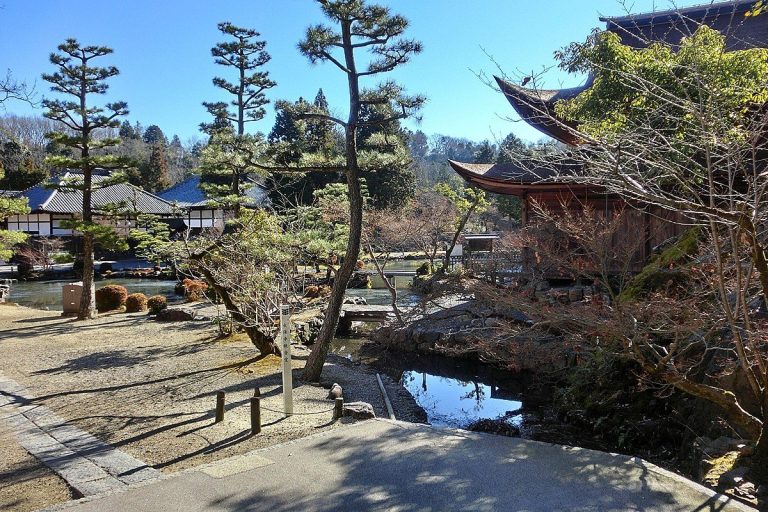
Jōkō-ji’s grounds combine the Buddhist temple with the Genkei-kō Mausoleum on its eastern side. The mausoleum is enclosed by earthen-plastered walls and arranged along an approach leading through successive gates and buildings. Its structures are principally Zen-style, with Chinese-inspired decorative elements.
Temple buildings
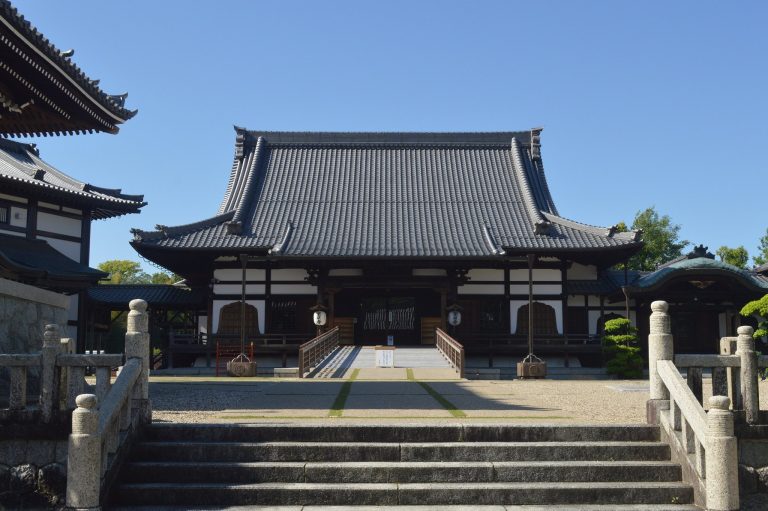
The temple’s principal building is the Hondō, or main hall. It contains the statue of Jizō Bosatsu known as Longevity Jizō, King of Vows, which serves as Jōkō-ji’s main image. The Hondō is among the site’s Important Cultural Properties.
Mausoleum enclosure
Dragon gate and approach
A dragon gate marks the front of the mausoleum. Earthen-plastered walls extend from both sides of the gate to form the enclosure. Along the approach stands a lion gate dating from 1699, added after the grave and the principal surrounding buildings had been established.
Incense hall and treasure house
Inside the enclosure are an incense hall and a treasure house. These buildings, together with related parts of the complex, use Zen-style architecture combined with Chinese-inspired decorative features. The incense hall and the surrounding buildings were erected in 1652, while the mausoleum’s grave was established in 1651.
Inner gate and Yoshinao’s grave
Farther inside the enclosure stands a Chinese-style gate. Yoshinao’s grave marker lies beyond it, forming the innermost focal point of the mausoleum arrangement. Beside the tomb, on family-owned land, is the underground reinforced-concrete ossuary containing the consolidated remains of members of the Owari-Tokugawa family.