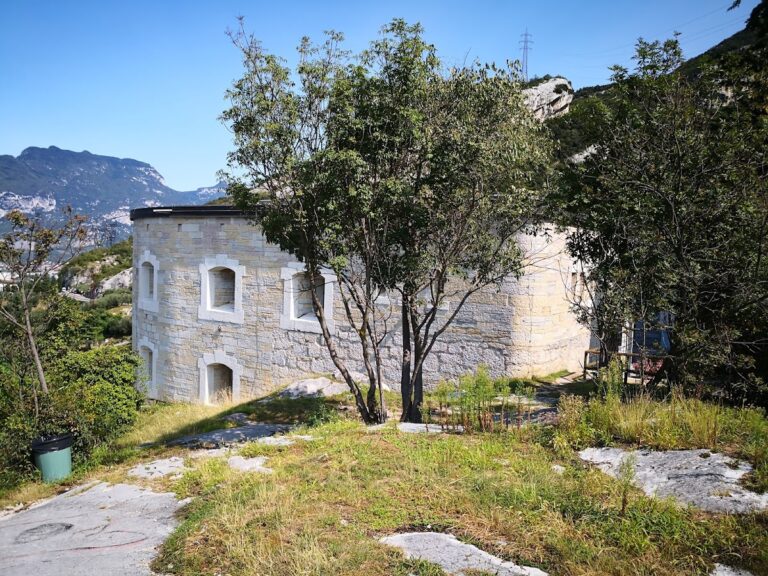
Immacolata Church: Former Parish Church of Avio, Italy


Site at a Glance
- Rating
- 4.6
- Popularity
- Very Low
- Country
- Italy
- Primary era
- Medieval
- Eras represented
- Medieval, Early Modern, Modern
- Civilizations
- Holy Roman Empire, Lombard, Venetian
- Site type
- Religious
- Remains
- Church
On this page11 sections
History
Immacolata Church is a Roman Catholic church in Avio, Italy, whose origins probably belong to the early medieval period between the eighth and tenth centuries. Dedicated to the Immaculate Conception, it served as Avio’s parish church and rural ecclesiastical center before becoming the cemetery church adjoining the modern burial ground.
Early parish history
The foundation of the church remains uncertain. Its beginnings are generally placed between the eighth and tenth centuries, when rural parish churches were being established across the region. Roman remains found at the site led to an eighteenth-century proposal that a pagan temple had once stood there, but that interpretation remained disputed.
The first direct reference to the parish church appears in a papal bull issued by Pope Eugene III in 1145. The document listed the parish of Avio, together with its chapels and tithes, among the churches of the Diocese of Verona. Bulls issued by Pope Anastasius IV in 1153 and Pope Clement III in 1188 reaffirmed this status during disputes over ecclesiastical jurisdiction.
A document dated 9 August 1203 provides the earliest known reference to the church’s dedication to the Immaculate Conception. It concerns a dispute between the priest of Sabbionara, the archpriest of Avio, and the Bishop of Verona over the burial of parishioners in the cemetery of San Vigilio. During the thirteenth century, population growth placed increasing pressure on the parish church, which was responsible for pastoral care, baptisms, and burials under the established organization of rural Christianity.
Castelbarco and Venetian rule
From the thirteenth century, the Castelbarco family, a powerful local dynasty, expanded its control across Vallagarina. The family received the fief of Avio Castle from the Bishop of Trento in 1198, and its political influence also affected the parish. A document from 1351 states that Guglielmo Castelbarco, son of Azzone, held three parts of the tithe of Avio and its dependencies. The family’s painted coat of arms inside the church is probably connected with this period.
When Ettore Castelbarco died without descendants, his 1410 testament transferred the territories of the Avio and Brentonico vicariates to the Republic of Venice in 1411. Venice, also known as the Serenissima, granted the local population a degree of administrative autonomy in exchange for loyalty and the defence of nearby borders. This political change began a period later described as Avio’s golden age.
Under Venetian rule, the people of Avio retained the right to administer justice according to local statutes, collect the communal tithe, and reject an archpriest whom they considered unsuitable. Parish clergy were therefore often local, while appointments providing income without full pastoral duties were uncommon. Alessandro de Hastis of Forli, who led the parish in the early fifteenth century, was remembered as the only archpriest from outside the area since the fourteenth century.
The parish also benefited from private bequests. In 1417, Guglielmo, son of Manuele of Avio, left money for commemorative masses, while in 1443 Bonifacio, son of Michele, requested burial in the church. Bishop Francesco Condulmer made the first recorded pastoral visit in 1445. On 10 October 1456, Bishop Ermolao Barbaro found the church generally well maintained, with liturgical books and furnishings, under the direction of the archpriest Aviano.
A major renovation, financed by a bequest from Cristoforo, son of Ognibene, had been completed by 1 October 1462. The church was reconsecrated in the following year. During the second half of the fifteenth century, frequent changes among the clergy caused local dissatisfaction, particularly when archpriests came from outside the area. In 1471, the local priest Francesco became archpriest. He remained in office until his death twenty-six years later, restoring a stronger degree of local autonomy from the Diocese of Verona.
From Venetian administration to a new parish church
After the War of the League of Cambrai, a conflict that weakened Venetian control in northern Italy, Vallagarina passed to the Prince-Bishopric of Trento within the Holy Roman Empire. Emperor Maximilian I initially accepted the vicariates’ existing privileges, and Bishop Cristoforo Madruzzo approved their statutes in 1539. The bishops of Verona nevertheless retained ecclesiastical jurisdiction over the parish for a time.
During Bishop Gian Matteo Giberti’s visit on 27 and 28 May 1530, Avio’s parish had 1,500 inhabitants, including 560 communicants, and the church was valued at 80 ducats. In 1532 Giberti ordered a shelter where priests could instruct worshippers outdoors while protected from sun and rain. In 1539 the parish lost jurisdiction over the chapel of Sant’Andrea at Ossenigo after that chapel became a parish church. During a pastoral visit in 1553, Bishop Luigi Lippomano criticized the conduct of the archpriest Sebastiano Malfatti and ordered him to dismiss his concubine and resume his pastoral duties personally.
Plague struck Avio in 1575 and killed approximately one-fifth of the population, about 280 people. The parish church was suspected of being infected and was temporarily abandoned. Its limitations became increasingly apparent as the population grew. A new church was begun in 1651 on the site of an earlier church dedicated to Saint Roch and was completed on 18 September 1695. It replaced Immacolata Church as the parish church, while the older building continued to serve the adjoining cemetery.
Later alterations and modern use
Although it no longer served as the parish church, the building underwent minor interventions in 1724 and 1734. It was enlarged westward in 1759, reaching its present dimensions. A new pulpit was installed in 1800. The archpriest Zantelli later financed a small portico and a burial chapel for deceased parish priests.
During the First World War, the church was used as a military hospital and suffered serious damage. In summer 1920, Giuseppe Gerola directed restoration work funded by the faithful, with the aim of returning the building to its sixteenth-century appearance. The bell tower was restored in 1957, and the damaged northern pillar received structural consolidation in 1976 and 1977 after centuries of seismic activity. Since the 2000s, the former parish church has functioned as the cemetery church for the adjoining burial ground.
Remains
Immacolata Church stands south of Avio’s main settlement at Ceré, near the eastern entrance to the Molini valley toward Vallagarina. The present structure combines alterations and reconstructions made over many centuries. Excavations and surviving fabric reveal an early church beneath the later building, a fifteenth-century rebuilding, subsequent changes to the roof and entrance, and a bell tower standing directly beside the church.
Church building
Early structure
Excavations in 1899 uncovered remains of a small earlier building beneath the current floor. It had three aisles, a pavement of flat cobbles about 40 centimetres below the present level, wall fragments, a doorway, and pillars including one round pillar. The search did not confirm the crypt suspected after discoveries in 1788. The earliest building was probably rectangular, with its entrance positioned where the present apse now stands. It was later lengthened, given three apses, and accompanied by the raising of the existing bell tower.
Roman remains from the site include funerary inscriptions referring to Augustal and Claudian seviri, members of a Roman religious or civic college. These inscriptions were found in 1733. A dedication to the Emperor Maxentius was discovered several years later during the demolition of the high altar, providing further evidence of Roman activity at the location.
Fifteenth-century rebuilding
The renovation completed in 1462 lengthened and probably raised the church. The two side aisles remained lower than the central nave, and two small round windows were opened in the northeast side of the nave. Two inscriptions in the present attic record the completion of the work on 1 October 1462. An early-sixteenth-century fresco of the Baptism of Christ occupies the wall west of the triumphal arch, while a triptych depicting the Madonna and Saint Peter was later placed on the opposite wall.
Entrances, roof, and interior alterations
The covered shelter ordered in 1532 was probably built in front of the facade and may have preceded the later enlargement of the church. The northern entrance portal, facing Avio, dates from 1541. In 1551, the ceilings of the two minor aisles were raised, allowing the entire church to be covered by one roof with two slopes. The facade remained without an opening until the small portico was constructed in 1891.
The presbytery floor was rebuilt in 1890, when earlier terracotta tiles were replaced by cement tiles. The portico erected the following year also sheltered the burial chapel for deceased parish priests. The Castelbarco coat of arms remains painted inside the church and is probably associated with the family’s medieval predominance in Avio.
Bell tower
The bell tower stands immediately beside the church. Its precise construction date is unknown, but it postdates the medieval enlargement that added the three apses. The first documentary reference to it dates from 1455. An earlier proposal for an eighth-century origin was rejected after examination of the materials in the bell chamber suggested a later, probably Lombard-period, beginning.
The tower is a Romanesque structure. It once carried a sundial, and traces of a fresco remained on its exterior plaster until the 1920s. The bell chamber now has two two-arched openings on its northeast and southeast sides. Other openings on the remaining sides were probably closed at an unknown date, and have been interpreted either as two-arched or three-arched openings.
A roof of four gently inclined slopes covered with stone shingles caps the tower. Four monolithic pinnacles rise at the corners, with a larger pinnacle at the centre. Each is topped by an iron cross. Restoration in 1957 and structural work on the church’s northern pillar in 1976 and 1977 form part of the building’s modern physical history.