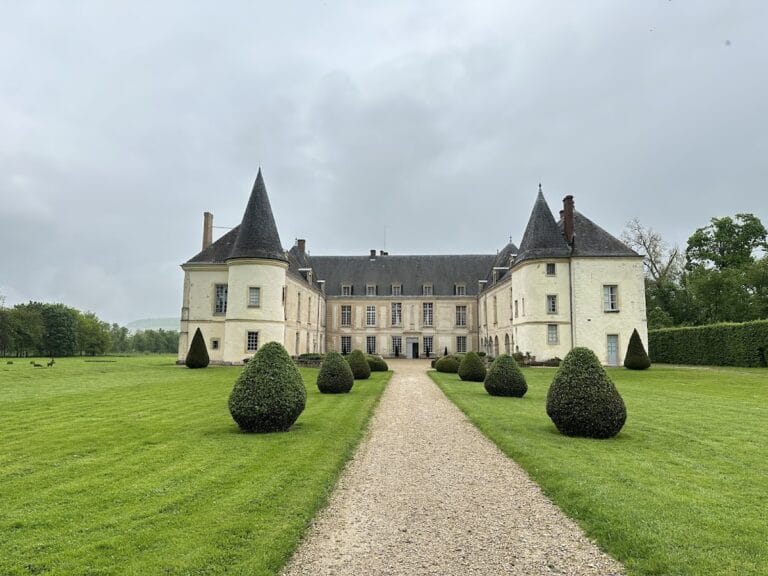
Igny Abbey: A Cistercian and Trappist Monastery in France
Site at a Glance
- Rating
- 4.7
- Popularity
- Low
- Country
- France
- Primary era
- Medieval
- External website
- Open
- Eras represented
- Medieval, Early Modern
- Civilizations
- County of Champagne, French
- Site type
- Religious
- Remains
- Monastery
On this page12 sections
History
Igny Abbey is a Cistercian monastery at Arcis-le-Ponsart in France, founded in the twelfth century after Archbishop Rainaud II de Martigny of Reims donated land in 1126. A foundation charter followed in 1127, and twelve monks from Clairvaux arrived on 12 March 1128 under Humbert, formerly Clairvaux’s prior. The first church was consecrated in 1130. Cistercians belonged to a Catholic monastic order that emphasized communal discipline, manual work, and a relatively austere way of life.
Foundation and Twelfth-Century Expansion
Igny began as a daughter house of Clairvaux, one of the leading Cistercian monasteries. Its early growth was supported by gifts from regional lords, particularly the lords of Braine, Châtillon, and Arcy. The community eventually reached as many as 300 monks. Igny also became a centre of expansion itself, founding Signy Abbey in 1135, Valroy Abbey in the late 1140s, and Bonnefontaine Abbey in 1152.
Humbert resigned as abbot in 1138 and returned to Clairvaux, where he died in 1148. His successor, Guerric of Igny, became known for sermons that later formed an important part of Cistercian spiritual writing. Guerric died at Igny in 1157 and was later beatified. In 1177, Gerard of Clairvaux was murdered at Igny by Hugh of Bazoches, a monk whom Gerard had threatened with disciplinary action. Gerard was subsequently regarded as the first Cistercian martyr.
Medieval Prosperity and War
The abbey continued to prosper during the later Middle Ages. In 1199, Dom Julien secured confirmation of its possessions and privileges from Thibaut III, count of Champagne, and Pope Innocent III. Dom Nicolas continued the abbey’s expansion between 1205 and 1232. Its landed estate included seventeen granges, or agricultural centres, around 1350 and properties in more than fifty localities. Nine granges were still operating in 1464.
Donations and recruitment declined from the late thirteenth century, while the Hundred Years’ War brought severe hardship. In 1378, substantial support from Gaucher V de Châtillon allowed restoration work to proceed. Thibaud of Luxembourg entered the community and later became abbot after his wife died in 1448. He subsequently became bishop of Le Mans and a cardinal.
Commendation, Destruction, and Replacement
A royal decree introduced commendatory abbots at Igny on 12 January 1545, when 72 religious belonged to the community. A commendatory abbot held the title and revenues of an abbey without necessarily living there or directing its religious life, a system that weakened Igny’s internal resources. Huguenots pillaged the church during the French Wars of Religion, the conflicts between Catholics and Protestants that affected France from 1562 to 1598. Spanish troops later pillaged the abbey during the Thirty Years’ War and the Franco-Spanish War. They burned the Longeville grange in 1650, and only nine monks remained in 1653.
The medieval church was demolished in 1733 and replaced by a new one. The replacement church and most of the new monastic buildings were complete by 1789. Jean-Charles de Courcy held the abbey in commendam from 1777 until the French Revolution. In 1790, the French government suppressed religious houses. An inventory at Igny listed four monks, and the remaining six were expelled on 5 April 1791. The estate became national property and was sold, with the monastic buildings and three granges acquired by the Raison family of Reims.
Restoration and Twentieth-Century Reconstruction
Archbishop Benoît-Marie Langénieux of Reims bought back the estate and surviving buildings on 28 December 1875 in order to restore monastic life. Twenty-three Trappist monks from Sainte-Marie-du-Désert arrived in January 1876, and the church was consecrated on 21 September that year. Trappists are Cistercians of the Strict Observance, a branch known for particularly rigorous observance. Igny initially functioned as a priory and became an abbey in 1886.
An agricultural orphanage operated at Igny from 1877 to 1891. In 1884, Augustin Marre established a chocolate works, which was later rebuilt in a larger and more modern form outside the monastic enclosure. At its height, the works employed more than 70 people.
In 1914, the abbey community comprised 22 members. During the First World War, the German army pillaged the chocolate works, converted the abbey into a hospital for contagious diseases, and forced its evacuation in May 1918 during the Second Battle of the Marne. During the retreat, German troops destroyed the abbey on 6 August 1918. The complex was left largely in ruins, although the small library survived. Reconstruction took place between 1927 and 1929, and on 29 November 1929 approximately 32 Trappist nuns from Laval Abbey moved into the rebuilt monastery. Igny thereby became a women’s Trappist abbey.
Later Community
In 1955, Igny founded Notre-Dame de la Clarté Dieu at Murhesa in South Kivu, in the Democratic Republic of the Congo. This was the first Cistercian nuns’ house in Africa. A reorganization begun in 2008 brought together the communities of Igny, La Grâce-Dieu, and Belval, followed by the community of Ubexy. The four communities were installed in the renovated abbey in 2011 under the name Notre-Dame du Val d’Igny.
Igny remains an active women’s abbey of the Cistercian Order of the Strict Observance. Since 1961, the nuns have produced the “Igny chocolate corks,” dark chocolates shaped like champagne corks and filled with chocolate ganache containing alcohol.
Remains
Valley Setting and Reconstructed Complex
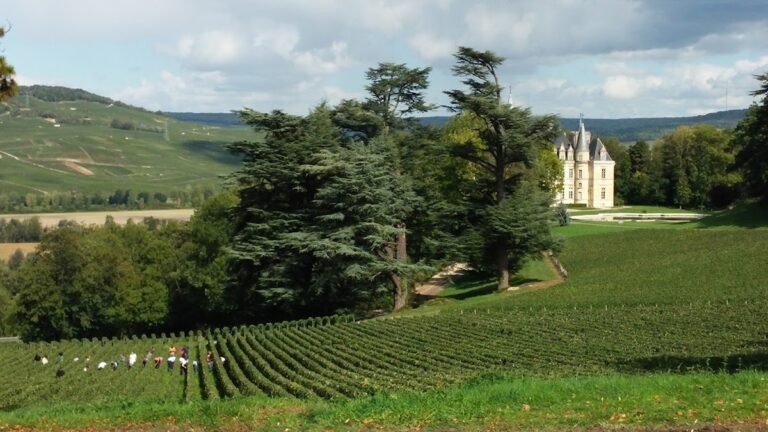
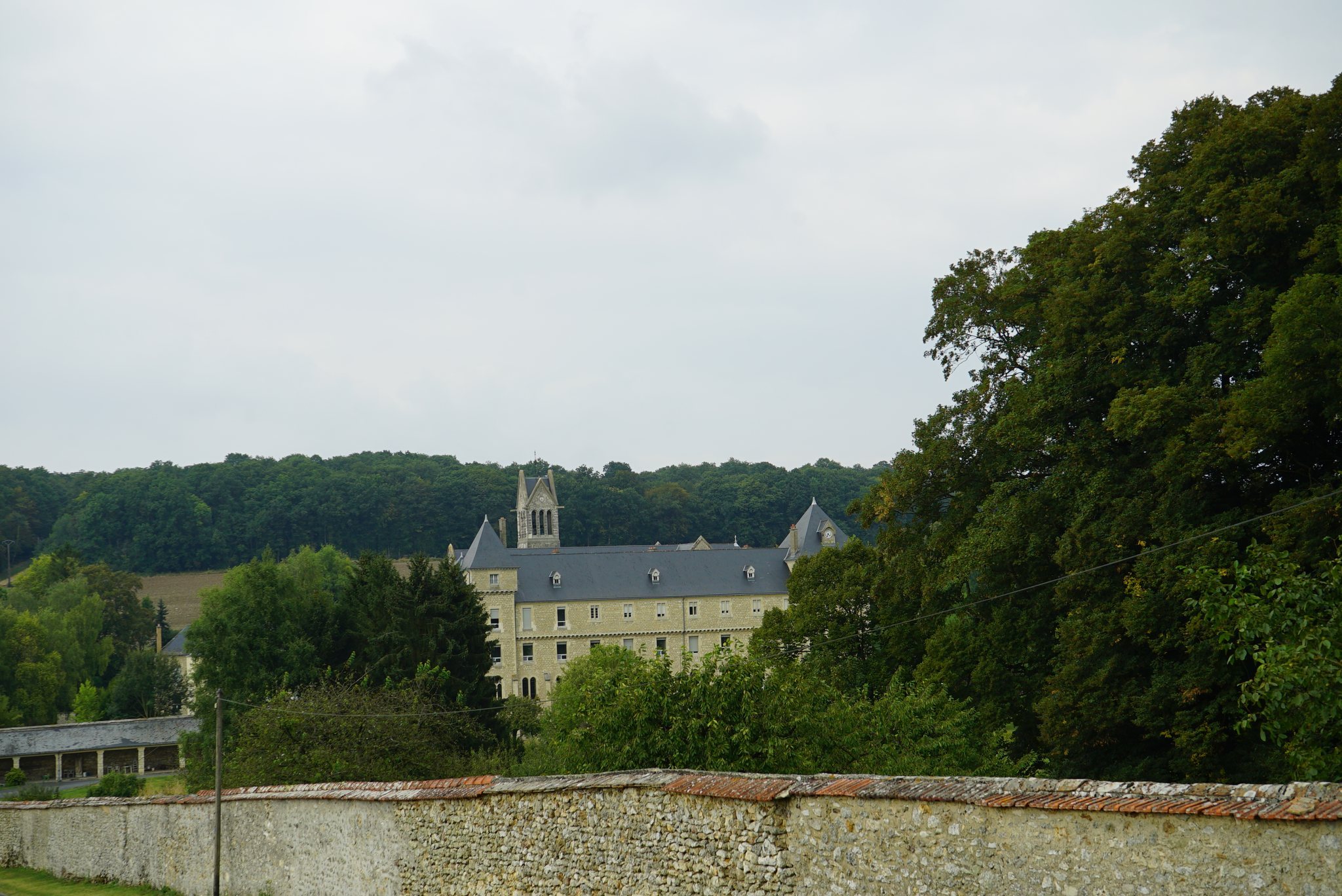
Igny Abbey occupies a hollow in a valley in the Tardenois region at Arcis-le-Ponsart. The present complex is a twentieth-century reconstruction whose architecture is based on Loc-Dieu Abbey. Stones and fragments from the earlier abbey were incorporated into the rebuilt monastery, linking the modern complex physically with the site’s earlier phases.
Buildings and Devotional Features
Abbey Church
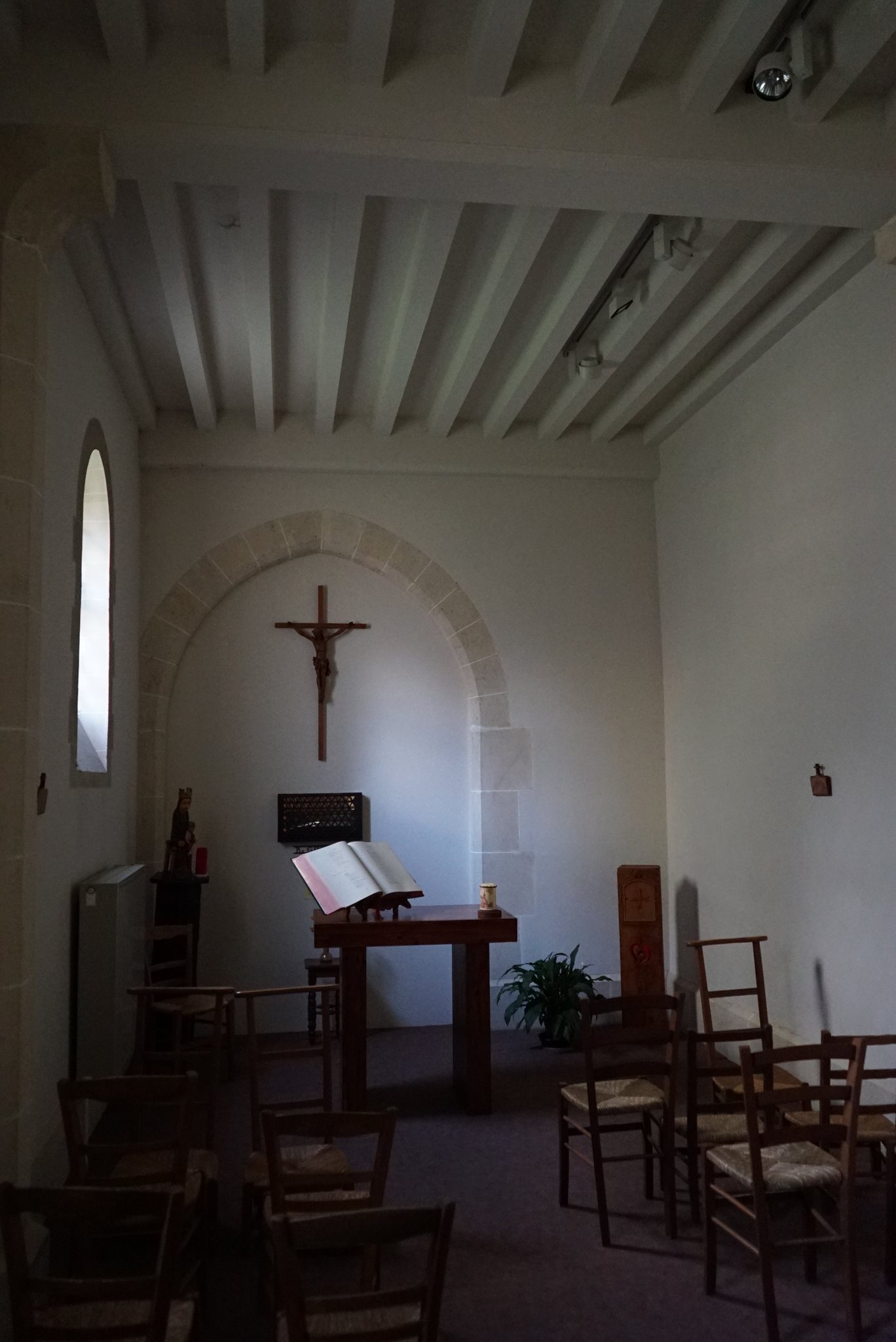
The church belongs to the sequence of rebuilding that followed the destruction of the medieval church in 1733 and the later nineteenth-century restoration. It was consecrated on 21 September 1876. A side chapel preserves and provides a place of veneration for the relics of Guerric of Igny, the twelfth-century abbot and spiritual writer.
Monastic Buildings
The historical monastic buildings were almost entirely destroyed in 1918. The small library is specifically recorded as surviving that destruction. The monastery rebuilt between 1927 and 1929 was enlarged and modernized from 2008 to 2011 to accommodate the four communities brought together at Igny.
Chocolate Works
The former chocolate works stands outside the monastic enclosure. It was rebuilt in a larger and more modern form after the original works established by Augustin Marre in 1884. The building remains associated with the community’s continuing production of chocolate.