Château de Boursault: A Neo-Renaissance Country Residence in France


Site at a Glance
- Rating
- 4.8
- Popularity
- Low
- Country
- France
- Primary era
- Modern
- External website
- Open
- Eras represented
- Medieval, Modern
- Civilizations
- French
- Site type
- Domestic
- Remains
- Castle
On this page9 sections
History
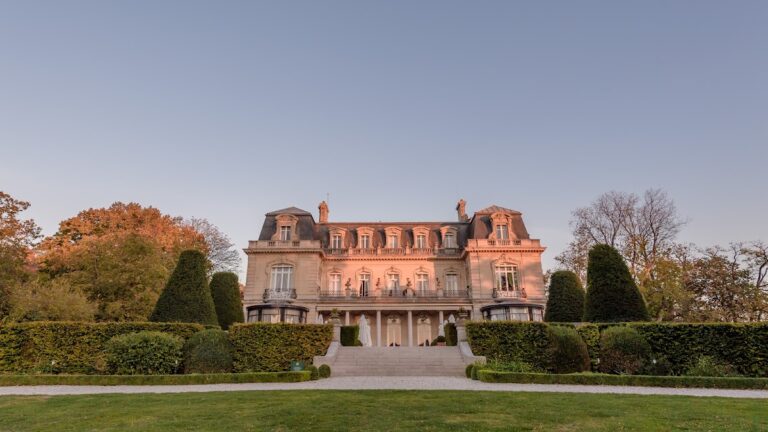
Château de Boursault is a nineteenth-century French château in Boursault, France, built in the Neo-Renaissance style as a country residence for Madame Clicquot Ponsardin and her family. The present building was constructed during the 1840s and completed in 1850, replacing a deteriorated medieval fortress and manor on an estate with medieval lordship records and a long association with vineyards.
Medieval Lordship and Fortress
The seigneurie of Boursault, a territorial lordship governed by a lord, appears in records from the fourteenth century. The land passed through the hands of Robert de Flandre, Geoffroy de Naast, Henry IV, Count of Bar, and Cardinal Louis de Bar. In 1409, Louis de Bar received Boursault and other lordships from his father, Robert, Duke of Bar.
By the sixteenth century, a fortress château belonging to the barons of Boursault stood on the site. Vineyards were established around it during that period, although the area was wooded for an intervening century. By the beginning of the nineteenth century, the medieval château had fallen into severe disrepair. A more modest manor stood beside the fortress ruins, which had previously belonged to the Anglure family.
The Clicquot and Chevigné Families
Louis Marie Joseph de Chevigné came to the Boursault estate through his adoptive uncle, General-Count du Chaffaut. After Louis de Chevigné married Clémentine Clicquot-Ponsardin in 1817, her grandmother, Madame Clicquot Ponsardin, financed repairs to the property. The decision to replace the old château entirely followed the 1839 marriage of Marie-Clémentine de Chevigné, Madame Clicquot’s granddaughter, to Louis de Rochechouart-Mortemart.
Madame Clicquot Ponsardin, owner of the Veuve Clicquot champagne house, commissioned the new residence to commemorate the marriage. The name Veuve Clicquot means “Widow Clicquot.” The first stone was laid on 15 August 1842 by the young Paul de Mortemart, held in his father’s arms. The château was completed eight years later and became a setting for formal receptions, fêtes, and dinners attended by Champagne society, writers, and artists hosted by Louis de Chevigné.
Later Ownership and Wartime Use
Madame Clicquot retired to Boursault at the age of 64 and died there at 89 in 1866. Her great-granddaughter Anne de Rochechouart de Mortemart, Duchess of Uzès, inherited the property and sold it in 1913. The estate then belonged to the Berry family of Canada until 1927, when Achod Fringhian acquired it. His family managed the property for generations.
During the First World War, from 1914 to 1918, the château was converted into a military hospital. It served the same purpose again during the Second World War, from 1939 to 1945. Afterward, the former parkland was converted into vineyards. Château de Boursault champagne has been produced at the estate since 1927 and aged in its cellars. The wine is described as the only champagne in the Marne to carry the “château” designation.
Remains
The Neo-Renaissance Residence
Designed by the French architect Jean-Jacques Nicolas Arveuf-Fransquin, Château de Boursault stands on the wooded summit of a vine-planted hill overlooking the village and surrounding countryside. Its monumental Neo-Renaissance design revives Renaissance forms through a high roof, ornate façades, and heavily decorated windows. The composition has been compared with Château de Chambord, the major Renaissance château in France’s Loire Valley, although Boursault has more fireplaces.
On the façade facing the basin, a plaque above the pediment of the central window bears the Latin inscription NATIS MATER, meaning “a mother to her children.” It commemorates Madame Clicquot’s gift of the residence to her daughter and granddaughter. The château’s design and surviving buildings remain associated with both the earlier fortress and the nineteenth-century residence.
Historic Interiors
The grand salon and dining-room woodwork was carved by Jean-Baptiste-Jules Klagmann, a nineteenth-century sculptor and decorative artist. The boudoir ceiling was painted by Levastre. Former interiors also included richly carved woodwork, modern tapestries in the dining room, and a monumental fireplace made of Burgundy stone in the salon. A life-size statue of Diana stood on the dining-room fireplace.
A portrait of Madame Clicquot by Léon Cogniet shows the future Duchess of Uzès seated at her great-grandmother’s feet, with Boursault’s white turrets visible in the distance. For a long period, the painting hung in the château’s large billiard room.
The Former Fortress and Estate Grounds
The old château is known from an engraving made by Claude Chastillon before 1610. A residential building and a tower survive from the former fortress at the entrance to the park near the parish church. They form the principal visible remains of the earlier complex beside the later residence.
The landscaped park created for the present château covered 11 hectares. Its grounds are now surrounded by vineyards, whose grapes supply the estate’s champagne production. The cellars continue to be used for ageing Château de Boursault champagne, while the estate’s history and surviving structures remain connected with the former medieval fortress and the nineteenth-century country residence. The park has been entered in the preliminary inventory of remarkable gardens.
Architectural Influence
Château Deganne at Arcachon, built by Adalbert Deganne in 1853, is described as an exterior replica of Château de Boursault. It is smaller and differs chiefly in the form of its chimney stacks. The building now houses the Casino de la Plage.