Ickworth House: A Palladian Country House and Hervey Family Estate
Site at a Glance
- Popularity
- Very High
- Country
- United Kingdom
- Primary era
- Modern
- Eras represented
- Medieval, Early Modern, Modern
- Civilizations
- British, English
- Site type
- Domestic
- Remains
- Elite Residence
On this page9 sections
History
The Hervey estate and construction
Ickworth House is a neoclassical country house in the United Kingdom, built in Palladian style between 1795 and 1829 for the Hervey family. Palladian architecture draws on the designs of Renaissance architect Andrea Palladio. The Herveys had held the estate since 1467, and the house became their principal residence. Its landscape park was designed by Capability Brown, an influential English landscape designer.
Frederick Hervey, who held the hereditary rank of 4th Earl of Bristol and served as Bishop of Derry, a senior Christian cleric responsible for a diocese, commissioned the Italian architect Mario Asprucci to design the house. Hervey had seen the Villa Borghese in Italy, and Asprucci’s plans drew on his work there. Francis and Joseph Sandys later adapted the plans and oversaw construction.
Hervey intended the house to serve as an art gallery, but Napoleon Bonaparte, emperor of the French, seized his art collection. Hervey died in 1803, leaving his successor to continue the work. The West Wing remained unfinished until 2006.
National Trust ownership and later use
In 1956, the house, park, and a large endowment passed to the National Trust, a UK organization that owns or manages historic buildings and landscapes, in lieu of death duties. The arrangement granted the Marquess of Bristol a 99-year lease on the East Wing, which contains 60 rooms. The house received Grade I listing in 1955, and the park was added to the National Register of Historic Parks and Gardens in 1984.
The Hervey family continued to live in the East Wing until 1998, when John Hervey, 7th Marquess of Bristol, sold the remaining lease to the National Trust. The Trust declined to sell the lease to his half-brother and successor, Frederick William Augustus Hervey, 8th Marquess of Bristol, despite a Letter of Wishes asking that the head of the family be offered accommodation of his choice at Ickworth. The East Wing is now operated as a hotel under lease from the Trust, while apartments in the estate’s Dower House are also leased from it. The West Wing, previously used for agricultural storage and later for a squash court installed by the 4th Marquess, was renovated in 2006 for conferences and events.
Most members of the Hervey family, from Thomas Hervey, who died in 1467, to John Hervey, 7th Marquess of Bristol, who died in 1999, were buried at Ickworth Church in the park. The church remains in family ownership and has received safety repairs.
Remains
The house is arranged around a central rotunda, linked by narrow curved wings to two substantial terminal wings. The estate also includes a large landscape park and Ickworth Church.
The house
The rotunda and wings
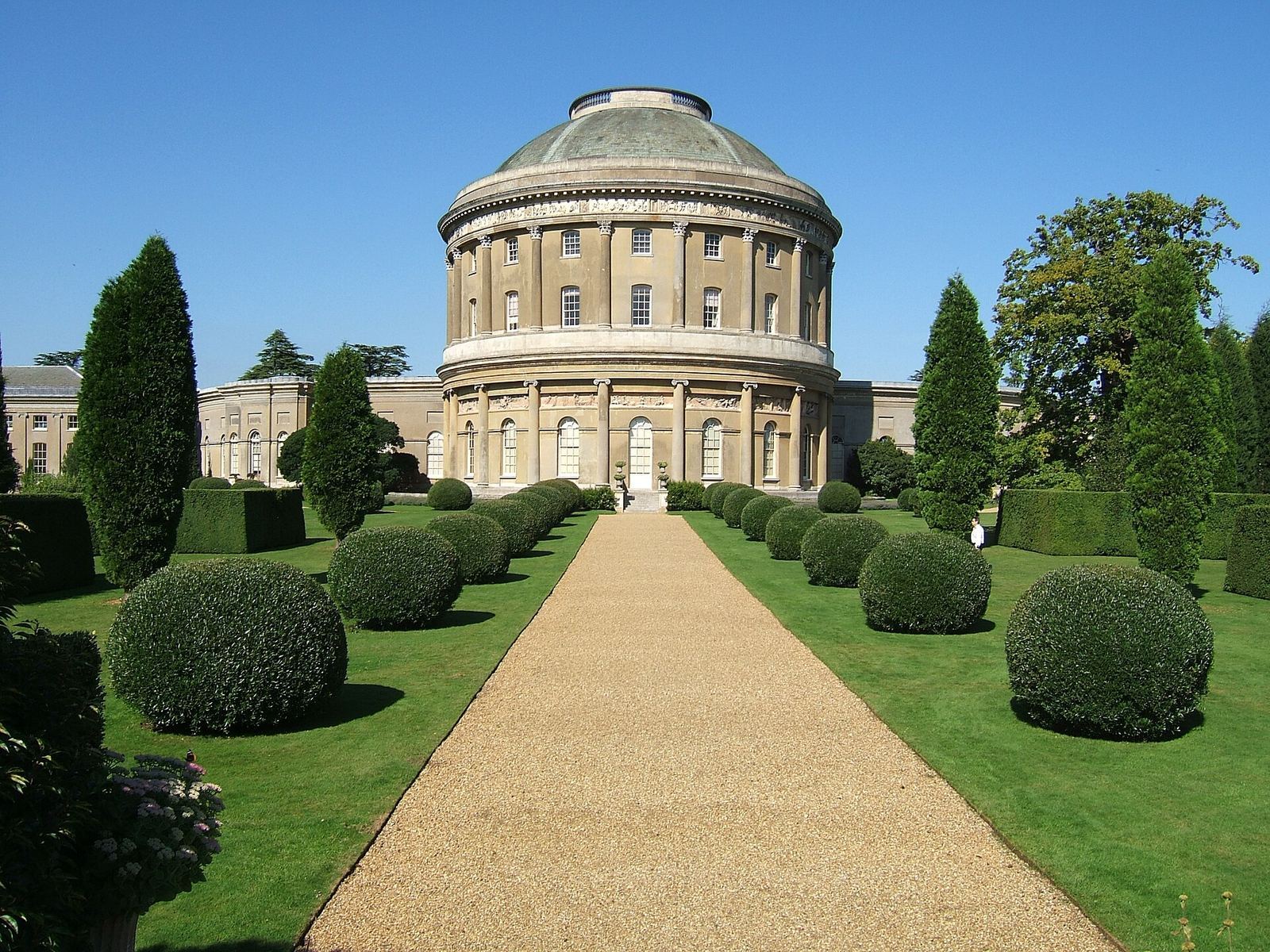
Brick covered in stucco, a plaster finish, and roofed with slate and lead, the house is composed around a rotunda, a circular central structure about 105 feet (32 metres) high. Its dome has a balustraded rim, and the main entrance is a porch beneath an Ionic pediment, a classical triangular gable. Ionic pilasters, flat wall columns with scroll-shaped capitals, decorate the lower level; Corinthian pilasters with leaf-like capitals appear above. Shallow carved friezes run across the ground and first floors, the third floor, and the balustraded parapet. The ground floor is shorter than the upper levels, while the second storey has two tiers of windows. Two narrow, single-storey curved links, formed as closed archways, join the rotunda to the terminal wings. Projecting bays in the links contain the Smoking Room and Pompeian Room, both added in the later 19th century. The East Wing has 60 rooms. The West Wing was intended for an orangery, sculpture gallery, and service rooms, and now accommodates these uses alongside conference and event spaces.
Collections
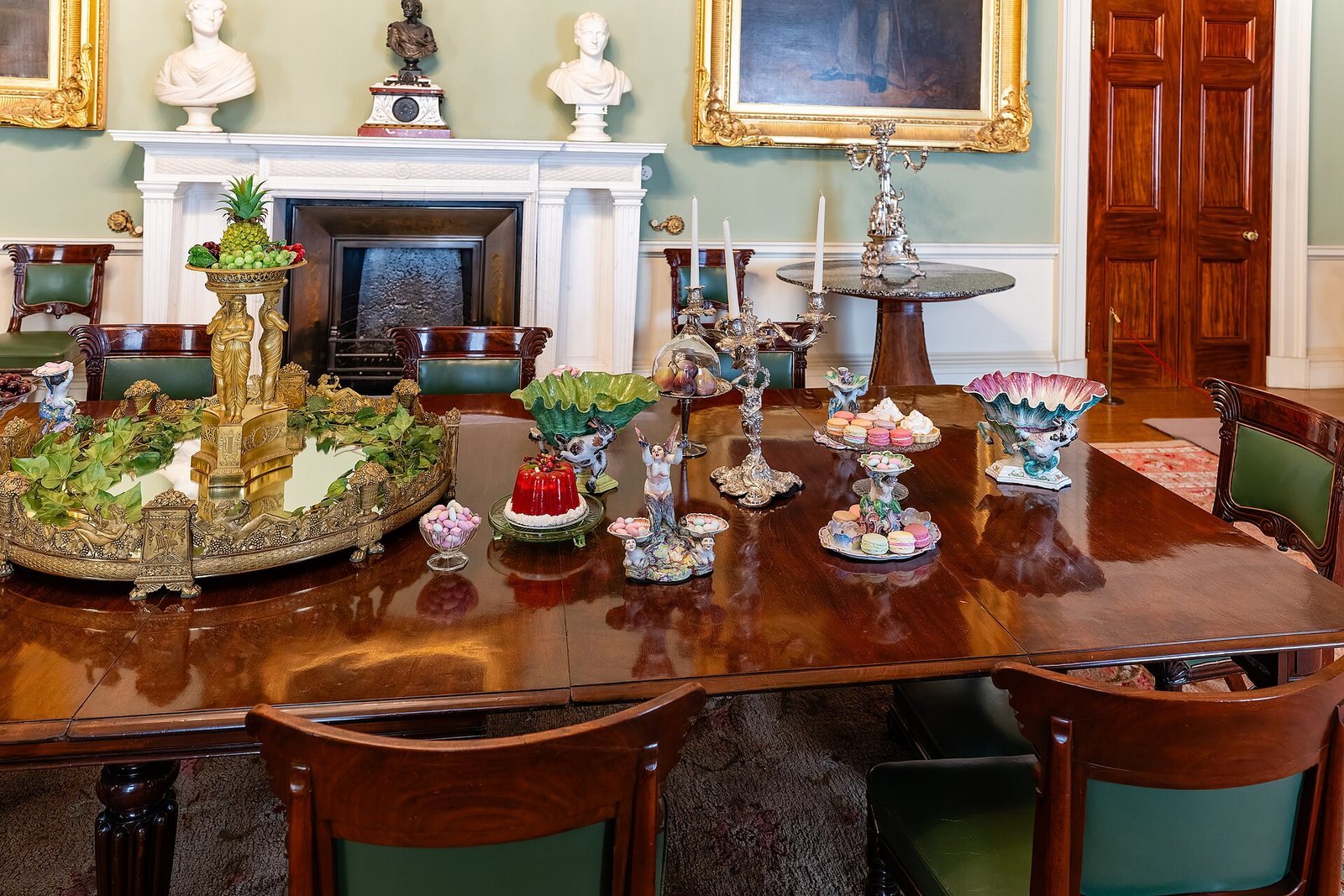
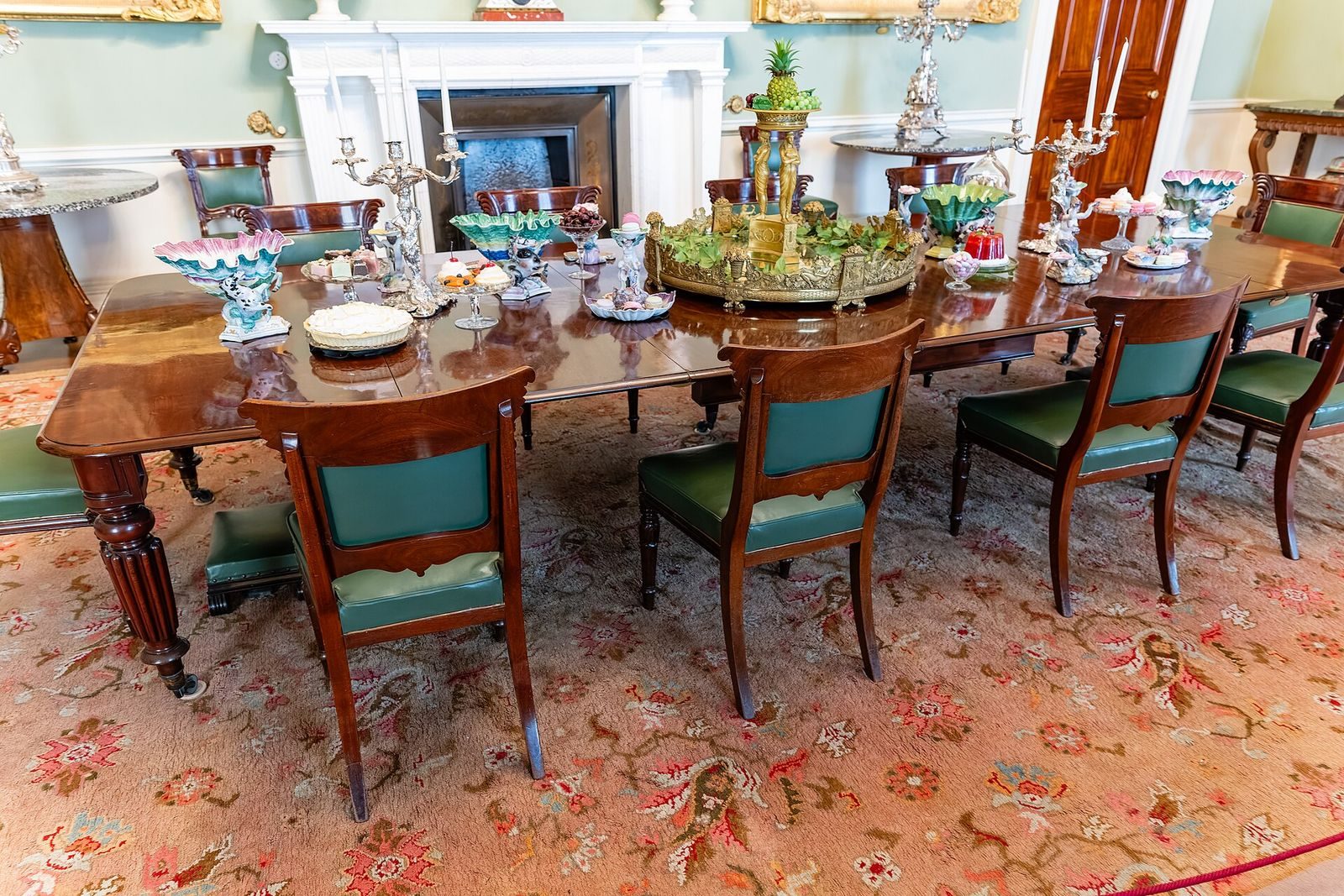
The house contains paintings by Velázquez, Titian, Poussin, and Claude Lorrain, as well as 18th-century portraits of Hervey family members by artists including Gainsborough, Reynolds, Vigée-Lebrun, Batoni, Angelica Kauffman, Ramsay, van Loo, and Hogarth. Other collections include Georgian silver, Regency furniture and porcelain, and 16th-century maiolica, a type of tin-glazed earthenware.
The park
Ickworth Park covers more than 1,800 acres (about 730 hectares) and contains ancient trees. South of Ickworth Lodge, the Tea Party Oak is at least 800 years old and measures more than 9 metres (30 feet) in diameter; it is among the county’s oldest surviving oaks. A tree in Albana Wood is about 600 years old.
Ickworth Church
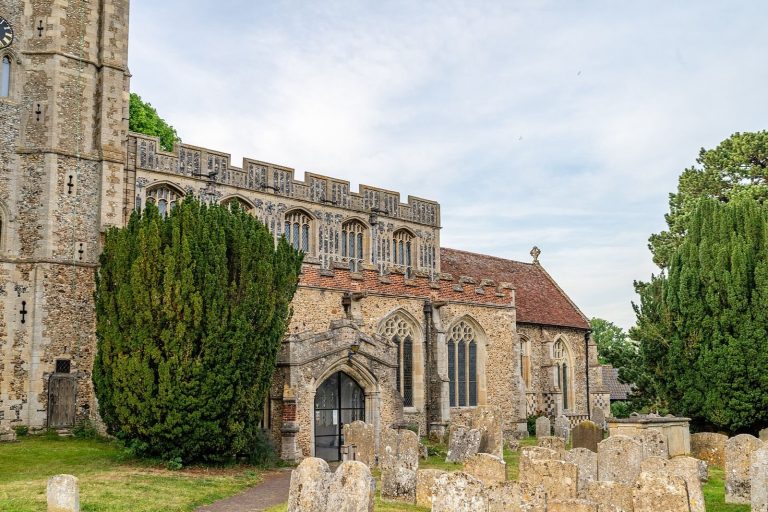
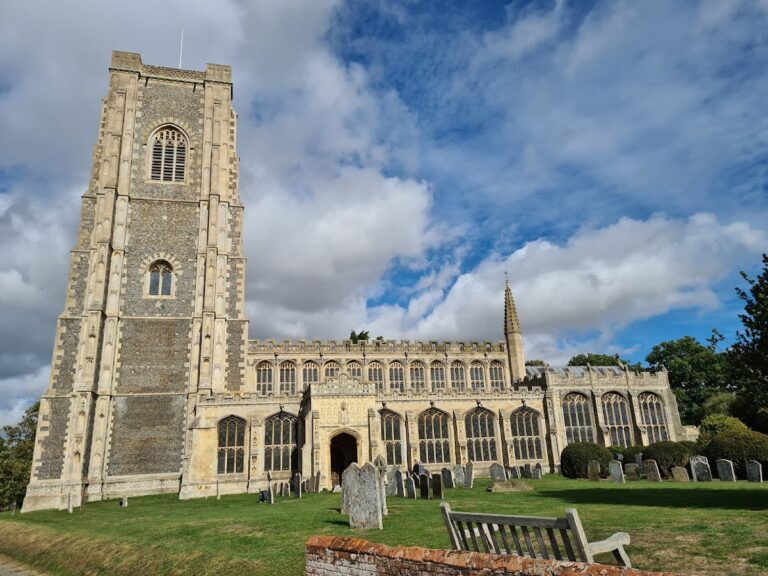
Ickworth Church is a church of Norman design with later additions. Its features include a 15th-century wall painting of the Angel of the Annunciation, a 15th-century font, circular Flemish glass panels dating from as early as the 14th century, and numerous marble memorials to members of the Hervey family.