Huis ter Kleef: A Medieval Castle in Haarlem, Netherlands


Site at a Glance
- Rating
- 4.6
- Popularity
- Very Low
- Country
- Netherlands
- Primary era
- Medieval
- External website
- Open
- Eras represented
- Medieval
- Civilizations
- Unclassified
- Site type
- Military
- Remains
- Castle
On this page7 sections
History
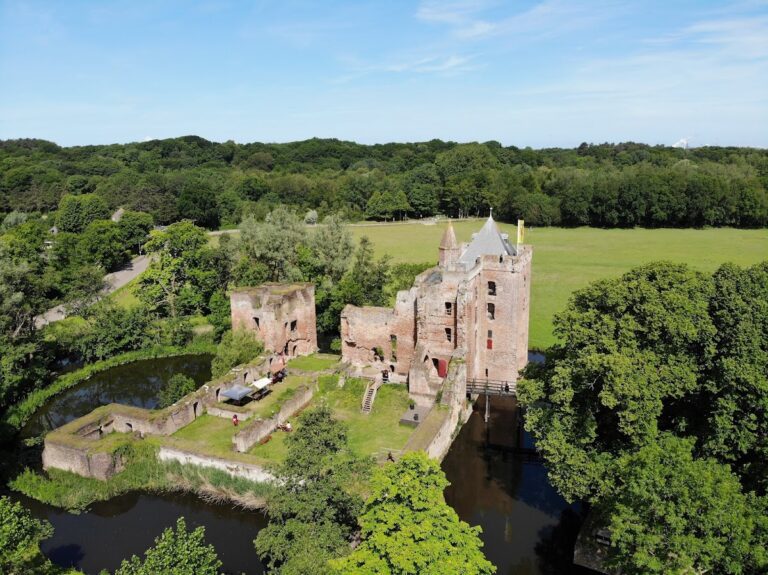
Huis ter Kleef is a former thirteenth-century brick castle in Haarlem, Netherlands, built during the medieval period on the road between Haarlem and Schoten, then a separate village north of the city. Originally called Huis te Schoten, it began as a residential tower owned by Pieter van Rolland. The castle later passed through the hands of Willem de Bastaard, Willem de Cuser, Willem Cuser junior, Catharine de Cleve, and the Van Borsselen family.
From Huis te Schoten to Huis ter Kleef
The Van Borsselen family changed the castle’s name from Huis te Schoten to Huis ter Kleef. The Van Brederode family owned it from 1492 to 1568, followed by Don Frederik from 1570 to 1573. The castle stood on an important route and approximately halfway between Brederode Castle and Haarlem City Hall, about 1.5 miles from Haarlem’s center.
The Siege of Haarlem and destruction
During the Siege of Haarlem in 1572–1573, a major confrontation of the Dutch Revolt in which Spanish forces besieged the city, Huis ter Kleef served as the Spanish headquarters. In 1573, Don Frederik, son of the Duke of Alva, ordered the castle blown up. The destruction was intended to prevent the Geuzen, Dutch rebels opposing Spanish rule, from occupying the site and using it as a base to retake Haarlem.
In 1576, after the great Haarlem fire, inhabitants demolished part of the ruin and reused its bricks in the rebuilding of the city. Stones from the central ruin also entered surrounding buildings. Huis ter Kleef returned to the Van Brederode family in 1578, but the family chose not to rebuild the castle. Instead, it used the surviving Kaatsbaan, also known as the House with the Little Tower, which formed part of the former outer bailey.
Inheritance, decline, and preservation
In 1600, inheritance rights connected with the Van Brederode estate were converted into a heritable fief, a feudal holding transmitted under specified inheritance rules. The revised arrangements allowed sisters, daughters, and grandchildren to inherit. Through a marriage into the Dohma family, Huis ter Kleef came into the possession of the German Count Frederik Adolf of Lippe.
The estate produced little income and accumulated substantial debts. In 1713, Von Lippe surrendered part of his possessions, including Huis ter Kleef, which was purchased by the city of Haarlem. After the acquisition, the ruin deteriorated rapidly, while Haarlem residents removed stones for new houses. The site and its decline were recorded in prints and paintings by Jan de Beijer, Cornelis van Noorde, Hendrik Spilman, and Jacob van Ruisdael.
Since 14 April 1909, the ruin and the Kaatsbaan have stood within the Stadskweektuin, now the Haarlemmer Kweektuin. Huis ter Kleef is a protected national monument of the Netherlands under monument number 506216. Only a small part of the ruin is visible today, while the remainder lies beneath the sand covering the island on which it stands.
Remains
The surviving site consists of a small visible section of the former brick castle, a separate building beside it known as the Kaatsbaan, and castle stones reused in surrounding buildings. Most of the former castle structure is buried beneath the sand of the island. The surviving features therefore preserve both the original medieval complex and the material consequences of its destruction and later dismantling.
Castle ruin
The thirteenth-century castle was built of brick and included a residential tower. The visible ruin represents only a small portion of that complex. Much of the central structure was destroyed in 1573 and later dismantled, with bricks and stones reused in Haarlem. Stones from the former castle remain visible in nearby buildings, while the buried sections lie beneath the island’s sand covering.
Kaatsbaan
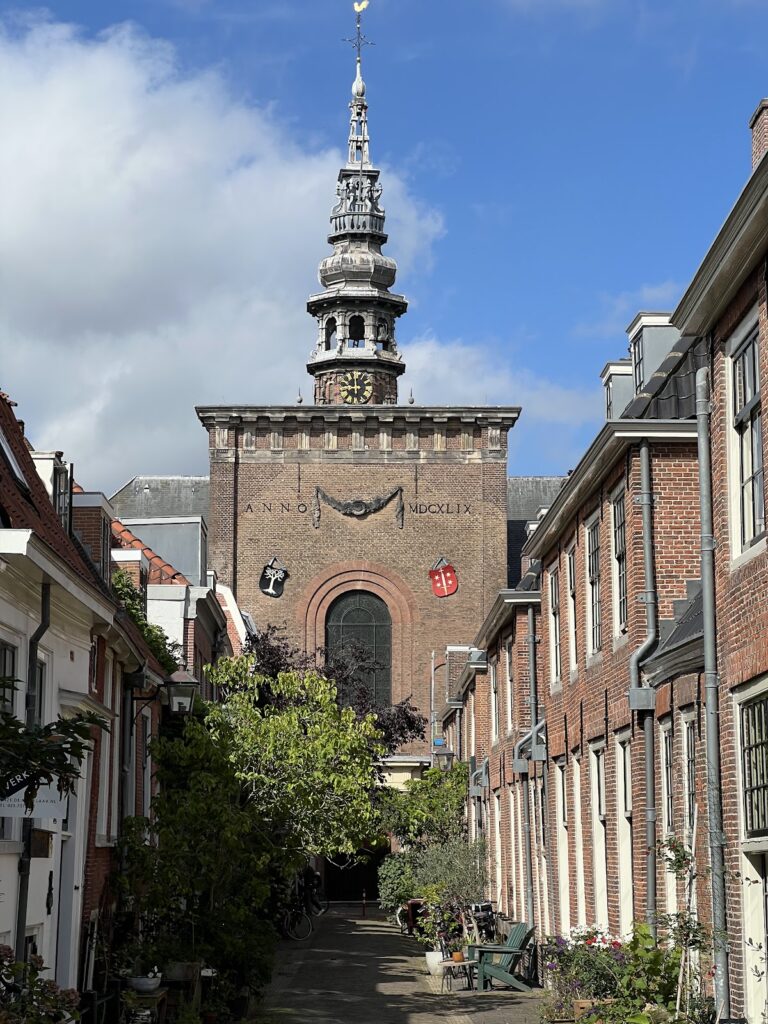
The Kaatsbaan, or House with the Little Tower, was a separate surviving building beside the castle and formed part of the former outer bailey. Former owners used it as a residence, and it is now used by the city gardens. Its name may refer to jeu de paume, an indoor ball game that preceded modern tennis, or to kaatsen, a Frisian handball game. In the eighteenth century, the sport played there may instead have been kolven, an early Dutch club-and-ball game often compared with golf.
The Kaatsbaan was long regarded as the only structure left standing after the 1573 explosion. Archaeological research indicates that its foundations contain stones older than the rest of the building, suggesting that the building itself may have been rebuilt after the explosion. The foundations consequently preserve evidence of change within the surviving part of the former castle complex.
Nearby sites