Huandacareo: A Pre-Hispanic Archaeological Center in Michoacán, Mexico
Site at a Glance
- Popularity
- Medium
- Country
- Mexico
- Primary era
- Medieval
- Eras represented
- Medieval, Early Modern
- Civilizations
- Purépecha
- Site type
- Religious
- Remains
- Sanctuary
On this page21 sections
History
Huandacareo is an archaeological complex in Michoacán, Mexico, whose most visible construction is thought to date to around AD 1200. Classified across the Mesoamerican Preclassic, Classic, and Postclassic periods, it reflects Chupícuaro, Chichimec, and Purépecha traditions. Earlier building phases and materials indicate activity before the visible construction. The site may have served as a religious and administrative center, although its precise political and ceremonial roles remain uncertain.
Regional traditions and Purépecha rule
Huandacareo developed in a region shaped by Chupícuaro, an early regional cultural tradition, and by traditions that preceded Purépecha rule. Teotihuacan, a major ancient city and civilization in central Mexico, also influenced the wider region. The term Chichimec applied broadly to different peoples rather than to one unified culture. The Purépecha, the leading pre-Hispanic people and political power in Michoacán, later took control of the area. Local inhabitants paid tribute, and the site remained under Purépecha authority for at least 300 years before the Spanish arrival.
The explored center may have helped administer communities within the Purépecha political and economic system. Its location and archaeological finds connect it with the Pátzcuaro region, Teotihuacan, the Mexican plateau, obsidian sources in Michoacán, and coastal areas, especially the Pacific coast. Lake Cuitzeo’s resources and natural conditions supported communication and exchange among communities. A sixteenth-century account known as the Relación de Michoacán mentions the Indigenous community at Huandacareo and its subjection to Purépecha rule.
Spanish arrival, continued practices, and the name
The center’s established phase of use ended in 1536, amid the Spanish destruction of Purépecha civilization. A burial combining European glass with pre-Hispanic cultural practices indicates that older traditions continued in western Mesoamerica after European glass had reached the Mexican plateau.
A tradition links the name Huandacareo to a return journey by a Cazonci, the title of the highest Purépecha ruler. After leading an army against groups attacking Yuriria-Púndaro, he is said to have stopped near Lake Cuitzeo with his victorious force. There, he heard speeches praising him, and the place supposedly took its name from the event. Other explanations derive the name from the Purépecha word Uandakua, interpreted as “place of judgments,” “place of speakers,” or “court.” A separate proposed origin gives it a Chichimec meaning, “preaching place.”
Excavation and preservation
Looting and the removal of artifacts began in the early twentieth century, while cultivation over the structures also caused damage. Excavation started in December 1977 and continued through five further seasons, ending in 1983. The first uncovered wall was named Structure A, and work proceeded in both directions from it. Excavation then stopped, and the site was neglected. Rebuilt sections have been set back from original masonry to distinguish the new work, by an average of about five centimeters.
Remains
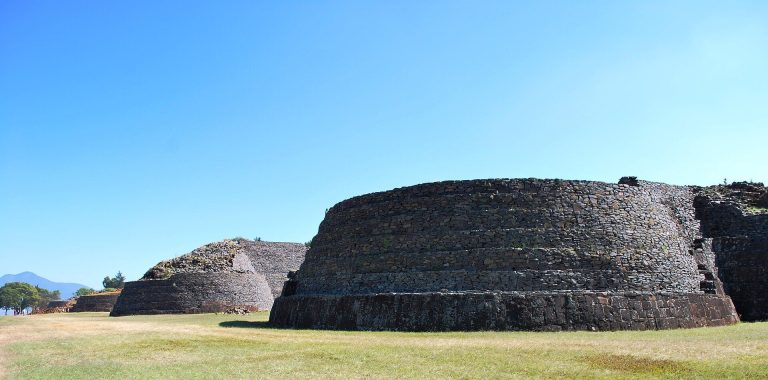
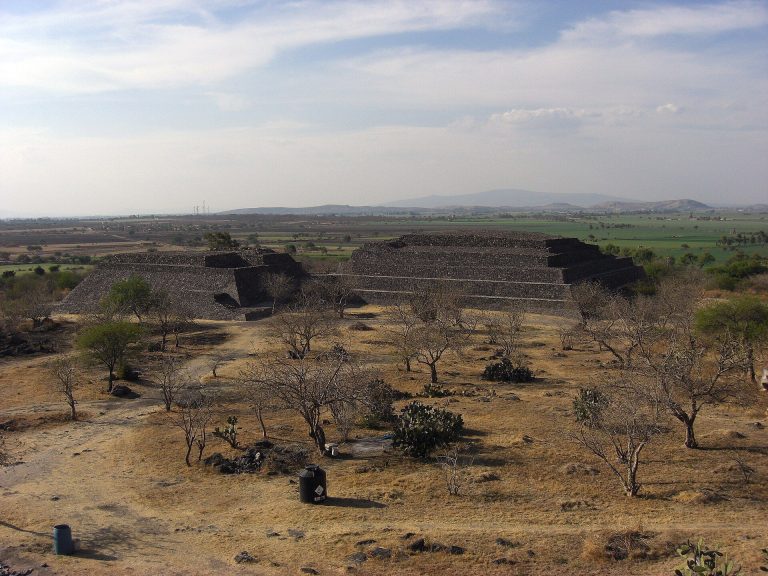
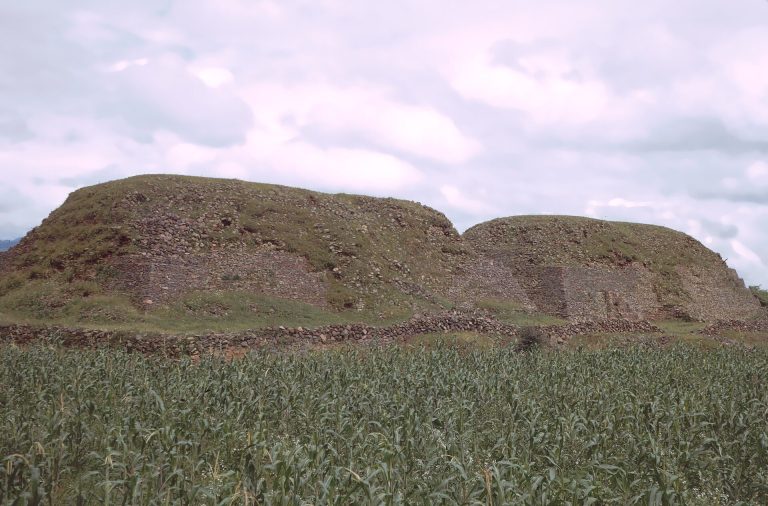
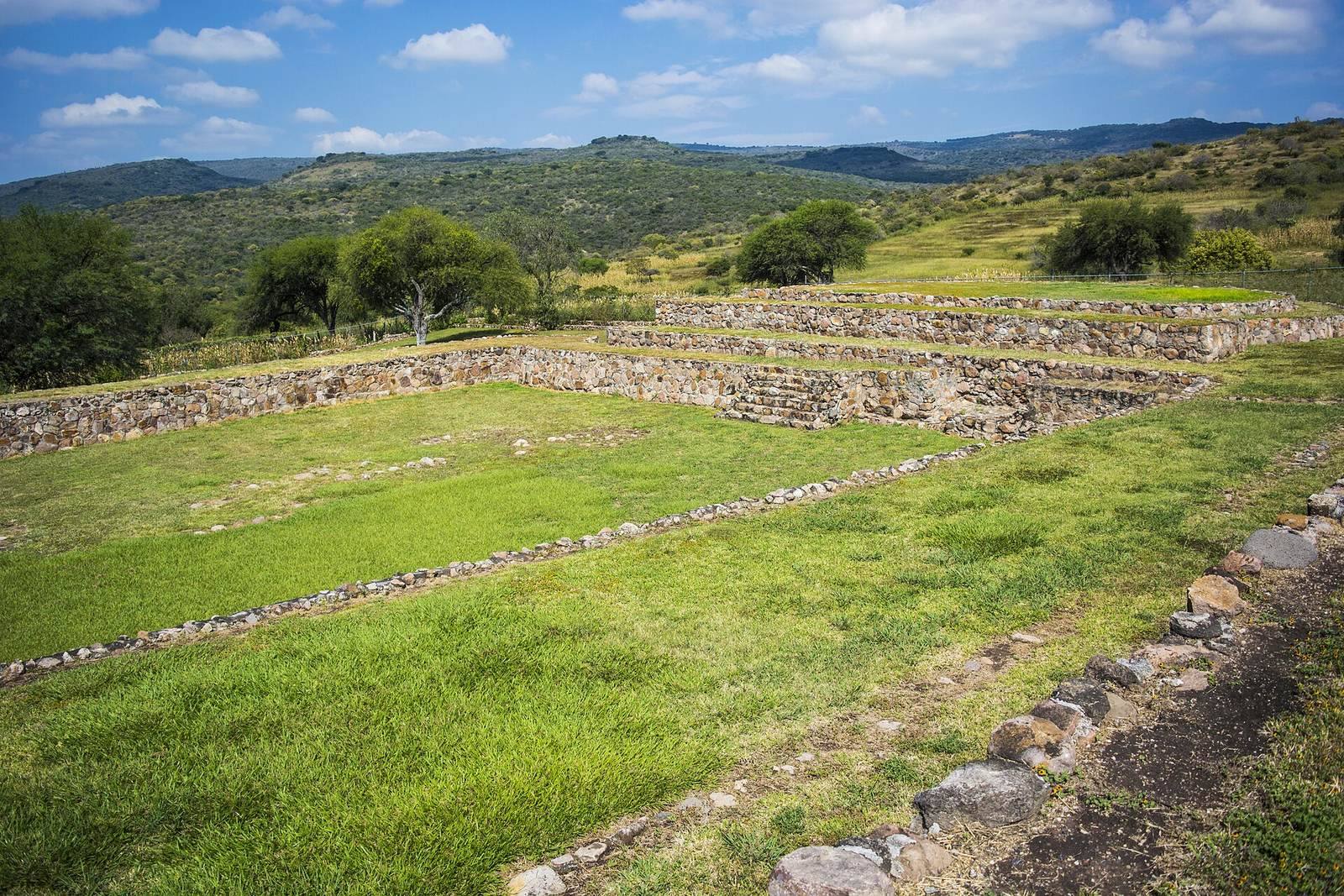
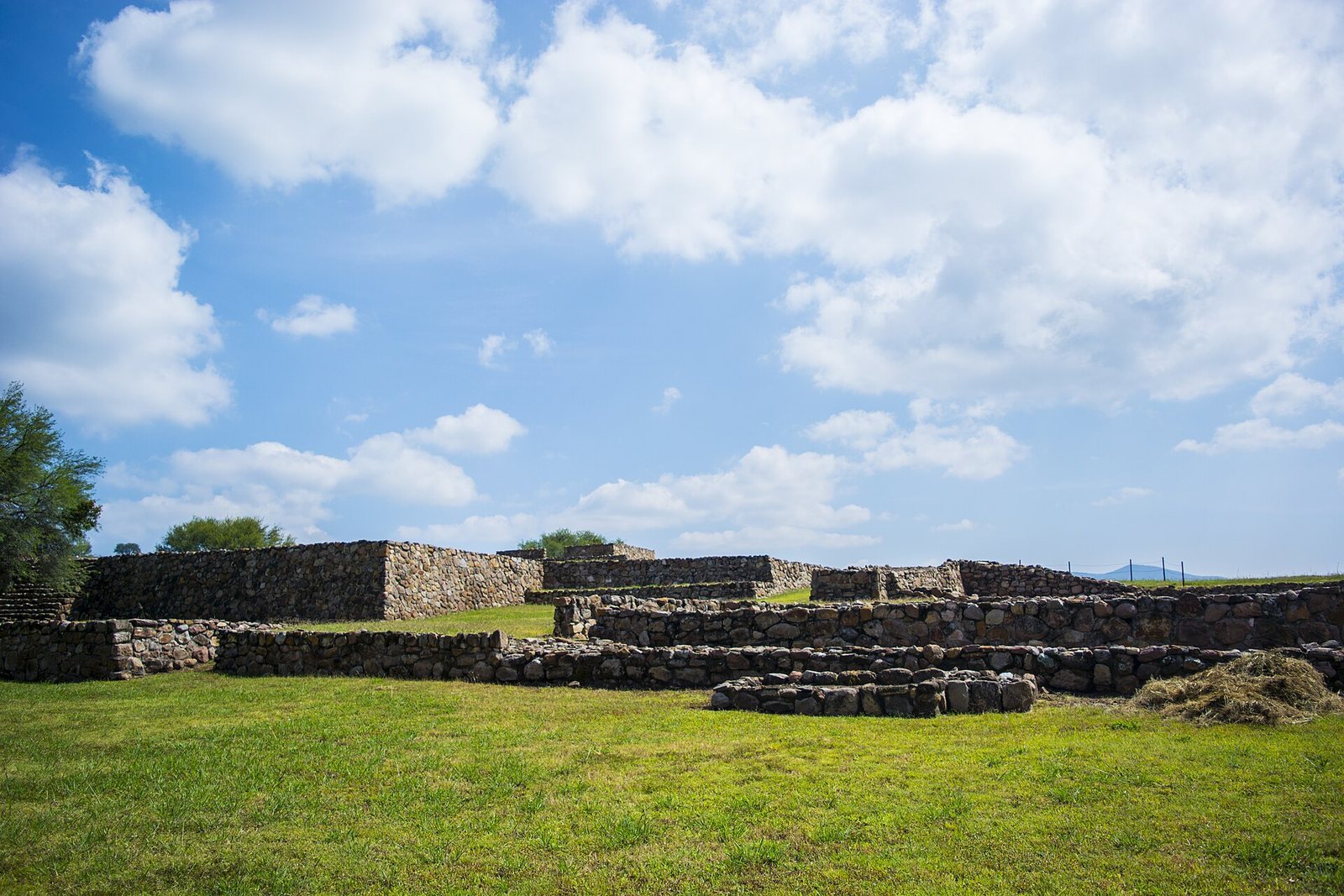
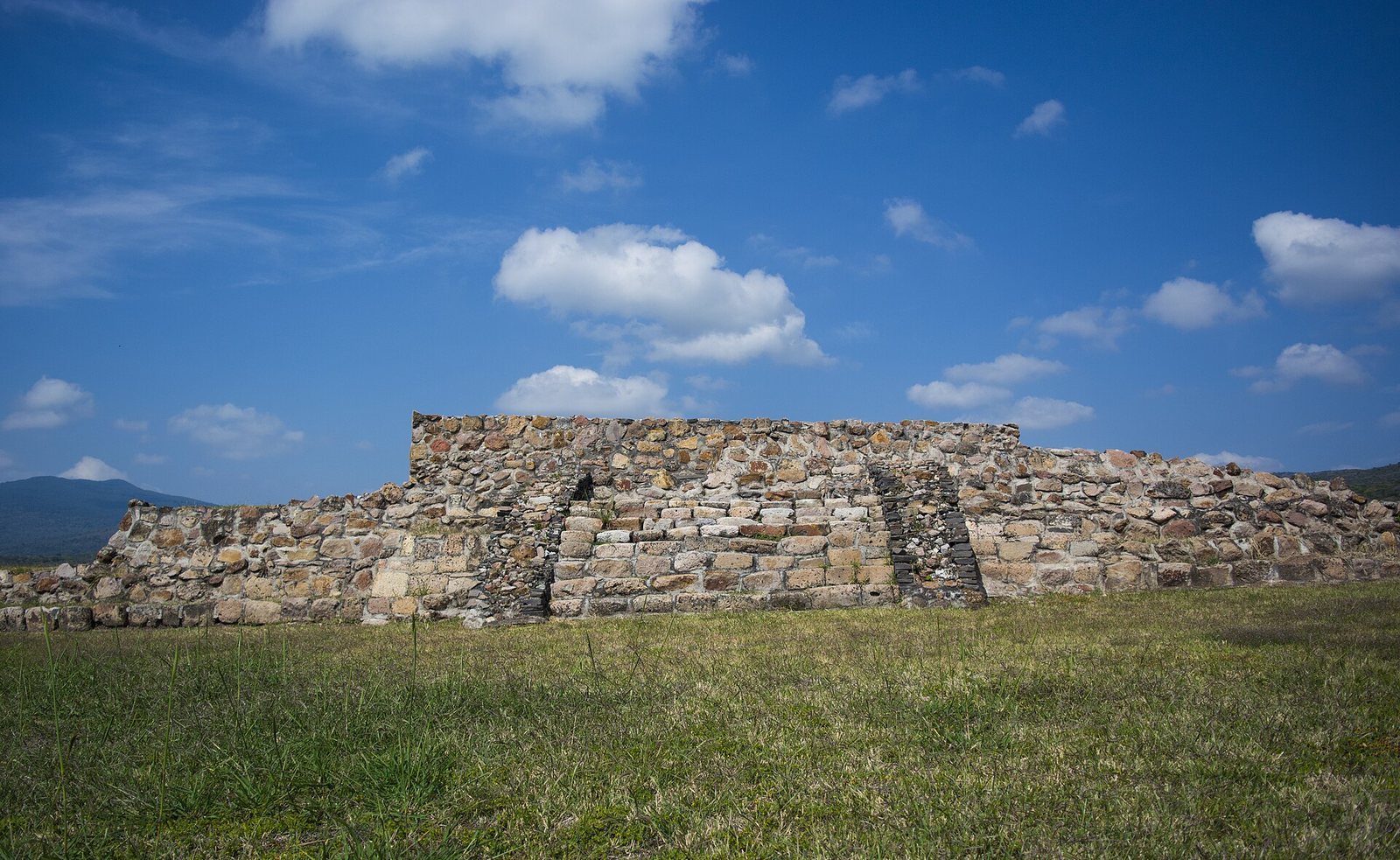
The complex occupies an elevated plateau on the western side of Lake Cuitzeo, about 2.46 km from the lake’s northwestern shore and about 2 km from the center of Huandacareo. Morelia lies roughly 60 km to the south. The lake’s level and volume fluctuate frequently. The visible complex covers an area about 187 by 100 m, arranged on an east–west axis. Its principal building stands in the north, with other structures mainly to the south and foundation remains also extending along the northern edge. The gentle slope is terraced and supported by retaining walls, with drainage channels built into the layout. Regional white and pink quarry stone joined with mud forms the structures. Some plastered surfaces survive, with finishes described as hardened by fire. Mounds 1 and 2 are associated with the temple; the complex also includes a sunken plaza and a tomb patio.
Ceremonial core
Sunken patio
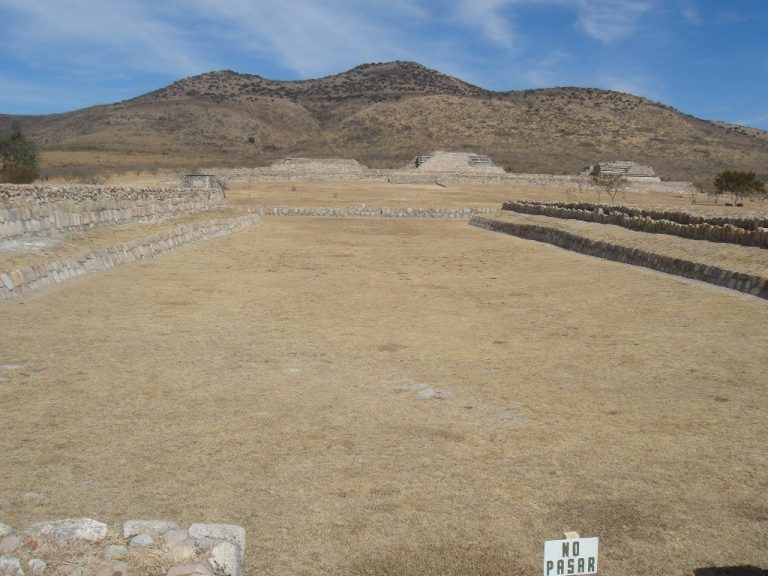
The sunken patio is an irregular trapezoid about 30 m long, measuring roughly 20 m across at its southern side and 24 m at its northern side. A double wall encloses it and may have served as a perimeter walkway. Stairs centered on its north and south sides connect it with the surrounding structures. Its dimensions and depth have prompted comparison with a pool, but its purpose is unknown; it may have been used ceremonially.
Northern altar and circular foundation
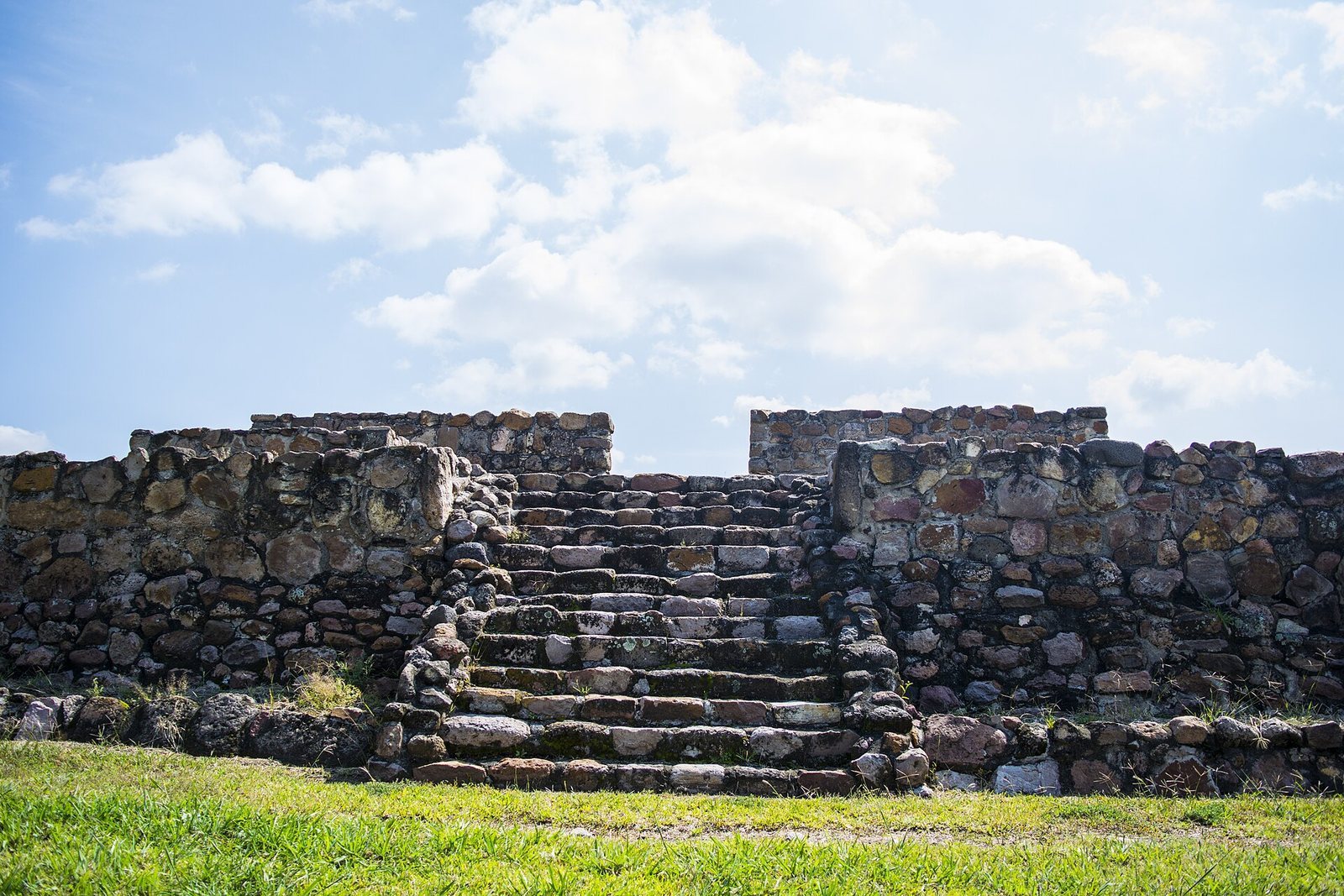
A stairway on the patio’s north side leads to a structure with several stepped levels and remains of a possible altar associated with events at the complex. At the northern edge of this patio-and-altar group is a stone foundation formed by two concentric circles. Its outer ring is about 20 m in diameter. The southern side is incomplete and lies flat against the altar structure.
Temple
The temple stands at the complex’s highest point, east of the sunken patio, with its entrance facing west toward the patio. Walled passages or spaces occupy its eastern side, and stairways provide access from both east and west. The eastern side is partly destroyed; its stairway leads to the remains of a nearly destroyed structure. Blocks at the foot of that structure incorporate a petroglyph, a figure carved into stone, showing a human form upside down. Several walled, roofed spaces on top of the temple survive, although their uses are unknown.
Terraces and subsidiary buildings
Southern terraces
Other buildings stand on terraces at different levels, most of them on the southern side overlooking the lake. They are irregular in shape and partly damaged, so their original layouts and uses are difficult to establish. Apparent entrances and passageways lead into more private areas, and a perimeter wall encloses the group. These buildings may have housed high priests and city governors involved in ceremonies and other events at the center.
Earlier domestic and mixed-form remains
Possible earlier household units beneath present-day houses have been proposed, though this identification remains uncertain. A structure combining rectangular and circular forms, considered together with the sunken patio, has been interpreted as evidence for a yácata, a Purépecha temple platform combining rectangular and circular shapes. The interpretation also points to architectural traditions associated with different cultural groups and periods.
Burial architecture
Shaft tomb
One deep-entry tomb was cut into tepetate, a hardened layer of earth or volcanic material found in parts of Mexico. Its form resembles tombs at El Opeño associated with the Preclassic period, but its grave offerings indicate a date in the period immediately before the Spanish arrival. It held the first burial of an older person and a second burial of an adult.
Tombs in the patio
Six tombs, one unfinished, were laid out in a clearly defined patio; another tomb with similar features was associated with the group. Six were arranged symmetrically. Their walls were made from carefully cut stone blocks joined with mortar, their floors from compacted earth, and large stone slabs covered them. Some slabs had worked edges. The roof slab of Tomb 2 also served as a weight for Tomb 4, which was set at right angles to it. Together the two tombs suggest a cross shape, though each is rectangular. Each contained the first burial of an adult, accompanied by pottery, shell objects, and bone and stone tools.
Burial trench and ground interments
A trench measuring 3 by 18 contained 63 first and secondary burials. Some human remains show decapitation or mutilation. These include skulls still joined with the first neck vertebra and upper jaw, as well as arm bones accompanied by a hand but not the rest of the body. More broadly, the burial evidence includes large funerary structures for socially important people as well as burials placed directly in the ground. Some show signs of sacrifice, decapitation, or dismemberment. The funerary structures stood in front of a principal building known as the Temple.
Objects and material culture
Copper, gold, and ornaments
Copper finds include tools and eyed needles about 35 cm long. Tweezers served for shaving and also as ornaments and signs of social rank; historical depictions show important people wearing them from the neck. Wire hoops with rectangular or circular cross-sections, often found in first burials, may have been earrings. Copper bells of different sizes and types were made from worked sheet metal, sometimes with patterns imitating fine wirework. A broad hoop bearing worked-metal bells, associated with soldiers, may have formed part of a command baton. Other ornaments are shaped like an inverted U and end in animal heads, possibly eagles, with small bells hanging from their beaks. Gold examples were made by hammering thin sheets and may have served as funerary offerings. Four half-cylinder beads, attributed to Chupícuaro and Pátzcuaro, point to specialized craft production.
Ceramics and figurines
Ceramic finds include a complete owl-shaped pipe, globular objects, and spindle whorls, tools for spinning fibers. Many of the globular pieces have scratched decoration, including a repeated pattern of lines forming an infinity symbol; some whorls are also decorated. The whorls indicate widespread spinning of plant fibers, particularly cotton. Solid brown female figurines, in varying shades, have flattened and reshaped skulls. Their forms have been associated with lunar deities, agriculture, and fishing connected with water. One figurine about 14 cm tall was found with an infant burial. It carries a nursing child described as about two years old, positioned astride its body. Both figures have skull shaping and banded hairstyles resembling a shaping device. The mother also wears a skirt, ear ornaments, and a necklace.
Stone tools and objects
Obsidian, a natural volcanic glass, was worked into spheres averaging about 5 cm across; the spheres may have been brought from elsewhere. Other obsidian tools include pressure-worked projectile points with bases or extensions, long faceted blades, some reshaped as projectile points, pins, cutters, and knives. Green obsidian ornaments accompanied rich offerings for high-status burials. Spherical or roughly square pieces were placed inside some skulls as if in the mouth. A small rectangular piece of dark-green stone, polished to a mirror-like finish and perforated at one edge, came from the same burial context. Tubular and spool-shaped ear ornaments include pieces thin enough to be translucent, while bezotes, ornaments worn through the lip, were used by high-ranking chiefs. Slate discs average 16 cm in diameter; some have two symmetrical holes. They served as fasteners in burials of people of high social rank. A fragment showing an old man’s face is traditionally linked to the fire deity and believed to be a rare image of Curicaueri, a Purépecha deity associated with fire. Other finds include grinding stones, a mortar, ceramic polishers, metal fragments, and larger tools that may have been used to tan hides. The site’s materials also include turquoise, carved green-stone slabs, construction stone, and marine shells from the Pacific coast.
Shell and bone objects
Small necklaces were made from cut and perforated snail shells, and circular shell hoops were classified as bracelets. Other shell objects depict human figures, including soldiers, nude figures of unspecified gender in formal, rigid poses, and dancers with shell inlays forming an eye. Among the finds are also small dog figures, solid and dark brown, molded but unpolished. All are identified as dogs, and the worship of dogs is associated with Purépecha culture.