Hover Church: A Romanesque Stone Church in Denmark
Site at a Glance
- Popularity
- Low
- Country
- Denmark
- Primary era
- Medieval
- Eras represented
- Medieval, Early Modern, Modern
- Civilizations
- Danish
- Site type
- Religious
- Remains
- Church
On this page10 sections
History
Hover Church is a Romanesque stone church in Hover, Denmark, believed to have been completed in the first half of the 12th century. Romanesque is a medieval style associated with rounded arches and substantial masonry. The church is among Denmark’s oldest stone churches. It belongs to the Church of Denmark, the country’s established Evangelical Lutheran church, and the parish of Hover.
A storm damaged the west gable in 1771, and the masonry was subsequently rebuilt. Restoration work took place in the 1960s. In 2006, Hover Church was selected for the architecture category of the Danish Culture Canon, a national selection of works considered important to Danish cultural heritage. The canon presented it as a church type rooted in the Danish cultural landscape.
Remains
Exterior and plan
Setting and main structure
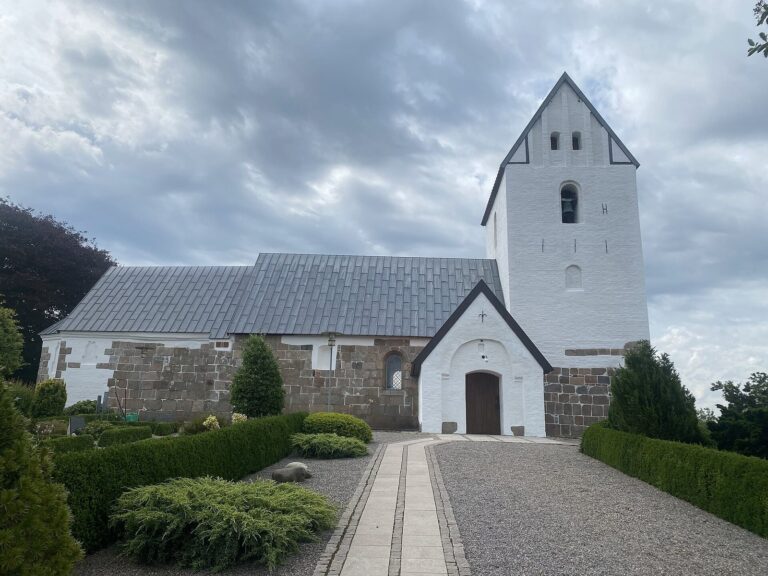
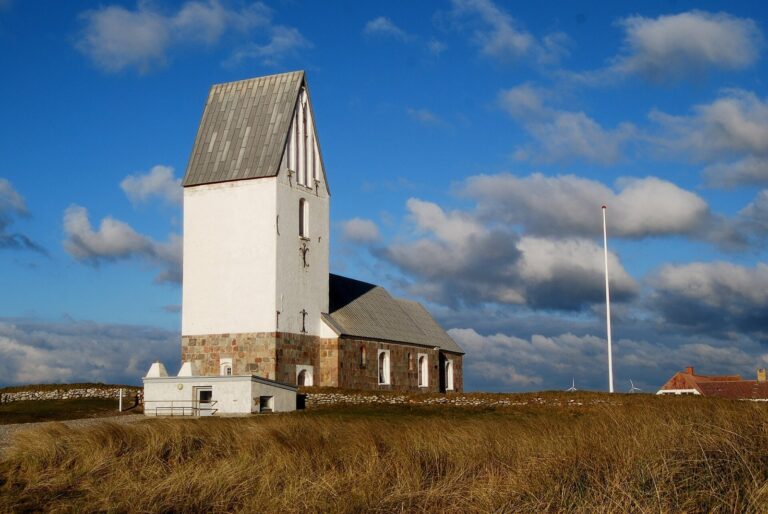
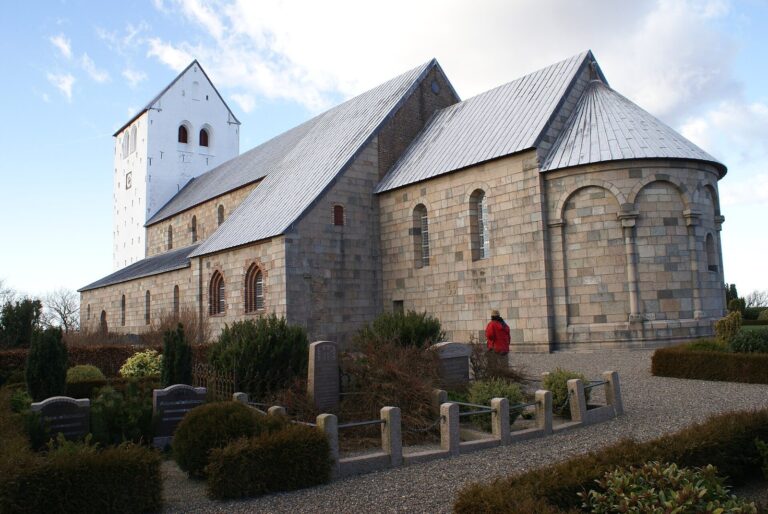
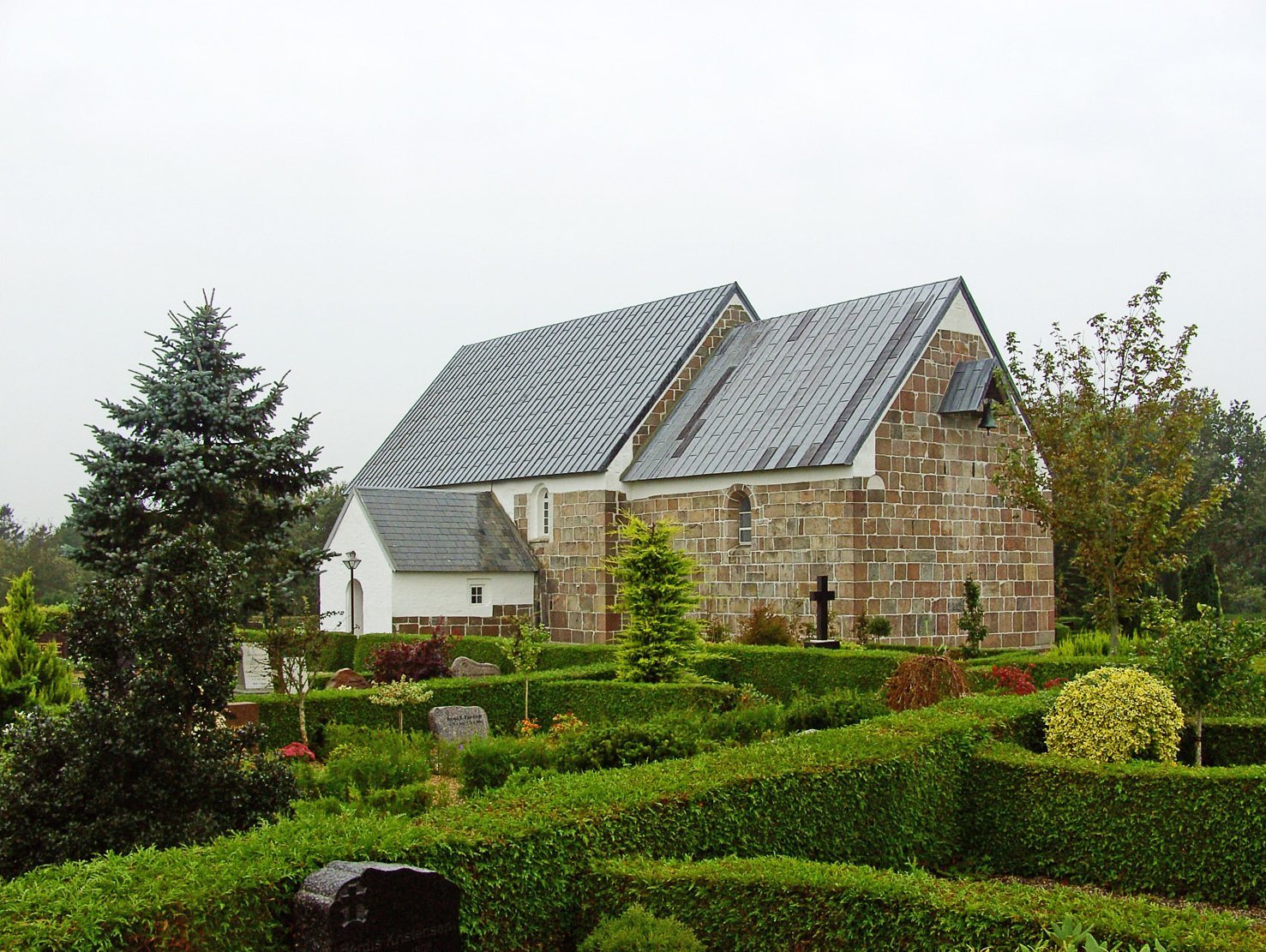
The church stands north of the Hover River and west of the village of Hover, above surrounding fields and heath. Built from dressed granite blocks on a sloping foundation, it has a rectangular nave, the main area of the church, and a nearly square chancel, the area around the altar. Its design echoes earlier wooden churches, and its overall form has changed little since construction. Four small, simply glazed windows sit high in the walls.
Porch and exterior features
A porch in the late Gothic style, a later phase of Gothic architecture, was added on the south side in the 16th century. It served as the men’s entrance, while women entered from the north. A small bell hangs beneath a lean-to roof on the east gable. A substantial buttress, a projecting support, braces the west wall. The church is associated with a churchyard.
Interior and fittings
Altar and baptismal font
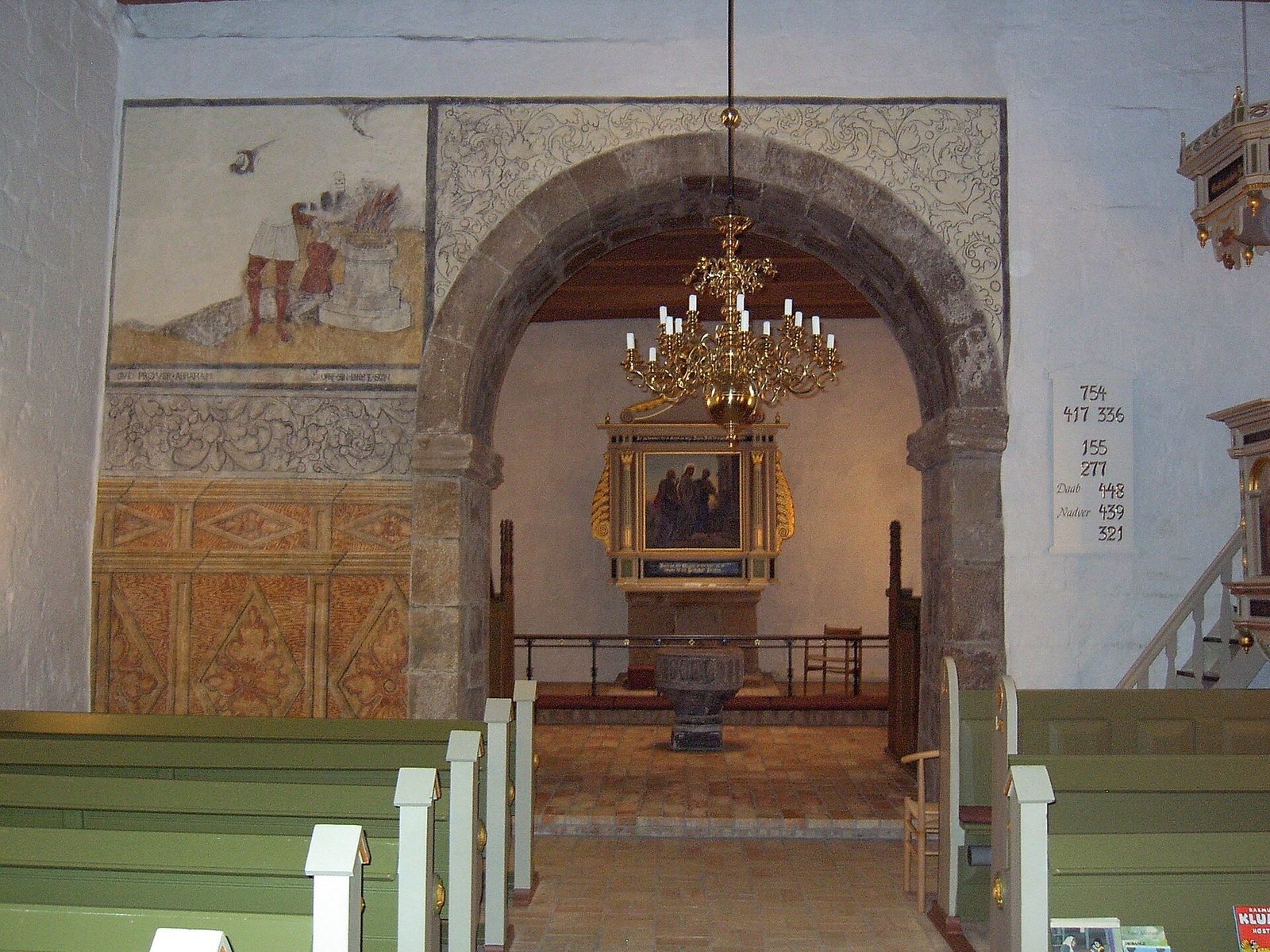
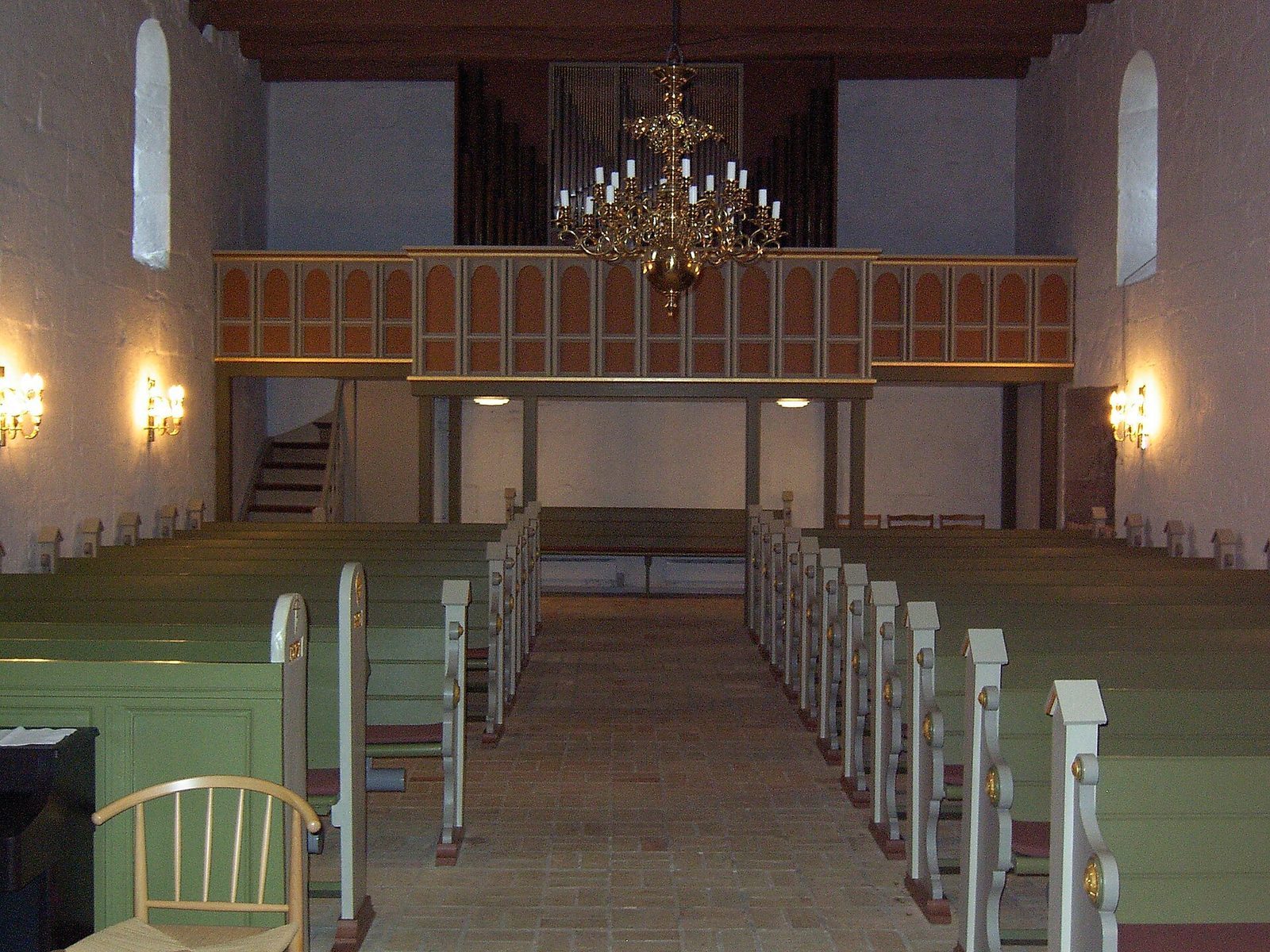
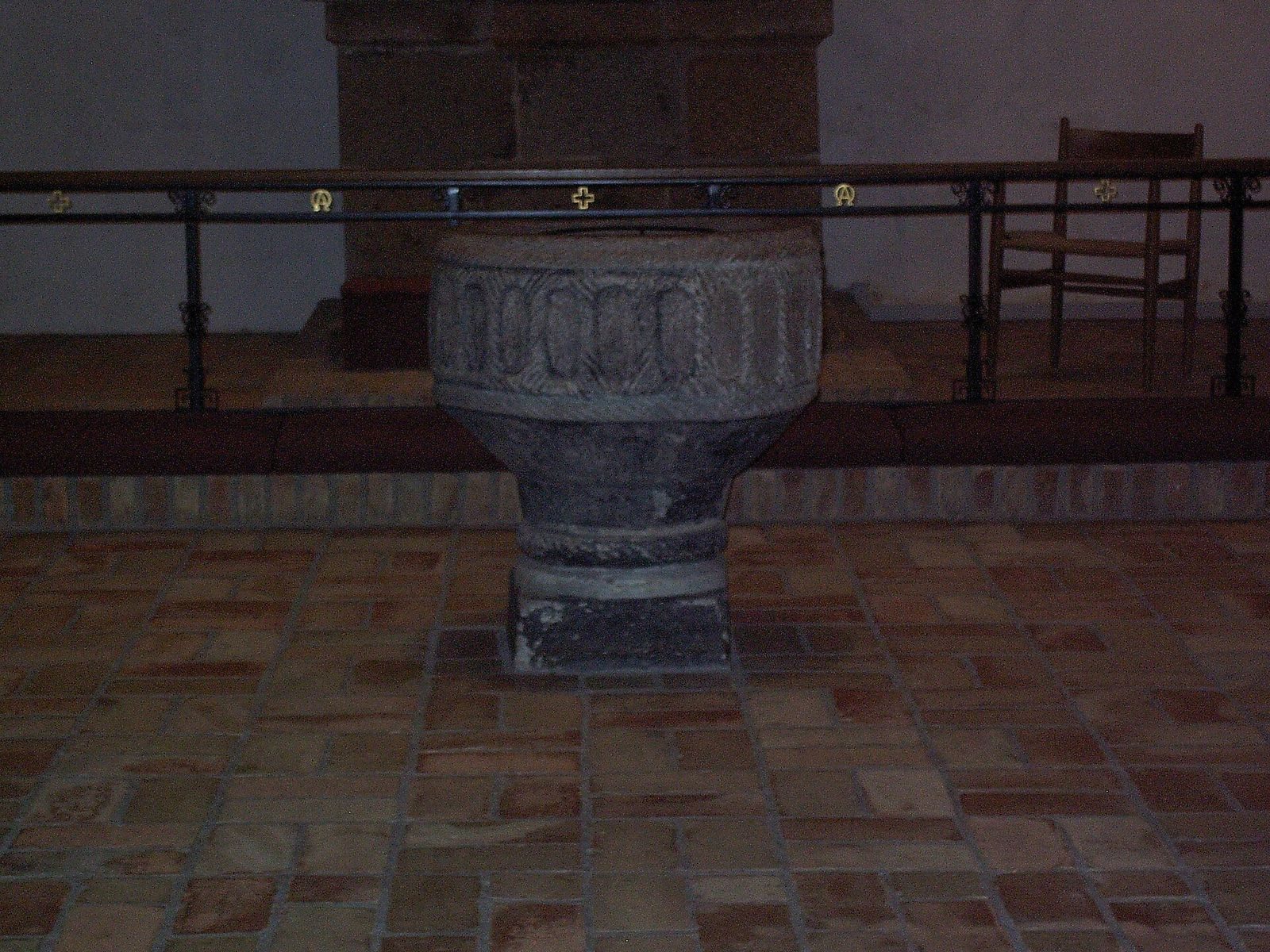
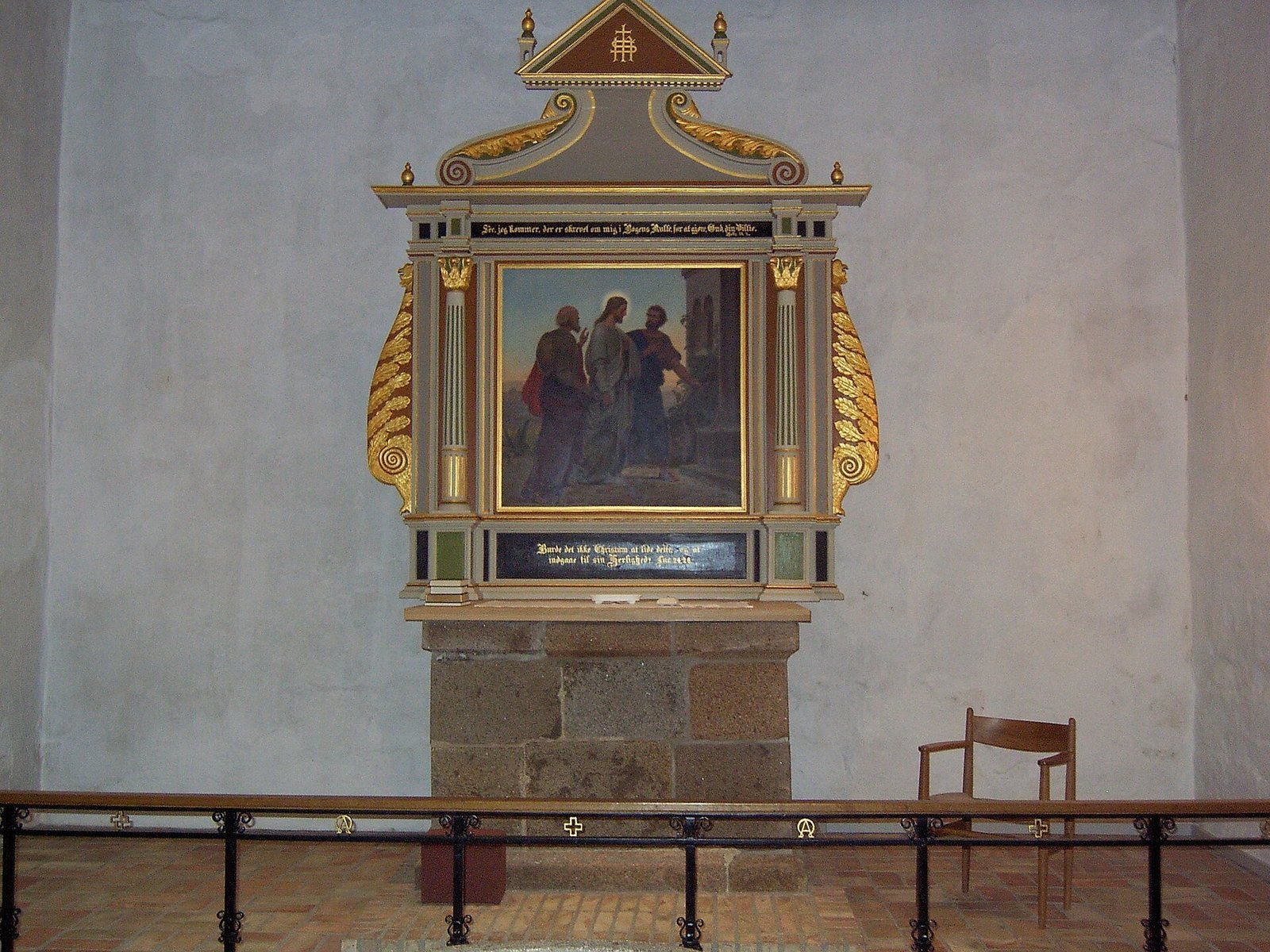
The interior has a flat ceiling and a rounded arch between the nave and chancel. Its altar is built from solid granite blocks. The altarpiece’s date and subject are uncertain. The baptismal font, the basin used for baptisms, is as old as the church. It was once fully painted and later acid-washed, with small traces of paint still visible.
Pulpit and seating
The pulpit dates to 1596 and depicts the four Evangelists, figures traditionally associated with the Gospels: Matthew, Mark, Luke, and John. A crossbow motif and the date 1575 appear on one chair back. The church benches are olive green.
Ceiling and organ
Artist Mogens Jørgensen created the abstractly painted plank ceiling around 1960. The organ was built in 1968 by Th. Frobenius and Sons and acquired from Tårs Church. It has eight stops, sets of pipes or registers producing different sounds, one hand-played manual, and a foot-operated pedal.
Wall paintings
During restoration in 1910, dark, indistinct frescoes, paintings made on plaster, were uncovered on the north part of the wall forming the chancel arch. They date to the 16th century and show the sacrifice of Isaac, the biblical episode in which Abraham is commanded to sacrifice his son. The paintings may have been based on a woodcut in the Bible of Christian III, the 16th-century king of Denmark and Norway. Traces of earlier paintings remain beneath limewash.