Rydhave: A Danish Manor and Boarding School
Site at a Glance
- Popularity
- Low
- Country
- Denmark
- Primary era
- Early Modern
- Eras represented
- Medieval, Early Modern
- Civilizations
- Danish
- Site type
- Domestic
- Remains
- Manor House
On this page6 sections
History
Rydhave is a manor in Vinderup, Denmark, an estate organized around a residence and its agricultural lands. Its history reaches back to the early 14th century, when it belonged to the Eberstein family and operated as a farm under Landting for more than a century. Around the early 16th century, Rydhave became a manor in its own right.
From farm to independent manor
Albert Andersen Eberstein and Henrik Albertsen Eberstein held Rydhave through 1377. The Bishopric of Ribe, a diocesan institution of the Danish church, held it until 1422, when it passed to Karen Henriksdatter Albertsen, who had married into the Puder family. Jens Eriksen followed her. Niels Eriksen Gyldenstjerne held the estate from 1435 to 1484, after which it remained with Niels’s estate until 1486. Inger Eriksen, who had married into the Rosenkrantz family, then held it until 1505.
The Rosenkrantz family
In 1523, Landting belonged to Axel Nielsen Rosenkrantz. After his death, Landting and Rydhave went to different heirs, and Rydhave emerged as a separate manor around this period. Axel’s tenure at Rydhave is listed as 1505–1551. The estate then passed through Birgitte Knob, who had married a Rosenkrantz, Niels Axelsen Rosenkrantz, and Timme Rosenkrantz. Birgitte Rosenkrantz, later married to a member of the Kaas family, held Rydhave in 1592–1593 and again in 1597–1600, with Niels Kaas holding it between those periods.
Rydhave passed by inheritance to Anne Kaas, Birgitte Rosenkrantz’s daughter. Anne married Albert Rostrup, who sold the estate to Anna Lykke, also known as Anna Sehested. She was the widow of Claus Sehested, a former governor of Øsel, now in Estonia. Rostrup’s tenure lasted until 1615, and Anna held Rydhave from 1615 to 1621. Her son Malte Sehested then owned it until 1661.
Sehested ownership and later holders
After Malte’s death, his wife Margrethe Frederiksdatter Reedtz, daughter of Frederik Reedtz, managed Rydhave for about 30 years and acquired three other manors. She held Rydhave from 1661 to 1693. The estate then passed among Frederik Sehested, Birgitte Sophie Sehested, Jens Sehested, Elisabeth Birgitte, Frederik Numsen, and Niels Sehested, whose tenure ran from 1783 to 1821. Niels’s estate retained Rydhave until 1825, when it passed to the Diocese of Viborg. The Sehested family’s connection with Rydhave had lasted for more than 200 years.
Agricultural change and school use
Henning Johannes Peter von Bracht owned Rydhave from 1828 to 1854 and operated a brickyard there. For a time, his son-in-law Emil Edvard Schnackenburg managed the estate. Years after Rydhave was sold, Schnackenburg built a country house in Charlottenlund and named it Villa Rydhave after his father-in-law’s former estate. Carl Vilhelm August Christensen held Rydhave from 1854 to 1856. Count Gregers Christian Raben acquired it in 1865 to improve cultivation on the extensive heathlands of western Jutland. From 1873 to 1895, Frederik Vilhelm Steen Danneskiold-Samsøe owned the estate and planted much of its land with conifers. Eugenie Holstein Ledreborg followed as owner from 1895 to 1910.
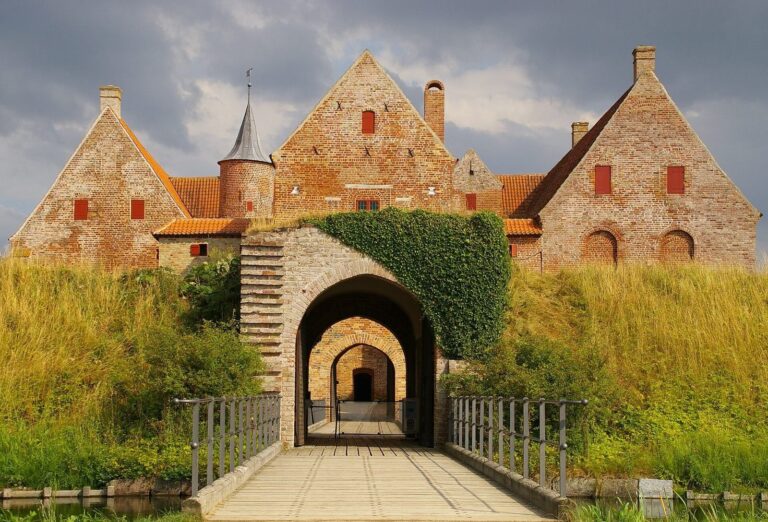
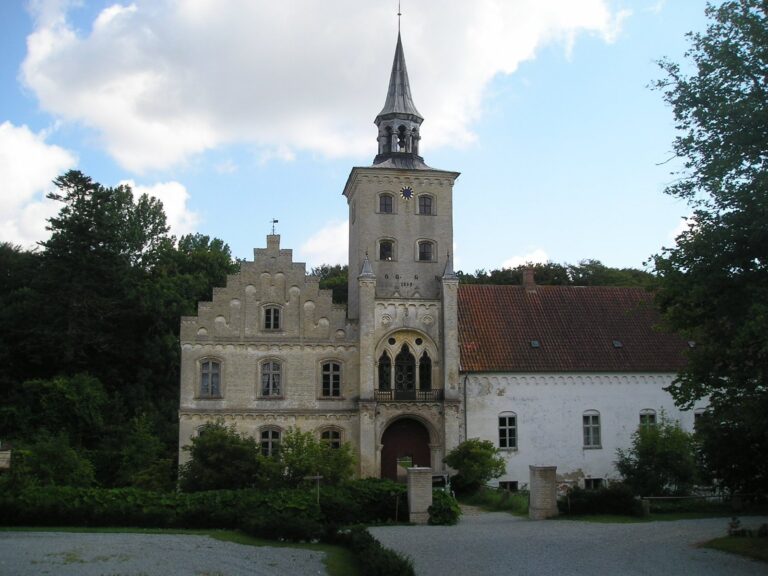
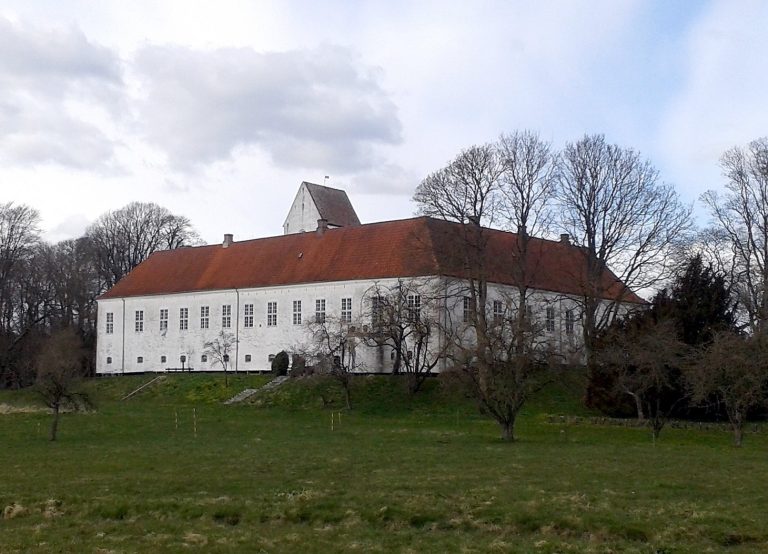
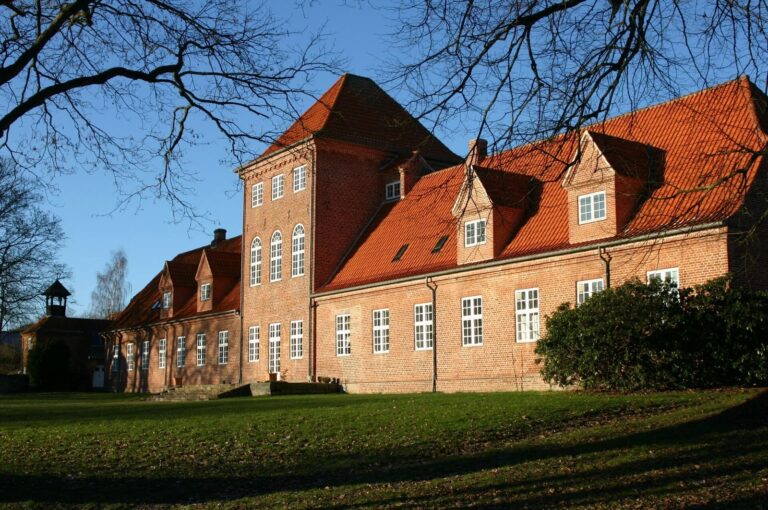
A consortium bought Rydhave in 1910 and divided the estate into parcels. After A. Berbom’s tenure, the main building and remaining land were sold in 1918 to Johanne Jacobsen Christensen, widow of Vagn Jacobsen and daughter-in-law of Carlsberg brewer Carl Jacobsen. She undertook a comprehensive renovation of the buildings. O. Skibbild and Mette Skibbild held the estate in turn, from 1923 to 1932 and 1932 to 1956. In 1956, the Inner Mission of Denmark, a Danish Lutheran evangelical movement, acquired Rydhave and converted its buildings into a Christian school. It now operates as a boarding school. The main building and complex have been protected since their listing in 1918.
Remains
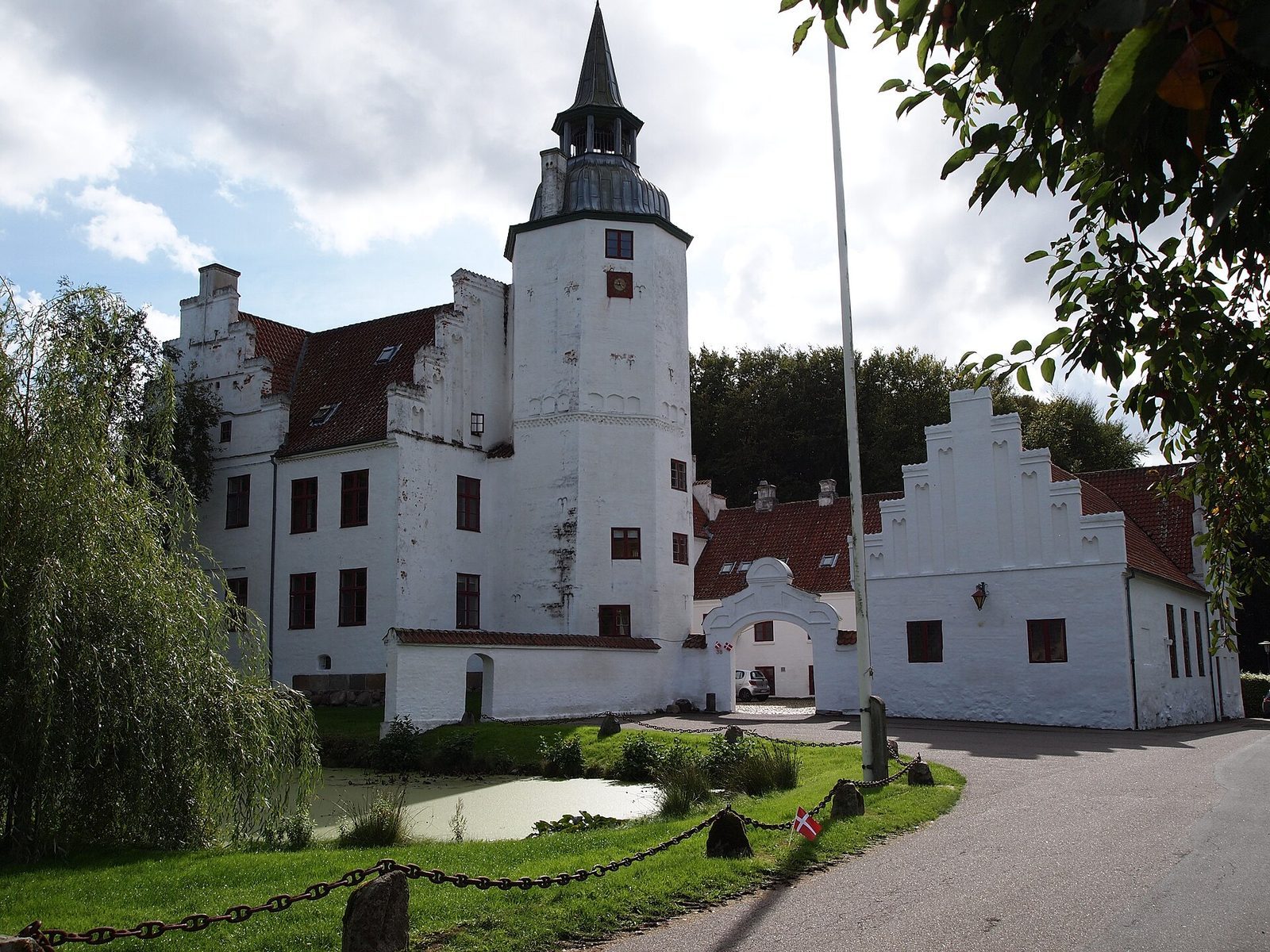
The main building is a three-wing complex with a tower, incorporating parts from the Middle Ages and the 16th century. Part of the tower dates to the medieval period; it is attached to the north wing, and a wall links it to the western wing. That wing was built between 1520 and 1530. The east wing dates to about 1550 and was altered in 1656 and again in 1794.