Homburg Castle: A Hill Castle and Museum in Nümbrecht



Site at a Glance
- Rating
- 4.5
- Popularity
- Medium
- Country
- Germany
- Primary era
- Early Modern
- External website
- Open
- Eras represented
- Medieval, Early Modern, Modern
- Civilizations
- German, Holy Roman Empire
- Site type
- Military
- Remains
- Castle
On this page8 sections
History
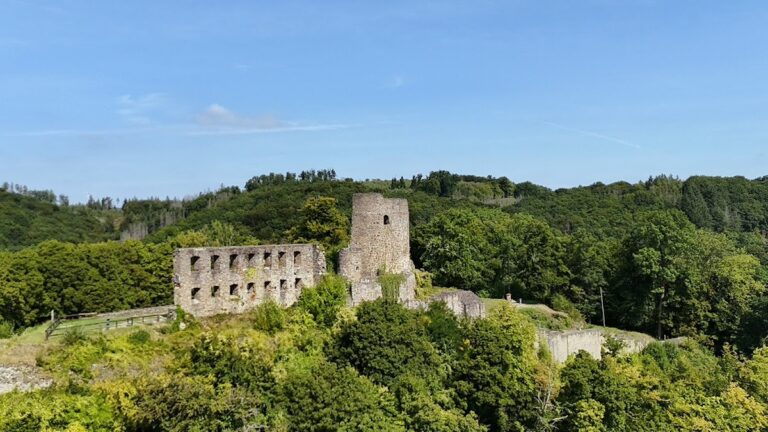
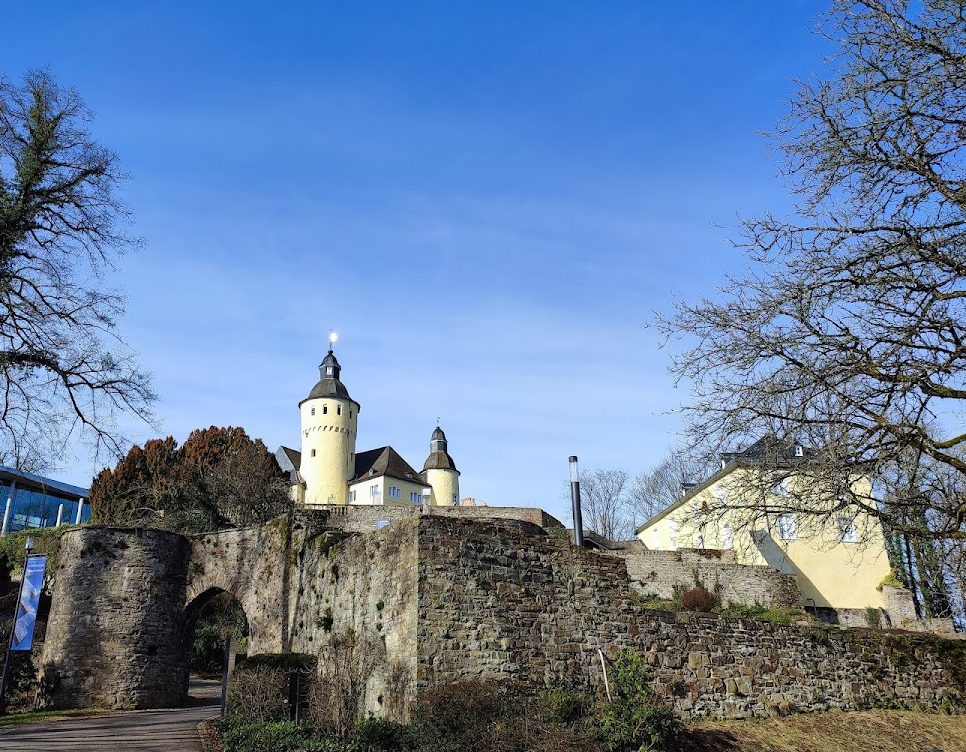
Homburg Castle is a hill castle near Nümbrecht, Germany, first documented in 1276. Its exact age remains unknown, although excavations have identified an earlier stone residential tower probably dating from the eleventh century. The castle became the residence of the Counts of Homburg and the centre of the imperial lordship of Homburg.
Royal Protection and Noble Rule
In 1276, Gottfried I of Sayn, a member of the House of Sponheim, transferred his castrum Homburg to Rudolf of Habsburg, King of the Romans and the first Habsburg to hold that title. Rudolf placed the castle under royal protection and then granted it back to Gottfried as an inheritable fief, a hereditary property held in return for allegiance to a superior lord.
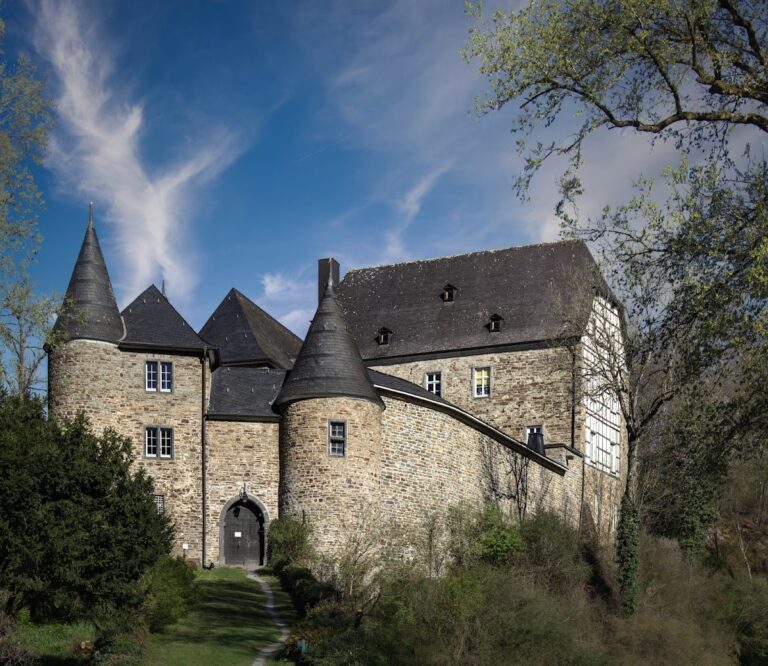
Homburg’s rulers held authority directly from the emperor as lords of an imperial territory. From 1635, Count Ernst von Sayn-Wittgenstein-Homburg remodelled the castle into the form that largely survives today. About a century later, the Sayn-Wittgenstein-Berleburg line assumed its administration, after which the complex fell into disrepair.
Administrative Use and Preservation
After 1806, Napoleon incorporated the territory into the Grand Duchy of Berg. Between 1816 and 1819, Homburg Castle served as the administrative seat of the Prussian district of Homburg. It was later left to decay until 1904, when Prince Richard zu Sayn-Wittgenstein-Berleburg, then the heir, halted the deterioration.
Hermann Conrad founded a museum at the castle in 1926. That institution developed into the Museum of the Oberbergischer Kreis. Excavations in 1999 uncovered the remains of an earlier stone residential tower and prompted a reassessment of the castle’s origins. Homburg Castle is protected as immovable heritage in North Rhine-Westphalia.
Redevelopment of the Complex
In early 2005, the district council approved an expansion of the complex that included enlarging the Red House and constructing a central ticket and toilet facility. The project received an A designation under the Regionale 2010 programme. Archaeological investigations by the Rhenish Office for the Preservation of Monuments took place before the old orangery was demolished. On 4 May 2012, the foundation stone was laid for a new glass pavilion on the former orangery site.
Remains
Castle Complex
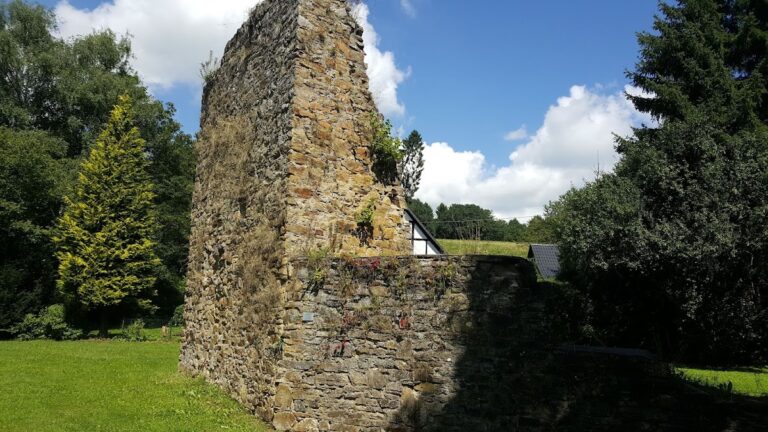
Homburg Castle occupies a hilltop and is built of rubble stone. Excavations exposed the remains of a stone residential tower approximately 12.5 metres in diameter. Probably dating from the eleventh century, the tower was designed for both domestic accommodation and defence. Its discovery provides physical evidence for an early phase of the castle before the later remodelling associated with Count Ernst von Sayn-Wittgenstein-Homburg.
Former Agricultural Buildings
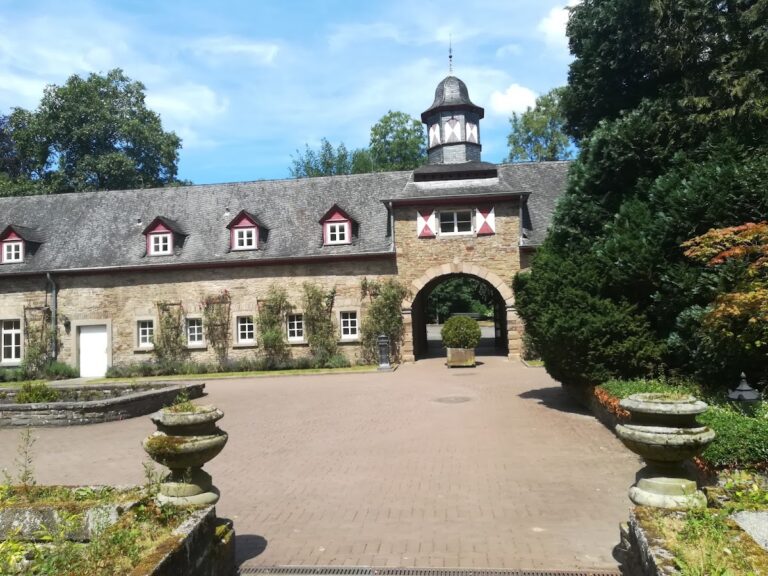
The Red House is the castle’s former tithe barn, a farm building used to store agricultural produce owed as a religious tithe. It was incorporated into the 2005 expansion plans and now accommodates the headquarters of the Oberberg Biological Station, whose work concerns the scientific and practical management of nature reserves and landscape-conservation projects in the Oberberg region.
A sawmill, grain mill, and bakery stand close to the castle complex. The old orangery, formerly part of the aristocratic garden complex, was demolished during redevelopment. A two-storey administration and exhibition building was planned in its place, and a glass pavilion subsequently received its foundation stone on 4 May 2012.
Nature Trail
The Homburg Castle nature trail, established in 2004, forms a circular route of approximately 2.8 kilometres. It begins at the castle, passes through Homburg-Bröl and Huppichteroth, continues past the historic Holstein Mill and the natural monument called the Thick Stones, and returns to the castle. Nine stations interpret the surrounding environment, including the forests around Homburg Castle, an oak’s annual rings, the cultural landscape and its habitats, village life, hedges, a tree-top platform, the Bröl meadow and stream, the origin of the Thick Stones, and a spotted woodpecker’s nest.