Holy Trinity Church, Bierawa: A Late Renaissance Parish Church in Poland
Site at a Glance
- Popularity
- Very Low
- Country
- Poland
- Primary era
- Early Modern
- Eras represented
- Early Modern, Modern
- Civilizations
- Holy Roman Empire, Kingdom of Bohemia
- Site type
- Religious
- Remains
- Church
On this page7 sections
History
Foundation and Protestant use
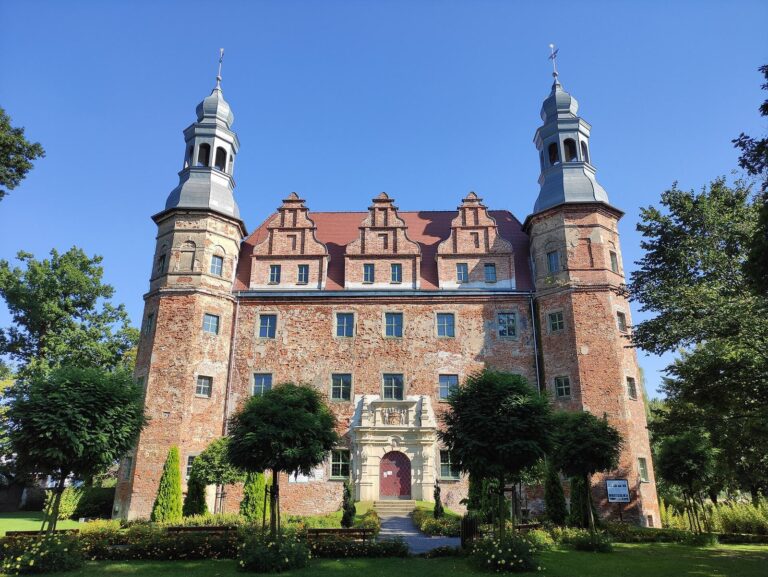
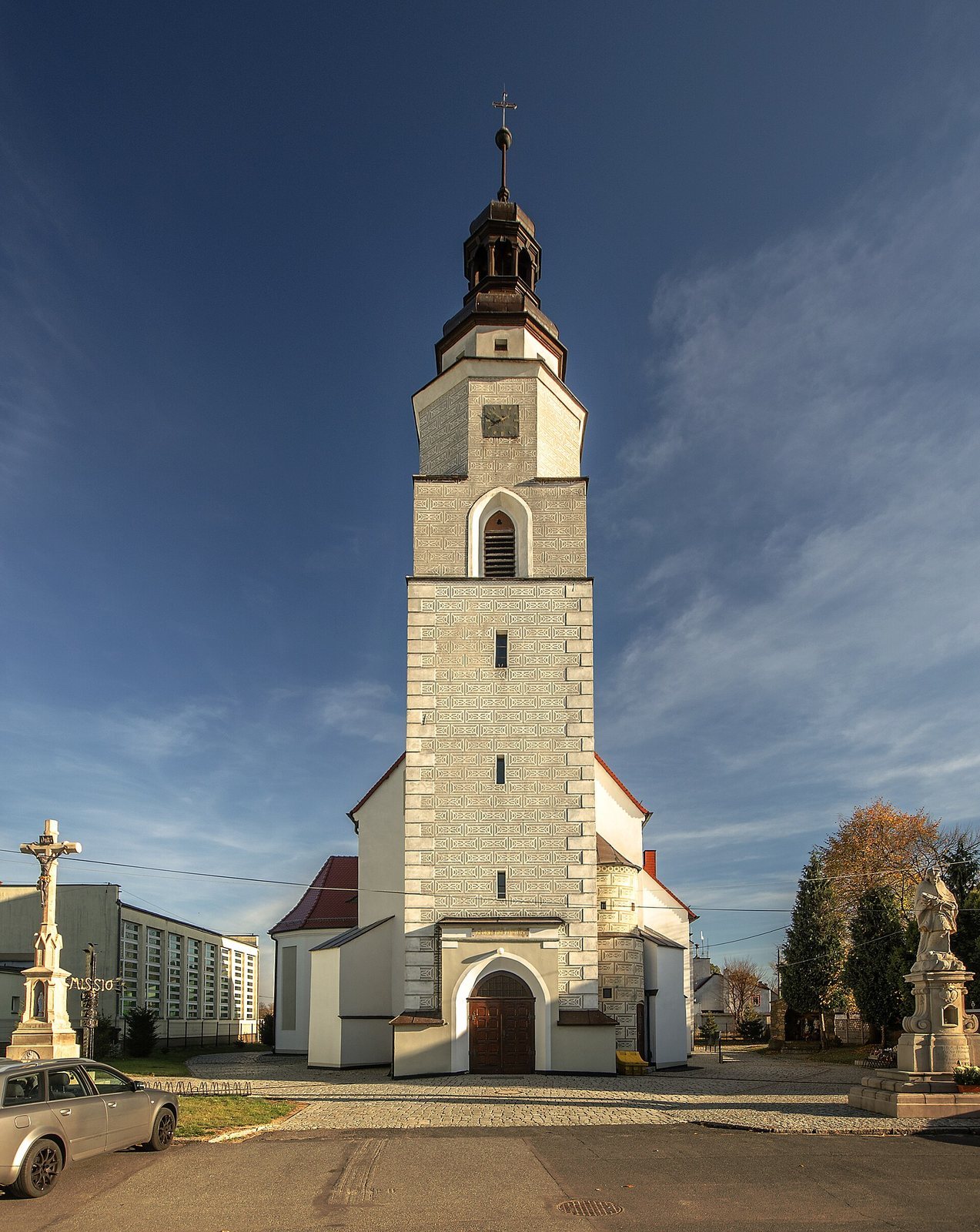
Holy Trinity Church, Bierawa, is a Roman Catholic church in Poland, built in the second half of the sixteenth century in the late Renaissance style, a later phase of Renaissance art and architecture. Piotr Dluhomil funded its construction. The church was originally evangelical, meaning Protestant, and remained so until 1639. A tower was added in the early seventeenth century.
Catholic use and parish status
By the eighteenth century, the church had become Catholic and served as a subsidiary church, dependent on the parish in Stare Koźle. A chapel was added on its north side during that century. In 1915, the church became a parish church. It now serves the Roman Catholic parish of the same dedication in the Kędzierzyn deanery, a grouping of parishes within the Diocese of Opole, a church jurisdiction overseen by a bishop.
During the tower’s renovation in 1999, old documents were found in the sphere beneath the cross. After they were copied, the original documents and updated documents were placed back in the sphere.
Remains
Exterior
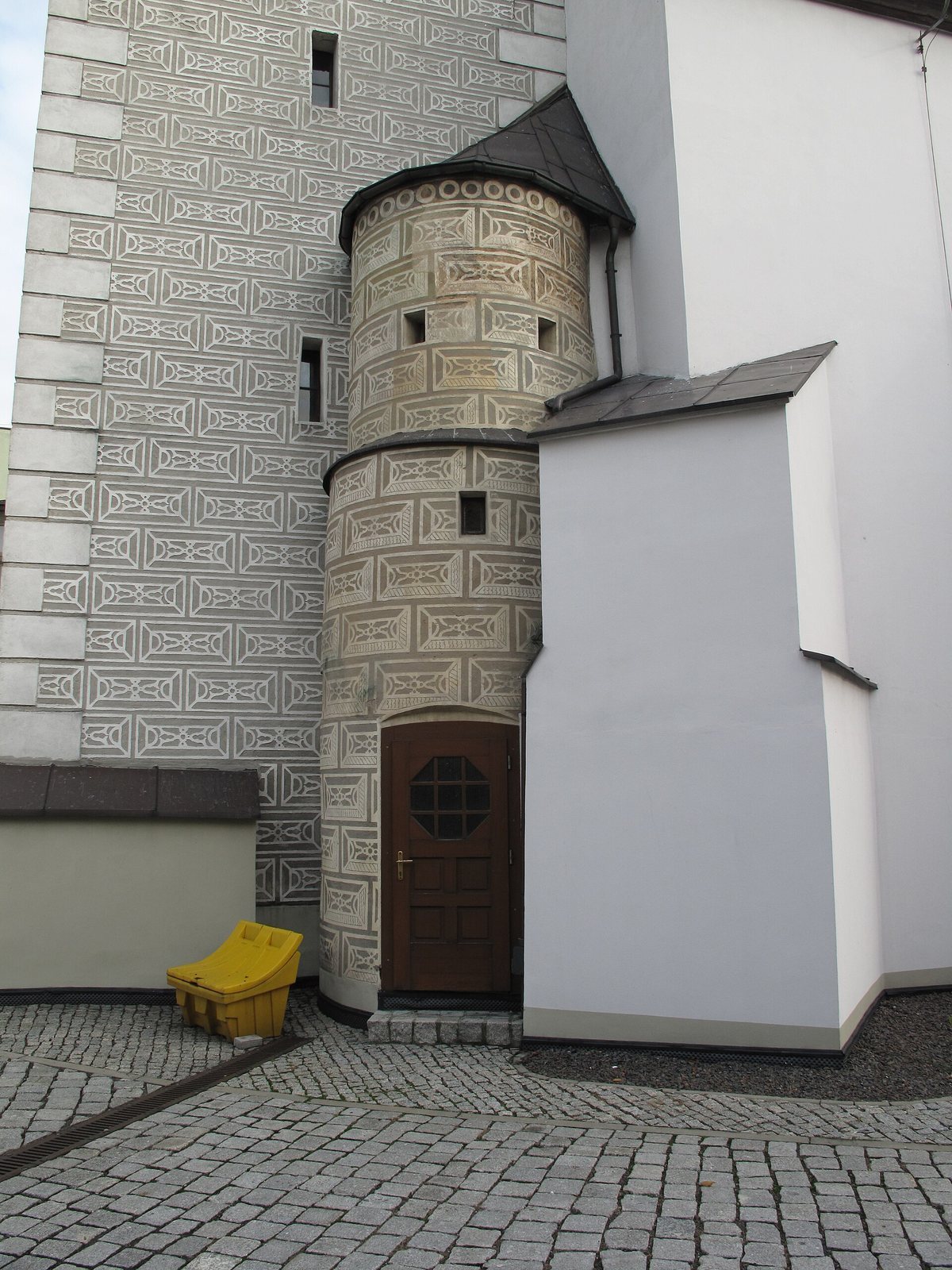
The brick church has a single nave, a tower, and a chapel on its north side. The tower and its stair turret carry sgraffito decoration, made after 1614. Sgraffito is created by cutting or scraping away an upper surface to reveal a contrasting layer beneath. This ornament was repaired in 1923, 1952, and 1974, then reproduced during the 1999 renovation. The tower has a helmet-shaped roof, covered with new copper sheeting during that work, and a new cross was installed.
Interior
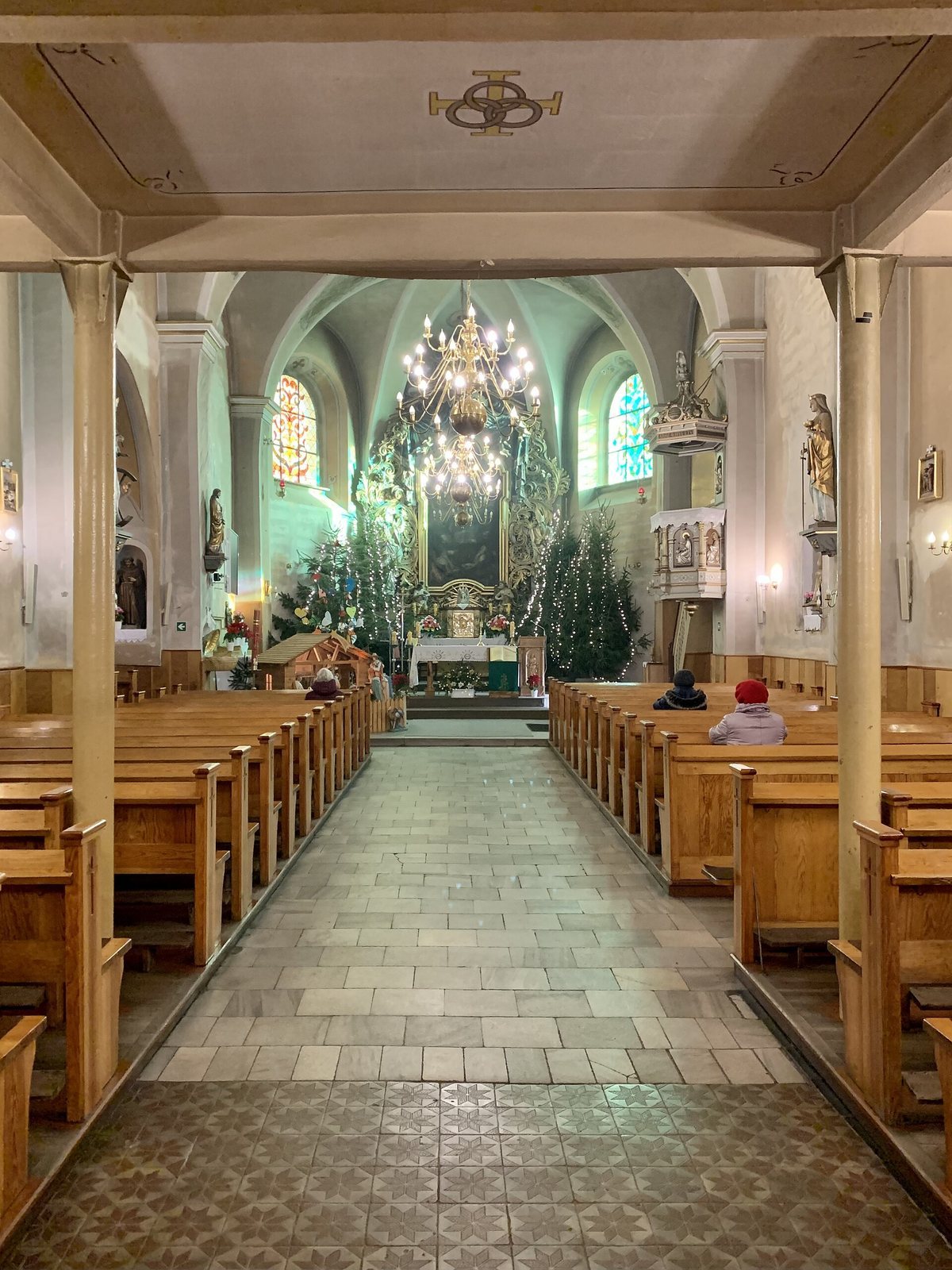
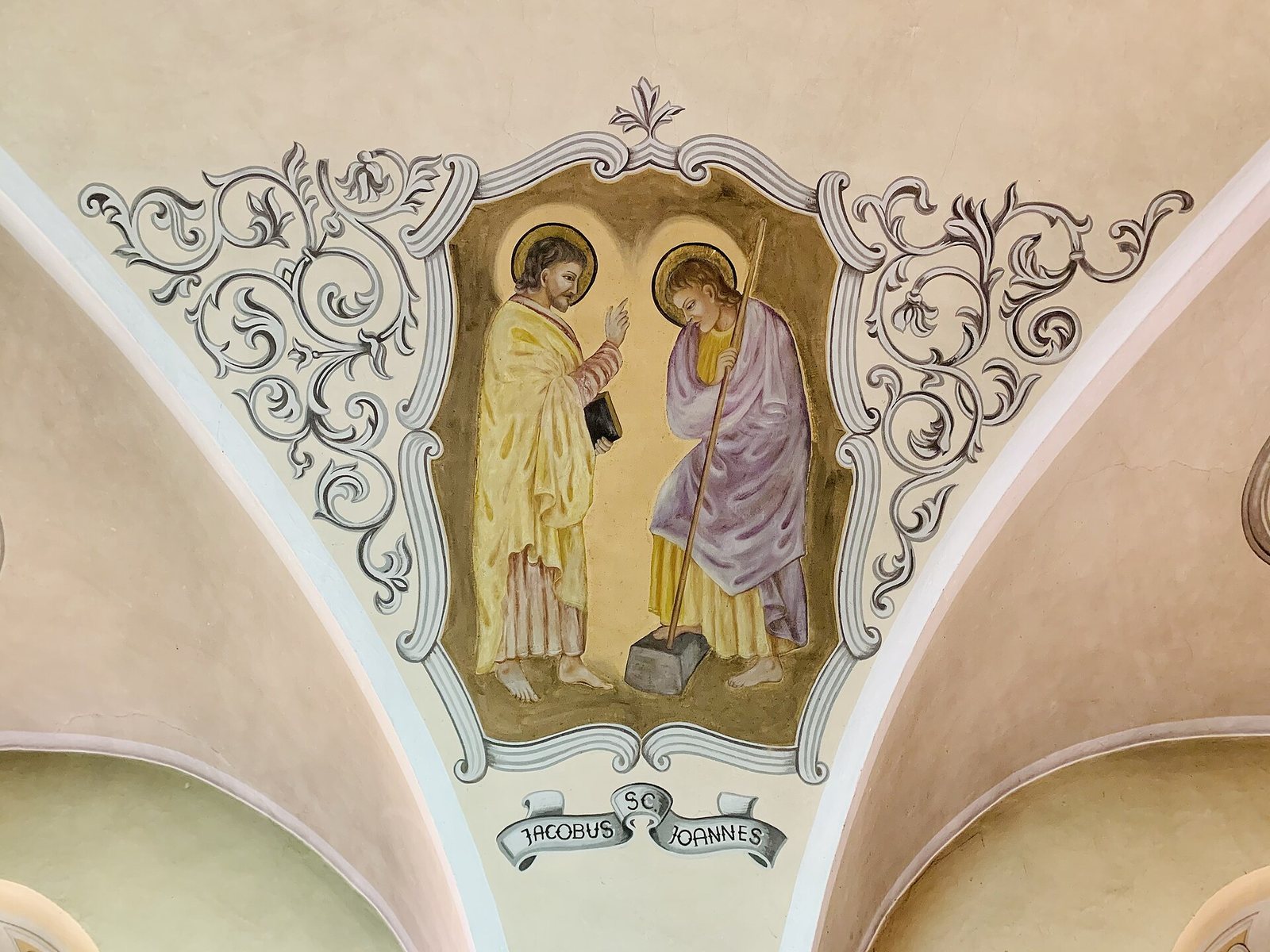
The interior includes a vestibule with a tombstone slab, the nave, and a choir loft. Three altars serve the church. Wall paintings depict Saint Andrew and Saint Philip, as well as Saint James and Saint John, all apostles and early followers of Jesus.
Organ
Włodzimierz Truszczyński built the organ in 1969. It has cone windchests, which distribute air to the pipes, and electro-pneumatic action, using electrical controls and pneumatic mechanisms to operate the instrument. Its 18 stops control which groups of pipes sound, while two hand-played keyboards and a foot-operated pedal provide the playing controls.