Sechin Alto: An Early Andean Ceremonial Complex in Peru
Site at a Glance
- Popularity
- Medium
- Country
- Peru
- Primary era
- Bronze Age
- Eras represented
- Bronze Age
- Civilizations
- Unclassified
- Site type
- Religious
- Remains
- Temple
On this page8 sections
History
Sechin Alto is an archaeological complex in Peru’s Casma Valley associated with the Early Formative, an ancient Andean period dated to about 2000–1500 BC. The wider Sechin Alto complex is also linked to the Initial Period, another period of ancient Andean prehistory, dated to about 2150–1000 BC. It may have served as an administrative center for the Sechin cultural area, perhaps alongside Pampa de las Llamas-Moxeke.
Regional connections and political phases
Sechin Alto was regarded as the largest of four principal sites in the area, along with Taukachi-Konkan, Sechin Bajo, and Cerro Sechin. Archaeologists Thomas and Shelia Pozorski interpreted the sites as contemporaneous and in ongoing contact, forming a broad settlement across the floodplain of the northern branch of the Sechin River. Shared orientations and similarities in mound form and layout linked Sechin Alto with Taukachi-Konkan and Sechin Bajo. Cerro Sechin was included in the group because of its proximity and conical adobe constructions.
Moxeke and Sechin name both archaeological phases and the political communities associated with them. A polity is an organized political community, not necessarily a state. During an early Moxeke phase, the Moxeke polity may have unified the greater Casma Valley, linking the Sechin Alto complex with Pampa de las Llamas-Moxeke to the south and coastal sites north of the Casma River mouth. Near the end of the Initial Period, during the Sechin phase, political power became more centralized in the Sechin branch under the Sechin polity. Pampa de las Llamas-Moxeke then ceased to be occupied, while Las Haldas, previously isolated, became a major satellite of the Sechin Alto complex.
Study and heritage status
Julio C. Tello made the first thorough description of Sechin Alto after visiting the Casma Valley in 1937. He judged it the largest architectural structure in Peru and the Americas. Rosa Fung Pineda and Carlos Williams studied the site in 1979, followed by the Pozorskis in 1987. Sechin Alto is identified as Cultural Heritage of the Nation in Peru.
Remains
Layout and principal structures
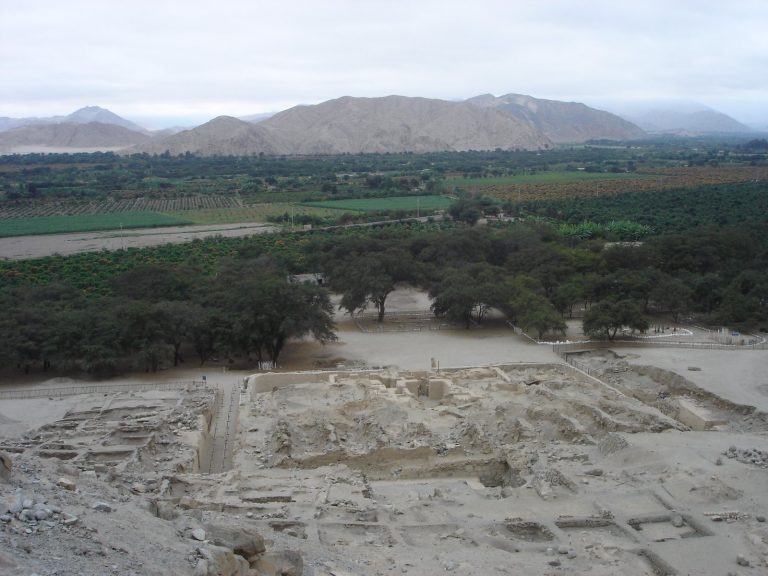
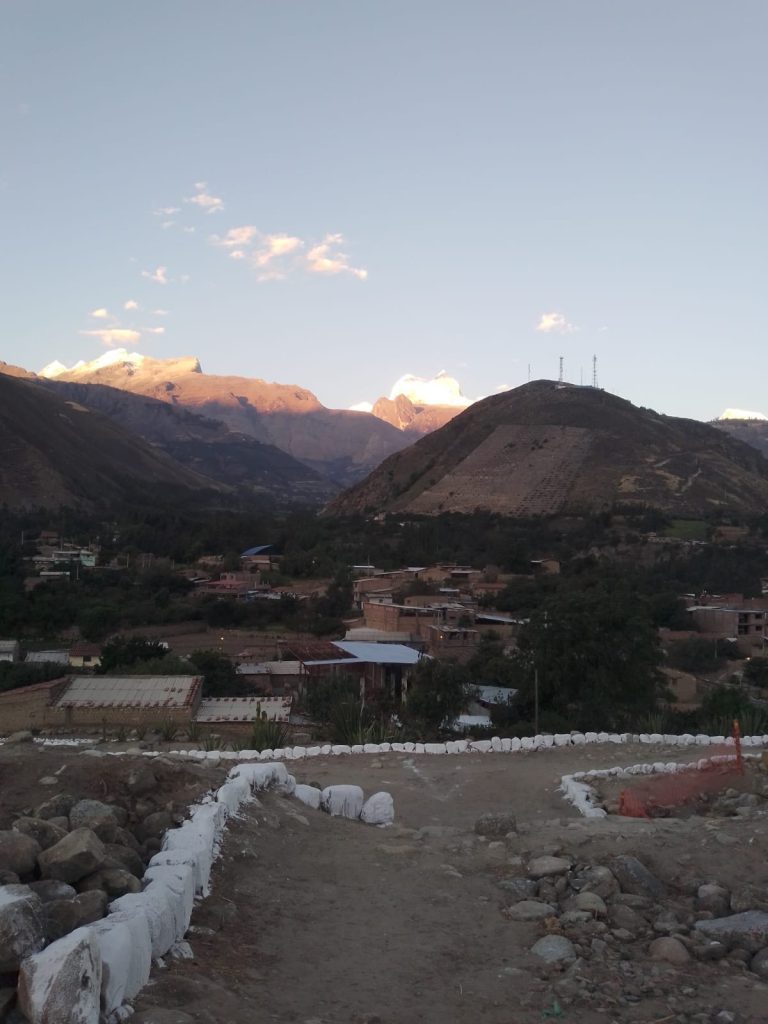
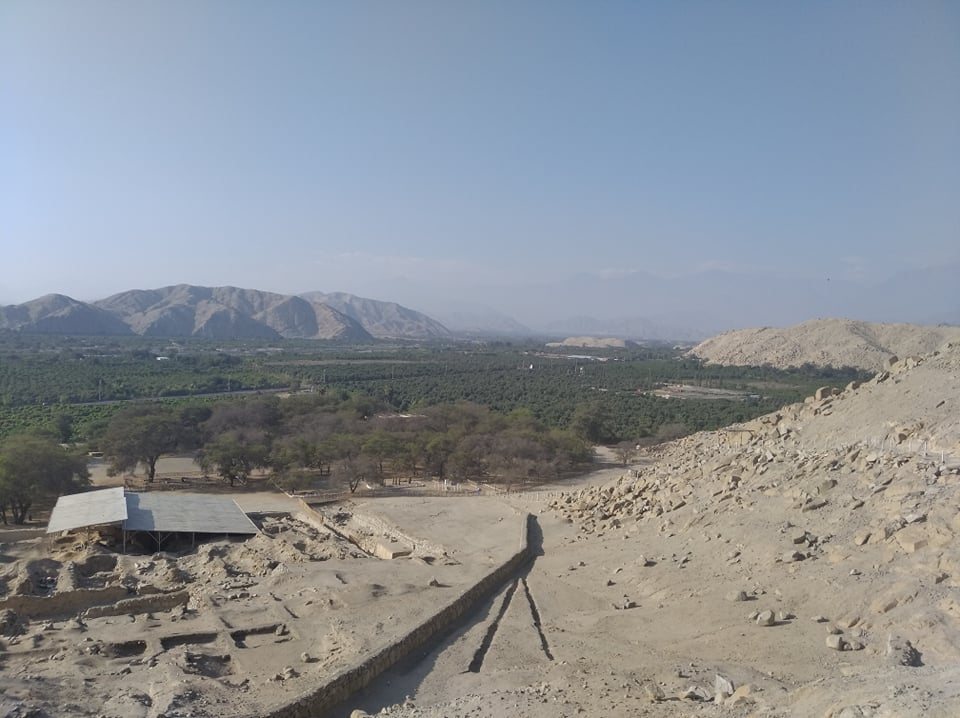
The complex stands on the left bank of the Sechin River, east of the town of the same name. Oriented northwest, it extends for about 2 km and covers approximately 300–400 hectares, an area about five times that of Caral. Its principal buildings and smaller surrounding structures follow the complex’s main axes.
The Temple
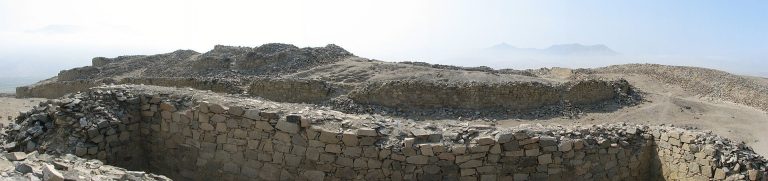
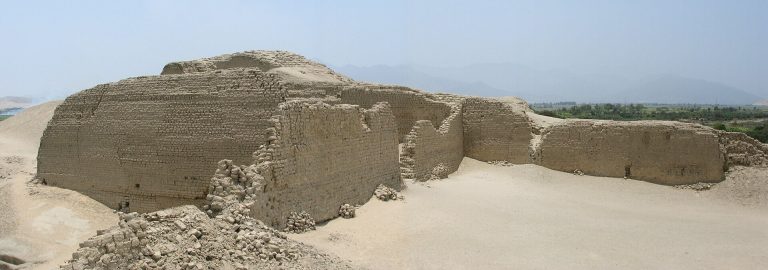
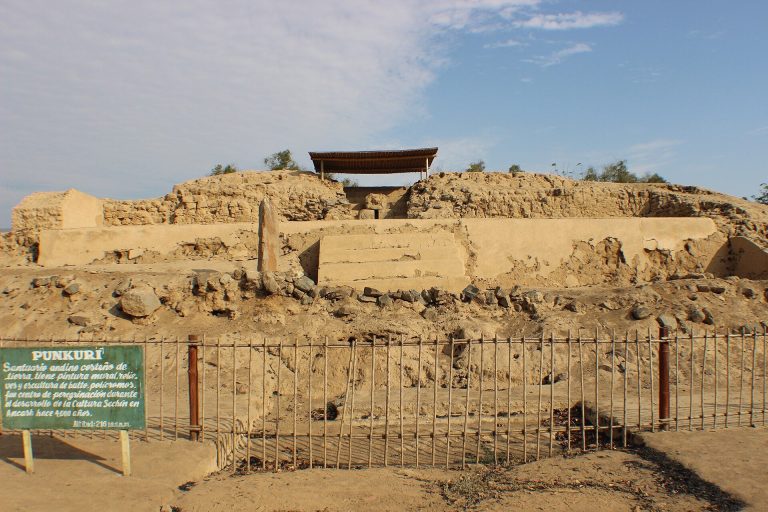
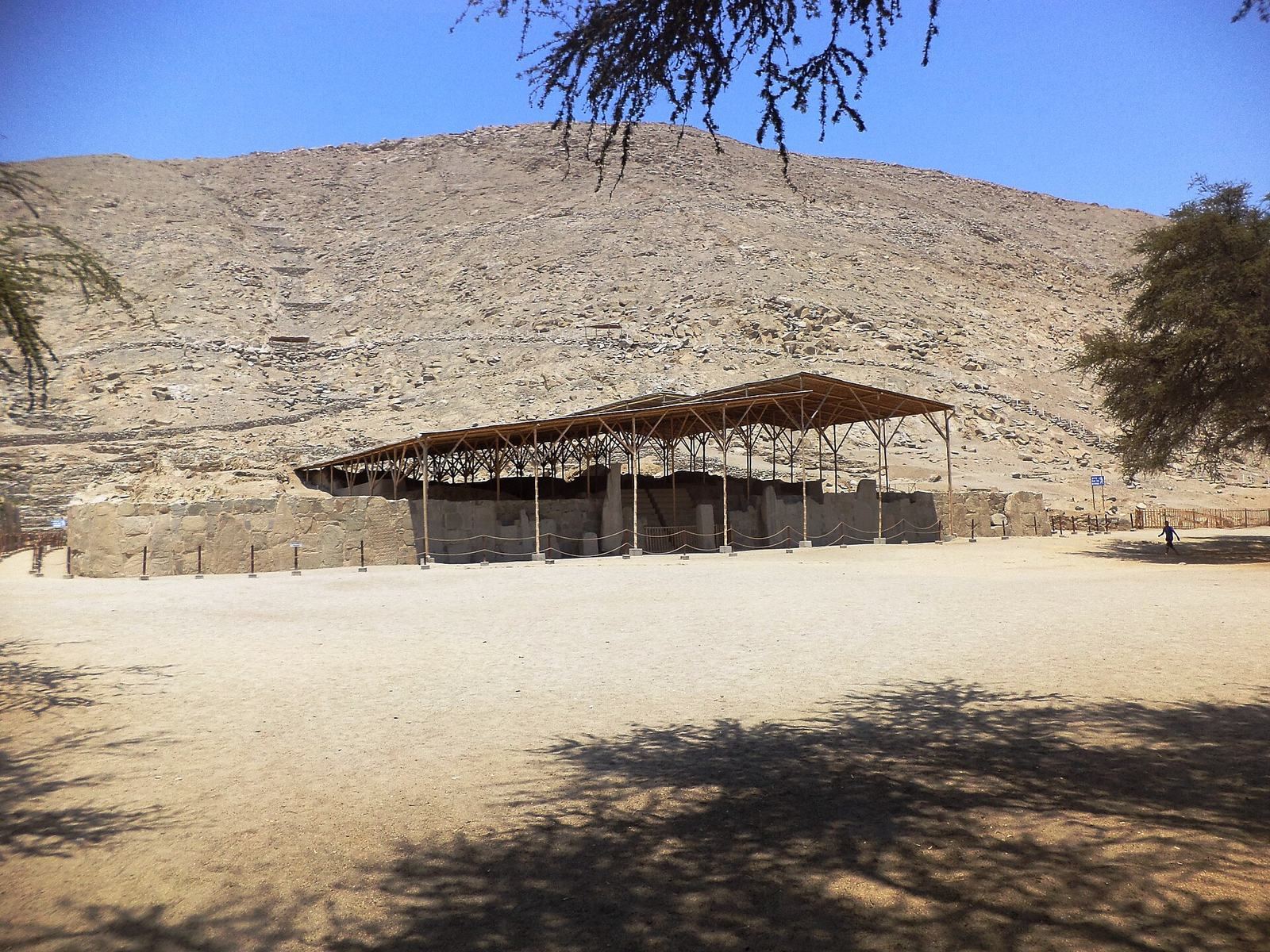
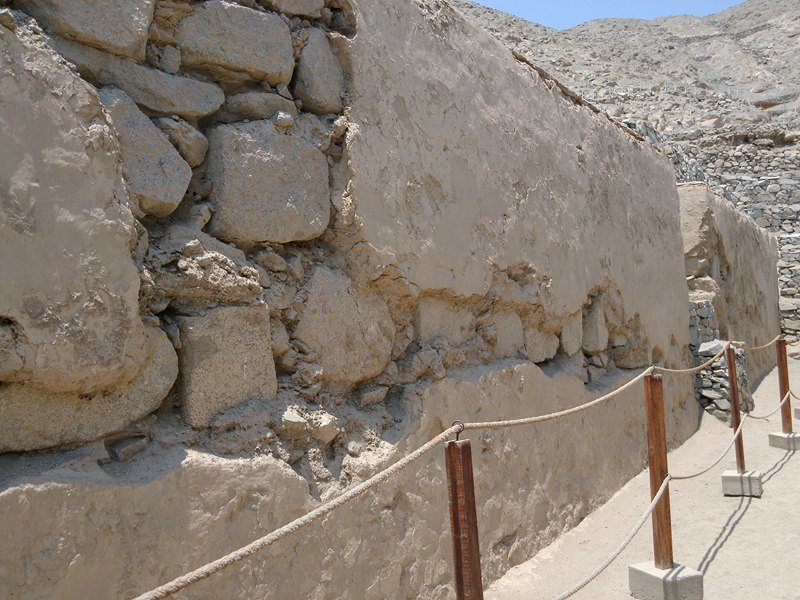
The central pyramidal structure, known as the Temple, measures about 350 by 300 m and rises approximately 35 m. Its raised embankments and walls were built with large stones alternating with smaller ones, and the walls were coated with mortar. Conical adobe bricks, made from earth shaped into bricks and dried, occur inside the structure.
Courts and plazas
Five courts or plazas extend in front of the Temple. Some contain sunken circular courts. Their arrangement suggests that the complex had a ceremonial function.
Surrounding structures
Numerous smaller structures lie around the main complex, aligned with its principal axes. The surrounding land is now used for agriculture.