Hokenoyama Kofun: An Early Japanese Keyhole Burial Mound


Site at a Glance
- Rating
- 4
- Popularity
- Very Low
- Country
- Japan
- Primary era
- Classical
- External website
- Open
- Eras represented
- Classical, Medieval
- Civilizations
- Yamato
- Site type
- Burial
- Remains
- Burial Mound
On this page10 sections
History
Hokenoyama Kofun is an ancient Japanese burial mound in Sakurai, Nara Prefecture, Japan, generally dated to around AD 250 and built in the early keyhole-mound tradition. A kofun is a Japanese burial mound associated with elite or powerful individuals, and this monument forms part of the Makimuku Kofun Cluster at Hashinaka, on the western foothills of Mount Miwa and east of Hashihaka Kofun.
Date and historical setting
The mound’s date has been debated. Earlier interpretations placed its construction in the fourth century, while more recent discussion generally assigns it to the middle of the third century. Radiocarbon dating of timber from the wooden burial structure produced a range extending into the early fourth century, leaving Hokenoyama Kofun between two historical interpretations. It has consequently been viewed either as a late Yayoi-period square-fronted burial mound or as an early monument of the Kofun period, which conventionally followed the Yayoi period and became known for large tombs built for powerful individuals.
Its middle-third-century date overlaps the traditionally proposed lifetime of Queen Himiko, the female ruler described in the Chinese Records of the Three Kingdoms. That account associates her with Yamataikoku, a polity whose location remains debated. One interpretation favors a fourth-century date because Hokenoyama’s stone-enclosed wooden burial structure appears difficult to reconcile with the account’s description of a burial having a coffin but no outer coffin.
Burial traditions and later use
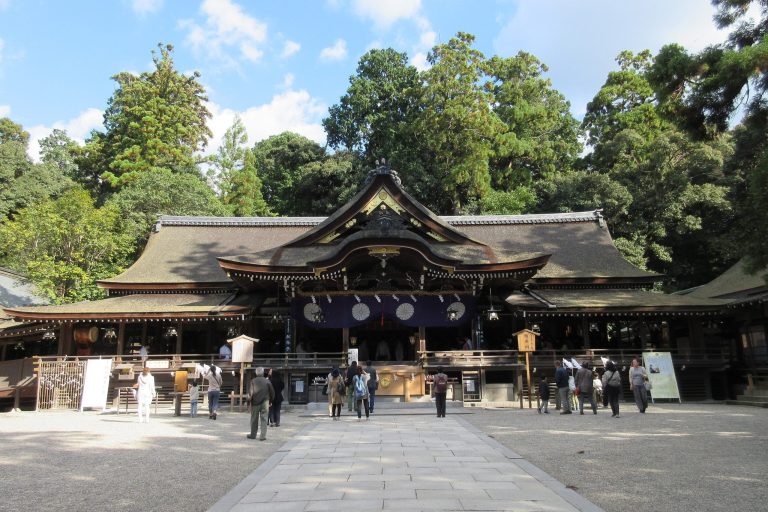
The identity of the person buried in the principal tomb is unknown. A tradition preserved by Omiwa Shrine identifies the mound as the tomb of Toyosukiiri-hime, a figure described in Japanese mythology and imperial genealogy as a daughter of Emperor Sujin and an early chief priestess of the Ise Grand Shrine. The excavated evidence does not establish that identification.
Hokenoyama Kofun was later reused. Around the end of the sixth century, a horizontal stone chamber was built on the western side of the circular mound, taking advantage of the existing tumulus. This later intervention added a new burial facility to a monument that had already stood for centuries.
Investigation and heritage status
Archaeological investigations began in September 1999 under the Nara Prefectural Kashihara Archaeological Institute and the Sakurai municipal authorities. Their findings were published in a 2008 study of Hokenoyama Kofun. The Makimuku Kofun Cluster received designation as a National Historic Site of Japan in 2006. The excavated objects were collectively recognized as a Nara Prefectural Tangible Cultural Property in 2013 and as a National Important Cultural Property in 2024.
The grave goods also point to connections beyond the immediate area. The assemblage includes pottery from the Tokai region and the Seto Inland Sea, showing that objects and cultural influences reached the Makimuku complex from other parts of Japan.
Remains
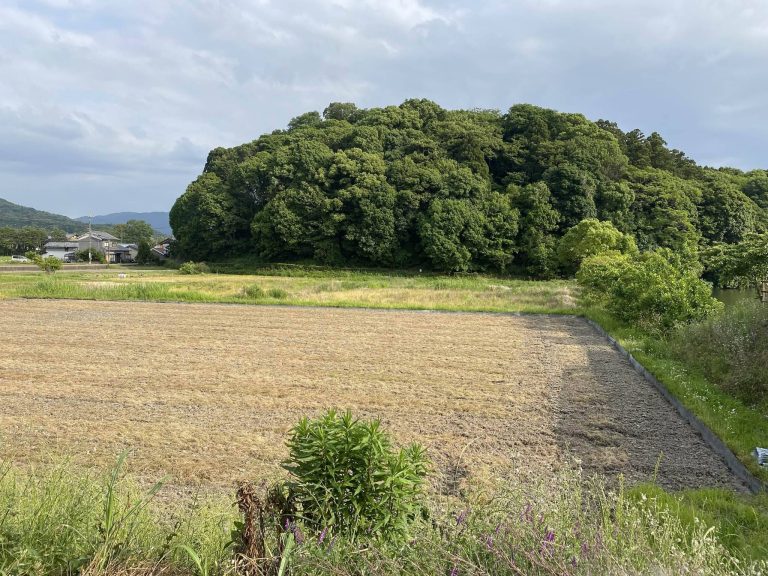
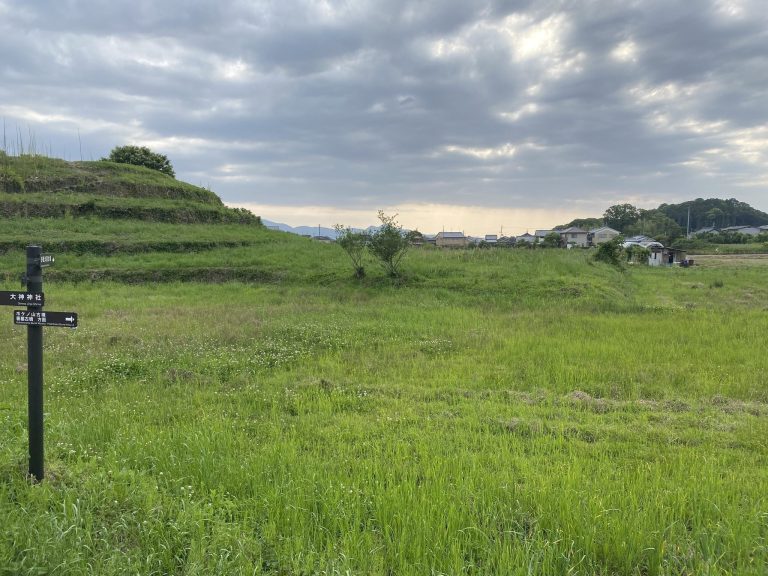
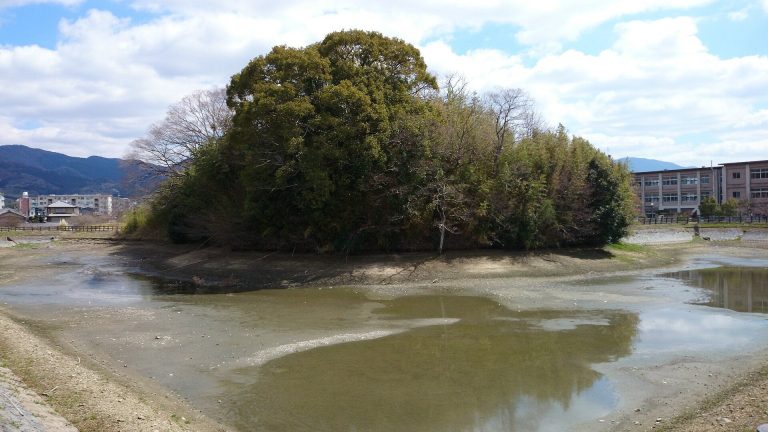
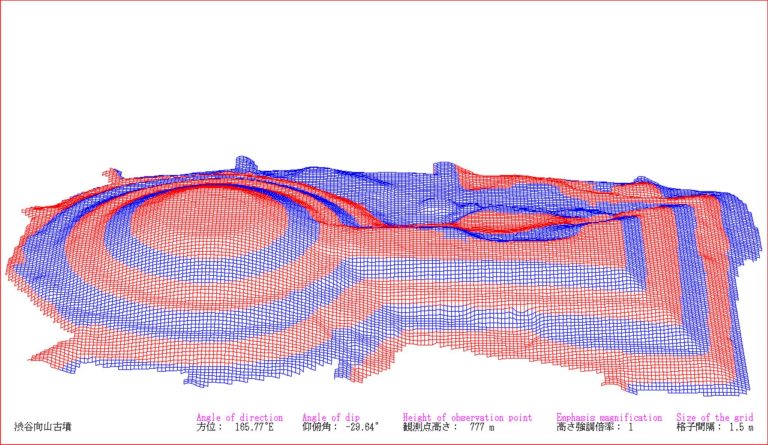
Hokenoyama Kofun is a scallop-shaped, Makimuku-type keyhole mound. This form combines a large circular rear section with a narrower rectangular projection, while the Makimuku type refers to an early form associated with the burial-mound complex around the ancient Makimuku settlement. The mound is approximately 80 meters long and is surrounded by a moat. Its outer surface was covered with fukiishi, stones laid over a burial mound, taken from the Makimuku River.
Mound form and outer works
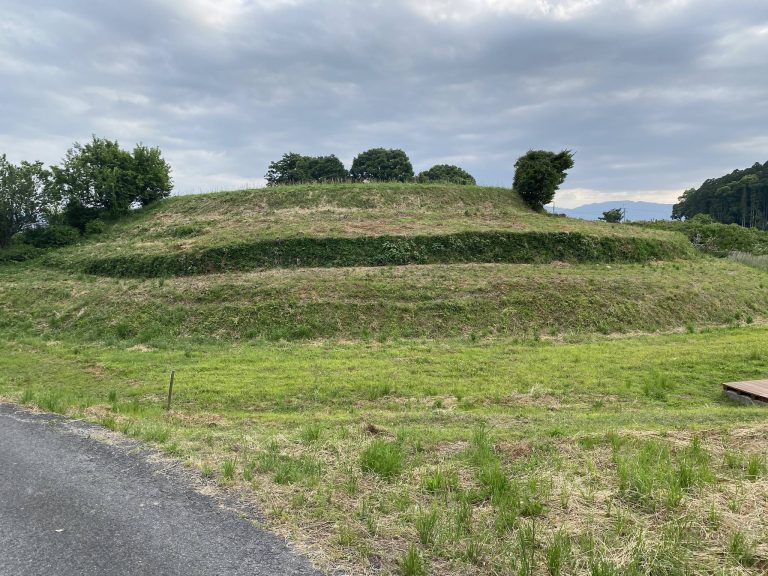
The circular rear section measures approximately 55 to 60 meters in diameter, rises about 8.5 meters, and was constructed in three tiers. A short rectangular projection extends toward the southeast for approximately 20 to 25 meters and rises about 3.5 meters. The surrounding moat is about 10.5 to 17 meters wide and is broader on the western side. Erosion has softened parts of the mound’s angular outline, while a road cuts through the southeastern projection.
Principal burial structure
The main burial facility occupies the center of the summit in the rear circular section. It consists of a large stone enclosure within a substantial pit, with a wooden ceiling and an interior approximately 6.5 to 7 meters long and 2.6 to 2.7 meters wide. Its original height was estimated at about 1.5 meters, while approximately 1.1 meters survives. Piled local river stones formed the enclosure.
Inside it lay a five-meter-long coffin hollowed from Koyamaki wood. It is broadly classified as a split-bamboo-shaped wooden coffin, meaning that it was carved from a log into a form resembling bamboo divided lengthwise. The inner surface appears to have been coated with vermilion mercury sulfide. Decorated jar-shaped earthenware had been arranged above the coffin; after the wood decayed, the vessels fell into it. The principal burial was partially looted.
Secondary burial facilities
A second wooden coffin was placed in the rectangular front section after part of the fukiishi at the mound’s foot had been removed. Another simple burial facility occupied the narrow connecting section between the circular rear and rectangular front parts, adding further burials to the mound’s original arrangement.
Later stone chamber
The later chamber on the western side of the mound is a horizontal stone construction more than 14 meters long. It contains a composite, house-shaped stone sarcophagus and represents the monument’s reuse around the end of the sixth century.
Grave goods and displayed objects
The excavated objects include two picture-and-text-belted divine-beast bronze mirrors. One is complete, while another survives as 23 fragments from a mirror that was deliberately broken. The assemblage also contains an inner-circle floral-pattern bronze mirror, bronze and iron arrowheads, iron swords, agricultural tools, other iron implements, and earthenware.
One bronze mirror from the mound is kept at Omiwa Shrine. Other excavated objects are displayed at the Nara Prefectural Kashihara Archaeological Institute Museum. The recognized group of important objects comprises the two picture-and-text-belted divine-beast mirrors, groups of bronze and iron objects, and 15 earthenware vessels.