Makimuku Kofun Cluster: Early Keyhole-Shaped Burial Mounds in Japan
Site at a Glance
- Rating
- 3.8
- Popularity
- Very Low
- Country
- Japan
- Primary era
- Classical
- Eras represented
- Classical, Modern
- Civilizations
- Japanese, Yamato
- Site type
- Burial
- Remains
- Necropolis
On this page15 sections
History
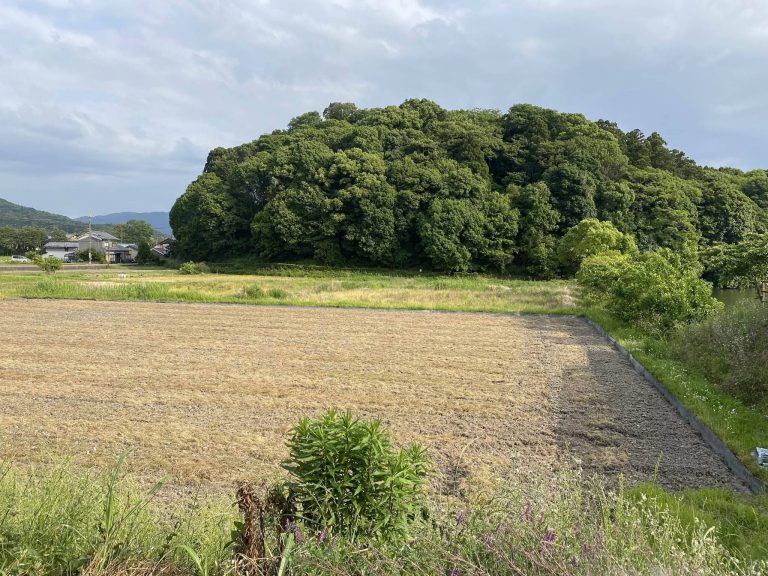
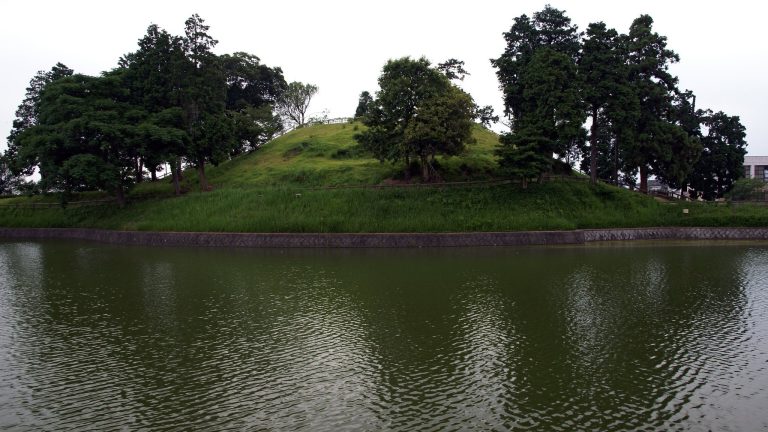
The Makimuku Kofun Cluster in Japan is a group of early burial mounds at Sakurai, Nara, built during the opening phase of the Kofun period, the era of large mound construction in Japan from approximately the third to the sixth centuries. Distributed across Ota, Higashida, and Hashinaka at the western foot of Mount Miwa, the cluster is regarded as the birthplace of the standardized keyhole-shaped tomb. Its construction broadly belongs between the latter part of the third century and the fourth century, although the dates of individual mounds remain debated.
Origins of the keyhole tomb
The cluster forms part of the Ooyamato Kofun Cluster and extends through the Makimuku archaeological site in the former Mizukaki district. It lies south of the Yanagimoto Kofun Cluster, with the Tamaki-yama hills separating the two groups. Six keyhole-shaped mounds are associated with Makimuku, including Hashihaka Kofun, also known as Hashinakayama Kofun. The other five are often described as Makimuku-type or proto-keyhole mounds because their forms represent an earlier stage in the development of the fully standardized tomb.
The five smaller mounds occupy a transitional position between the end of the Yayoi period and the beginning of the Kofun period. Their shapes, pottery sequence, unusual burial facilities, and excavated objects point to changing burial practices during this transition. The distribution of comparable mounds from Kyushu to the Kanto region, together with the scale of the Makimuku group, has been interpreted as evidence that a political alliance had formed around a chief in the Yamato region.
Hashihaka and early Yamato kingship
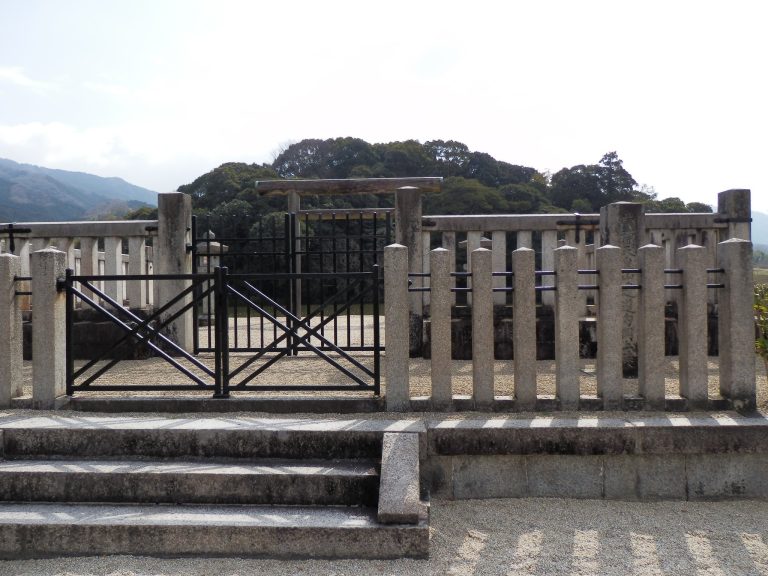
Hashihaka Kofun is regarded as the earliest standardized keyhole-shaped mound. It is estimated to have been built between the latter part of the third century and the fourth century, and its appearance is commonly used to mark the beginning of the Kofun period. The mound is often interpreted as the first royal tomb of the early Yamato kingship.
A theory that began in prewar research identifies Hashihaka as a possible tomb of Himiko, the female ruler known from Chinese historical tradition. The Imperial Household Agency manages the mound as the tomb identified with Yamato Totohi Momoso-hime, who is traditionally regarded as an imperial princess. The different interpretations reflect the importance of Hashihaka in discussions of early political authority, even though its occupant cannot be established with certainty.
Ishizuka Kofun and ritual practice
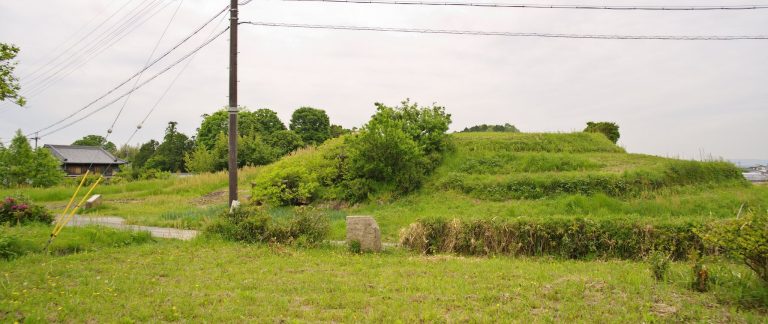
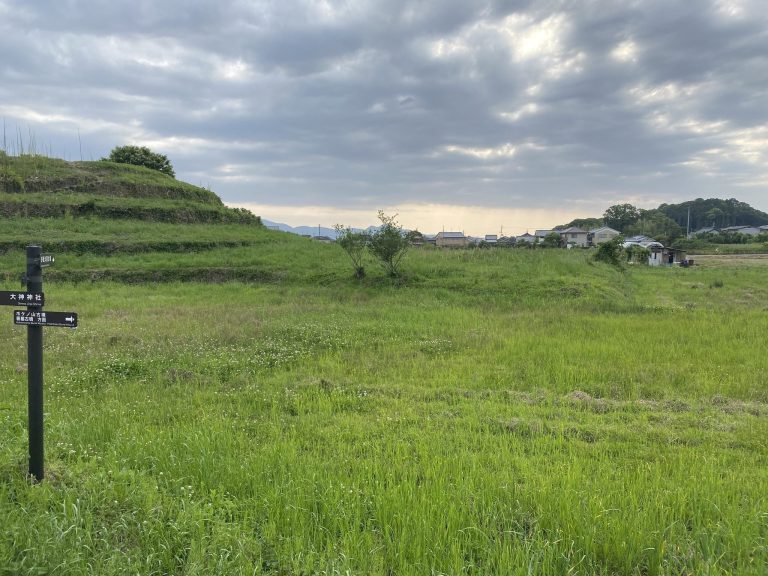
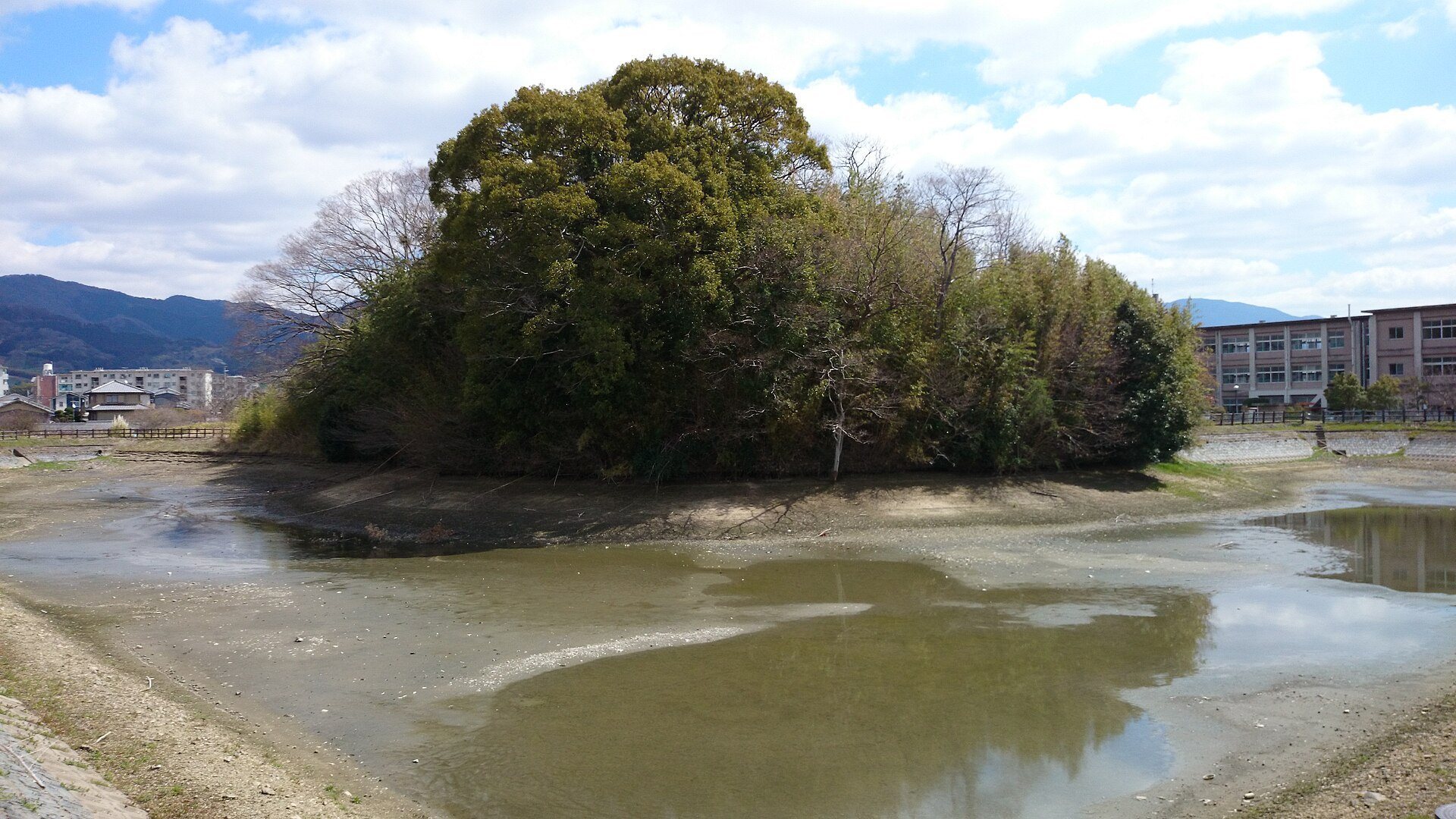
Makimuku Ishizuka Kofun may be the oldest mound within the Makimuku archaeological site and has a central place in studies of how the keyhole-shaped tomb developed. Proposed dates range from the early third century to the middle fourth century, while one interpretation places its burial in the latter part of the third century.
A hinoki board from the lowest layer of Ishizuka’s moat retained an outermost tree ring dated to AD 177. That date belongs to the timber itself, not necessarily to its use in the mound. Surviving sapwood has placed the felling no earlier than about AD 200, and this evidence has been used to associate construction of the moat with the latter part of the third century. Radiocarbon estimates remain uncertain because of the possible effects of old wood and marine reservoirs.
Wooden pillars and vermilion-painted wooden roosters were placed in Ishizuka’s moat. These objects have been interpreted as possible elements of ceremonies intended to seek the deceased’s resurrection, although their precise meaning remains uncertain. Ishizuka faces Mount Miwa, a sacred mountain associated in Shinto tradition with the kami Omononushi. The orientation of the mound, together with the deliberate alignment of buildings in the Makimuku area, has therefore been interpreted as evidence of a strong religious relationship between the area’s rulers and the mountain.
Ishizuka has no identified occupant. A weak theory connects it with a male king said in Chinese historical tradition to have ruled for more than seventy years before the Wa civil war, dated around AD 178 to 184. The connection remains unsubstantiated.
War damage and heritage status
During the final phase of the Pacific War, the summit of Ishizuka Kofun was levelled. The work exposed the remains of an emplacement for an anti-aircraft gun or anti-aircraft machine gun, altering the historic fabric of the mound. The Makimuku Kofun Cluster was designated a National Historic Site of Japan in 2006.
Remains
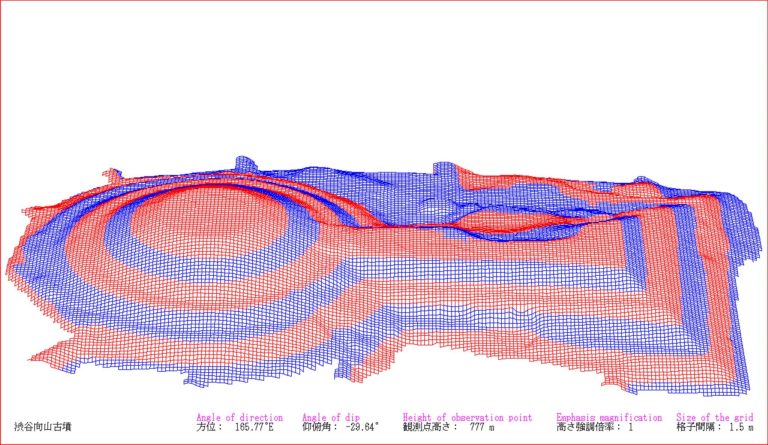
The cluster contains six keyhole-shaped burial mounds. Five have the distinctive scallop-shell form, in which a short, narrow front projection joins a much larger rear mound. Their total length, rear-mound diameter, and front-part length generally follow a 3:2:1 ratio. The rear sections are flattened, inverted-egg-shaped, or irregular rather than truly circular, while mounds with moats have especially narrow front sections.
Principal burial mounds
Hashihaka Kofun
Hashihaka differs sharply from the five Makimuku-type mounds. Its rear mound rises in five stepped levels, and its front section spreads outward in a fan-like form. The entire mound is about 278 metres long, approximately three times the scale of the other five mounds. Its form represents the standardized keyhole design that emerged from the earlier Makimuku-type tradition.
Makimuku-type mounds
The five smaller mounds preserve an early form of the keyhole plan. Their front projections are markedly lower and shorter than their rear sections, creating the scallop-shell outline. Their irregular rear mounds and narrow front portions, particularly where moats surround them, distinguish them from the more regular and larger form represented by Hashihaka.
Ishizuka Kofun
Shape, moat, and construction
Ishizuka Kofun is approximately 96 metres long. Its rear mound is about 64 metres in diameter, with a principal mound measuring roughly 59 metres from east to west and 45 metres from north to south. The front section is about 32 to 34 metres long and 34 metres wide, while the connecting neck measures approximately 15 to 16 metres across. A moat about 20 metres wide surrounds the mound.
The rear mound is irregularly circular, and the front section opens outward like a shamisen plectrum. The mound was built without fukiishi revetment stones or clay haniwa figures. Its summit was levelled during the Pacific War, and the foundations of an anti-aircraft emplacement remain there. The position of the burial facility is unresolved, with the deeper, unlevelled part of the mound offering a possible location.
Moat finds and ritual objects
Late Yayoi and early Kofun pottery came from the surrounding moat, including Haji ware from the Makimuku I phase. Other finds include arc-patterned discs used as ritual objects, a vermilion-painted wooden rooster, wooden hoes and shovels, mallets, a water tank, and materials from wooden buildings. Wooden pillars about 20 centimetres in diameter stood within the moat around the circular part of the mound. The rooster and related bird imagery have been interpreted as possible symbols of resurrection or the soul’s journey.
Other archaeological features
Hokenoyama Kofun
Hokenoyama Kofun contains a burial facility formed by a wooden coffin surrounded by an unusual structure of stacked stones. Associated grave goods include a painted belt, a bronze mirror decorated with a divine-beast design, and iron weapons.
Moat deposits across the cluster
The moats surrounding the cluster’s mounds have yielded agricultural and civil-engineering tools, ritual implements, and materials from buildings. Together with the finds from Ishizuka, these objects provide physical evidence for activities carried out around the mounds and for the varied practices connected with their construction and use.