Chihara Ōbaka Kofun: A Kofun-Period Burial Mound in Japan

Site at a Glance
- Rating
- 3.9
- Popularity
- Very Low
- Country
- Japan
- Primary era
- Classical
- External website
- Open
- Eras represented
- Classical
- Civilizations
- Yamato
- Site type
- Burial
- Remains
- Burial Mound
On this page6 sections
History
Construction and Political Context
Chihara Ōbaka Kofun is a Japanese burial mound in Sakurai, Nara, built around the end of the fourth century AD, at the beginning of the middle Kofun period. The Kofun period, from approximately the third to the sixth centuries AD, was an era when powerful regional leaders were buried in monumental mounds. Chihara Ōbaka Kofun is therefore part of the development of early Japanese political authority.
The mound stands in the southeastern Nara Basin, where the Yamato Tomb Group had already developed from the third century through the latter half of the fourth century. This concentration of major burial mounds is associated with the emergence of powerful rulers and elites in the Yamato region, and includes Hashihaka Kofun, one of its prominent early monuments. Since no other clearly identifiable major chief’s tomb is known nearby from approximately the time Chihara Ōbaka Kofun was built, the site provides evidence for examining changes in the political power structure of the Kofun period.
Records and Archaeological Investigation
The mound was entered as “Ōbaka” in the 1893 survey register Record of Investigations of Ancient Tombs in Yamato Province. A survey of the mound followed in 1978. Archaeological excavations took place in fiscal year 1995 and again from fiscal years 2008 to 2012, producing evidence about its construction and funerary features. The kofun area became a National Historic Site of Japan on December 18, 1982.
Remains
Mound and Moat
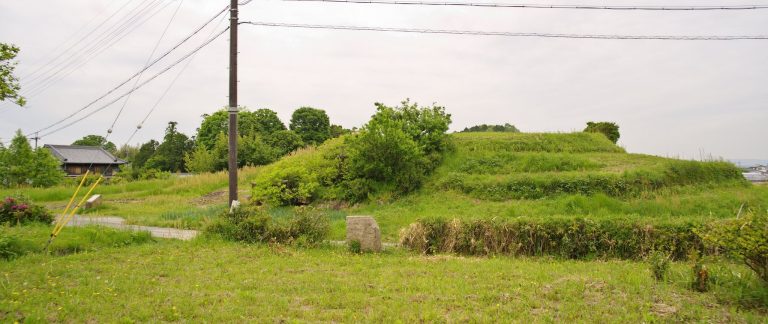
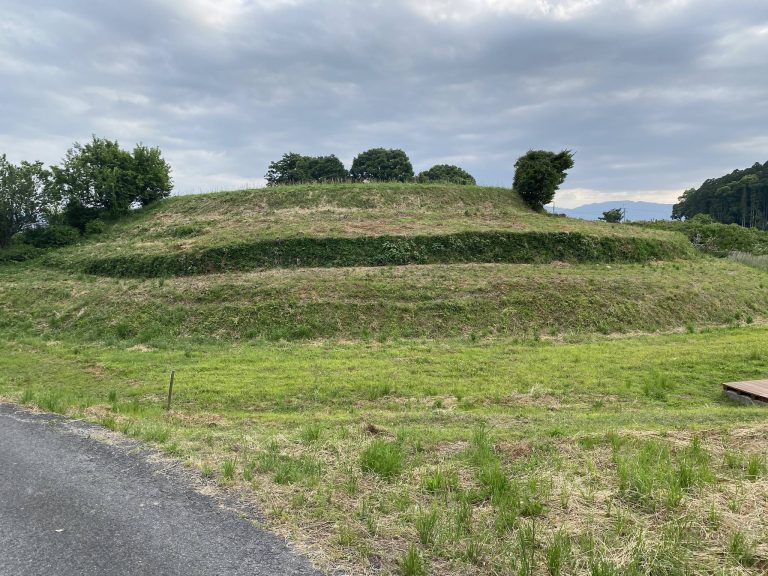
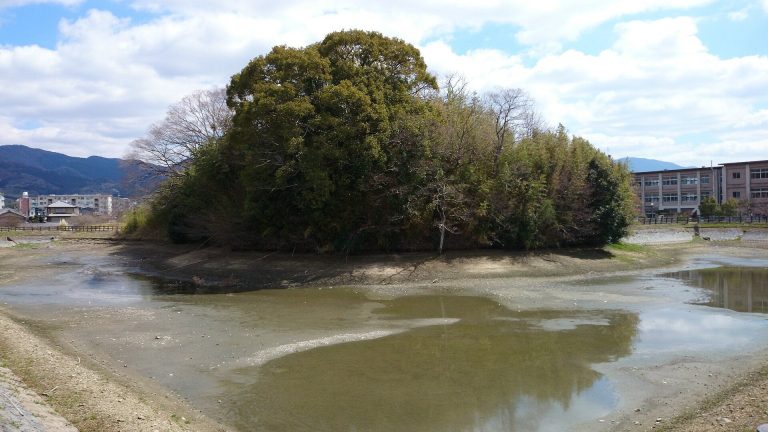
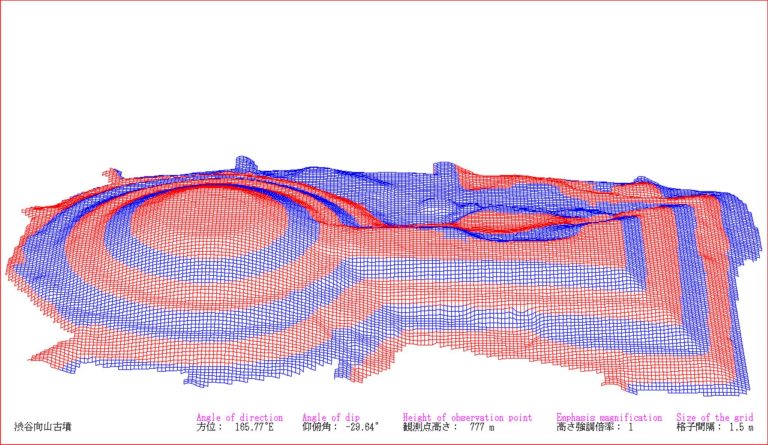
Chihara Ōbaka Kofun lies at the western foot of Mount Miwa in the Chihara area. Its scallop-shaped keyhole plan consists of a circular rear mound and a short projecting front section directed north-northeast. The mound is approximately 86 meters long, while the rear circular section measures about 71 meters across. The rear part rises in three tiers and the front part in two. Stones known as fukiishi, laid over a burial mound’s surface to protect its earthen slopes, covered the mound.
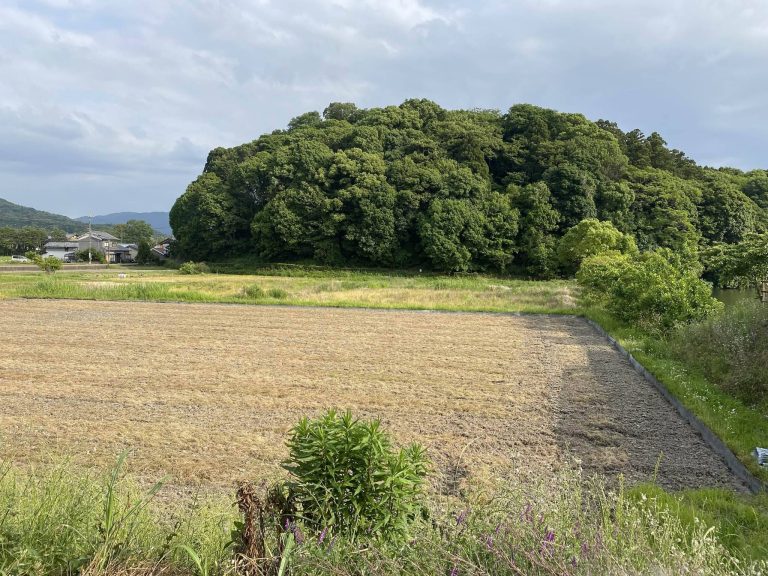
A moat surrounded the mound, and parts of it survive as reservoirs or ponds. An earthen causeway crossing the moat was identified on the north side of the front section. This surviving feature clarifies how the mound’s perimeter and entrance area were arranged.
Haniwa and Burial Facilities
Clay funerary objects called haniwa stood in rows on the mound and included cylindrical and jar-shaped examples. Figurative haniwa represented houses, shield-bearing human figures, umbrella-shaped objects, and birds. The shield-bearing human figure is regarded as the oldest known human-figure haniwa. In 2011, a haniwa depicting a human head on a shield, dating to the late fourth century, was found in the moat.
Three haniwa coffins have been identified at the kofun. The burial facility itself has not been clarified, and the grave goods are unknown. These features, together with the mound’s tiered construction and surrounding moat, preserve evidence of the monument’s funerary design and its place within the changing burial traditions of the late fourth century.