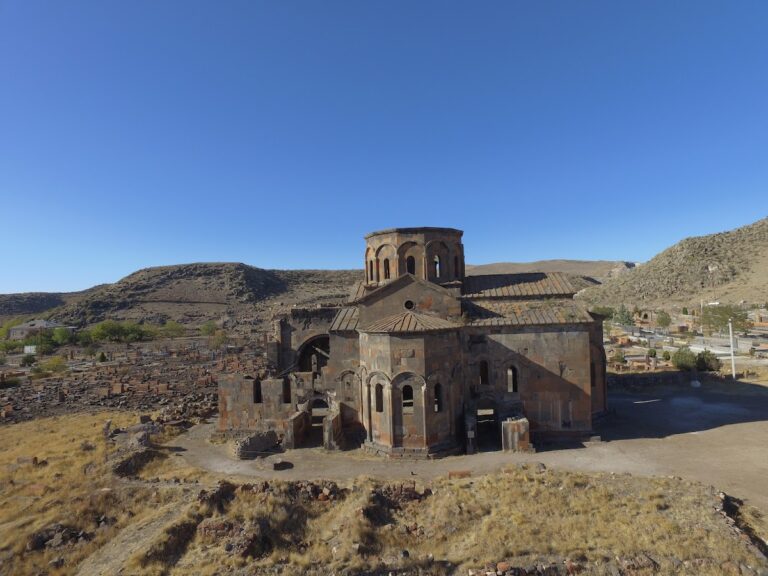
Hogevank Monastery: A Thirteenth-Century Armenian Apostolic Monastery


Site at a Glance
- Rating
- 4.9
- Popularity
- Very Low
- Country
- Armenia
- Primary era
- Medieval
- Eras represented
- Classical, Medieval
- Civilizations
- Armenian
- Site type
- Religious
- Remains
- Monastery
On this page7 sections
History
Hogevank Monastery is an Armenian Apostolic monastery near Sarnahbyur in Armenia, built in the Armenian architectural tradition and centered on the Saint Karapet church, whose construction is dated by an inscription to 1205. The complex is generally associated with the thirteenth century and belongs to the Shirak Diocese, the regional ecclesiastical jurisdiction of the Armenian Apostolic Church.
Medieval origins
The inscription above the northern entrance identifies 1205 as the construction date of Saint Karapet. The church was originally dedicated to Saint Stephen, the early Christian martyr traditionally regarded as the first deacon and martyr, before becoming associated with Saint Karapet, an Armenian designation for John the Baptist. Some documents mention Hogevank as early as the seventh century, indicating that the site was associated with an earlier phase of Christian activity.
Earthquake damage and renewal
The church dome collapsed in the 1939 earthquake. It was reconstructed in 1980, and further repairs followed during the 1980s, with the most recent stated repair campaign taking place in 1985. The monastery was consecrated again on 23 November 2013 by Mikael Ajapahyan, the bishop who led the Shirak Diocese.
Remains
Saint Karapet Church
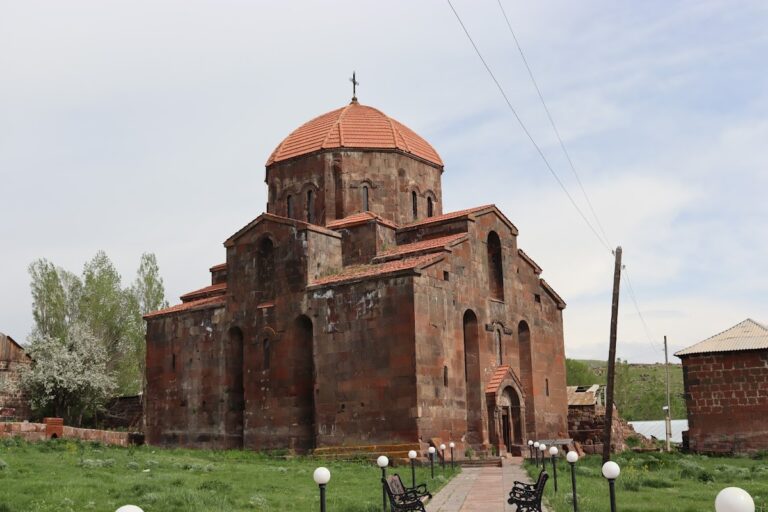
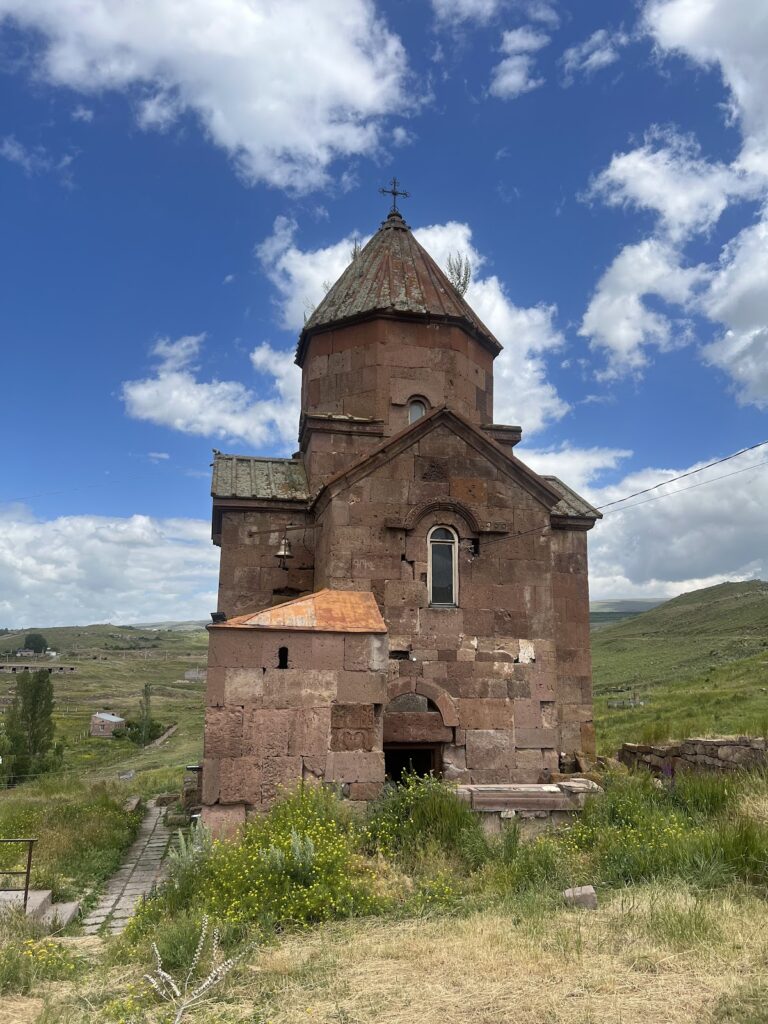
Saint Karapet is a domed-hall church, meaning that its hall-like central space is covered by a dome. It has western and northern entrances, while its eastern end contains a semicircular apse, the recess behind the sanctuary. Rectangular vaulted rooms flank the apse on both sides; they are set at right angles to the sanctuary and openly separated from it. The dome rests on a cylindrical drum, an upright circular structure supporting the dome. The original walls were built from dressed red tuff, a volcanic stone widely used in Armenian architecture. Black and gray or brown tuff appear in later repairs, and inscriptions decorate the exterior walls.
Earlier religious structures
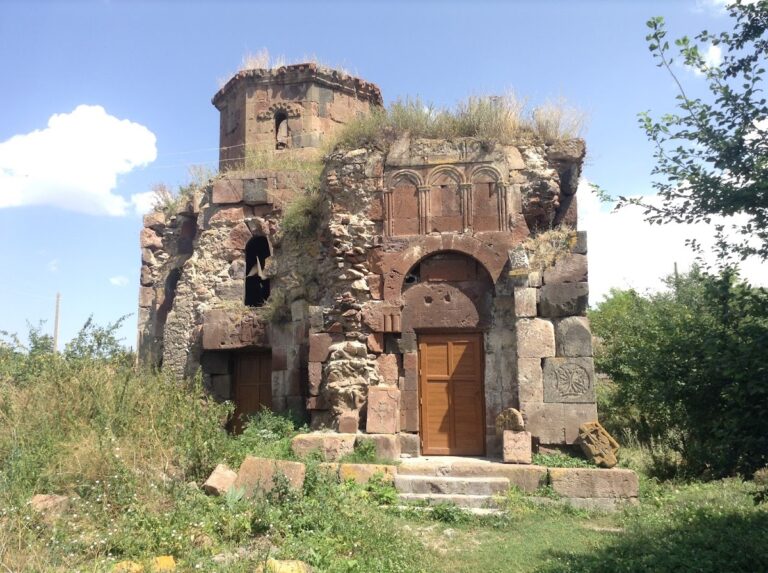
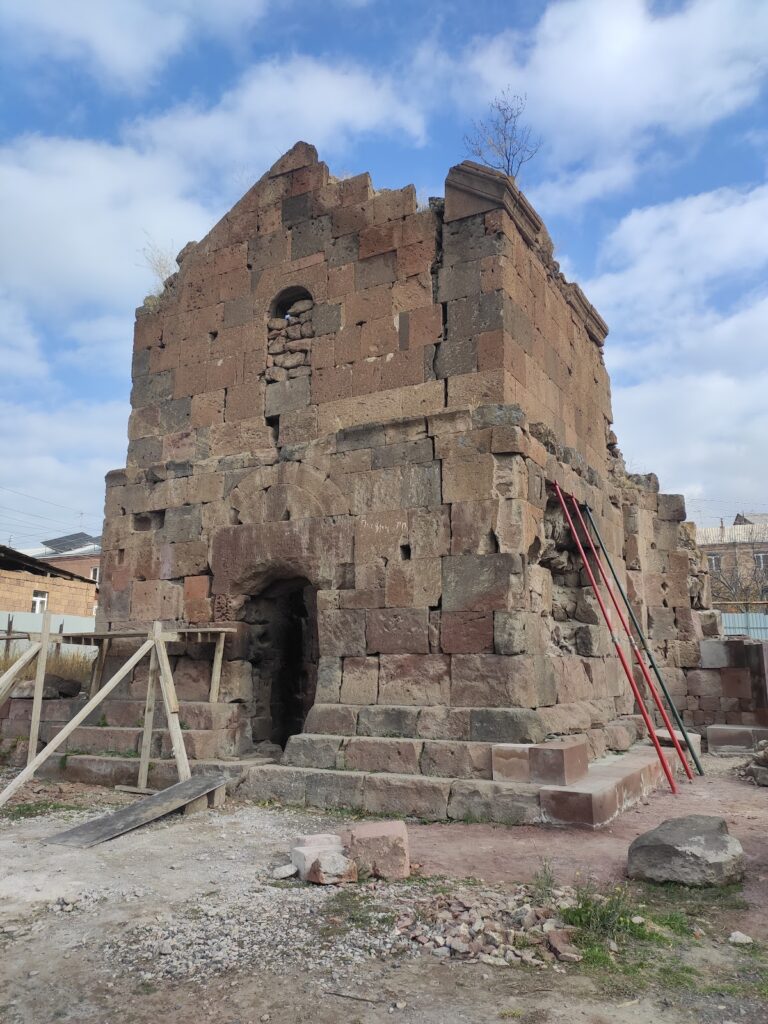
North of Saint Karapet Church are the collapsed walls of a fifth-century single-nave chapel and a seventh-century sanctuary with four apses. These remains place the monastery within a longer sequence of Christian construction that predates the principal church.
Memorial stones and khachkars
Inside Saint Karapet are carved, four-sided memorial markers dated to the fourth and fifth centuries. Numerous fragments of thirteenth-century khachkars, Armenian carved stone cross monuments, were also found at the monastery. Their inscriptions are now illegible because of age. The complex is described as being in good condition, with the dome reconstructed on the basis of the 1980 restoration.