Hofburg Palace: Historic Imperial Residence and Cultural Center in Vienna
Visitor Information
Google Rating: 4.7
Popularity: Very High
Official Website: www.wien.info
Country: Austria
Civilization: Early Modern, Medieval European, Modern
Site type: Domestic
Remains: Palace
History
The Hofburg Palace is located in the municipality of 1010 Vienna, Austria. It was originally built by medieval European rulers and developed over centuries as a central seat of power for several Austrian dynasties, most notably the Habsburgs.
The origins of the Hofburg trace back to the early 13th century, with the first written record dating to 1279. Its initial construction took place under the rule of the Babenberg dynasty, with Duke Leopold VI starting the foundation. Completion of the early structure took place under King Ottokar II Přemysl of Bohemia. During this period, the Hofburg was designed primarily as a fortified castle, featuring defensive towers and a surrounding moat. It functioned as one of several residences for the sovereign dukes governing Austria.
In the mid-16th century, Emperor Ferdinand I established the Hofburg as his principal residence, prompting a series of renovations that introduced Renaissance architectural elements. From then onward, the Hofburg became the winter residence of the Habsburg emperors. It retained its importance as the imperial seat throughout the following centuries, witnessing numerous expansions and alterations that mirrored the dominant artistic styles of their times, including Gothic, Baroque, Classicism, and later Historicism.
Important moments in the palace’s history include hosting the first session of the Austrian parliament in 1848, held within the Winter Riding School, and the proclamation of the Anschluss by Adolf Hitler from the balcony of the Neue Burg in 1938. After the end of the Habsburg monarchy in 1918, the palace’s role shifted from imperial residence to political and cultural functions. Since the mid-20th century, it has served as the official residence and office of the President of Austria and accommodates various federal institutions, museums, and the Austrian National Library. Additionally, the Hofburg houses the permanent headquarters of the Organization for Security and Co-operation in Europe (OSCE).
Plans during the late 19th and early 20th centuries aimed to expand and connect the Hofburg to other major cultural institutions along the Ringstraße boulevard through the Kaiserforum project. However, this project remained incomplete. The palace complex today stands as a reflection of its long history as a residence, center of governance, and cultural hub.
Remains
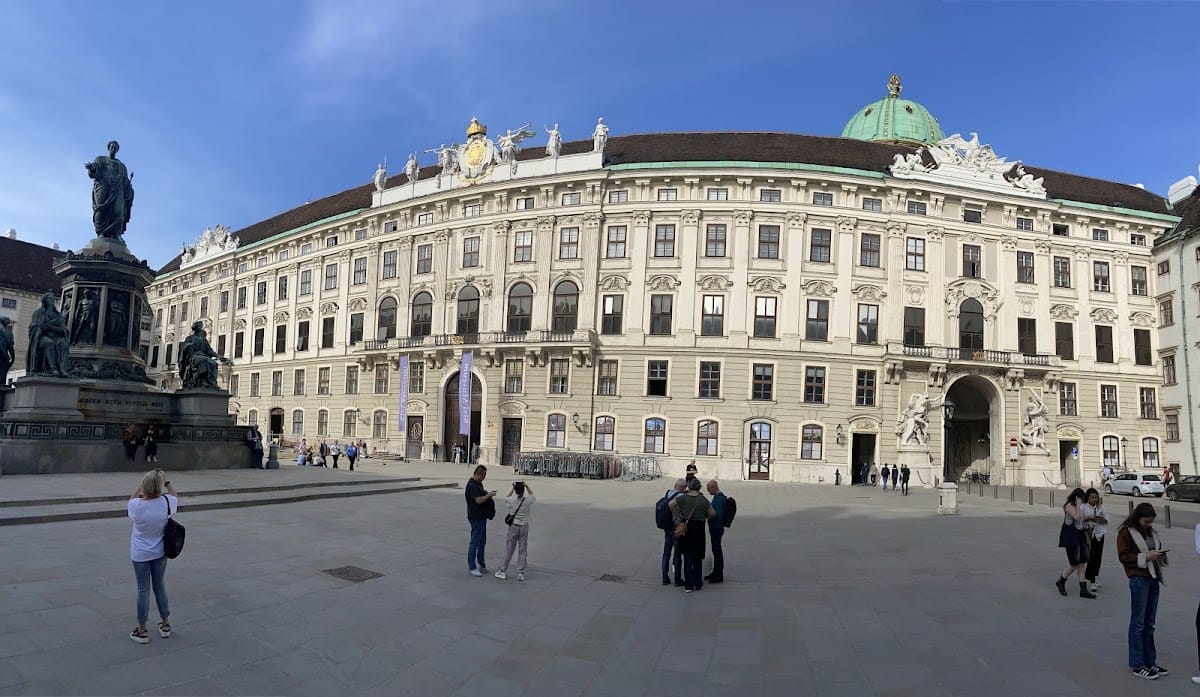
The Hofburg Palace complex covers around 300,000 square meters, enclosed by several notable squares including Michaelerplatz, Josefsplatz, Heldenplatz, and Ballhausplatz. Its layout evolved from a fortified medieval castle into a sprawling palace incorporating a range of architectural styles, with structures built in stone and decorated with various artistic elements across centuries.
The oldest surviving section is the Swiss Wing (Schweizertrakt), dating to the 13th century. This part has a roughly square plan reinforced by four thick corner towers and was originally surrounded by a moat, features that reveal its defensive purpose. The wing houses the Gothic Burgkapelle (court chapel) from the 15th century, preserved to this day. In 1552, the Swiss Gate, made of stone and designed by Pietro Ferrabosco, was added; it bears inscriptions of Emperor Ferdinand I’s titles and emblems of the Order of the Golden Fleece. Near the gate, the Swiss Court Fountain rises from a hard white limestone known as Kaiserstein. The wing also contains the Imperial Treasury, home to the Imperial Regalia of both the Holy Roman and Austrian Empires, and the Hofmusikkapelle, the court’s music chapel.
Another important part is the Stallburg, originally built as a residence for Maximilian II but later transformed during the 18th century into stables for the imperial horses. It currently accommodates much of the Spanish Riding School, famous for its equestrian tradition.
The Amalienburg, constructed between 1575 and 1611 and named for Empress Amalie Wilhelmine, exemplifies the late Renaissance style. It features a small tower topped with an onion-shaped dome known as a welsche Haube. The façade houses an astronomical clock that marks the time.
The Leopoldinischer Trakt, built in the 1660s under Emperor Leopold I by architect Filiberto Lucchese with Italian artists Carl Martin and Domenico Carlone, represents Baroque architecture. Following the 1683 siege of Vienna by Turkish forces, it underwent reconstruction and expansion by Giovanni Pietro Tencalla. The Kammerkapelle, a chapel within this wing, was renewed in 1772.
The Reichskanzleitrakt began construction in 1723 under Johann Lucas von Hildebrandt and was finished by Joseph Emanuel Fischer von Erlach around 1730. Originally designed as offices for the Imperial Vice-Chancellor and the Reichshofrat (Imperial Court Council), it later contained apartments for figures such as the Duke of Reichstadt and Emperor Franz Joseph I.
Between 1729 and 1735, the Winter Riding School was erected by Johann Bernhard Fischer von Erlach. It features a spacious hall where, notably, the first Austrian parliament sessions took place in 1848. Above its entrance is a Latin inscription honoring Emperor Charles VI, who commissioned its construction.
Near this, the Redoutensaaltrakt contains two ballrooms and concert halls known as the Redoutensäle. These halls were adapted from a 17th-century opera house under Empress Maria Theresa. After suffering fire damage in 1992, they were restored over several years, with interior decoration renewed by the artist Josef Mikl.
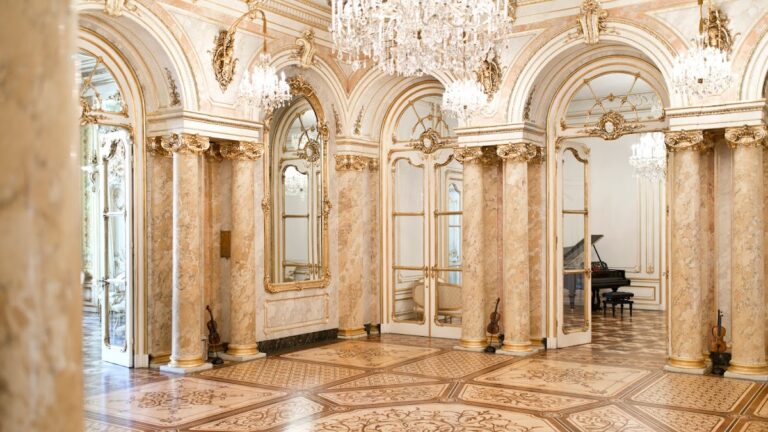
The Ceremonial Hall Wing (Zeremoniensaaltrakt) was built in 1804 by Louis Montoyer. This section boasts the grand Zeremoniensaal, a ceremonial hall supported by 24 Corinthian columns made with imitation marble. Twenty-six crystal chandeliers once held about 1,300 candles, illuminating imperial events, including the marriage proposal of Napoleon to Empress Marie Louise and official court balls.
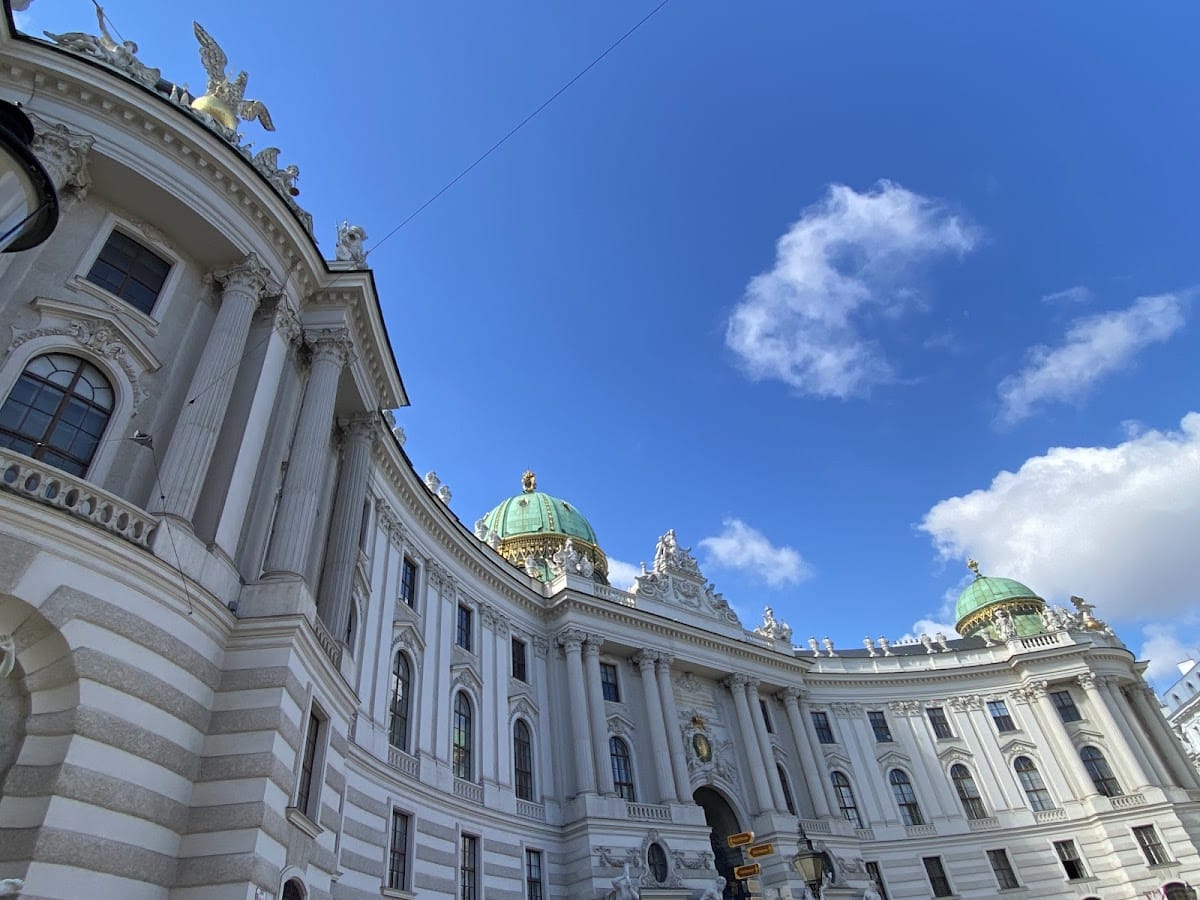
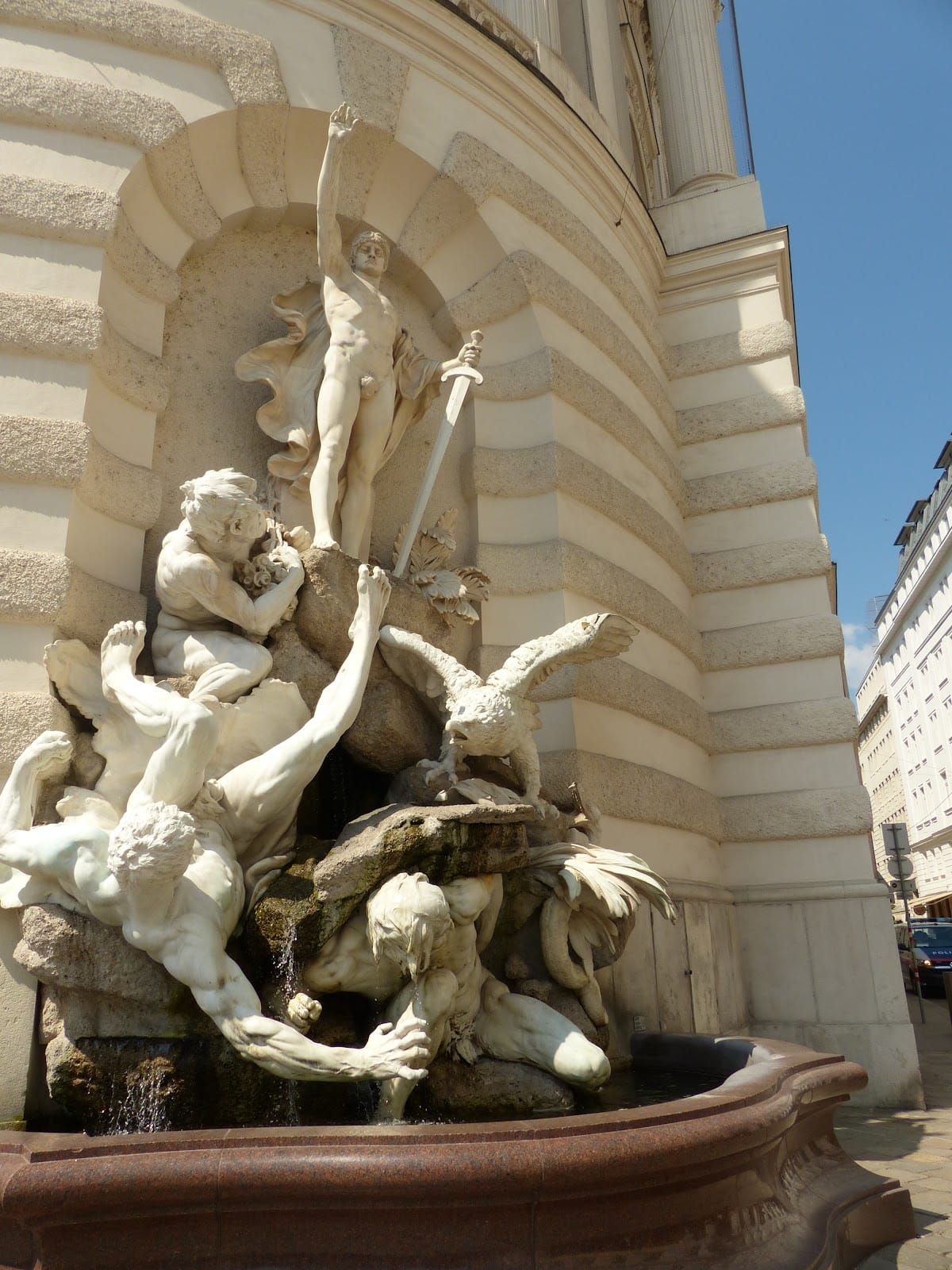
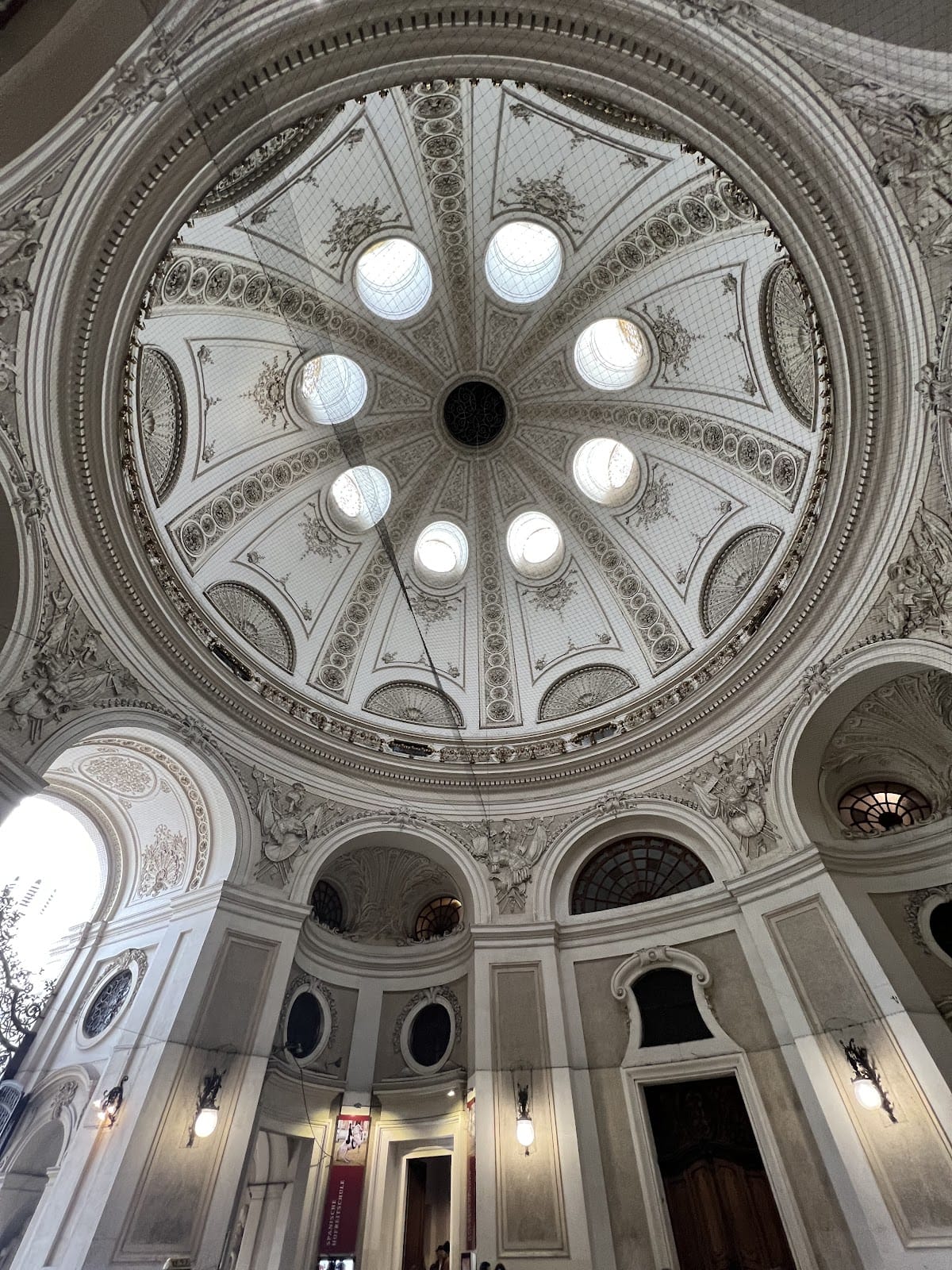
The Michaelertrakt, linking the Winter Riding School and the Reichskanzleitrakt, was initially planned in 1726 by Joseph Emanuel Fischer von Erlach but completed only between 1889 and 1893 by Ferdinand Kirschner. It features a large bronze dome and two fountains that symbolize Austria’s naval and land military power.
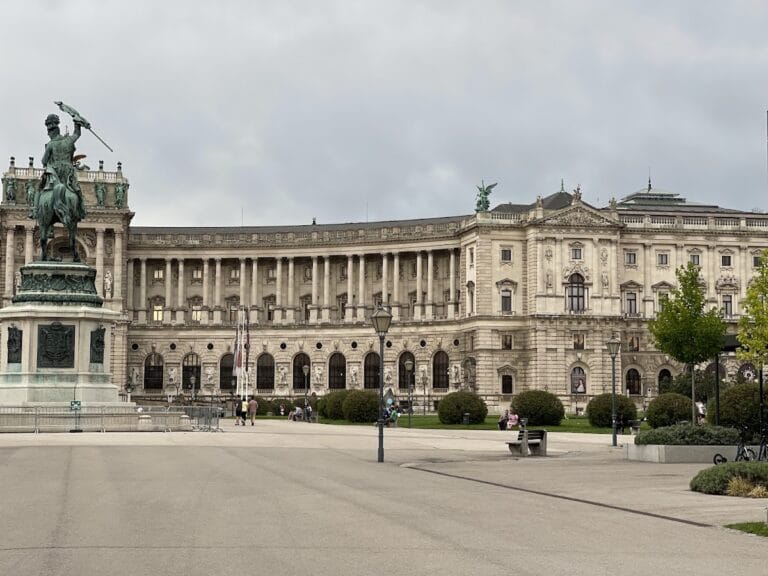
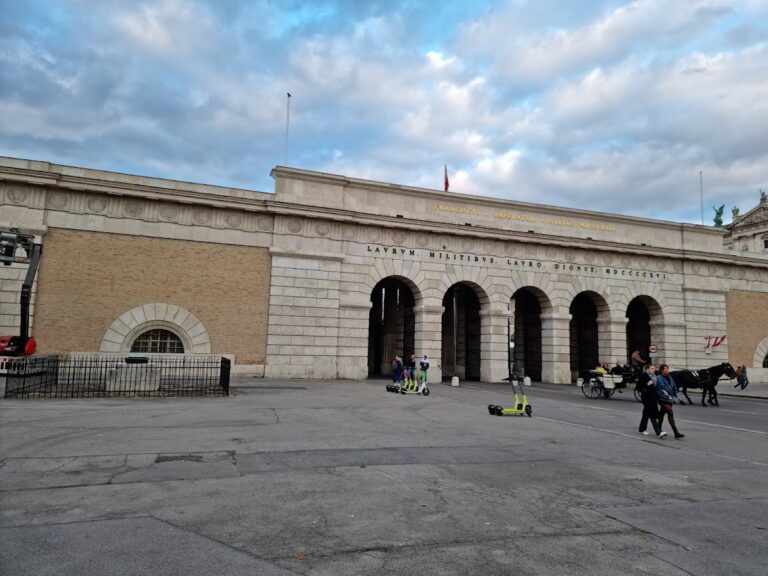
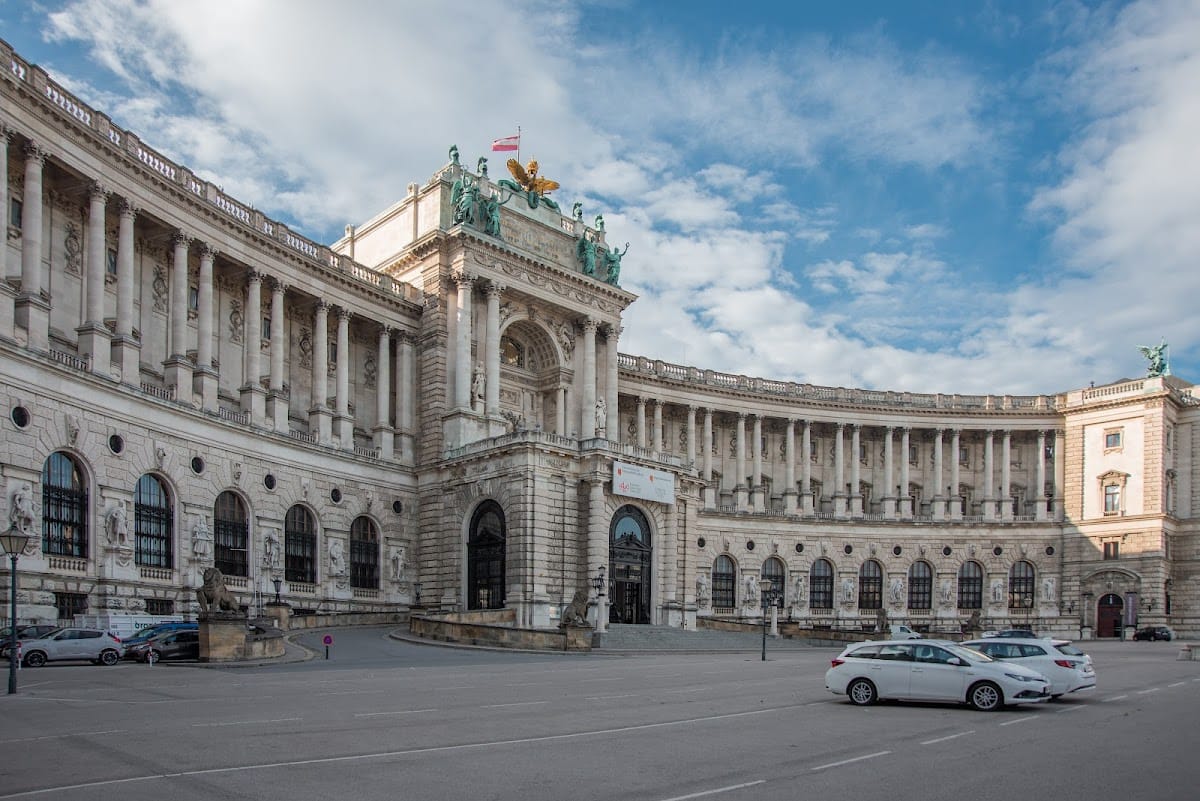
The Neue Burg, built between 1881 and 1913 as part of the halted Kaiserforum, is a major wing housing museums and reading rooms of the library. The Burggartentrakt, the garden-facing part completed by 1908, carries Latin inscriptions honoring Emperor Franz Joseph I. The Große Festsaal or Great Festival Hall within the Neue Burg is the palace’s largest hall, covering about 1,000 square meters. Its interior decoration includes ceiling artworks by Alois Hans Schramm and lunettes painted by Eduard Veith and Viktor Stauffer. These lunettes depict prominent Austrian historical figures.
Central to the Hofburg complex is the Hofbibliothek or Imperial Library, begun by Johann Bernhard Fischer von Erlach and finished by his son Joseph Emanuel in 1735. It contains the Prunksaal, or State Hall, adorned with a ceiling fresco by Daniel Gran and statues of emperors sculpted by Paul Strudel. This hall exemplifies Baroque grandeur and artistic achievement.
Adjacent to the Hofbibliothek is the Augustinertrakt, which integrates the Augustinian Church and Monastery into the palace complex. Also connected structurally is the Palais Erzherzog Albrecht, formerly known as Palais Silva-Tarouca, which presently holds the Albertina graphic art collection.
Throughout the complex, various monuments and statues commemorate historical figures, including memorials for emperors and military leaders such as Franz I, Joseph II, Prince Eugene of Savoy, and Archduke Charles.
Excavations in 2013 uncovered foundations belonging to the Kunstkammer, an art chamber constructed between 1558 and 1563. This building is recognized as the first purpose-built museum north of the Alps.
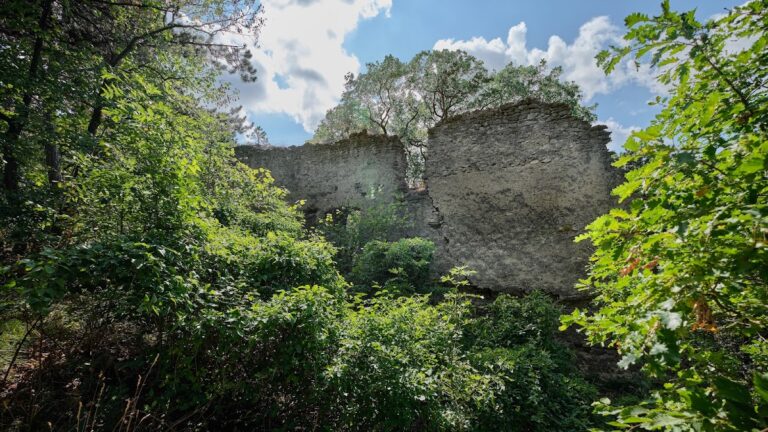
Remnants of the palace’s original defensive nature persist in thick walls and vestiges of fortifications. Some walls that once formed defensive towers now serve as elements like the Antechamber. The entire Hofburg provides a layered architectural record of its continuous use and adaptations over more than seven centuries. Managed by the Burghauptmannschaft, the site today continues its long-standing role as a center for governmental, cultural, and historical functions.
Nearby sites