Hněvín Castle: A Royal Stronghold Above Most in Czechia
Site at a Glance
- Rating
- 4.6
- Popularity
- Medium
- Country
- Czechia
- Primary era
- Modern
- Eras represented
- Iron Age, Medieval, Modern
- Civilizations
- Habsburg, Holy Roman Empire, Kingdom of Bohemia
- Site type
- Military
- Remains
- Castle
On this page15 sections
History
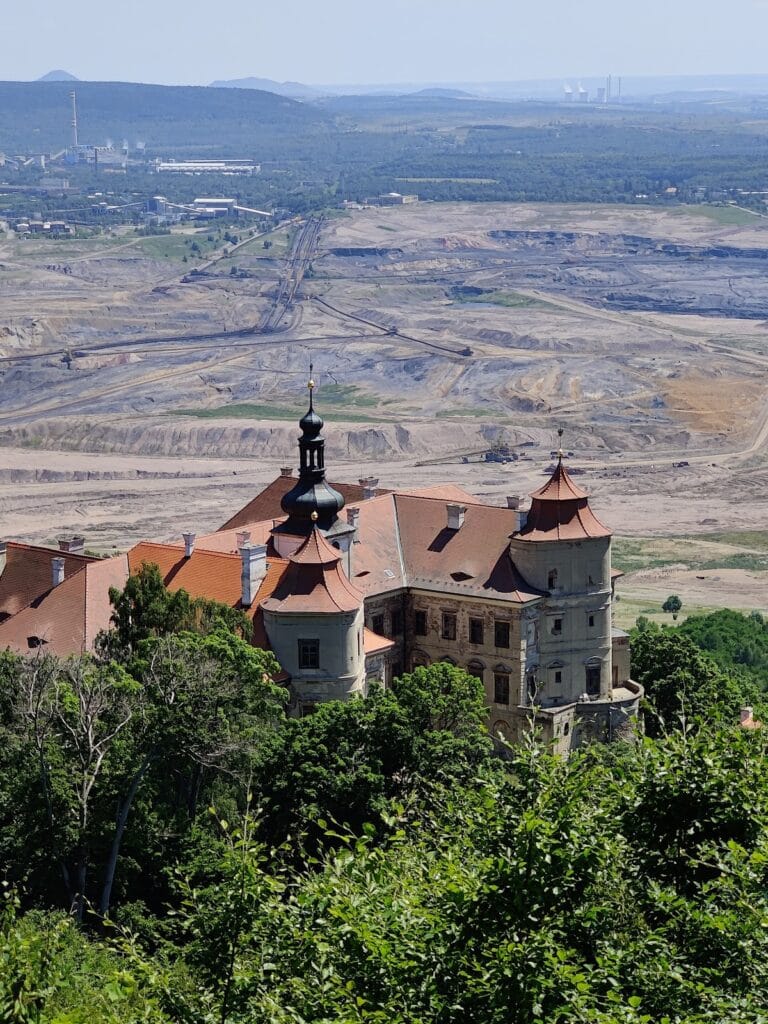
Hněvín Castle is a medieval royal stronghold above Most in Czechia, founded probably by King Wenceslaus I in the late 1230s and later rebuilt in historicizing Gothic Revival forms. Its hill had already been occupied from prehistoric times, and the castle controlled an important estate and defensive position above Most.
Prehistoric hill and royal foundation
Hněvín Hill was inhabited from prehistory onward. Archaeological investigations identified material from the Eneolithic period, the Únětice and Knovíz cultures, the Late Hallstatt period, and the eighth and ninth centuries. Before the area came under royal authority, the powerful Hrabišic family controlled the surrounding territory.
In 1207, Kojata IV of the Hrabišic family donated a vineyard on Hněvín Hill to Osek Monastery. He later bequeathed his remaining local property to the Knights of the Cross of the Red Star, and his brother Všebor transferred his property to the same order in 1238. King Wenceslaus I then acquired the lands and probably founded both the castle and the town of Most in the late 1230s. A possible twelfth-century origin has also been proposed, so the exact foundation date remains uncertain.
The first written reference to the castle dates from 1248. In that year, Přemysl Otakar II, the Bohemian king, besieged Hněvín during his revolt against his father, Wenceslaus I, but failed to take it. The castle subsequently served as a royal stronghold and may also have been the seat of a district administrator.
Pledges, sieges, and noble ownership
During the thirteenth century, Wenceslaus II pledged the castle to the Brandenburgers. It later passed to the margraves of Meissen and returned to royal possession in 1406 after compensation was paid. Hněvín remained unconquered during the Hussite Wars, a fifteenth-century conflict associated with religious reform and military campaigns in Bohemia.
King Sigismund pledged the castle to the margrave of Meissen again in 1423. King George of Poděbrady besieged it unsuccessfully in 1455. The Cheb Peace Treaty restored Hněvín to royal control in 1459, after which George granted the castle and its estate to his sons Hynek, Viktorin, and Jindřich. Jindřich sold it to Beneš and Ludvík of Veitmile in 1480.
In 1585, Hněvín became the property of Ladislav Popel the Younger of Lobkowicz. After he was accused in 1593 of attempting to revolt against Emperor Rudolf II, he fled, was condemned in absentia, and forfeited his possessions. An imperial commission took over the castle in 1594. Rudolf II sold it and its associated property to the town of Most in 1595 for 69,480 Meissen groschen.
The estate acquired by Most included a demesne farm, brewery, malt house, sheepfold, and forest on Ressl. It also included several villages, Lake Komořany, four villages in the Ore Mountains, the Střílnice and Gruntmil mills, a forge with a mill and sawmill, and the estates of Stradov and Přestanov. Because Hněvín retained strategic importance, the ruler kept a right of first refusal, while Most had to maintain the garrison at its own expense.
Alchemists and the Thirty Years’ War
During Rudolf II’s reign, the English alchemist Edward Kelley and Marek Mamugny stayed at Hněvín on the emperor’s orders. Alchemists combined experimental work with attempts to transform matter and discover substances such as the philosopher’s stone. Kelley was later imprisoned at the castle after an unsuccessful escape from Křivoklát and died there in 1597.
The Thirty Years’ War, the major European conflict of 1618 to 1648 involving religious and dynastic struggles, brought repeated military occupation. Imperial garrisons held Hněvín several times between 1620 and 1631, and the people of Most were required to support them. Swedish forces repeatedly tried to capture the castle and ravaged Most even when their first attacks failed.
General Wrangel’s forces captured Hněvín in 1646. Swedish troops retained control through the end of the war and after the Peace of Westphalia, which ended the conflict, until October 1649. At the request of the townspeople, Emperor Ferdinand III approved demolition in September 1650. The decision was intended partly to prevent further attacks on Most and partly to provide stone and other building material for repairing the town. Demolition began in November 1651 and ended in 1653.
Reconstruction and survival
The summit remained deserted for more than two centuries. From the 1870s, the slopes were reforested and fitted with surfaced paths and park landscaping. A restaurant opened on the old foundations in 1879. A wooden lookout tower followed in 1889, but strong winds destroyed it the next year.
The German Friends of Castle Hill Association was founded in 1896 to revive the site. A stone lookout tower was completed in September 1900, and a Gothic Revival restaurant designed by Adolf Schwarzer was built in 1905 and 1906. The association later remodeled the tower, while a smaller eastern tower intended as a castle chapel was constructed in 1913 and 1914. Building work stopped during the First World War, and a covered veranda was added in 1927.
During the Second World War, the German army occupied Hněvín for air-defence purposes. A large illuminated swastika was placed on the perimeter wall, and a glass plotting board in the cellars was used to mark aircraft movements over the Most region. The army also built a wartime cave beneath the lookout area as a possible shelter during raids on the STW chemical works.
The complex briefly retained military uses after 1945, apparently in connection with a search for remnants of SS units. Administration passed to the Municipal National Committee of Most in 1950. The site deteriorated, a television relay station was installed in the tower in 1959, and the castle closed in the 1960s because parts of it threatened to collapse. Reconstruction from 1967 to 1970 stabilized and renewed the complex. A small public observatory opened in the former chapel in 1972.
Hněvín and the villa district of Zahražany are the only parts of historic Most that escaped the demolition of the old town during the redevelopment of the 1960s to the 1980s. The castle, once southwest of Most, now stands on the northern edge of the new city. After 1989, the city regained Hněvín through restitution as historic municipal property and carried out a major renewal in 2000 and 2001. The complex continues to house the Dr. Antonín Bečvář Observatory, a branch of the Teplice Observatory. A June cultural event called Magister Kelley Day is also held there.
The television series Most! presents Hněvín as the destination of a Stations of the Cross route, but this depiction is inaccurate. The surviving part of Most’s Stations of the Cross runs only along Jana Žižky Street below the castle.
Remains
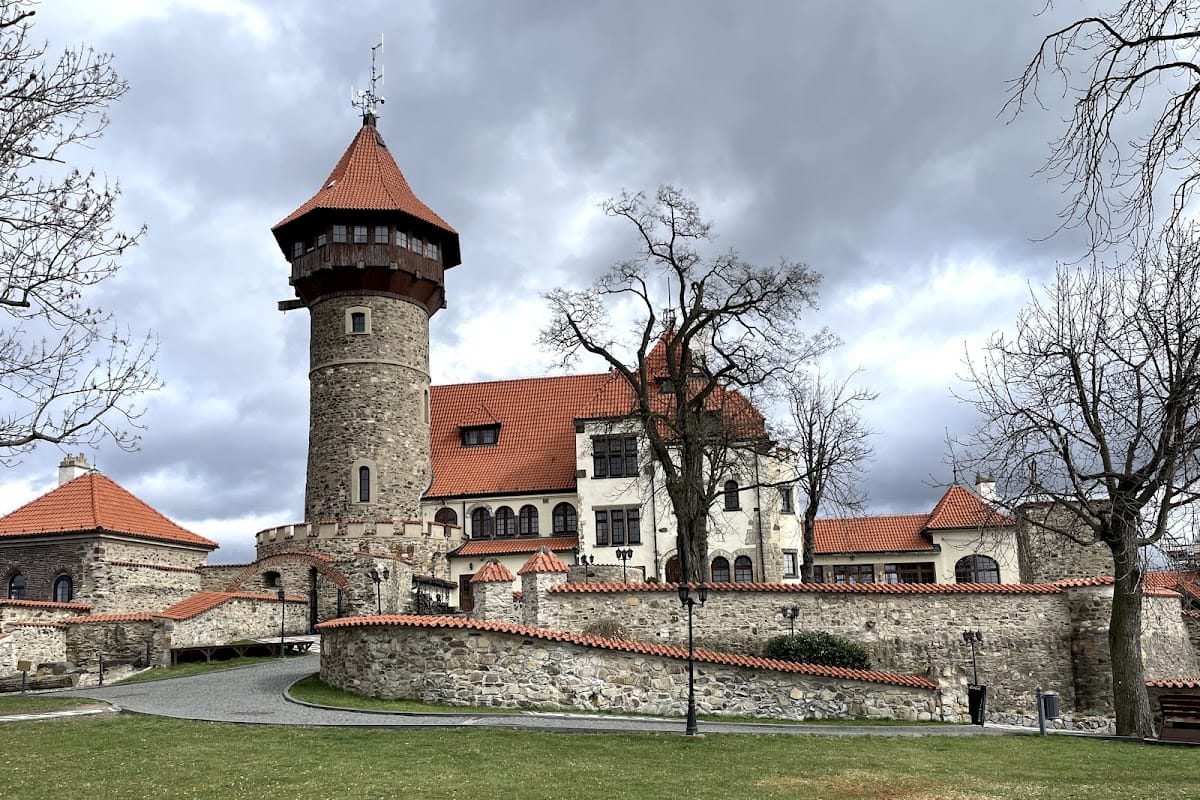
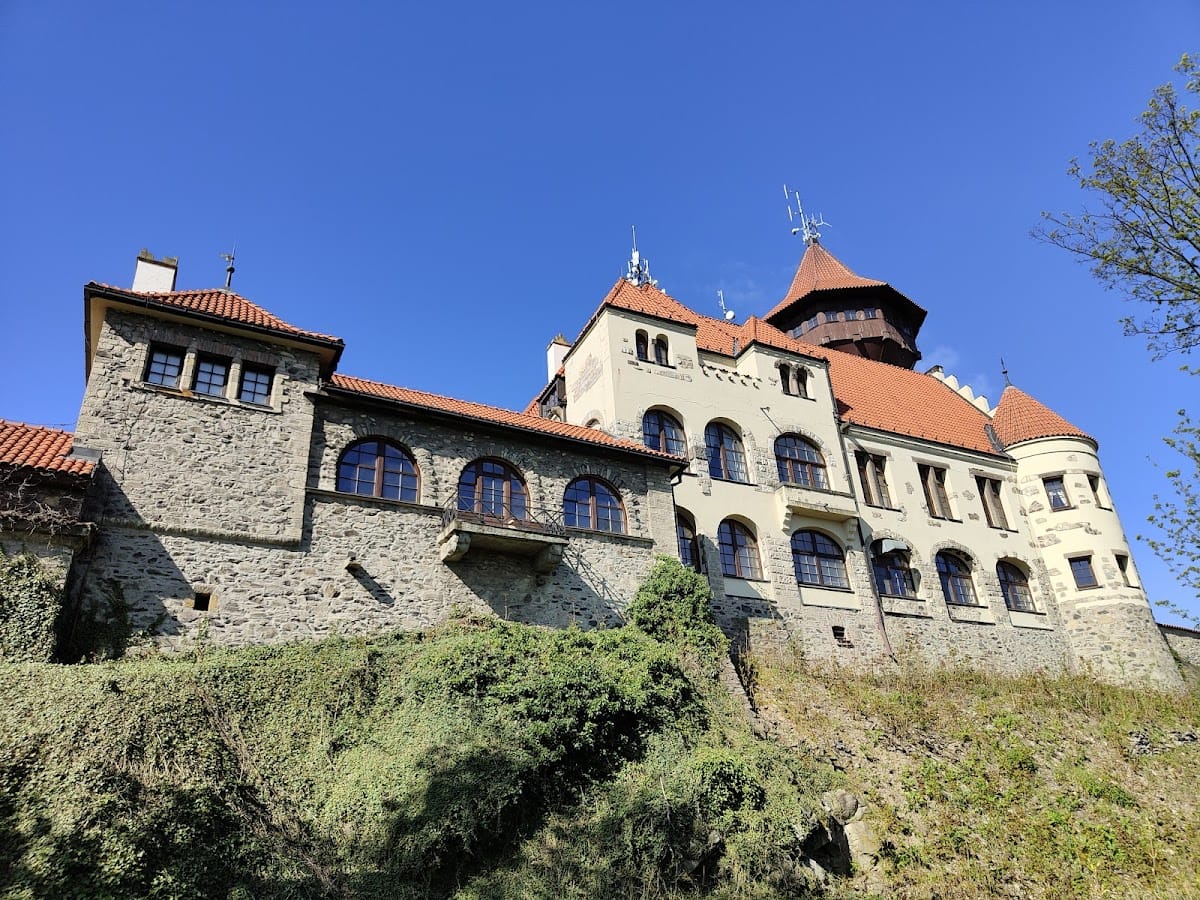
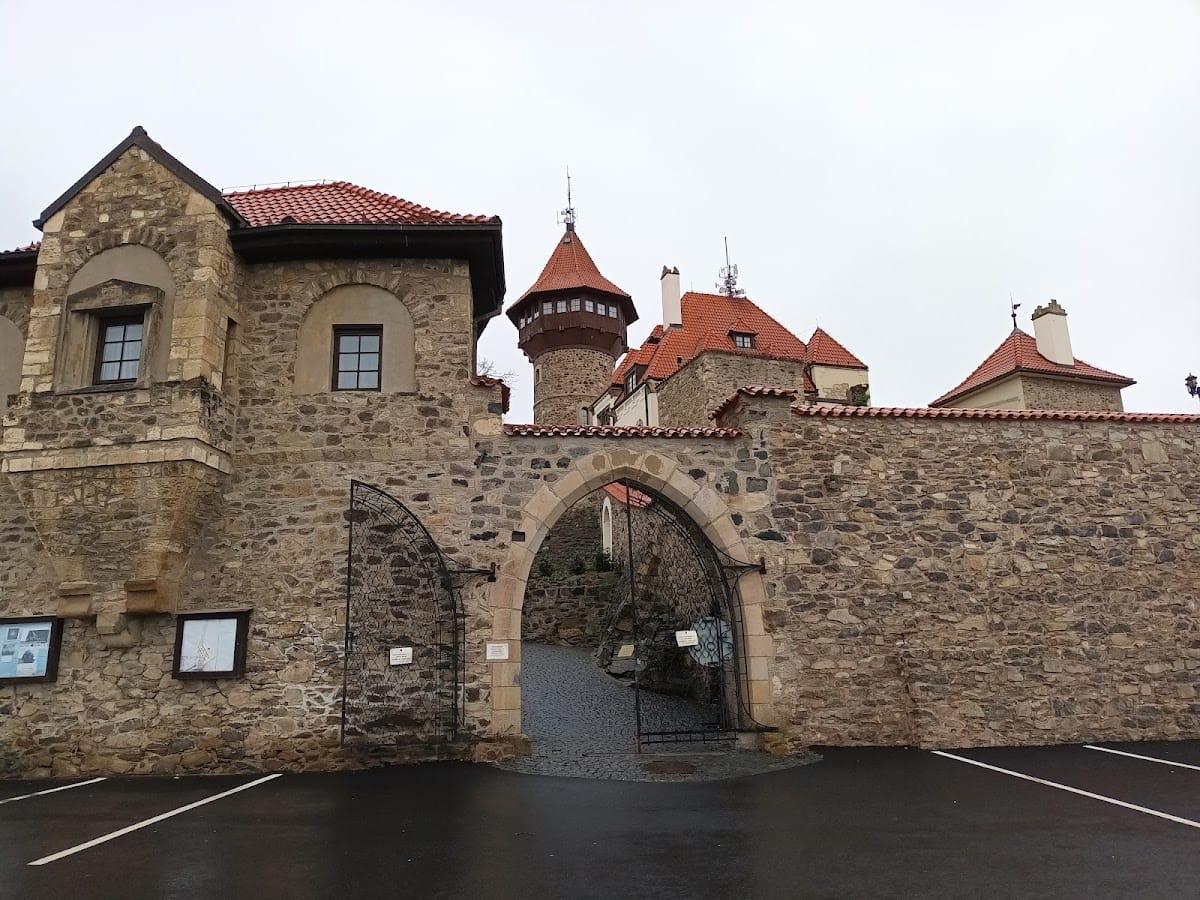
Hněvín stands on the summit of a conical hill about 397 to 399 metres above sea level. Much of its present appearance comes from the reconstruction around the turn of the twentieth century, while only limited medieval fabric survives. The modern complex combines the remnants of the castle layout with a stone lookout tower, a Gothic Revival restaurant, a smaller eastern tower, a hotel, a covered veranda, a courtyard with renewed paving, and a wartime cave beneath the lookout area.
Archaeological remains of the hill
On the southwestern slope, approximately 50 metres below the summit, an elevated terrace measures about 100 by 70 metres. Quarrying damaged part of the terrace, which retains remnants of park landscaping. Along its edge runs a rampart from the Late Hallstatt period. It is uncertain whether this earthwork enclosed only the terrace or also extended around the summit later occupied by the medieval castle.
Small quantities of Eneolithic and Early Bronze Age material from the hill are associated with an Únětice-culture settlement. Pottery fragments belong to the Knovíz culture, and remains of structures from the eighth and ninth centuries indicate later early medieval activity. The perimeter fortification may have originated during the Knovíz period and been repaired in the Hallstatt and early medieval periods, although that interpretation remains uncertain.
Medieval castle layout
Inner core and palaces
The medieval castle had a roughly triangular plan with a rounded front and buildings along its perimeter. An inner core occupied the northeastern corner, while an outer section extended beyond it. Along the northwestern curtain wall stood a two-storey palace containing a chapel and a vaulted hall. A second palace later abutted the southern wall and survives only at basement level.
Towers and entrances
A rectangular tower was attached to the southwestern corner of the palace and is partly preserved. A cross-wall beginning beside it divided the inner core from the outer section. The castle also possessed a circular bergfried, the principal defensive tower intended for defence and refuge rather than permanent residence, with a diameter of approximately 14 metres. The original gate approached from the north and stood west of the palace, while a second gate was added on the southern side during the fifteenth century.
Fortifications
In the nineteenth century, the ground level was raised by as much as several metres. The medieval perimeter wall was demolished into the moat, and the line of the modern perimeter wall probably follows the former fortification. A rampart bordered the moat along the front side. Two rectangular and three circular bastions incorporated into the perimeter wall may belong to a late Gothic rebuilding, although they may instead date from the nineteenth-century Romantic revival. Restored remnants of circular gun bastions remain visible within the inner fortification.
Historicizing complex and observatory
Lookout tower and restaurant
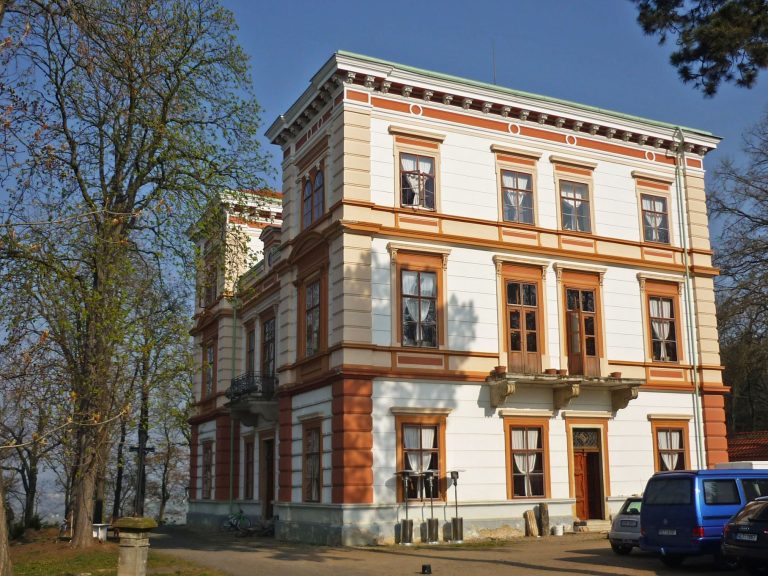
The stone lookout tower and the adjacent restaurant represent the principal early twentieth-century reconstruction. The restaurant, built in Gothic Revival forms in 1905 and 1906, was electrified and equipped with a telephone when completed. The complex also includes a hotel, a covered veranda, and an open-air stage.
Chapel tower and wartime cave
The smaller eastern tower, originally planned as a castle chapel, now houses a small observatory. The wartime cave beneath the lookout area remains freely accessible and was built as a possible shelter during air raids on the regional chemical works.
Later renewal
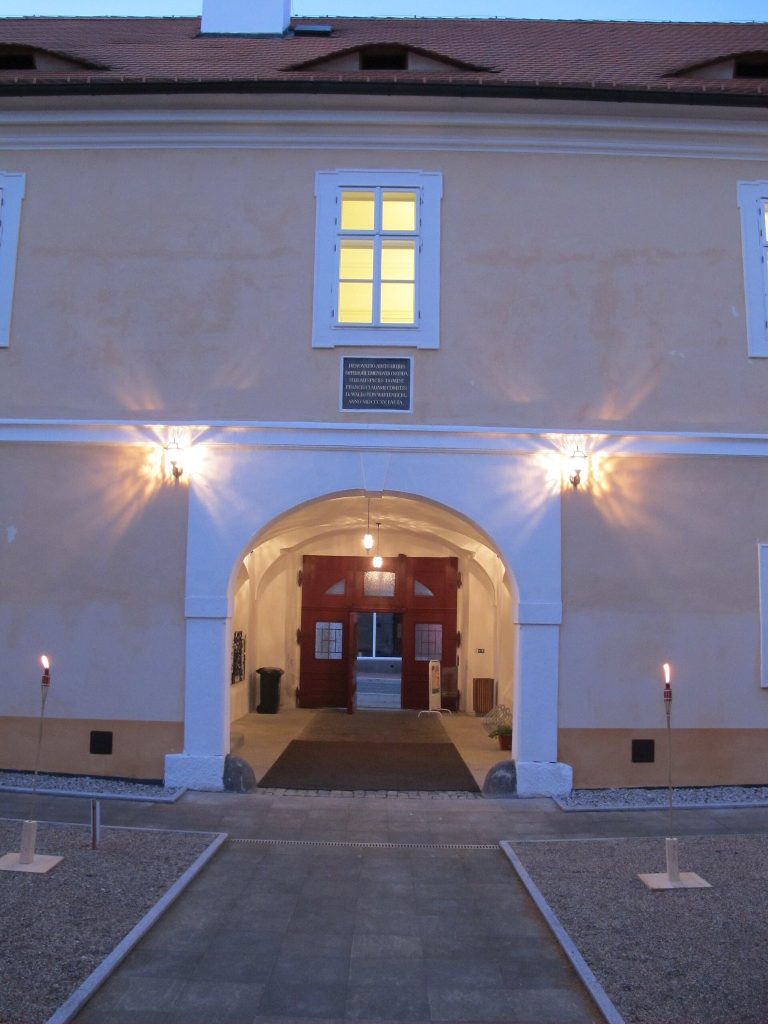
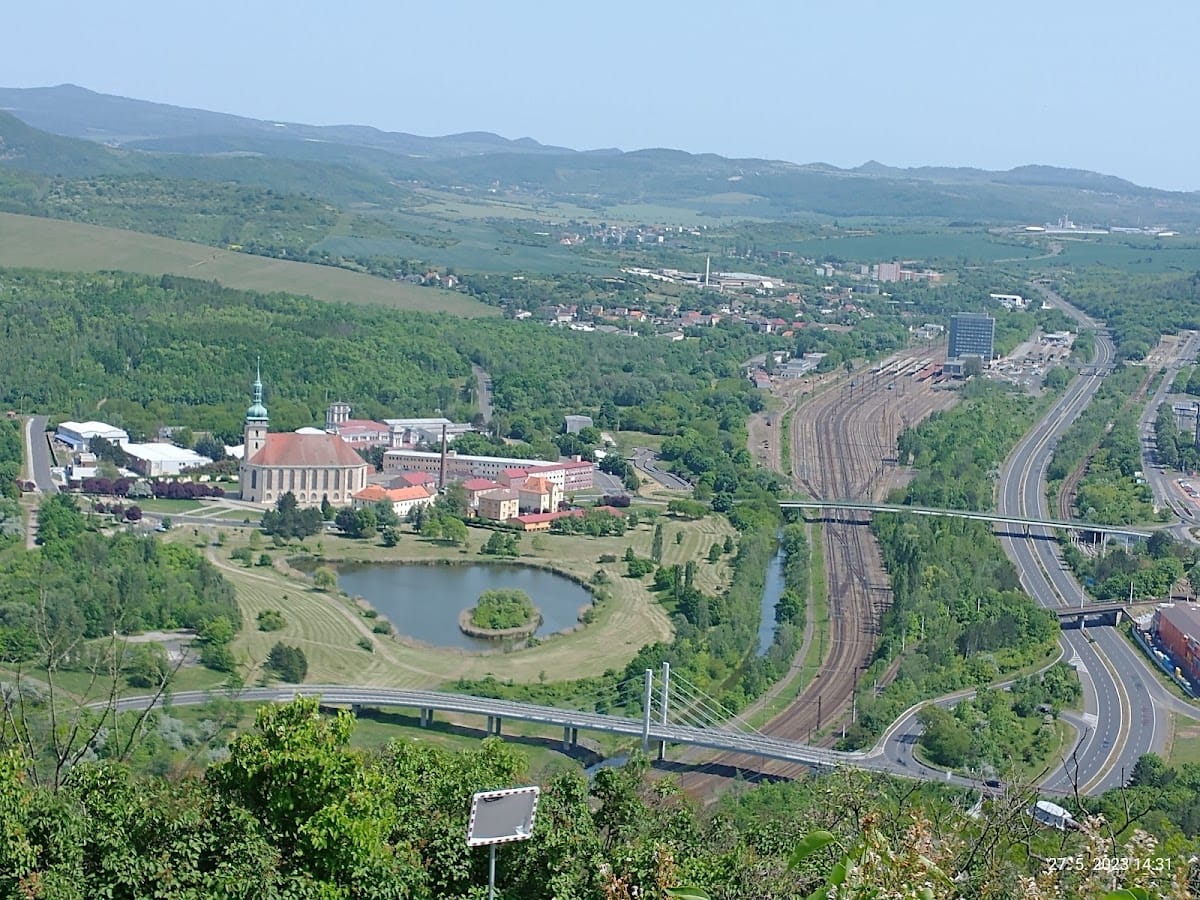
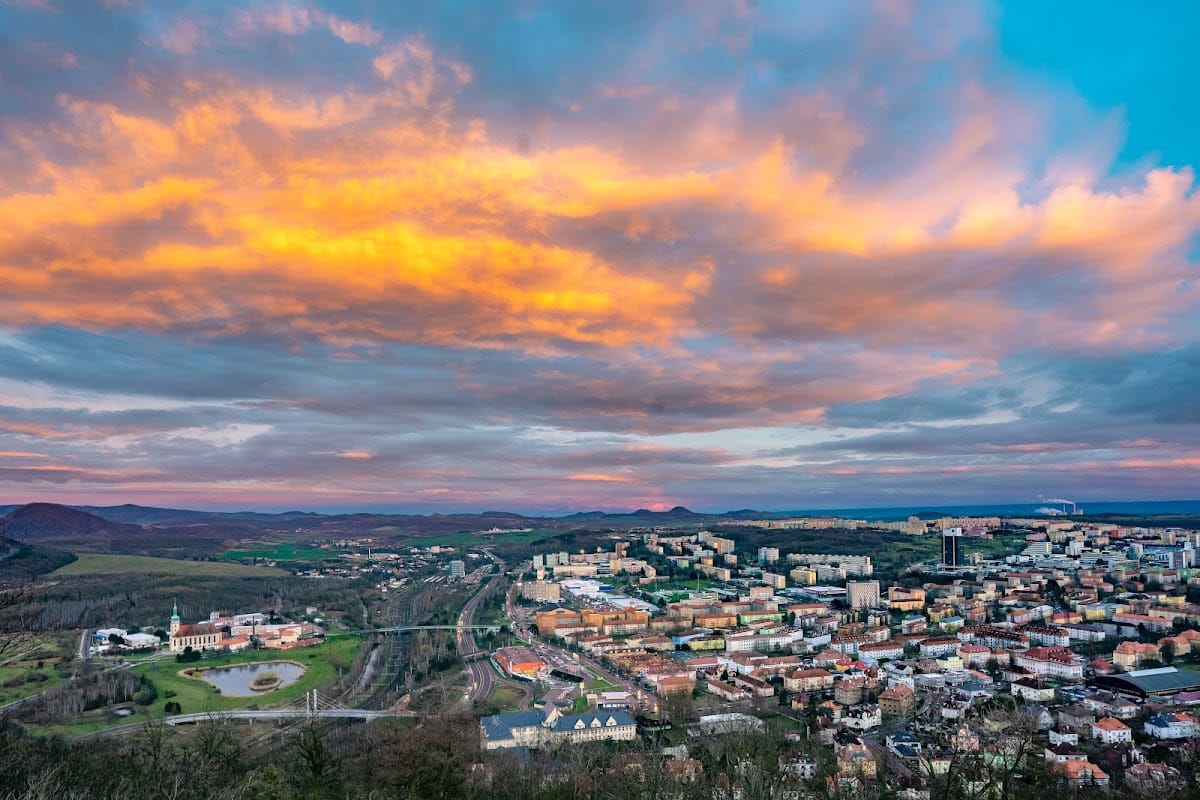
The renewal of 2000 and 2001 repaired the roofs, installed new utility connections, repaved the courtyard, and added exterior lighting. The reconstructed lookout tower provides views over Most, the Most Basin, the southern slopes of the Ore Mountains, the Bohemian Central Highlands, former and current mining areas, the Church of the Assumption of the Virgin Mary, and the new town. The surviving medieval elements are chiefly parts of the former layout, basement-level remains of a palace, portions of the rectangular tower, and sections of the fortifications.